 Bellingham Roofing
 Composite Decking in Sunnyland: Built for a Coastal, Wet Climate
Sunnyland homeowners already know what Bellingham weather does to outdoor wood — it doesn't take long. Between the salt-carrying air off Bellingham Bay and the Salish Sea, the driving rain that blows in sideways during fall and winter storms, and the long stretch of the year when moss and algae find a foothold on anything shaded and damp, a deck in this neighborhood works harder than a deck almost anywhere inland. Composite decking, installed correctly, is one of the few deck surfaces that holds up to all three of those stressors at once without demanding constant upkeep from the homeowner.
This page is specifically about composite decking for Sunnyland properties — not a general decking overview. The framing choices, board selection, fastening details, and drainage planning below are all shaped by what actually happens to a deck in this part of Whatcom County over a Pacific Northwest winter and the shoulder seasons on either side of it.
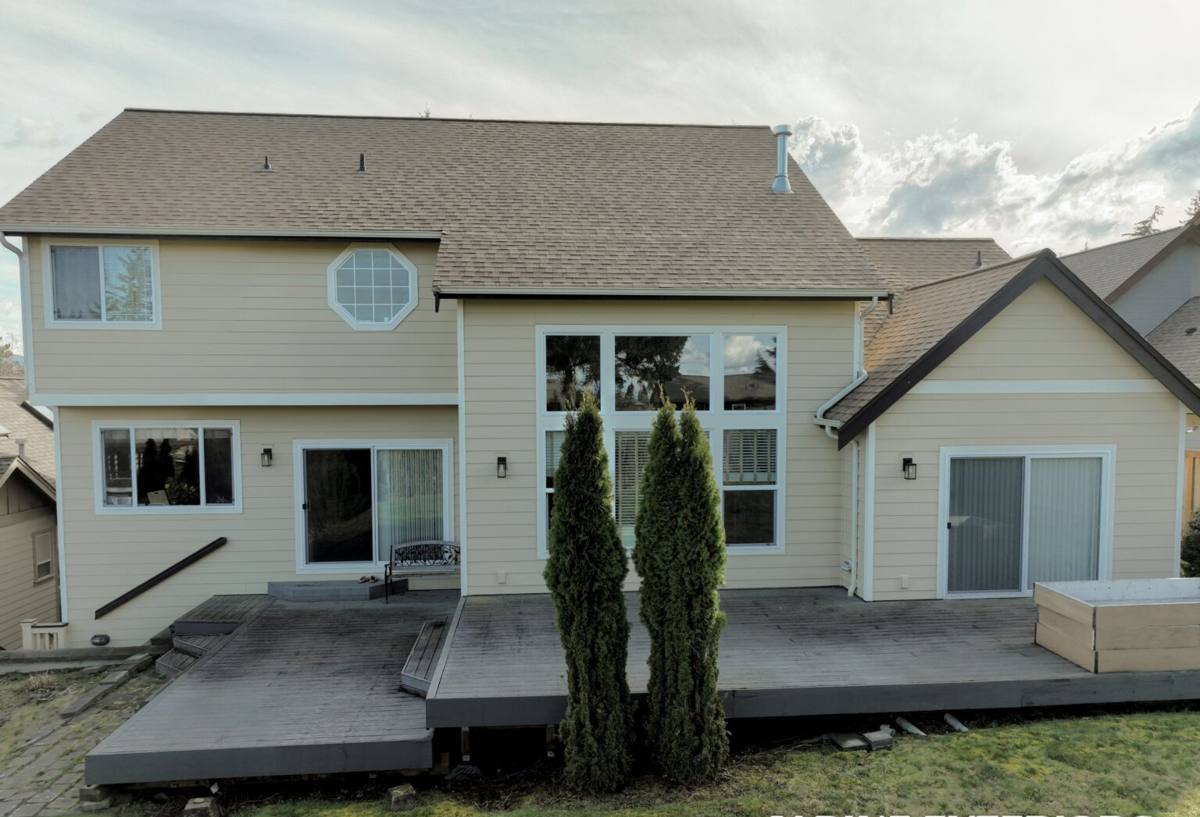
What Bellingham's Climate Actually Does to a Deck
Salt Air and Corrosion
Homes closer to the water pick up airborne salt that settles on exposed surfaces and accelerates corrosion in anything metal — fasteners, brackets, and railing hardware included. Over years, standard hardware can weaken from the inside even when the deck surface still looks fine, which is a big part of why fastener choice matters as much as board choice.
Driving Rain
Bellingham doesn't just get a lot of rain — a good share of it comes in at an angle during fall and winter systems, which means water reaches surfaces that a straight-down rain would miss: the undersides of rail caps, stair stringers, ledger connections, and the gaps between boards. A deck that isn't built with drainage and airflow in mind will trap that water instead of shedding it.
Moss and Algae Season
Whatcom County's combination of moisture, mild temperatures, and long stretches of overcast skies creates ideal conditions for moss and algae growth on any exterior surface that stays damp, especially in shaded or north-facing spots common in Sunnyland's tree-lined lots. On a deck, that growth isn't just cosmetic — it holds moisture against the board surface and creates a slick, slip-prone film if it's not managed.
Why Composite Decking Makes Sense Here
Wood decking can absolutely be built well, but it asks a lot of the homeowner in a climate like this: annual cleaning, periodic sealing or staining, and vigilance about moss and rot in shaded areas. Composite decking shifts that burden. A quality composite board is manufactured to resist moisture absorption, doesn't need annual sealing, and stands up to the freeze-thaw swings and constant damp of a Whatcom County winter far better than untreated or even pressure-treated lumber.
That doesn't mean composite is maintenance-free — moss and algae can still grow on any exterior surface, composite included, if it stays shaded and wet. The difference is that composite doesn't rot, splinter, or need refinishing when that happens; a period cleaning is usually all it takes to keep it looking right.
Composite vs. Wood — Honest Trade-Offs for This Climate
| Factor | Composite Decking | Wood (Cedar/Pressure-Treated) |
|---|---|---|
| Moisture absorption | Low — capped boards resist water intrusion | Higher — wood swells, cups, and checks with repeated wetting |
| Moss/algae response | Grows on surface film only; cleans off, board unaffected underneath | Growth can hold moisture against wood, contributing to rot over time |
| Annual upkeep | Periodic wash; no sealing or staining | Cleaning plus sealant/stain typically every 1-2 years |
| Upfront cost | Higher material cost | Lower material cost |
| Long-term cost | Lower — fewer refinishing cycles over the deck's life | Higher over time due to recurring maintenance |
| Fastener corrosion risk (salt air) | Manageable with correct hardware selection | Same risk, same hardware requirement |
What a Correct Composite Deck Installation Involves
Composite boards are only as good as what's underneath them. Most of the composite deck failures we get called to inspect trace back to the substructure, not the decking material itself.
Framing and Joist Spacing
Composite boards flex differently than wood and generally require tighter joist spacing than a traditional wood deck — manufacturers publish specific spacing requirements, and going wider to save on framing lumber is a common shortcut that leads to bounce, sag, and premature board stress over time.
Ledger and Flashing Details
Where the deck ties into the house is the single most important waterproofing detail on the entire structure. Proper ledger flashing keeps driving rain from working its way behind the ledger board and into the house framing — a slow leak here can go unnoticed for a long time in a climate that's damp most of the year anyway, which is exactly why it has to be done right the first time.
Fastening System
Hidden fastener clip systems are standard on most composite installs now, and they matter for two reasons: they keep the walking surface free of exposed screw heads that can back out or corrode, and a correctly rated, corrosion-resistant clip system holds up far better to salt air than mismatched or under-spec'd hardware.
Ventilation and Drainage Underneath
A composite deck built low to the ground or over a patio without adequate airflow underneath traps moisture in the substructure, even though the boards on top are moisture-resistant. Ground clearance, vapor barriers where appropriate, and drainage planning underneath the deck keep the framing dry regardless of what the surface is doing.
Stairs and Railings
Stair stringers and railing posts see more direct rain exposure than the main deck field and need the same attention to flashing and fastener quality — they're often the first place a poorly built deck shows problems.
Choosing the Right Composite Board
Not all composite decking is built the same way, and the differences matter more in a wet coastal climate than they would somewhere dry.
- Capped composite boards have a protective outer shell around a composite core, which resists moisture absorption and staining better than uncapped boards — our standard recommendation for Sunnyland's climate.
- Uncapped composite boards cost less but absorb more moisture at the surface over time, which can accelerate fading and, in shaded damp spots, make them more hospitable to surface growth.
- Board color and grain pattern affect heat absorption and how visible surface dirt or moss film becomes — lighter, variegated colors tend to hide the occasional surface film better between cleanings than solid dark tones.
- Fastener and clip compatibility varies by manufacturer — using the board maker's specified hardware keeps the warranty intact and ensures the fastening system was engineered for that exact board profile.
Our Process, Start to Finish
1. On-Site Assessment
We walk the property, look at grade, drainage, sun/shade exposure, and how the new or replacement deck ties into the house, then talk through board options that fit both the budget and the site conditions.
2. Design and Material Selection
We help homeowners weigh board type, color, and railing style against upkeep expectations and budget — there's rarely one "right" answer, just trade-offs worth understanding up front.
3. Permitting
Deck work often requires a permit depending on size, height, and attachment to the structure. We handle that process rather than leaving it to the homeowner to sort out with the city or county.
4. Demolition (Replacement Projects)
For deck replacements, we remove the old structure and inspect the ledger connection and any framing that will be reused, flagging anything compromised before building on top of it.
5. Framing and Structural Work
This is where the joist spacing, ledger flashing, and drainage planning discussed above actually get built — the part of the job that doesn't show once the boards go down but determines how the deck performs for the next 20-plus years.
6. Decking, Fastening, and Railing Installation
Boards go down per the manufacturer's spacing and fastening specs, with attention to consistent gapping for drainage and expansion.
7. Final Walkthrough
We walk the finished deck with the homeowner, cover basic care, and answer questions before calling the job done.
Living With a Composite Deck in Whatcom County
Composite cuts the maintenance workload significantly compared to wood, but "low-maintenance" isn't "no-maintenance" — especially during moss season.
Seasonal Care Checklist
- Sweep debris (leaves, needles, fir cones) off the deck regularly — trapped organic debris in shaded corners is the single biggest driver of moss and algae growth on any decking surface.
- Wash the deck surface once or twice a year with a mild soap-and-water solution and a soft-bristle brush; avoid pressure washers on composite unless the manufacturer's guidelines specifically allow it, since aggressive pressure can damage the surface cap.
- Check gaps between boards periodically and clear out compacted debris so water can still drain through as designed.
- Inspect railing posts and stair connections once a year for any looseness, which can signal a fastener or framing issue worth catching early.
- Trim back overhanging branches where practical to reduce shade and debris buildup on chronically damp sections of the deck.
Cost Factors for a Sunnyland Composite Deck
Every deck is priced around its own size, structure, and site conditions, so we don't quote sight-unseen numbers — but these are the factors that move the price up or down on most projects in this area.
| Factor | Impact on Cost |
|---|---|
| Deck size and footprint | Larger square footage means more board, framing, and fastener material |
| Height off grade | Taller decks need more substantial framing, footings, and often railings/stairs |
| Board tier (capped vs. uncapped) | Capped composite costs more upfront but resists moisture and staining longer |
| Site access | Tight side yards or sloped lots can add labor time for material handling |
| Demolition needs | Replacing an existing deck adds tear-off and disposal costs |
| Railing and stair complexity | Multiple stair sections or custom railing designs add labor and material |
| Permitting requirements | Varies by jurisdiction, size, and attachment method |
Why a Crew That Already Works Sunnyland Matters
A contractor who regularly works in Sunnyland and the surrounding Bellingham neighborhoods already understands the local permitting process, has a working sense of how each property's grade and drainage tend to behave, and has seen firsthand how the salt air and moss cycle affects decks built with shortcuts versus decks built to spec. That's a different starting point than a crew working from a generic install manual with no context for this specific climate. It also means faster response if a warranty question or a maintenance question comes up after the job is done — we're not driving in from out of the area to take a look.
Let's Talk About Your Deck
If you're planning a new composite deck or replacing one that hasn't held up to a Bellingham winter, we're glad to come take a look and talk through options honestly — no pressure, no upsell. Fill out the form below for a free estimate on your Sunnyland composite decking project.