 Bellingham Roofing
 New Roof Installation Built for Sunnyland's Weather, Not Just the Average Whatcom County Home
Sunnyland sits close enough to Bellingham Bay that salt-laden air is part of daily life, and far enough into the Pacific Northwest weather pattern that driving rain off the water and a moss season stretching from fall through spring are simply the norm. A roof that would hold up fine in a drier inland climate can fail early here if it wasn't chosen and installed with these specific conditions in mind. When we install a new roof for a Sunnyland homeowner, we're not just swapping old shingles for new ones — we're building an assembly that's meant to handle salt exposure, sustained wet weather, and heavy moss pressure for its full expected lifespan.
This page covers what a correct new roof installation looks like specifically for this neighborhood: the materials that make sense, the parts of the job that matter most in this climate, and how our process works from the first look at your roof to the final cleanup.
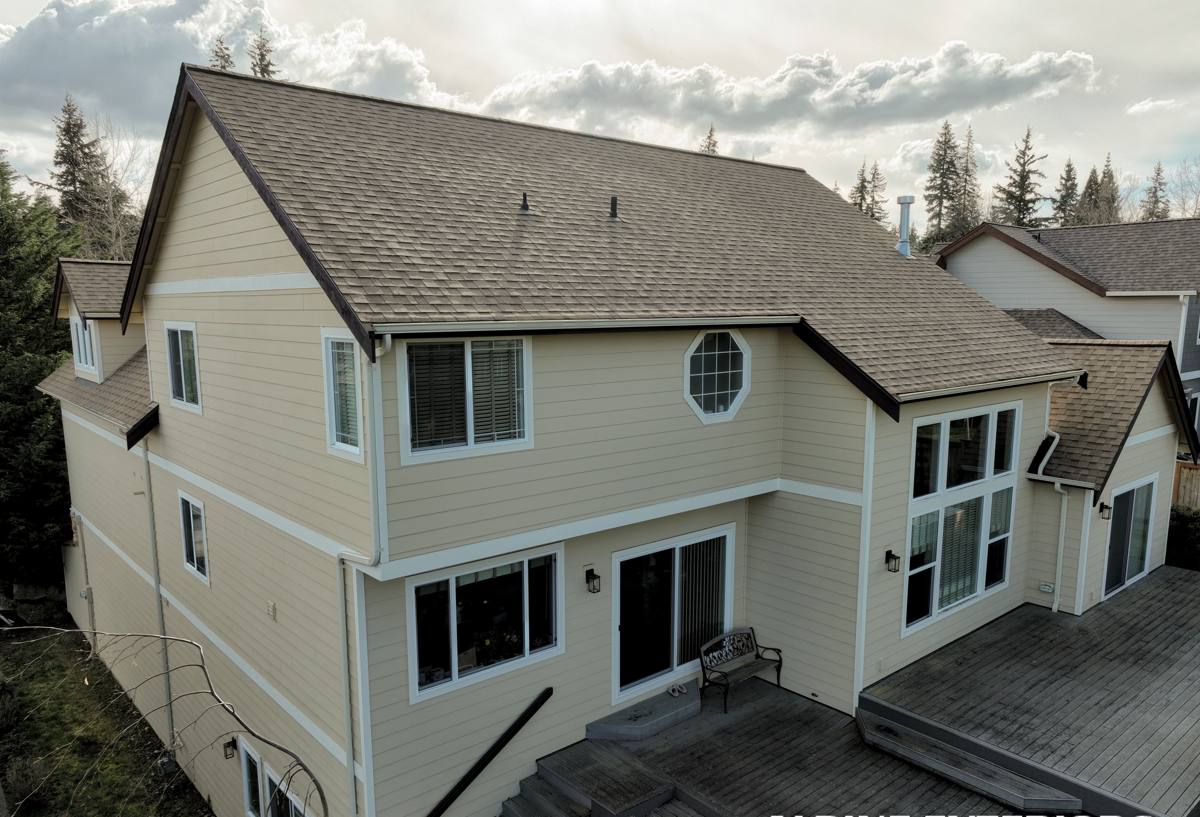
Why Sunnyland's Climate Changes What "Correct Installation" Means
Salt Air and Metal Fasteners
Homes closer to the bay deal with airborne salt that accelerates corrosion on exposed metal — nails, flashing, and fastener heads that aren't properly rated will rust and stain years before they should. On every new roof install in this area, we use corrosion-resistant fasteners and flashing metals suited to a marine-influenced environment, not the cheapest option that happens to meet code on paper.
Driving Rain, Not Just Rain
Bellingham gets plenty of straight-down rain, but Sunnyland's exposure means wind-driven rain is a regular event too — rain that gets pushed sideways under shingle tabs, around vents, and into any gap a builder-grade roof might tolerate elsewhere. That means underlayment selection, valley treatment, and flashing detail all have to assume water will be pushed uphill and sideways at some point, not just fall straight down.
Moss Season
Whatcom County's long damp season is ideal moss-growing weather, and Sunnyland's tree cover in many yards adds shade that keeps roof surfaces from drying out between rains. Moss isn't just cosmetic — it holds moisture against the roofing material, lifts shingle edges as it grows, and can work its way under flashing over time. A new roof installation is the best opportunity to build in moss resistance from day one, rather than fighting an established problem later.
What Goes Wrong When Installation Doesn't Account for This
- Standard fasteners corrode and streak the roof with rust within a few years near the bay
- Underlayment rated for basic rain protection lets wind-driven moisture through at edges and valves
- Flashing installed without enough overlap or the wrong metal fails quietly, and the leak shows up on a ceiling far from where the water actually entered
- Moss is left unaddressed at install, takes hold within a season or two, and shortens the life of an otherwise good roof
- Ventilation is sized for a drier climate, trapping moisture in the attic and encouraging rot from the inside out
None of these are dramatic failures on day one — they're slow problems that show up two, five, or ten years in, which is exactly why they're worth getting right during installation rather than repairing later.
Material Choices That Make Sense for This Neighborhood
There's no single "best" roofing material for every home — the right choice depends on your home's structure, your budget, and how much roof-related maintenance you want to deal with going forward. Here's how the common options compare for a Sunnyland install specifically.
| Material | Moss Resistance | Salt Air Durability | Typical Lifespan Here | Maintenance Burden |
|---|---|---|---|---|
| Architectural asphalt shingle | Moderate — improves with proper ventilation and periodic cleaning | Good with corrosion-rated fasteners and flashing | 25–30 years | Low to moderate |
| Standing seam metal | High — moss struggles to get purchase on smooth metal | Very good with the right coating and fastener spec | 40–50+ years | Low |
| Cedar shake | Low without diligent upkeep — organic material and moss are a natural match | Requires careful fastener selection and regular maintenance | 20–30 years with upkeep | High |
| Composite/synthetic shingle | Moderate to high depending on product | Good — non-organic material resists salt-driven degradation well | 30–50 years | Low |
We'll walk through these trade-offs honestly during your estimate. If we steer you away from a particular product for your specific roof, it's because of how it performs under this area's rain and moss pressure over time — not because of any one brand.
The Parts of the Job Homeowners Don't See — But Matter Most Here
Underlayment
We use synthetic or self-adhering underlayment rated for high-moisture, wind-driven-rain conditions rather than basic felt. This layer is your roof's backup plan, and in a climate like Bellingham's, it earns its keep.
Flashing at Every Transition
Valleys, chimneys, skylights, and wall intersections are where roofs actually leak — the open field of shingles rarely fails on its own. We install flashing sized and lapped for sideways-driven rain, using metal that won't corrode prematurely in salt-influenced air.
Ventilation
Proper intake and exhaust ventilation keeps your attic from trapping the moisture that this climate produces in abundance. Under-ventilated attics stay damp longer, which feeds both mold risk and moss growth from the underside up.
Moss-Resistant Details
Where appropriate, we incorporate zinc or copper strips near the ridge and design for airflow and sun exposure where your roof's layout allows it. These details won't eliminate moss on a shaded roof entirely, but they meaningfully slow its return.
Our New Roof Installation Process
- On-site inspection and honest assessment — we look at your current roof's condition, your attic ventilation, and any moss or moisture patterns already visible before recommending a full replacement over a repair.
- Material walkthrough — we discuss the options above in the context of your home, your budget, and how much long-term maintenance you want to take on.
- Tear-off and deck inspection — full removal of the old roofing so we can inspect the deck underneath for rot or damage, particularly in valleys and around penetrations where past leaks tend to concentrate.
- Deck repair as needed — any soft or damaged sheathing gets replaced before new roofing goes down; this step is not skippable if the deck isn't sound.
- Underlayment and flashing installation — installed to the wind-driven-rain and salt-air standard described above, not the minimum code requirement.
- Roofing material installation — installed to manufacturer specification, with attention to fastener pattern and exposure given local wind conditions.
- Ventilation check and correction — intake and exhaust balanced for your attic's size and current insulation.
- Cleanup and final walkthrough — magnetic sweep for stray fasteners, full site cleanup, and a walkthrough so you understand what was done and why.
Cost Factors Specific to a Sunnyland Roof Replacement
| Factor | Why It Affects Cost Here |
|---|---|
| Roof pitch and access | Steeper pitches and limited access common on older Sunnyland lots add labor time and safety equipment needs |
| Existing deck condition | Homes with a history of unaddressed moss or slow leaks often need more deck repair once the old roofing is off |
| Material choice | Metal and composite options cost more upfront than asphalt but reduce moss-related maintenance and last longer in salt air |
| Tree cover and shade | Heavily shaded roofs benefit from extra moss-resistant detailing, which adds a modest cost but pays off in reduced upkeep |
| Ventilation upgrades | Older homes often need intake or exhaust vents added or corrected, which is easiest to do during a full tear-off |
Full roof replacements for typical single-family homes in this area commonly land in the broad range of several thousand to the mid-five-figures depending on size, pitch, material, and how much deck repair is needed — we'll give you a specific number after seeing your roof in person, not a phone-quote guess.
What to Ask Before Hiring a Roofing Crew Here
Not every roofing contractor treats Sunnyland's conditions as anything special, and that's exactly how homeowners end up with a roof that looks fine for a few years and then underperforms. Before hiring anyone for a new roof installation in this neighborhood, it's worth asking:
- Do you use corrosion-rated fasteners and flashing given the salt air this close to the bay?
- What underlayment do you install as standard, and is it rated for wind-driven rain?
- How do you handle ventilation sizing for homes with existing moss or moisture issues?
- Will you inspect and repair the deck if it's compromised, or just roof over it?
- Do you have a plan for moss-prone, shaded sections of the roof specifically?
A contractor who already works regularly in Sunnyland and the surrounding Bellingham area should be able to answer these without hesitation, because they're dealing with these exact conditions on a regular basis — not guessing at what a coastal Whatcom County roof needs.
Why Local Experience in This Neighborhood Matters
Roofing standards written for a generic climate zone don't account for the specific combination Sunnyland deals with: bay-adjacent salt exposure, wind-driven rain, and a moss season that runs much of the year. A crew that installs roofs across a wide range of Whatcom County conditions — not just one type of subdivision — learns which details actually hold up here and which ones are corner-cutting dressed up as "standard practice." That's the difference between a roof that looks right on installation day and one that's still performing well a decade later.
If you're planning a new roof for your Sunnyland home, we're happy to take a look and walk you through your options honestly — no pressure, no upsell, just a clear picture of what your roof needs and what it will cost to do right. Use the form below to request a free estimate.