 Bellingham Roofing
 Asphalt Shingle Roofing Built for York's Weather, Not Just the Catalog
York sits close enough to the water and the tree line that a roof here works harder than a roof twenty miles inland. Salt-laden air off the Sound accelerates corrosion on fasteners and flashing. Driving rain off Pacific storms finds every gap in a shingle course that wasn't laid tight. And Whatcom County's long, wet moss season turns any roof with poor airflow or too much shade into a slow-motion problem. Asphalt shingles remain the most practical, cost-effective roofing option for most York homes — but only when the installation actually accounts for these conditions instead of following a generic spec sheet.
We install and repair asphalt shingle roofs for homeowners in and around York regularly enough to know which details matter here and which manufacturer talking points don't. This page covers what a shingle roof needs to hold up in this specific climate, what a correct installation actually involves, and how we run the job from first look to final walkthrough.
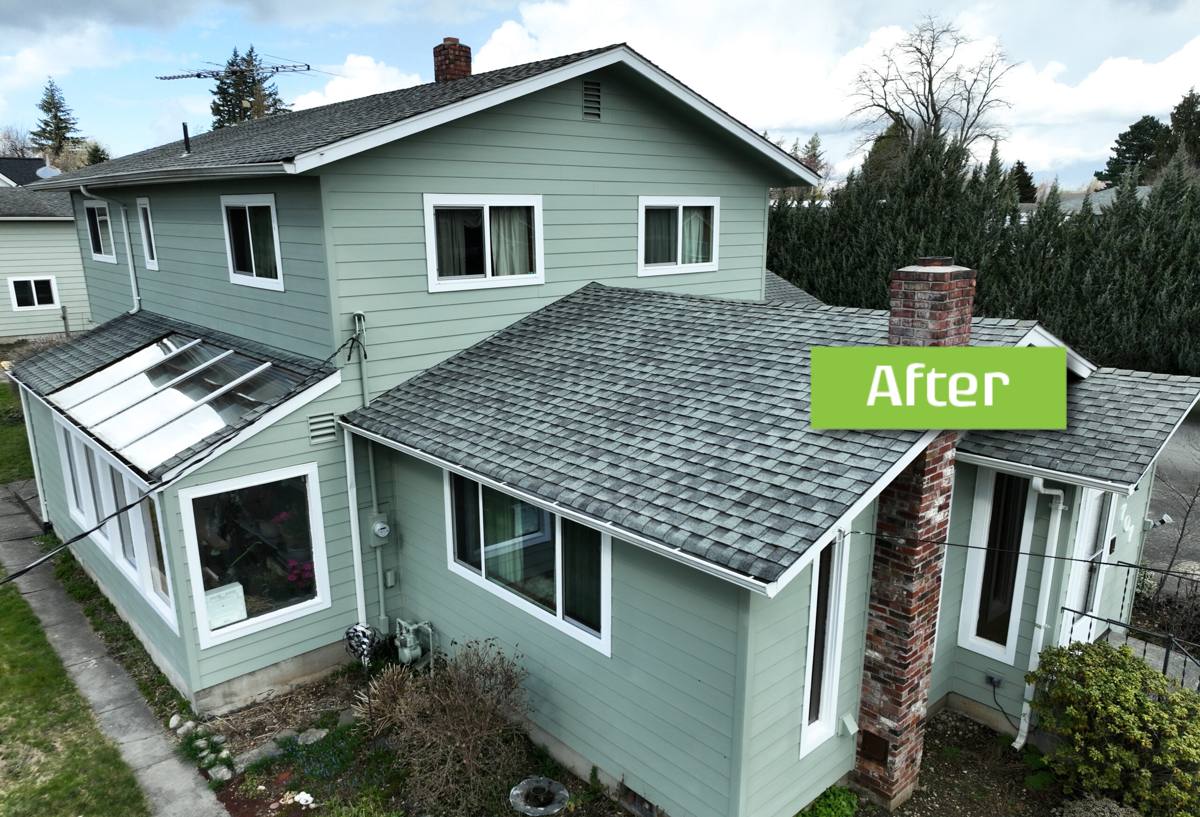
Why Bellingham's Climate Is Harder on Shingles Than People Expect
Salt Air and Metal Fatigue
Homes closer to the water deal with airborne salt that settles on exposed metal — nail heads, flashing, vent caps, gutter hardware. Over years, that accelerates rust and pitting far faster than the same materials would wear inland. A roof that looks fine from the ground can have flashing that's thinned out and starting to leak at the seams.
Driving Rain and Wind-Driven Water
Storms off the Pacific don't just drop rain straight down — wind pushes it sideways and up under shingle tabs, into valleys, and around penetrations like vent pipes and chimneys. A roof system that only handles vertical rainfall will eventually leak here. Underlayment coverage, valley treatment, and proper shingle overlap all matter more in this kind of weather than they would in a drier climate.
Moss, Shade, and Slow Roof Death
Whatcom County's wet season runs long, and shaded, north-facing, or tree-covered roof sections stay damp for extended stretches. Moss and algae take hold in those conditions, and once established, moss roots work under shingle edges and lift them, which is what actually causes the leaks — not the moss itself, but the physical damage it does while it's growing there. Left unchecked, it also holds moisture against the shingle surface and speeds up granule loss.
What a Correct Asphalt Shingle Installation Actually Involves
A shingle roof is a system, not a single product. Each layer has a job, and skipping or shortcutting one shows up as a leak or premature failure later — sometimes years later, which is exactly why cutting corners is tempting for less careful crews.
| Component | Its Job | Why It Matters Here |
|---|---|---|
| Deck inspection & repair | Solid, dry nailing surface | Soft or delaminated sheathing from old leaks won't hold fasteners correctly |
| Ice & water shield | Self-sealing membrane at vulnerable points | Protects valleys, eaves, and penetrations from wind-driven rain |
| Synthetic underlayment | Secondary water barrier under the shingles | Backup protection during the long wet season before shingles are the only line of defense |
| Drip edge & flashing | Directs water off the roof edge and around penetrations | Salt air corrodes cheap or improperly sealed metal faster than inland climates |
| Shingle field | Primary weather surface | Nailing pattern and exposure must match wind and rain exposure, not just the minimum code |
| Ventilation (intake/exhaust) | Moves moist air out of the attic | Poor airflow traps humidity, which feeds moss and rots decking from underneath |
Skipping any one of these doesn't usually cause an immediate failure — it causes a roof that looks fine for a few years and then leaks earlier than it should have.
Ventilation: The Detail Most Often Skipped
Ventilation gets overlooked because it's invisible from the ground, but it's one of the biggest factors in how long a shingle roof lasts in a climate this wet. A roof deck that can't breathe stays damp longer after every rain, which shortens shingle life from underneath and gives moss more time to establish on the surface. Balanced intake at the eaves and exhaust at the ridge keeps air moving through the attic space year-round. When we quote a re-roof, we check existing ventilation as part of the estimate — not as an upsell, but because installing new shingles over a roof that can't breathe just resets the clock on the same problem.
Choosing Shingle Weight and Warranty Class for This Area
Asphalt shingles come in a range of weights and warranty tiers, and the right choice depends on exposure, roof pitch, and how long the homeowner plans to stay in the house — not just budget alone.
- Standard 3-tab: Lowest upfront cost, thinnest wind and impact resistance — generally not what we recommend for exposed or higher-wind sections of a York property.
- Architectural (laminated) shingles: Heavier, better wind rating, longer warranty — the standard choice for most re-roofs in this area given the weather.
- Algae-resistant granules: Copper- or zinc-infused granules that slow algae and moss growth on shaded or north-facing sections — worth the upgrade on roofs with tree cover.
- High-wind rated lines: Extra nailing requirements and higher wind ratings, useful on more exposed lots or taller roof pitches.
We'll walk through these trade-offs honestly during the estimate rather than defaulting to whatever has the best margin. For most York homes, a mid-to-upper architectural shingle with algae-resistant granules is the sweet spot between upfront cost and how little you'll think about the roof over the next 20-plus years.
Our Process, Start to Finish
1. On-Site Assessment
We walk the roof, check the attic for ventilation and moisture signs, and look at flashing, valleys, and any trouble spots specific to the home's exposure — sun, shade, tree cover, and wind direction all factor in.
2. Written Estimate
You get a clear, itemized quote — materials, labor, and scope — with no vague allowances hiding behind a lump sum. If ventilation or deck repair is needed, it's called out separately so you know exactly what you're paying for and why.
3. Tear-Off and Deck Inspection
Old roofing comes off down to the deck so we can actually see what's underneath. Any soft, rotted, or delaminated sheathing gets flagged and replaced before anything new goes down — installing new shingles over a compromised deck just guarantees an early repeat visit.
4. Underlayment, Flashing, and Shingle Installation
Ice and water shield goes in at valleys, eaves, and penetrations first, followed by synthetic underlayment across the field, then new flashing and drip edge, then the shingles themselves, nailed to the pattern the wind exposure calls for.
5. Ventilation Check and Correction
We confirm intake and exhaust are balanced and correct anything that isn't, since this is the step that protects the investment long after we've left the site.
6. Cleanup and Final Walkthrough
Site is cleared of debris and nails with a magnetic sweep, and we walk the finished roof with you so you know what was done and what to watch for going forward.
Maintenance That Actually Extends a Shingle Roof's Life Here
A new roof done right needs less maintenance, but "less" isn't "none" in this climate. A short annual routine catches problems while they're still cheap to fix.
- Clear gutters and downspouts before the wet season ramps up, so water has somewhere to go besides under your shingles
- Look for moss starting on shaded or north-facing slopes and address it before it takes root under shingle edges
- Trim back overhanging branches to reduce shade, debris buildup, and physical abrasion on the roof surface
- Check attic ventilation isn't blocked by insulation, stored items, or pest nests
- Have flashing around chimneys, vents, and skylights inspected every few years, since that's where most slow leaks start
Repair, Recover, or Full Replacement?
Not every roof problem in York calls for a full tear-off. The right call depends on the roof's age, how widespread the damage is, and what's happening underneath the shingles.
| Situation | Likely Fix |
|---|---|
| Isolated leak, roof under 10-15 years old | Targeted repair — flashing, a shingle section, or a penetration seal |
| Widespread granule loss, curling shingles, roof nearing warranty end | Full replacement — patching a roof this worn rarely holds up |
| Moss coverage with lifted shingle edges | Depends on extent — localized moss can sometimes be treated and repaired; widespread lifting usually means replacement |
| Sound existing roof, cosmetic wear only | Cleaning, minor repair, and a maintenance plan — no need to replace early |
We'll tell you honestly which category your roof falls into rather than defaulting to the most expensive option. If a repair will hold, we'll say so.
Why a Crew That Already Works York Is Worth Choosing
Roofing crews who work across a wide, varied territory tend to install the same way everywhere, regardless of local conditions. A crew that regularly works this specific part of Whatcom County already knows how much wind-driven rain a valley here typically takes, which sections of a lot tend to hold shade and moss longest, and how salt exposure near the water changes what fastener and flashing choices actually last. That local pattern recognition shows up in fewer callbacks and a roof that's built for the weather it will actually face — not the weather assumed in a standard install checklist written for somewhere drier.
If you're weighing a repair, a re-roof, or just want an honest read on how much life is left in your current shingles, we're happy to take a look. Reach out for a free, no-pressure estimate using the form below.