 Bellingham Roofing
 Deck Building for York Homes in Bellingham
York is one of Bellingham's older established neighborhoods, with a housing stock that spans decades of construction styles and a fair number of homes whose original decks are well past their prime. If you're looking at a deck project in York, you're dealing with the same climate challenges that affect every property in Whatcom County — salt-tinged air rolling in off Bellingham Bay, long stretches of driving rain from fall through spring, and a moss season that seems to start earlier and last longer every year. A deck built without those realities in mind will look tired within a handful of years, no matter how nice the lumber looked on installation day.
We build and repair decks throughout York and the surrounding Bellingham area, and the approach we take here is shaped directly by what this climate does to wood, fasteners, and footings over time. This page covers what a deck actually needs to hold up in this environment, how we build them, and what to look for whether you're planning new construction or replacing something that's failing.
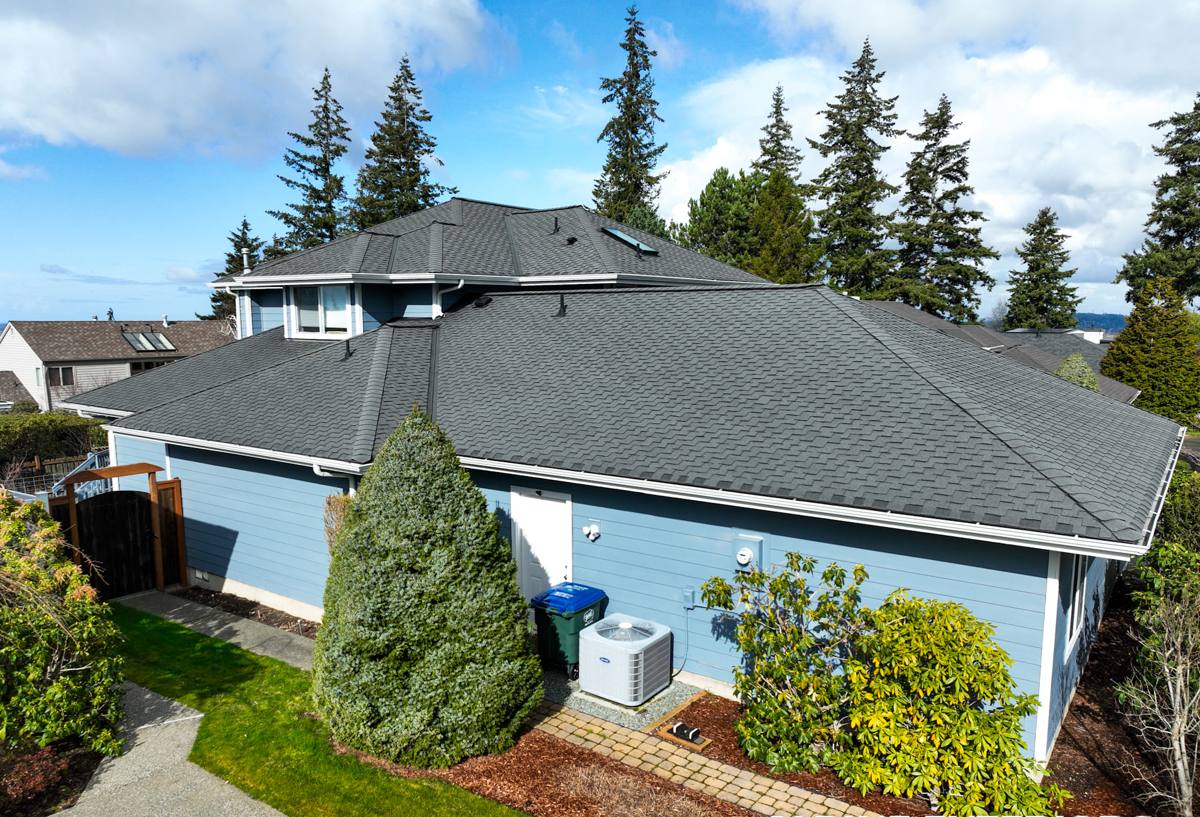
What Bellingham's Climate Does to a Deck
Whatcom County sits in a marine west coast climate, and York's proximity to the bay means decks here take on moisture almost year-round. It's worth understanding the specific ways that plays out, because it changes what "correctly built" actually means in practice.
Moisture and Rot
Bellingham gets a long, steady rainy season rather than short intense downpours. That means deck framing, ledger boards, and post bases stay damp for extended periods rather than getting a quick soak and drying out fast. Any spot where water can collect and sit — a poorly flashed ledger connection, a post base without a standoff, decking boards laid tight with no drainage gap — becomes a rot starting point. The wettest months tend to expose problems that were invisible when the deck was built dry.
Moss and Algae Growth
The combination of shade (common in York's mature tree canopy), consistent moisture, and mild temperatures makes this about as favorable an environment for moss and algae growth as you'll find anywhere in the state. On horizontal wood surfaces, moss holds moisture against the board and accelerates decay underneath it. On composite decking, algae growth mostly affects appearance and slip resistance, but it still needs airflow and drainage to manage well.
Salt Air and Metal Fasteners
York's distance from the water is close enough that salt-laden air is a real factor for exposed metal — fasteners, joist hangers, railing hardware. Standard galvanized coatings can start showing corrosion faster near the bay than they would further inland. This is a detail that's invisible on installation day and only shows up years later as rust streaks or, worse, weakened structural connections.
What a Correctly Built Deck Needs Here
None of this means a deck can't hold up well in Bellingham — it just means the build has to account for these conditions from the footings up, not just at the surface.
Footings and Framing
Post bases need to be set above grade with proper standoff hardware so posts never sit directly in standing water or wet soil contact. Footings should go below frost depth and be sized for the soil conditions on the lot, which in older York properties can vary block to block. Framing lumber should be pressure-treated and rated for ground contact where it's within a few inches of soil or in a persistently damp zone.
Ledger Attachment and Flashing
The ledger board — where the deck attaches to the house — is the single most common failure point we see on older decks in this climate. It has to be flashed correctly so water sheds away from the house wall rather than tracking behind the siding and into the rim joist. A deck that looks fine on the surface can be hiding a rotted ledger connection if this step was rushed or skipped originally.
Fasteners and Hardware
Given the salt air factor, we use fasteners and structural hardware rated for coastal or high-corrosion environments rather than standard-grade galvanized products. It costs a little more up front and it's the difference between hardware that's still solid in fifteen years and hardware that's rusting through in seven.
Drainage and Airflow
Decking boards need consistent gapping so water passes through instead of pooling on the surface. Underneath, the framing needs enough airflow that wood can actually dry out between rain events rather than staying perpetually damp. Skirting, if you want it for appearance, should still allow ventilation rather than sealing the underside completely.
Decking Material Options for This Climate
Material choice matters more here than in a drier climate, because the penalty for the wrong choice shows up faster. Here's how the common options stack up for a York, Bellingham application specifically.
| Material | Moisture Behavior | Moss/Algae Resistance | Maintenance |
|---|---|---|---|
| Pressure-treated lumber | Good if properly sealed and gapped; prone to cupping if neglected | Needs regular cleaning to prevent buildup | Annual cleaning, re-sealing every 2-3 years |
| Cedar | Naturally moisture-resistant, ages gracefully if maintained | Moderate — needs periodic cleaning | Cleaning and oil/sealant every 1-2 years |
| Capped composite | Excellent — non-absorbent core with protective cap | Surface growth possible but doesn't penetrate board | Occasional wash, no sealing needed |
| Uncapped composite (older generation) | Can absorb moisture at cut edges over time | More prone to surface staining | Periodic cleaning, more sensitive at edges |
We don't push one material as universally "best" — it depends on your budget, how much upkeep you want to do, and the look you're after. What we will tell you honestly is that in a shaded, moisture-heavy lot in York, a low-maintenance capped composite tends to hold its appearance with the least effort, while a well-maintained cedar or treated lumber deck can look great too if you're willing to stay on top of cleaning and sealing on a schedule.
Our Deck Building Process
Whether it's new construction or a full replacement, the process we follow is built around getting the structural and moisture-management details right before anything decorative goes in.
- On-site assessment — we look at the existing structure (if there is one), grade and drainage around the footprint, sun/shade exposure, and how the deck ties into the house.
- Design and material selection — we walk through decking material, railing style, and layout options based on your budget and how you'll use the space.
- Permitting — most deck projects in Bellingham require a building permit, especially for attached decks and anything above a certain height; we handle that process.
- Demolition (if applicable) — removal of the old deck, with an honest look at what the demo reveals about the ledger, framing, and posts underneath.
- Footings and framing — proper post bases, treated framing lumber, and correctly flashed ledger attachment.
- Decking and railing installation — installed with correct fastener spacing and drainage gaps.
- Final walkthrough — we go over the finished deck with you, including basic maintenance guidance specific to the material you chose.
Repair, Replace, or Rebuild?
Not every deck problem means starting over. If the framing and ledger are sound and the issues are cosmetic or limited to surface boards, a repair or resurfacing can extend the life of the deck for a reasonable cost. But there are warning signs that point toward a full rebuild rather than a patch job.
- Soft or spongy spots in the decking, especially near the house or around posts
- Visible gaps or separation where the ledger meets the house wall
- Posts that wobble or show rot at the base
- Persistent moss growth that returns quickly after cleaning
- Rust staining around fastener heads or hardware
- A deck more than 20-25 years old that's never had the substructure inspected
If you're not sure which category your deck falls into, that's exactly the kind of thing worth having a contractor look at in person before deciding on a scope of work.
Why a Bellingham-Familiar Crew Matters for York
A deck built by a crew that mostly works drier inland climates can make assumptions that don't hold up here — lighter flashing details, standard-grade hardware, decking gaps sized for a climate that doesn't see this much sustained rain. Working regularly in York and the greater Bellingham area means we're accounting for Whatcom County's marine climate as a default, not an afterthought. We also have a working sense of the kind of lot conditions common in this neighborhood — mature tree cover, established grading, older home tie-in points — which affects things like footing placement and ledger flashing details on a renovation.
Beyond the technical side, permitting for deck work in Bellingham has its own local requirements, and being familiar with that process means fewer delays and surprises for you during construction.
Maintenance That Actually Extends Deck Life Here
Whatever material you choose, a few habits make a real difference in how long a deck holds up in this climate.
- Clean debris out of gaps between boards each fall before the wet season sets in
- Wash off moss and algae buildup at least once a year, more often in shaded areas
- Check and re-seal wood decking on the schedule appropriate to that material
- Keep gutters and downspouts near the deck clear so runoff doesn't pool against the structure
- Trim back vegetation that's shading the deck and keeping it damp longer than it needs to be
None of this is complicated, but it's the difference between a deck that looks good at year fifteen and one that needs major work by year eight.
Get an Estimate
If you're weighing a new deck, a replacement, or you just want an honest opinion on whether your current deck needs repair or replacement, we're happy to take a look. Reach out for a free, no-pressure estimate using the form below — there's no obligation, just a straight answer about what your deck actually needs.