 Bellingham Roofing
 Roofing in Columbia Comes With Its Own Set of Problems
The Columbia neighborhood sits close enough to Bellingham Bay that salt-laden air is part of daily life, and that changes how a roof ages. Add in Whatcom County's long stretch of wet months and the shaded, tree-lined streets that keep roofs damp long after a storm passes, and you've got conditions that are noticeably harder on shingles than what you'd find further inland. A roof that would coast through fifteen years in a dry climate can show granule loss, moss colonies, and soft decking well before that if it wasn't built and maintained with this specific environment in mind.
We work on roofs in this neighborhood regularly, which means we're not guessing at how salt air, driving rain, and moss season interact with asphalt shingles here — we see the pattern on tear-offs year after year. This page covers what that means for your roof, what a correct installation looks like in this setting, and how we approach the job.
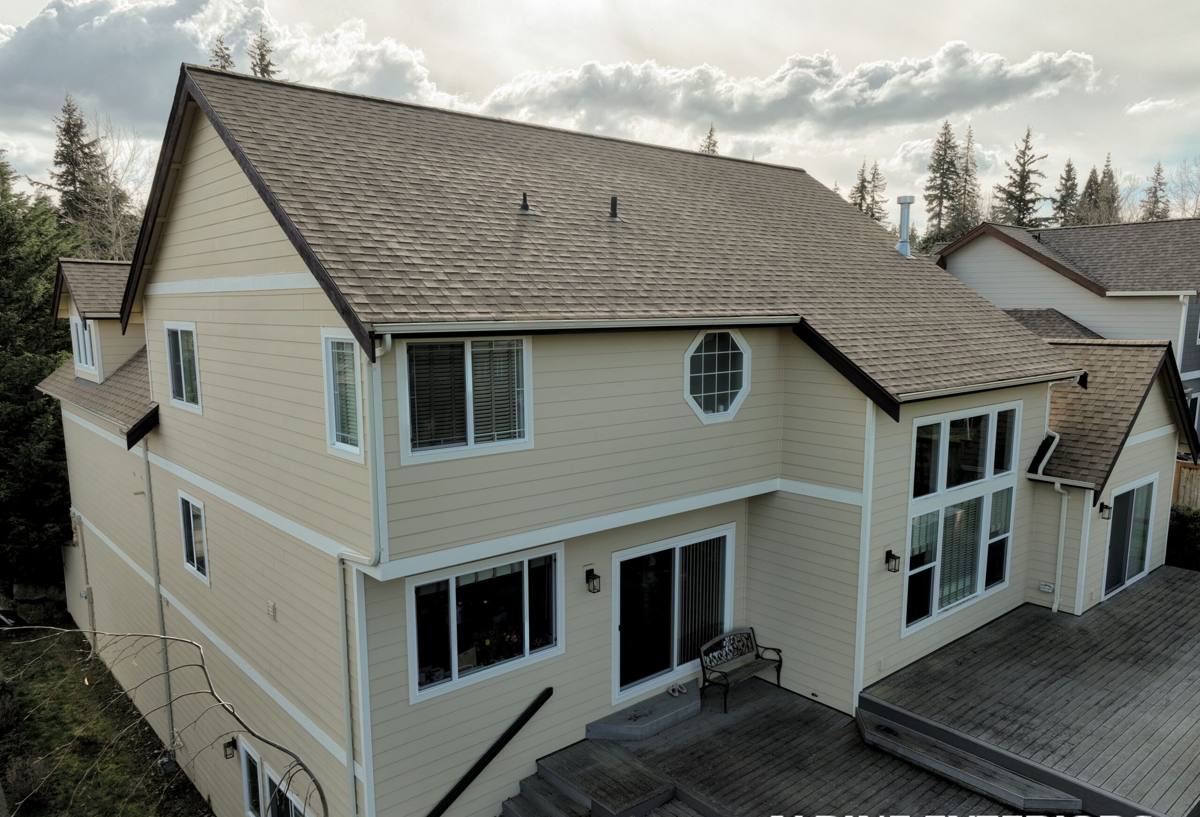
What Columbia's Climate Actually Does to a Shingle Roof
Salt Air and Metal Components
Asphalt shingles themselves tolerate salt air reasonably well, but the metal parts of your roofing system — flashing, fasteners, vent housings, gutter hardware — don't. Standard galvanized fasteners and lower-grade flashing corrode faster this close to the bay. Once flashing starts to pit or a fastener head rusts through, water finds a path long before the shingles themselves are due for replacement. This is one of the most common causes of a "premature" roof leak we find on inspections: the shingles are fine, but the metal underneath them failed first.
Moss and Prolonged Moisture
Whatcom County's moss season isn't a minor cosmetic issue. Moss holds moisture directly against the shingle surface, which accelerates granule loss and can lift shingle edges as root structures grow underneath them. On shaded lots or roofs with limited sun exposure — common in this neighborhood's tree canopy — moss can establish itself within a couple of years of a roof going untreated. Left long enough, it works its way toward the deck itself.
Driving Rain and Wind-Driven Water
Storms coming off the water tend to push rain sideways rather than straight down, which stresses details that a calmer climate wouldn't test as hard: shingle sealant strips, valley construction, and the laps around vents and chimneys. A roof that's technically "up to code" but installed with minimum-spec underlayment or shortcuts at the valleys is exactly the kind of roof that leaks in a Columbia rainstorm but might have held up fine somewhere drier.
What a Correctly Installed Shingle Roof Includes Here
A shingle roof that's actually built for this environment is more than shingles nailed to a deck. The components underneath and around the shingles are what determine whether the roof handles twenty years of Whatcom County weather or starts failing in year eight.
Underlayment
Given how much wind-driven rain this area sees, we treat synthetic or ice-and-water underlayment in vulnerable areas (eaves, valleys, around penetrations) as standard practice, not an upgrade. It's the backup layer that keeps the deck dry if wind pushes water past the shingle surface itself.
Ventilation
Proper intake and exhaust ventilation keeps the underside of the deck dry and regulates attic temperature, which matters for shingle lifespan and for controlling condensation — a real issue in a consistently damp climate. Poor ventilation shows up later as premature shingle curling or deck rot that has nothing to do with the roof surface itself.
Flashing and Fasteners
Given the corrosion risk from salt air, we use flashing and fastener materials rated to hold up in coastal-adjacent conditions rather than the cheapest option that meets code minimums. This is a detail that's invisible once the roof is finished but shows up as the difference between a 20-year roof and a 12-year roof.
Moss and Algae Resistance
Many shingle lines now include copper or zinc-infused granules specifically to resist moss and algae growth. In a neighborhood like Columbia, where shade and moisture combine to create ideal moss conditions, this feature earns its keep rather than being a marketing add-on.
Choosing a Shingle Type for This Neighborhood
Not every shingle product performs the same way under Columbia's specific mix of shade, moisture, and salt exposure. Here's how the common options compare for this setting:
| Shingle Type | Typical Lifespan Here | Moss/Algae Resistance | Best Fit |
|---|---|---|---|
| 3-tab asphalt | 12–18 years | Low unless treated | Budget-conscious projects, rental properties |
| Architectural (laminate) asphalt | 20–30 years | Moderate to high with algae-resistant granules | Most Columbia homes — best balance of cost and durability |
| Impact-resistant asphalt | 20–30 years | Moderate to high | Homes wanting added durability against wind-driven debris |
For most homes in this neighborhood, an architectural shingle with algae-resistant granules is the practical sweet spot — meaningfully better moss resistance and longevity than 3-tab, without paying for storm-resistance features that matter more in other climates.
How We Approach a Columbia Roofing Job
- On-site inspection. We walk the roof and the attic, not just look from the ground. Moss coverage, flashing condition, and deck moisture all get checked before we recommend anything.
- Honest scope. If moss and granule loss are cosmetic and the deck is sound, we'll say so. If flashing or decking needs replacing, we show you exactly where and why.
- Written estimate. Materials, labor, ventilation and flashing upgrades, and timeline spelled out — no vague allowances.
- Tear-off and deck check. We remove old roofing down to the deck and inspect for soft spots or rot before anything new goes down, rather than roofing over a problem.
- Installation to manufacturer spec. Underlayment, flashing, ventilation, and shingle installation done to the standards that keep warranties valid and match what this climate actually demands.
- Cleanup and walkthrough. Site cleared of debris and nails, and we walk you through what was done and what to watch for going forward.
Signs Your Roof Needs a Look
Most roofing problems in this neighborhood give warning signs well before they turn into a leak. Worth checking for:
- Moss patches, especially on north-facing or shaded slopes
- Granules collecting in gutters or at downspout outlets
- Shingle edges that look curled, lifted, or cracked
- Dark streaking that isn't just dirt (often algae, not moss)
- Rusty streaks near flashing, vents, or fasteners
- Soft spots or sagging visible from the ground or attic
- Daylight visible through the roof deck from inside the attic
- A roof over 15 years old that's never been inspected
What Affects the Cost of a Shingle Roof Here
| Factor | Why It Matters in Columbia |
|---|---|
| Roof size and pitch | Steeper roofs and larger square footage mean more material and labor |
| Existing layers / tear-off | Multiple old layers add disposal cost and labor time |
| Deck condition | Moisture damage from moss or old leaks often means replacing plywood sections |
| Shingle grade | 3-tab vs. architectural vs. impact-resistant changes material cost and lifespan |
| Flashing and ventilation upgrades | Coastal-grade materials cost more upfront but reduce corrosion-driven repairs |
| Access and roof complexity | Valleys, dormers, and tree cover around the property affect labor time |
We won't quote a number without seeing the roof — anyone who does is guessing. What we can tell you is that the biggest cost swings come from deck condition and how many layers of old roofing have to come off, both of which we check before writing an estimate.
Why a Crew That Already Knows This Neighborhood Matters
A roofer who works Columbia regularly already knows which slopes tend to hold moss, how salt exposure changes fastener and flashing choices, and where past crews in this area have historically cut corners with underlayment or ventilation. That's not something you get from a general contractor working here for the first time. It shows up in fewer surprises during tear-off, a more accurate estimate up front, and a roof detailed for the conditions it will actually face — not a generic install that happens to be located near Bellingham Bay.
Whatcom County's climate isn't extreme, but it's persistent — steady moisture, salt air, and shade add up over years in ways that reward roofs built with those specifics in mind from day one.
Get a Straight Answer on Your Roof
If you're dealing with moss, a roof that's getting up in years, or just want an honest read on where things stand, we're glad to take a look. Fill out the form below for a free, no-pressure estimate — we'll tell you what we actually see, not just what sells a job.