 Bellingham Roofing
 Asphalt Shingle Roofing Built for Fairhaven's Waterfront Climate
Fairhaven sits close enough to Bellingham Bay that salt-laden air is a daily fact of life, not an occasional nuisance. Add Whatcom County's long wet season, driving rain off the water, and the deep shade thrown by mature trees along many of the neighborhood's older streets, and you get a roofing environment that's genuinely harder on asphalt shingles than a typical inland subdivision. Homes here don't fail because asphalt shingle roofing is a bad choice — they fail when the installation wasn't matched to these specific conditions.
This page covers what an asphalt shingle roof actually needs to hold up in Fairhaven, what a correct installation involves, and how our process works from first call to final cleanup.
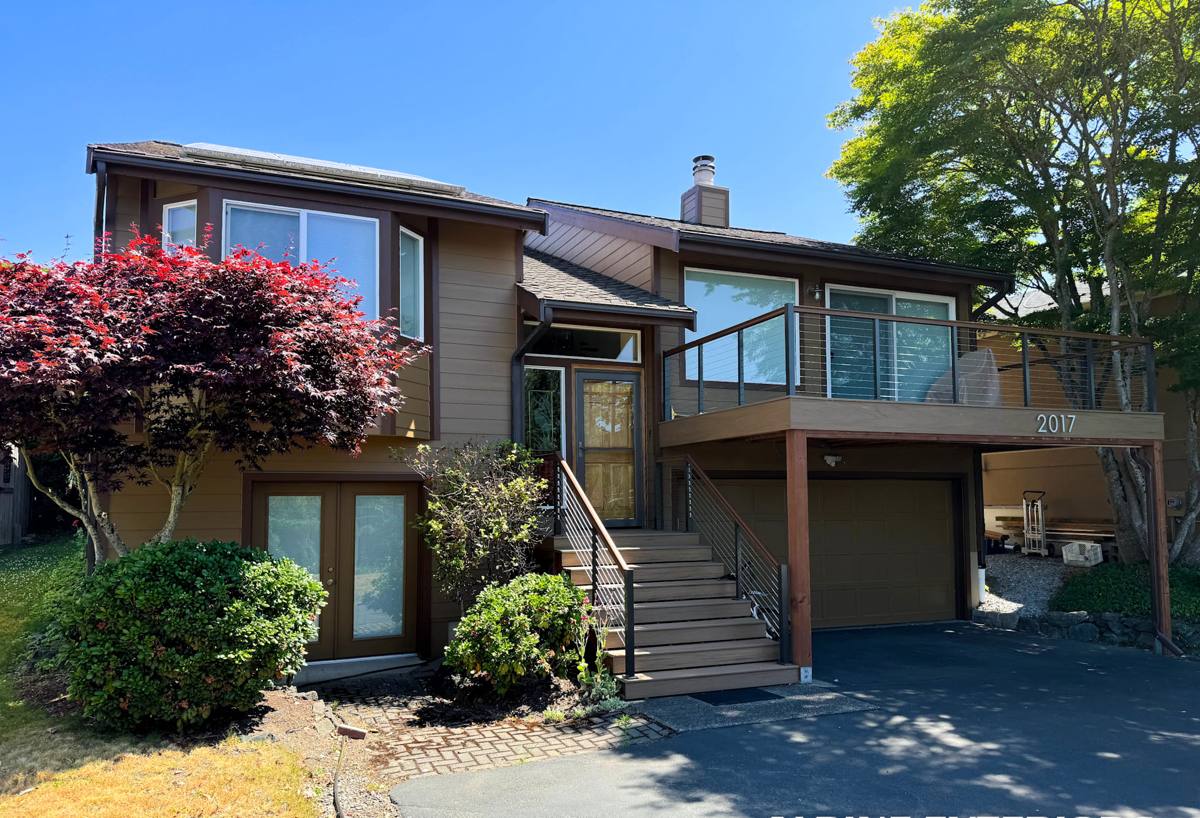
What Fairhaven's Climate Actually Does to a Shingle Roof
Salt Air and Metal Components
Salt air doesn't damage the shingles themselves nearly as much as it accelerates corrosion on the metal parts of a roofing system — nail heads, flashing, drip edge, and vent hoods. Once corrosion starts at a fastener or a flashing seam, water finds its way underneath the shingle mat long before the shingles look worn from the street. Material choice and fastener choice matter more here than in a drier, inland part of Whatcom County.
Driving Rain and Wind-Driven Water
Storms coming off the water tend to push rain sideways, not straight down. That means water is regularly forced up under shingle tabs and into vertical seams, valleys, and anything that penetrates the roof plane — vent stacks, chimneys, skylights. A roof that's fine in a light, vertical rain can still leak in a Fairhaven windstorm if the underlayment and flashing details weren't built for wind-driven water in the first place.
Moss, Shade, and a Long Wet Season
Bellingham's wet season runs long, and shaded roof sections — common under Fairhaven's tree canopy — stay damp far longer after a storm than sections in full sun. That extended moisture window is exactly what moss and algae need to establish. Once moss gets a foothold under shingle tabs, it lifts them slightly, which lets more water in, which feeds more moss growth. It's a slow, self-reinforcing cycle that eventually shows up as leaks, not just a cosmetic green tint.
What a Correct Installation Involves in This Environment
Underlayment and Ice-and-Water Protection
In a marine climate with driving rain, we treat the underlayment layer as a real second line of defense, not a formality. That means self-adhered ice-and-water shield at eaves, valleys, and around every roof penetration — the spots where wind-driven rain is most likely to work its way underneath the shingle field.
Flashing and Fastener Choice
Given the corrosion risk from salt air, flashing and fasteners get chosen for durability in a coastal-influenced environment, not just lowest cost. Proper step flashing at walls and chimneys, correctly lapped valley metal, and fasteners driven at the manufacturer-specified height and pattern all matter more here — a slightly proud nail or an undersized flashing lap is a much bigger liability under Fairhaven conditions than it would be somewhere drier.
Ventilation
A roof deck that can't breathe stays damp longer, which extends the moss-friendly window we described above and can also lead to premature shingle deterioration from the underside. Balanced intake and exhaust ventilation is part of a correct install, not an upsell — especially on the shaded, moisture-prone roof planes that are common in this neighborhood.
Choosing the Right Shingle for a Moss-Prone, Salt-Air Roof
Not every asphalt shingle product is equally suited to this environment. The table below compares the main practical differences homeowners should weigh.
| Factor | Standard 3-Tab Shingle | Architectural (Laminate) Shingle |
|---|---|---|
| Wind resistance | Lower rated; more tab lift risk in exposed, windy spots | Higher rated; heavier, multi-layer construction resists wind-driven rain lift |
| Algae/moss resistance option | Available on some product lines | Widely available, often standard on mid- and upper-tier lines |
| Expected lifespan in this climate | Shorter, especially on shaded planes | Longer, better suited to sustained damp conditions |
| Upfront cost | Lowest | Moderate |
| Appearance | Flat, uniform look | Dimensional, shadow-line look |
For most Fairhaven homes, especially anything with shaded roof planes or close proximity to the water, we recommend an algae-resistant architectural shingle. The copper- or zinc-infused granules in these products interfere with algae and moss growth over time, which directly addresses the biggest long-term threat to a roof in this setting. We'll walk through specific product lines and warranty terms once we've seen your roof in person, since the right pick also depends on pitch, sun exposure, and your budget.
Moss Prevention and Roof Ventilation, Working Together
Shingle selection alone won't solve a moss problem if airflow and drainage aren't also addressed. A correct system treats these as connected:
- Algae-resistant shingles slow new moss growth on the surface
- Balanced ridge and soffit ventilation keeps the deck drier, shortening the window moss needs to establish
- Properly sized gutters and downspouts move water off the roof quickly instead of letting it pool near eaves
- Keeping overhanging branches trimmed back reduces both shade and debris buildup, which are the two biggest drivers of moss on a Fairhaven roof
- Gentle, low-pressure moss removal (never aggressive power-washing, which can strip granules) extends the life of the shingles you already have
Our Process, Start to Finish
Inspection and Estimate
We start with an on-site look at your roof's condition, pitch, ventilation setup, and any trouble spots — valleys, chimneys, shaded planes, existing moss or moisture staining. You get a written estimate with clear scope, not a vague ballpark.
Tear-Off and Deck Check
Old roofing comes off down to the deck so we can actually see what's underneath. Any soft, rotted, or moisture-damaged decking gets identified and addressed before new material goes down — covering over a compromised deck just hides a problem, it doesn't fix it.
Underlayment, Flashing, and Shingle Installation
We install ice-and-water shield at vulnerable areas, correct flashing at every penetration and wall intersection, and shingles per manufacturer specification for nailing pattern and exposure. This is where a rushed install and a correct one look identical from the street but perform very differently in a storm.
Ventilation Check and Final Walkthrough
We confirm intake and exhaust ventilation is balanced, then walk the property with you, clean up thoroughly, and make sure you understand basic care going forward.
What Homeowners Can Do Between Roofing Services
A well-installed roof still benefits from basic upkeep, especially under Fairhaven's tree cover. A simple seasonal checklist:
- Clear leaves and needles from valleys and gutters at least twice a year, more often under heavy tree cover
- Watch for dark streaking or green tint on shaded roof planes — early signs of algae or moss forming
- Check attic ventilation isn't blocked by insulation or debris
- Have a professional look at flashing and fasteners periodically, since salt-air corrosion isn't always visible from the ground
- Trim back branches that overhang the roofline to reduce shade and debris
Cost Factors for an Asphalt Shingle Roof in Fairhaven
Every roof is different, but the factors below are what actually move the price on a typical project in this area.
| Factor | Why It Affects Cost |
|---|---|
| Roof size and number of planes | More material and more labor hours; complex rooflines take longer to flash correctly |
| Current deck condition | Rotted or soft decking found during tear-off requires repair before new roofing goes on |
| Shingle tier chosen | Standard 3-tab is less expensive upfront than algae-resistant architectural shingles |
| Ventilation upgrades | Adding or correcting intake/exhaust venting is an added but often worthwhile line item |
| Access and pitch | Steep or hard-to-access roofs take longer and require more safety setup |
We'll always give you a real number in writing after seeing the roof, rather than a rough figure that doesn't hold up once work starts.
Why Local Experience in This Neighborhood Matters
Fairhaven's older housing stock, tree-shaded lots, and closeness to the water mean the roofing decisions that work well elsewhere in Bellingham don't always translate directly here. A crew that regularly works this part of the city already knows which roof planes tend to hold moss the longest, how wind off the bay behaves against different roof orientations, and what flashing and ventilation details actually hold up over time in this specific setting. That local pattern recognition is what separates a roof that looks right on installation day from one that still performs correctly five and ten years later.
If you're weighing a repair, a full replacement, or just want an honest read on how much life is left in your current roof, we're happy to take a look. Request a free, no-pressure estimate using the form below — we'll walk the roof, answer your questions straight, and give you real numbers before any work begins.