 Bellingham Roofing
 Why Silver Beach Roofs Take a Different Kind of Beating
Silver Beach sits inside the same marine climate that shapes roofing decisions across Bellingham and Whatcom County, but the local mix of tree cover, moisture, and wind exposure means the wear pattern on a shingle roof here isn't generic. Salt-tinged air moving in off the water corrodes unprotected metal faster than it would inland, driving rain gets pushed sideways under wind gusts instead of falling straight down, and the long stretch of gray, wet months between fall and spring gives moss and algae months to establish themselves on any roof that isn't shedding water cleanly. None of that means shingle roofing is a poor fit for the neighborhood — asphalt shingles remain one of the most practical, cost-effective roofing systems for Pacific Northwest homes. It means the installation details matter more here than they would in a drier climate, and cutting corners on underlayment, flashing, or ventilation shows up as a problem within a few wet seasons rather than a few decades.
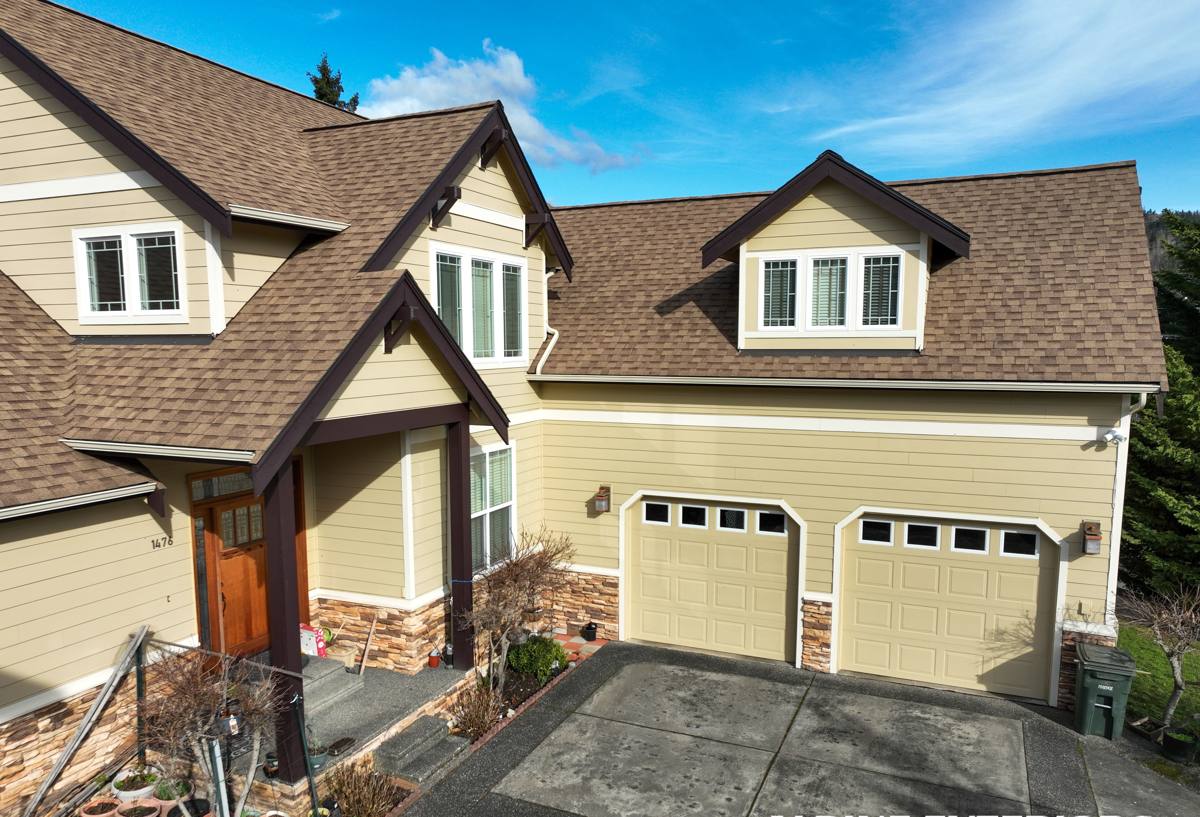
What a Correct Asphalt Shingle Installation Actually Involves
A shingle roof is a layered system, and every layer under the shingles is doing real work to keep water out of the house. When we talk about installing a roof "correctly" for this area, we mean these specific details are handled with the local climate in mind, not just installed to minimum code.
Starting With What's Underneath
Before any new material goes down, the roof deck gets inspected for soft spots, delamination, or rot — common on older homes where a slow leak went unnoticed for a season or two. Any damaged sheathing gets replaced before we move forward. Shingles laid over a compromised deck will telegraph problems (soft spots, uneven lines, fastener pull-through) within a couple of years.
Underlayment and Ice-and-Water Protection
We use synthetic underlayment across the full roof deck for a tougher, more water-resistant base layer than old-style felt paper. At eaves, valleys, and around penetrations — the spots where wind-driven rain is most likely to work its way backward under a shingle course — we add a self-adhering waterproof membrane. In a climate where rain regularly comes in at an angle rather than straight down, this detail is one of the biggest differences between a roof that stays dry and one that develops slow, hard-to-trace leaks.
Flashing That's Built to Last
Flashing around chimneys, skylights, sidewalls, and valleys is where most shingle roof leaks actually originate, not the shingle field itself. We install new step flashing and counterflashing rather than reusing old pieces, and we choose flashing metal that holds up against the mildly corrosive, salt-influenced air common near Bellingham Bay and the surrounding waterways. Reusing old, pitted flashing to save a little time is a false economy — it's usually the first thing to fail.
Ventilation That Matches the House
A balanced intake-and-exhaust ventilation system keeps the attic space at a stable temperature and moisture level. Without it, humid indoor air migrates into the attic, condenses against cold sheathing, and creates the exact damp conditions that feed rot and mildew from the inside out — a problem that's easy to miss until it's expensive. Proper ventilation also helps shingles last closer to their full rated lifespan instead of aging prematurely from trapped heat and moisture cycling.
Moss, Algae, and Salt Air: The Silver Beach Reality
Ask any longtime Whatcom County homeowner what shortens a roof's life and moss is usually near the top of the list. Shaded lots, mature trees, and the long stretch of cool, wet weather from fall through spring give moss and algae spores plenty of time to take hold, especially on north-facing slopes that stay damp longest. Moss doesn't just look bad — its root structure lifts shingle edges, holds moisture against the granule surface, and accelerates granule loss, which is what actually protects the shingle from UV and weather damage underneath.
Salt-influenced air adds a second, slower-moving issue: exposed steel fasteners, cheap flashing, and unprotected metal components corrode faster near the water than they would twenty or thirty miles inland. We account for both factors by using algae-resistant shingles where it makes sense for the home, corrosion-resistant fasteners and flashing, and by making sure gutters and downspouts are sized and pitched to actually clear water instead of holding it against the roof edge — standing water at the eaves is one of the most common places moss gets its first foothold.
Choosing the Right Shingle for This Neighborhood
Not every asphalt shingle is built the same, and the right choice depends on the home's exposure, roof pitch, and how much tree cover surrounds the property. Here's how the common tiers compare for a roof in this area:
| Shingle Type | Typical Lifespan | Wind Rating | Best Fit |
|---|---|---|---|
| 3-Tab Strip Shingles | 15–20 years | Lower | Budget-conscious re-roofs on simpler, less exposed roof lines |
| Architectural / Dimensional Shingles | 25–30+ years | Moderate to high | Most Silver Beach homes; better wind and impact resistance, thicker profile sheds water better |
| High-Wind / Impact-Rated Shingles | 30+ years | High | Exposed lots, waterfront-adjacent properties, or homes that see stronger gusts off open areas |
Most major manufacturers — brands like GAF, Owens Corning, and CertainTeed — offer algae-resistant granule options across their architectural lines, using copper or zinc compounds mixed into the granules to slow algae growth. We're not tied to a single manufacturer; we spec the shingle line and wind rating to match the specific roof rather than defaulting to whatever's cheapest to stock.
Signs Your Silver Beach Roof Needs Attention Now
Some roof problems announce themselves; others build quietly for a season or two before anyone notices. Worth checking for:
- Dark streaking or green-black patches on north-facing slopes (algae or early moss growth)
- Granules collecting in gutters or at the base of downspouts
- Shingle edges that look curled, cupped, or lifted, especially after a windy stretch
- Visible moss clumps, particularly where two roof planes meet or near shaded valleys
- Soft or spongy spots when walking the roof, or sagging visible from the ground
- Water stains or discoloration on interior ceilings, especially near chimneys or skylights
- Daylight visible through the roof deck from inside the attic
- Rusty streaking below flashing or exposed fasteners
Any one of these on its own isn't necessarily an emergency, but they're worth a professional look before the next round of fall rain.
Our Process, Start to Finish
Inspection and an Honest Estimate
We start by getting on the roof, not just looking at it from the driveway. That means checking the deck condition where accessible, flashing details, ventilation, and the general state of the existing shingles before giving a written estimate. If a full replacement isn't actually needed yet, we'll say so.
Tear-Off and Deck Repair
Old material comes off down to the deck so we can see what we're actually working with — layering new shingles over old is a shortcut that traps moisture and shortens the life of the new roof. Any rotted or delaminated sheathing found during tear-off gets replaced before installation continues.
Installation Day
Underlayment, ice-and-water membrane, flashing, and shingles go down in that order, following manufacturer specifications for nailing pattern and exposure — details that directly affect both wind performance and warranty coverage. Valleys, penetrations, and edges get finished with the same care as the open field of the roof, since those are the spots most likely to leak if rushed.
Cleanup and Final Walkthrough
We run a magnetic sweep for stray nails, clear debris, and walk the finished roof with the homeowner to review the work and answer questions before calling the job done.
What Drives the Cost of a Shingle Roof Here
Pricing depends on the specific roof, but the factors that move the number up or down are consistent across most Silver Beach jobs:
| Cost Factor | Why It Matters |
|---|---|
| Roof size and pitch | More square footage and steeper pitches mean more material and more labor time |
| Number of existing layers | Removing multiple old layers takes longer and adds disposal cost versus a single-layer tear-off |
| Deck condition | Rotted or damaged sheathing found during tear-off requires repair before shingles go down |
| Property access | Mature trees, steep driveways, or tight lot layouts common in the neighborhood can slow material staging and debris removal |
| Roof complexity | Chimneys, skylights, dormers, and valleys all add flashing work beyond a simple, open roof plane |
| Shingle tier selected | Architectural and high-wind-rated shingles cost more upfront than basic 3-tab but last longer |
As a general guide, a full asphalt shingle re-roof on a typical single-family home in this area runs from the mid-thousands into the low five figures depending on the factors above — a wide range because the factors above genuinely swing the number that much. We give a firm written number after the inspection, not a phone-quote guess.
Why Hiring a Crew That Already Works in Silver Beach Matters
A roofing crew that regularly works this neighborhood already knows the practical realities that affect the job: which slopes tend to hold moss longest given the local tree cover, how the housing stock in this part of Bellingham was typically built and vented, and what permitting looks like through the City of Bellingham or Whatcom County depending on the property. That familiarity shows up in fewer surprises during tear-off and a more accurate estimate up front. It also means faster response if a storm causes damage and you need someone who can actually get to the property the same week, not a crew driving in from out of the area with a two-week backlog. Being local isn't a marketing line — it's the difference between a contractor who understands why your specific roof is behaving the way it is and one who's guessing from a photo.
Warranty Coverage and Taking Care of Your Investment
Asphalt shingle roofs typically carry two separate warranties: a manufacturer's material warranty covering defects in the shingles themselves, and a workmanship warranty from the installing contractor covering the quality of the installation. The two aren't interchangeable — a shingle can be defect-free under its material warranty and still leak if the flashing or underlayment beneath it was installed poorly. Following manufacturer installation specifications during the job is also what keeps the material warranty valid in the first place, which is one more reason installation details matter as much as the shingle brand chosen.
Once the roof is on, a little seasonal attention goes a long way in this climate: keeping gutters clear so water doesn't back up at the eaves, having moss or algae growth treated before it spreads, and doing a quick visual check after any major windstorm. None of that requires much time, and it's far cheaper than dealing with a slow leak that's been quietly running for a winter.
If you're noticing moss buildup, aging shingles, or you just want an honest read on how much life is left in your current roof, we're happy to take a look. We offer free, no-pressure estimates for Silver Beach homeowners — use the form below to get one scheduled.