 Bellingham Roofing
 Fiber Cement Siding in York: What This Neighborhood Is Up Against
York is one of Bellingham's older, established neighborhoods, and that history shows up in the housing stock: a mix of early- and mid-century homes alongside newer infill construction, set on streets with a fair amount of mature tree canopy and, in places, a noticeable slope. That combination matters more than most homeowners realize when it comes to siding. Mature trees mean more shade, and shade means walls that stay damp longer after every rain. Older homes often carry older siding, sometimes with decades of prior patch jobs, paint layers, or repairs stacked on top of each other. And a mixed streetscape means every house's exposure is a little different from the one next door.
Layer Whatcom County's regional climate on top of that — salt air drifting in off the water, driving rain that comes in sideways more often than it falls straight down, and a moss season that runs long compared to drier parts of the state — and you get a set of conditions that reward siding built to handle sustained moisture, not just look good when it's installed. We work on homes throughout York and the surrounding Bellingham area, and the approach we bring to siding here is built around this specific mix of tree cover, home age, and regional weather, not a generic climate profile.
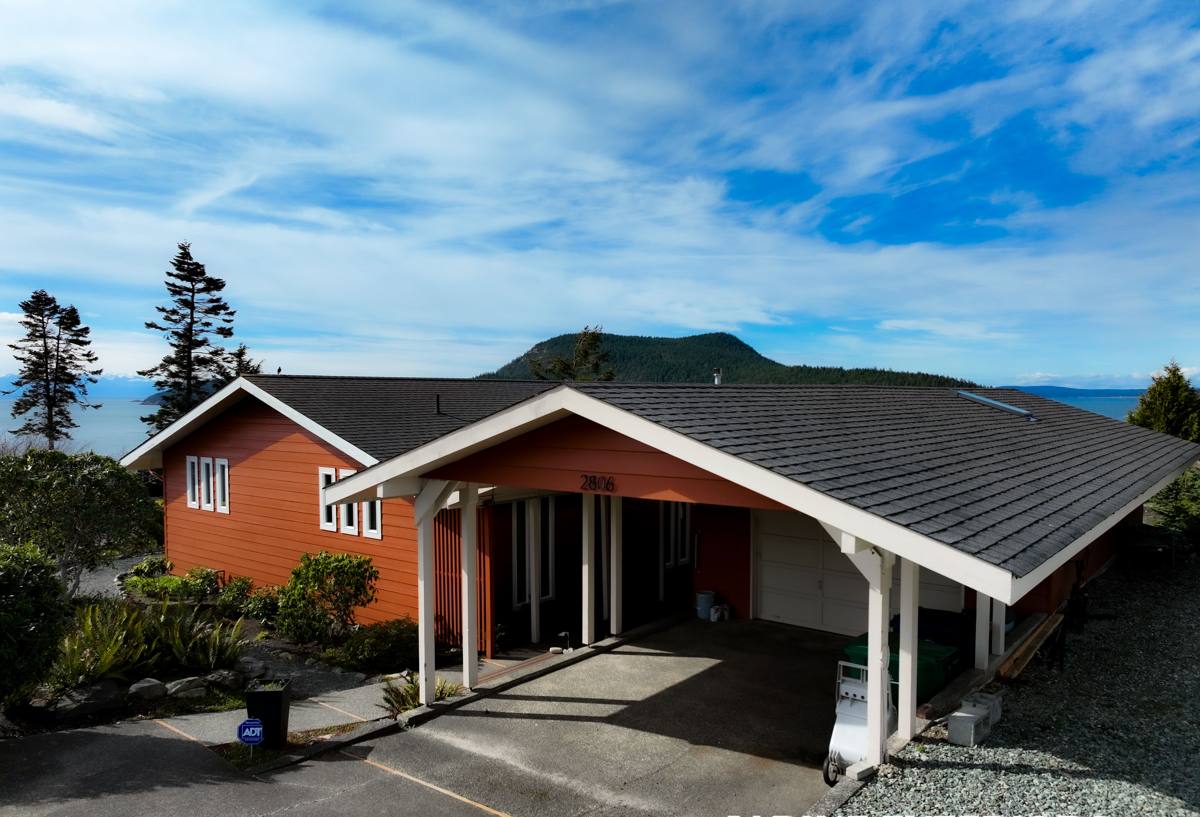
Why James Hardie Is the Only Fiber Cement We Install
We don't install vinyl siding, LP SmartSide, primed spruce, cedar, or other fiber cement brands like Allura or Cemplank. That's a professional standard, not a limitation on what we're capable of doing. In a shaded, damp climate like York's, the materials that tend to struggle over time share a common weakness: they either absorb moisture directly, rely on a field-applied or thin factory coating to keep water out indefinitely, or expand and contract enough with temperature and humidity swings that seams and joints gradually work loose.
James Hardie fiber cement is engineered specifically against that kind of exposure. It's non-combustible, it doesn't swell, rot, or feed moss the way wood-based siding can, and its ColorPlus factory finish is baked on under controlled conditions and warrantied against the fading and chalking that constant dampness and UV cycling cause over time. Hardie also builds climate-specific HZ formulations rather than one generic board for the whole country, which matters in a region that stays this damp for this much of the year. Combined with a strong transferable warranty and installation done to the manufacturer's actual specifications, it's the system we trust to perform through a full Whatcom County year on a shaded York lot, not just look good on install day.
What We Ask Homeowners to Weigh Before Choosing Anything Else
Cheaper alternatives aren't dishonest products — vinyl, engineered wood, and primed wood all have legitimate uses in the right climate and budget. But on a shaded lot with mature trees and long stretches of damp weather, the maintenance burden and moisture risk on those materials tends to land back on the homeowner within a decade or two, usually in the form of recaulking, repainting, or panel replacement that a fiber cement system needs far less often.
What a Correct Fiber Cement Siding Job Involves
James Hardie only performs the way it's engineered to when it's installed to spec, and on an older York home that starts with what's underneath the existing siding, not just the new material going on top of it. Before anything new goes up, we check the sheathing and framing for rot or moisture damage that older siding may have been hiding, especially around window and door openings and anywhere the old material shows signs of past leaks.
From there, correct installation means specific fastener types and spacing, correct clearance above grade, hardscape, and roof lines, properly lapped and sealed weather-resistive barrier underneath, and flashing detailed at every window, door, and penetration so water is directed out and away instead of trapped behind the cladding. On shaded walls we pay particular attention to ventilation gaps and drainage behind the siding, since those walls simply don't dry out as fast as a sun-exposed elevation does.
Fastening, Clearance, and Flashing Details That Matter Here
A few specifics tend to matter more in York than in a drier, sunnier part of the region:
- Fastener spacing and depth set for the wind exposure and rain-driving angle of each specific wall
- Extra care with clearance above grade on lots where mature trees and slope keep the ground damp longer after storms
- Flashing sequencing at every window and door so wind-driven rain can't track behind the new siding at the openings
- Ventilation gap behind the cladding on north-facing or heavily shaded walls, where moisture has the least chance to dry out on its own
- Trim and touch-up paint matched carefully on older homes where existing color schemes and architectural details are worth preserving
Choosing the Right Hardie Product and Finish
James Hardie makes several distinct product lines, and the right one for a given York home depends on its architecture, age, and how it sits on the lot. Older, character-driven homes in the neighborhood often call for a different profile than a newer infill build next door.
| Product | Best Fit | Why |
|---|---|---|
| HardiePlank lap siding | Most single-family homes, including traditional and updated styles | The most common profile, available in several widths and textures to match existing architecture |
| HardieShingle | Homes with shingle-style detailing or accent gables | Replicates a traditional shingle look without the moisture absorption of real wood shingles |
| HardiePanel | Modern or updated exteriors, accent walls, gable ends | Clean vertical lines for a more contemporary look |
| HardieTrim | Corner boards, window and door trim, fascia | Matches the siding's durability so trim doesn't become the weak point in the system |
On the finish side, ColorPlus factory-applied color is almost always the better long-term choice over field-applied paint, especially on a shaded lot where a painted finish stays damp longer between dry stretches. ColorPlus is baked on in a controlled environment, resists fading and chalking better than most field paint jobs, and comes with its own warranty coverage — which matters most exactly where a wall doesn't get much direct sun to help it dry.
Our Process for a York Siding Project
- Walkthrough and assessment: We look at the current siding, note shaded or high-moisture areas specific to the lot, and check for any signs of underlying rot or past water damage.
- Honest scope and estimate: We tell you plainly whether the home needs full replacement, targeted repair, or can wait, and walk through product, color, and trim options.
- Substrate repair: Any damaged sheathing or framing found once old siding comes off gets repaired before anything new goes up — this step isn't optional if the job is going to last.
- Weather-resistive barrier and flashing: Properly lapped house wrap and flashing at every penetration, set up specifically for the wall's sun exposure and rain angle.
- Installation to spec: Hardie fastened, spaced, and cleared per manufacturer requirements, not shortcuts that happen to look fine on install day.
- Final walkthrough: We go over the finished work with you before calling the job done, not after.
Cost Factors to Expect
Every York property is a little different, but a few factors consistently move the price of a siding project up or down:
| Factor | How It Affects Cost |
|---|---|
| Substrate condition | Rot or water damage found under old siding adds repair scope before new material goes up |
| Home size and wall complexity | More corners, gables, and dormers mean more cutting, fitting, and trim work |
| Access and lot layout | Tight side yards, slope, and mature landscaping can slow staging and material handling |
| Product and finish selection | Plank width, texture, and ColorPlus color all vary somewhat in material cost |
| Scope of trim and detail work | Matching existing architectural detail on an older home takes more time than a simple flat-wall replacement |
We don't quote off a generic price list — every estimate comes from actually walking the property and pricing the real scope in front of us, not a guess based on square footage alone.
Signs Your York Home's Siding Needs Attention
Most homeowners reach out because something specific caught their eye, not because they've been tracking every detail of their siding's condition. Worth knowing what to look for:
- Moss or green staining that keeps coming back on shaded or north-facing walls, even after cleaning
- Paint that keeps peeling or failing no matter how often it's redone
- Soft spots or slight give when pressing near a window, door, or bottom course of siding
- Siding that's cupping, warping, or visibly separating at the seams
- Rust streaks below fasteners or hardware
- Persistent musty smell near an exterior wall, which can point to trapped moisture behind the siding
- Visible daylight or drafts around older window and door trim
Any one of these on its own doesn't automatically mean full replacement is necessary. But on an older home, especially one with shaded walls, moisture problems tend to compound rather than stay static, so it's worth having a professional actually look rather than waiting to see if it resolves on its own.
Why a Crew That Already Works York Matters
A lot of what makes a siding job hold up here comes down to details a crew unfamiliar with the neighborhood tends to miss: which walls stay damp longest based on tree cover and slope, how much clearance a given lot's grading actually requires, where flashing needs extra attention on an older home with decades of prior repairs layered underneath, and how to match trim and color on a house where the surrounding architecture is worth respecting rather than overriding.
A crew that works Bellingham exteriors regularly starts to recognize these patterns street by street. That familiarity shows up in small, on-site decisions — where a ventilation gap actually needs to go, which walls need extra fastener corrosion protection, how much drying time a shaded elevation realistically gets between storms — that homeowners rarely notice directly but feel in how the siding performs over the following decade.
If your York home needs new siding, a second opinion on an aging exterior, or you're just weighing whether repair or replacement makes more sense, we're glad to take a look. Reach out using the form below to schedule a free, no-pressure estimate.