 Bellingham Roofing
 Metal Roofing Built for Barkley's Weather, Not Just Its Look
Barkley sits close enough to Bellingham Bay and the surrounding lowlands that homes here take on a specific combination of weather stress: salt-laden air moving in off the water, long stretches of driving rain through fall and winter, and a moss season that can run most of the year in shaded yards. A roof that holds up in a drier inland climate doesn't automatically hold up here. Metal roofing, installed correctly for this environment, is one of the few systems that handles all three of those stresses at once without constant upkeep.
This page is specifically about metal roofing for Barkley properties — what the local climate demands from the material, what a correct installation looks like, and how our process works when we take on a project in this neighborhood.
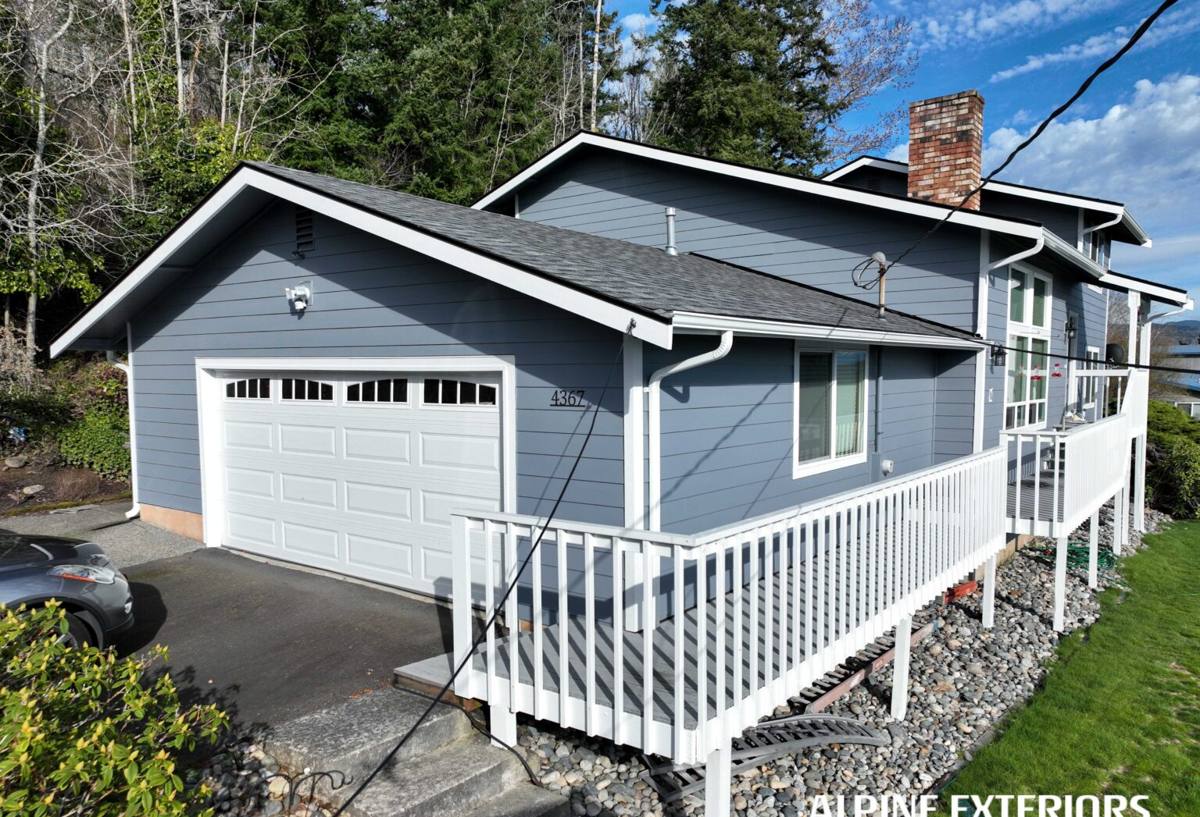
What Bellingham's Climate Actually Does to a Roof
Moss and Organic Growth
Whatcom County's damp, shaded conditions are ideal for moss, and Barkley's mature tree cover only adds to that. Moss doesn't just look bad — it holds moisture against roofing material, works into seams and laps, and accelerates granule loss on asphalt shingles. Metal roofing gives moss far less to grab onto. Smooth panel surfaces and tight seams don't offer the texture moss needs to establish itself the way a shingle roof does, which cuts down on the moss treatments and manual cleaning that shingle roofs need every year or two.
Wind-Driven Rain
Rain in this area rarely falls straight down — it comes in sideways off Pacific storm systems, which pushes water sideways under flashing, around vents, and into any gap that a calmer climate might get away with. A metal roof's water resistance depends almost entirely on how the seams, laps, and flashing details are executed, not just the panel itself. This is where a lot of the failures we see on older metal roofs actually originate — not rusted-through panels, but wind-driven rain finding its way through poorly lapped trim or fasteners that were never meant to hold up long-term.
Salt Air and Corrosion
Proximity to the bay means airborne salt is a real factor for Barkley roofs, even a few miles inland. Salt exposure speeds up corrosion on exposed fasteners, cut edges, and lower-grade coatings. This doesn't rule metal roofing out — it changes which metals, coatings, and fastener types we consider appropriate for the area, and it's a big part of why we don't treat every metal roof quote the same regardless of where the house sits.
Choosing the Right Metal System for This Area
Not all metal roofing is built the same way, and the differences matter more here than in a drier, inland climate. The two systems we install most often for coastal Whatcom County homes are standing seam and exposed-fastener panels, each with real trade-offs.
| Factor | Standing Seam | Exposed Fastener |
|---|---|---|
| Fastener exposure | Concealed clips, no exposed screws | Screws penetrate the panel face |
| Corrosion risk in salt air | Lower — fewer penetration points | Higher — gaskets and screws age faster |
| Long-term maintenance | Minimal once installed correctly | Periodic fastener/gasket checks needed |
| Upfront cost | Higher | Lower |
| Best fit | Long-term ownership, coastal exposure | Budget-conscious projects, secondary structures |
For homes in Barkley with meaningful salt air exposure, we typically steer homeowners toward standing seam or a comparable concealed-fastener system, because the exposed screws and rubber gaskets on fastener-style panels are the first thing to degrade in this air. That said, exposed-fastener systems still have a place — garages, outbuildings, and budget-driven projects where the trade-off makes sense — as long as the homeowner understands the maintenance difference going in.
Metal Type and Coating
Between steel and aluminum, aluminum has a natural advantage near salt air because it doesn't rust the way steel can once a coating is compromised. Steel panels can still be a good choice, but we're selective about coating quality and won't cut corners on the finish just to hit a lower price, since the coating is what's actually standing between the metal and the salt-humid air over the next few decades.
What a Correct Installation Actually Involves
The panels get most of the attention, but the details underneath and around them are what actually determine whether a metal roof performs in this climate for its full lifespan.
- A proper underlayment rated for the exposure — not a minimal-cost synthetic that skips ice-and-water protection at eaves and valleys
- Correctly lapped and sealed flashing at every penetration, valley, and wall transition, sized for wind-driven rain rather than straight-down rain
- Fastener type and spacing matched to the panel manufacturer's spec, not a generic pattern
- Adequate ventilation at the ridge and eaves, so trapped moisture doesn't condense against the underside of the panels
- Compatible metals throughout — mixing incompatible metals (for example, certain fasteners against certain panel alloys) can trigger galvanic corrosion, which shows up faster in salty coastal air than almost anywhere else
Skipping any one of these doesn't usually cause an immediate problem — it shows up two, five, or ten years later as a leak, a corroded fastener line, or a panel that's failing at the seam. That lag is exactly why cutting corners on a metal roof is a worse bet here than in a milder climate.
Our Process for Barkley Projects
Inspection and Assessment
We start by walking the roof and the attic space, noting existing moss buildup, any signs of past water intrusion, ventilation condition, and how exposed the property is to prevailing wind and salt air. This tells us which panel system and detailing approach actually make sense for that specific house rather than defaulting to a one-size answer.
Written Estimate
You get a clear, itemized estimate covering panel type, underlayment, flashing approach, and ventilation work — no vague lump-sum number that hides what you're actually paying for.
Installation
We schedule around Bellingham's wetter months where possible, since a dry work window matters more for underlayment and flashing work than for the panels themselves. Tear-off, deck inspection and repair as needed, underlayment, flashing, and panel installation follow in sequence, with attention paid to the seam and fastener details discussed above.
Walkthrough and Cleanup
Once the roof is complete, we walk the property, clear debris and fasteners from the yard and gutters, and go over care and warranty details before we consider the job finished.
Living with a Metal Roof in a Moss-Prone, Salt-Air Climate
One of the real advantages of metal roofing in this area is how little ongoing maintenance it needs compared to shingles — but "little" isn't "none." A short annual routine keeps a correctly installed metal roof performing for the long haul.
- Clear overhanging branches and debris that trap moisture against the roof, especially in shaded yards common to Barkley
- Check gutters and downspouts each fall so water isn't backing up under eave flashing during heavy rain
- Look over exposed fasteners (if you have an exposed-fastener system) every year or two for early corrosion or loosening
- Rinse off accumulated salt film and organic debris periodically, especially on sides of the roof facing prevailing wind off the bay
- Have a professional check flashing and seams after any major windstorm, since that's where wind-driven rain finds a way in if something has shifted
What Affects the Cost of a Metal Roof in Barkley
| Factor | Why It Matters Here |
|---|---|
| Panel system chosen | Standing seam costs more upfront but reduces long-term maintenance in salt air |
| Roof complexity | Valleys, dormers, and multiple planes mean more flashing detail work, which is where failures start in wind-driven rain |
| Existing roof condition | Moss damage or deck rot found during tear-off adds repair scope |
| Ventilation upgrades | Older Barkley homes often need ridge or soffit vent improvements to perform well under a metal roof |
| Metal and coating grade | Higher-grade coatings cost more but resist corrosion longer near the bay |
We don't publish a flat price per square foot because these factors genuinely change the number from one house to the next — but we'll walk you through exactly where your estimate is going before you commit to anything.
Why Local Experience in Barkley Matters
A crew that mostly installs roofs in drier parts of the state may default to detailing that's adequate there but undersized for what Bellingham throws at a roof — less flashing overlap, lighter underlayment, less attention to fastener corrosion. Working regularly in Whatcom County means we're used to designing for wind-driven rain and salt exposure as the baseline, not the exception, and we've seen firsthand which shortcuts show up as problems a few winters later. That local pattern recognition is worth more than a marginally lower bid from a crew unfamiliar with this specific stretch of coastline.
If you're weighing metal roofing for a home in Barkley, we're glad to take a look and give you a straightforward, no-pressure estimate — just fill out the form below to get started.