 Bellingham Roofing
 Composite Decking Built for Birchwood's Marine Climate
Birchwood sits close enough to the water and tree cover that a deck here works harder than a deck in a drier inland town. Salt-laden air off the Sound, long stretches of driving rain, and a moss season that can run from fall well into spring all put steady stress on any outdoor structure. Composite decking handles that stress better than wood in most cases, but only when it's chosen and installed with this specific climate in mind. A lot of composite deck problems we get called out to fix aren't product failures — they're installation shortcuts that didn't account for how wet, shaded, and salty this part of Whatcom County actually gets.
This page covers what a composite deck needs to hold up in Birchwood specifically: the climate factors at play, what correct construction looks like, how we approach the job, and why local install experience matters more than people expect.
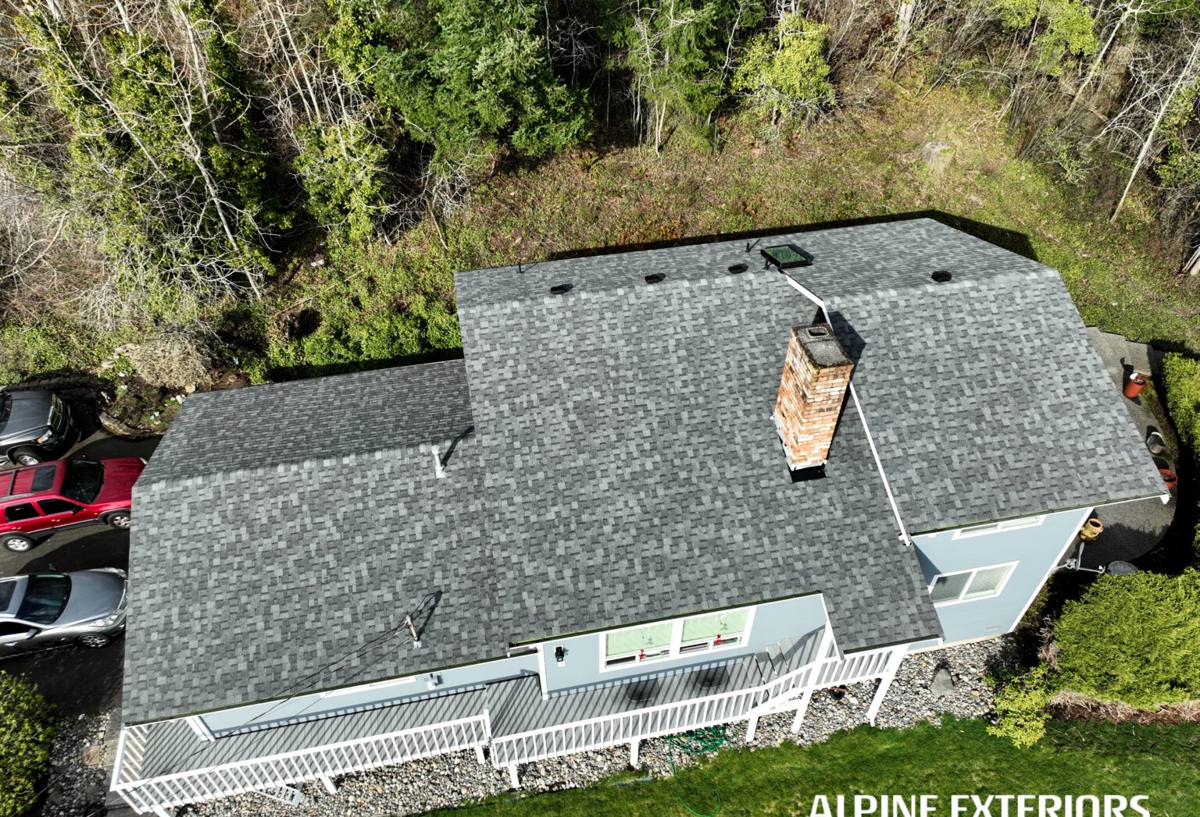
What Bellingham's Weather Actually Does to a Deck
Salt Air and Hardware
Homes closer to the water deal with salt-laden air that settles on everything outdoors, including deck hardware. Composite boards themselves don't corrode, but the fasteners, brackets, post bases, and railing hardware holding the deck together can if they're not rated for coastal exposure. Cheap or mismatched hardware can rust and stain the boards around it within a couple of seasons, and a corroding fastener eventually loses grip strength — which matters most at stair stringers, railing posts, and ledger connections.
Moss, Algae, and Standing Moisture
Birchwood's mix of tree cover and marine humidity creates ideal conditions for moss and algae to take hold on any horizontal surface that stays damp. Composite decking resists rot, but surface growth is a different issue — it's cosmetic and can make boards slick underfoot, especially on shaded sections of a deck that get more rain exposure than direct sun. Boards that sit too close together, or over a substructure with poor airflow, hold moisture longer and give moss more time to establish itself between rains.
Driving Rain and Water Movement
Wind-driven rain in this area doesn't just fall straight down — it gets pushed sideways into ledger connections, under railings, and into any gap that wasn't flashed correctly. Composite decking is water-resistant at the board level, but the framing, flashing, and drainage details underneath it are still wood or metal in most builds, and those need protection whether the surface above them is composite or not.
Composite vs. Wood Decking in This Climate
Both materials can work in Birchwood, but they carry very different maintenance loads once the rain and moss season sets in. Here's how they compare on the factors that matter most locally:
| Factor | Composite Decking | Wood Decking |
|---|---|---|
| Moisture absorption | Very low — most boards are capped or fully encapsulated | Absorbs water, swells and contracts seasonally |
| Moss/algae growth | Grows on the surface, doesn't penetrate the board | Grows on the surface and can work into grain and checking |
| Rot risk | None in the board itself | Real risk, especially at fastener points and end grain |
| Refinishing needs | None — no staining or sealing required | Sealing/staining every 1-3 years to hold up in this climate |
| Upfront cost | Higher material cost | Lower material cost |
| Long-term cost in this climate | Lower — little ongoing maintenance spend | Higher — repeat sealing, board replacement over time |
| Slip resistance when mossy | Depends on board texture; textured caps help | Can get slick on smooth or worn boards |
We'll install wood decking when that's what a homeowner wants, but for most Birchwood properties dealing with regular rain and shade, composite carries less long-term maintenance burden — the trade-off is a higher price at install.
What a Correctly Built Composite Deck Involves
Composite boards are only as good as what's underneath and around them. A correct installation in this climate accounts for drainage, hardware, and structural details that a lot of quick installs skip. Before we call a composite deck finished, it needs to check every one of these boxes:
- Joist spacing tightened to the manufacturer's spec for composite (usually closer than typical wood-deck spacing) to prevent board sagging over time
- Ledger board properly flashed against the house to stop wind-driven rain from tracking behind the siding
- Consistent board gapping for drainage and seasonal expansion — composite still moves with temperature, even if it doesn't absorb water
- Corrosion-resistant fasteners and hardware rated for coastal or high-moisture exposure, not standard interior-grade hardware
- Blocking added under railing posts and stair stringers, where load and hardware stress are highest
- Adequate under-deck ventilation so the substructure and board undersides can dry out between rain events
- End caps or trim details closed off so moisture and debris can't collect in exposed board ends
Skip any of these and the deck can still look fine for a year or two before problems show up — soft spots at the ledger, staining around fasteners, or boards that stay damp and grow moss faster than the rest of the deck.
Choosing a Composite Board for Birchwood's Conditions
Capped vs. Uncapped Composite
Capped composite boards have a protective outer shell bonded over the composite core, which resists moisture absorption, staining, and surface mold far better than older uncapped composite products. In a neighborhood with a long moss season and steady rain, that cap is doing real work — it's the difference between a board you can hose off and one that holds onto grime and organic growth in its surface texture. We install capped composite as our standard for exactly this reason.
Color and Texture Choices
Darker composite boards run hotter in direct sun and can show pollen, moss spores, and water spotting more visibly than mid-tone or lighter colors — worth factoring in in a rainy climate where the deck won't always be freshly washed. Textured, wood-grain-embossed surfaces also give better footing than smooth caps once a deck picks up a light film of moisture or moss, which is a real consideration on partially shaded sections of a Birchwood lot.
Our Process for a Birchwood Composite Deck
- On-site assessment — we look at sun/shade exposure, drainage slope, existing structure (if replacing an old deck), and how close the site is to salt air exposure.
- Structural check — many homes in this area have decks built decades ago; we check ledger attachment, footings, and framing condition before anything new goes on top.
- Material selection — we walk through board options, color, and hardware suited to the site's actual moisture and sun conditions, not a one-size answer.
- Permitting — decks attached to the home or above certain heights typically require a permit through the City of Bellingham or Whatcom County depending on the property's location; we handle that step.
- Build — framing first, with attention to spacing, flashing, and fastener choice, then board installation and trim/railing work.
- Final walkthrough — we check drainage, railing stability, and finish details with the homeowner before calling the job done.
Caring for a Composite Deck Through Moss Season
Composite decking is low-maintenance, not no-maintenance. In a climate like Bellingham's, a little seasonal attention keeps a deck looking and performing the way it should:
- Sweep off leaves, needles, and debris regularly through fall — trapped organic matter is what feeds moss and algae growth
- Rinse or lightly scrub shaded areas more often than sun-exposed sections, since they stay damp longer
- Use a soft-bristle brush and mild soap-and-water solution for moss buildup rather than a high-pressure washer, which can wear at board texture over years of use
- Check railing and stair hardware annually for early rust or looseness, especially on decks closer to the water
- Keep gutters and downspouts near the deck clear so runoff isn't dumping extra water onto the deck surface
Why a Crew That Already Works Birchwood Matters
A contractor who's worked other decks in this neighborhood already knows which lots hold shade and moisture longer, which streets sit closer to salt air exposure, and which older homes tend to have ledger or framing issues that need addressing before new decking goes on. That local pattern recognition saves time during the estimate and prevents surprises mid-project. It also means we're familiar with the permitting process through the correct local jurisdiction and aren't learning Bellingham's rain and moss patterns for the first time on your project. A deck built without that context can still look right on installation day — the difference shows up two or three wet seasons later.
If you're planning a new composite deck or replacing an aging one in Birchwood, we're happy to come take a look and walk through honest options for your specific site. Reach out for a free, no-pressure estimate using the form below.