 Bellingham Roofing
 Custom Decks Built for Birchwood's Marine Climate
A deck in Birchwood spends its whole life outside with nothing over it, which puts it in the direct path of everything Bellingham's climate throws at a structure year-round. Salt-tinged marine air drifts through the neighborhood and works quietly on exposed metal — fasteners, brackets, post hardware — long before any corrosion is visible from a normal walk-through. Rain here doesn't just fall straight down; it gets driven sideways and forced up under railings and between boards during the region's wetter stretches. And on shaded or north-facing decks, a moss season that runs most of the year settles in fast and doesn't let go until well into summer.
None of that means a custom deck is a bad investment for a Birchwood home. It means the build has to account for those specific stresses from the framing up, not just the decking surface people see and walk on. This page covers what a correctly built deck actually needs in this part of Whatcom County, what goes into the job beneath the surface, and how our process works from first visit to final walkthrough.
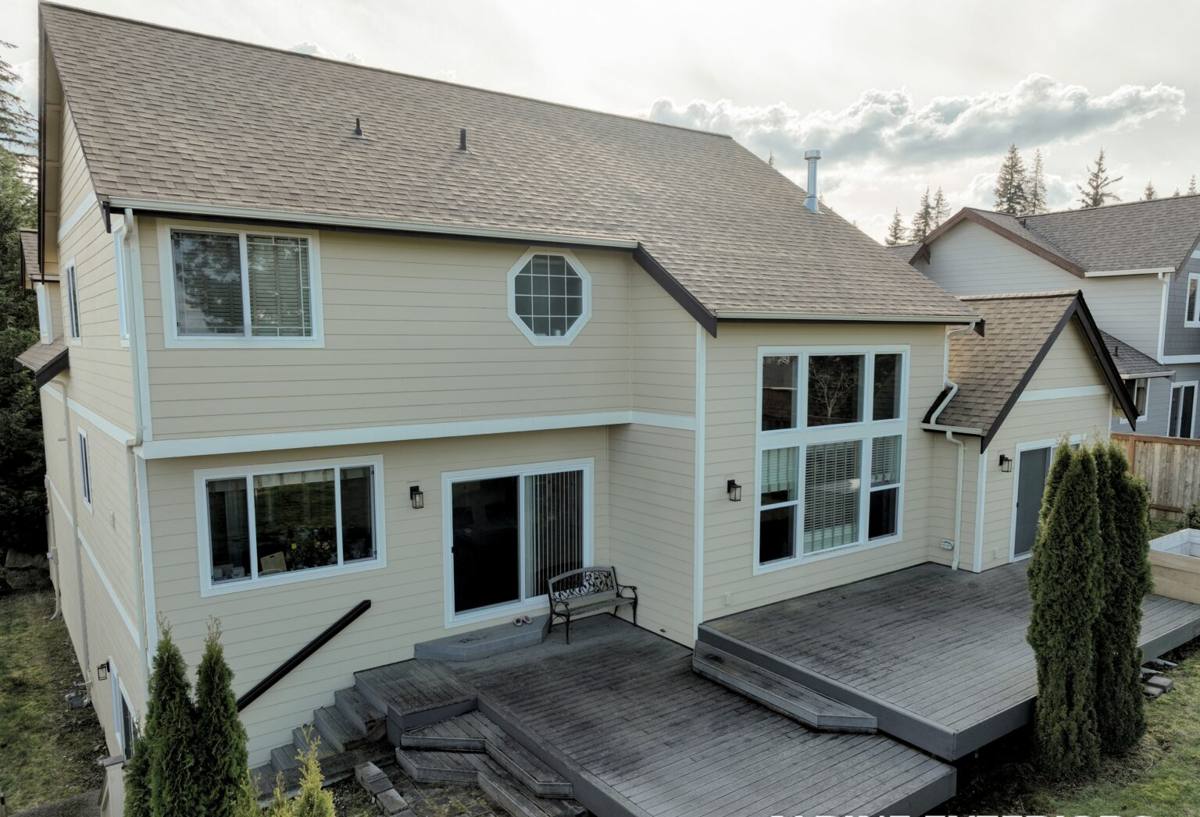
What Birchwood's Weather Does to a Deck Over Time
Salt-Tinged Marine Air
Salt in the air accelerates corrosion on any exposed metal, and a deck has more of it than most homeowners realize — screws, structural brackets, post bases, railing hardware. A fastener that's corroding loses holding strength well before it looks obviously bad, and on a structure people stand on, that's a real safety issue, not a cosmetic one. Standard hardware-store fasteners simply aren't built for sustained exposure like this.
Wind-Driven Rain
Storms coming through Birchwood rarely deliver rain in a neat, straight-down pattern. Wind pushes it sideways and up, into ledger connections, under railing base plates, and between deck boards that aren't gapped correctly for drainage. A deck that would shed water fine in calm conditions can still trap moisture the moment wind gets involved — and in this area, wind is involved often enough that it has to be part of the design from the start.
A Moss Season That Runs Most of the Year
Mild, damp conditions give moss and algae a long growing season here, and a horizontal deck surface is one of the first places it takes hold — it holds water longer than a vertical wall and stays damp between rain events. Shaded decks tucked under trees or set against the north side of a house are usually first to show it, and any decking material with real surface porosity gives moss something to grip onto.
Choosing the Right Decking Material
Material choice matters more here than it would in a drier, more sheltered climate, because the gap between a well-suited product and a poorly-suited one shows up faster. The three categories most Birchwood homeowners weigh are pressure-treated or cedar wood, capped composite, and cellular PVC.
Wood
Pressure-treated lumber and cedar look great new and remain a reasonable choice, but both need regular sealing or staining to hold up against sustained moisture, and both leave exposed fasteners more vulnerable to corrosion over time. Left unmaintained even a season or two, wood is usually the first material on a deck to show moss and soft spots in this climate.
Capped Composite
Capped composite boards have a plastic shell wrapped around a wood-fiber composite core, which resists moisture absorption, staining, and UV fade far better than wood or uncapped composite. In a climate with this much sustained moisture, that cap layer is doing real work — it's the difference between a board that needs occasional washing and one that needs ongoing sealing to stay ahead of the weather.
Cellular PVC
PVC decking has no wood fiber at all, so it doesn't absorb moisture the way even capped composite can at cut edges or fastener holes. It costs more up front and can flex more under heavy point loads than composite, but for a shaded, moisture-heavy site, some homeowners find the added resistance worth it.
| Material | Handling Moisture & Salt Air | Moss Resistance | Upkeep |
|---|---|---|---|
| Cellular PVC | Excellent — no wood fiber to absorb moisture | Strong, smooth non-porous surface | Occasional washing |
| Capped composite | Strong — cap layer resists moisture and staining | Good on most product lines | Occasional washing |
| Uncapped composite | Moderate — some absorption at exposed fiber | Fair; more prone to buildup over time | Periodic cleaning |
| Cedar | Moderate — natural resistance, but needs sealing | Fair when sealed and maintained | Regular oiling or sealing |
| Pressure-treated wood | Weak against sustained moisture over years | Poor without regular treatment | Regular sealing or staining |
The Structural Work That Determines How Long It Lasts
The decking surface gets most of a homeowner's attention when picturing a new deck, but in this climate the framing, fasteners, and drainage details underneath are what actually decide how long the whole structure holds up. A correctly built deck for a Birchwood property includes:
- Framing lumber rated for sustained moisture exposure, sized correctly for the actual span and load, not a generic layout
- Stainless steel or coastal-grade corrosion-resistant fasteners throughout, not standard hardware that starts corroding within a few seasons of this air
- Hidden fastener systems on the decking surface where the product supports it, reducing exposed metal and giving a cleaner walking surface
- Correct board gapping for drainage and material movement, so wind-driven rain and standing moisture can drain and dry between boards instead of pooling
- Proper ledger board flashing where the deck ties into the house — one of the most common places moisture gets into a poorly built deck
- Joist spacing matched to the specific decking product's span rating rather than a one-size-fits-all framing plan
- Grading and airflow underneath the deck so moisture doesn't sit against the framing between storms
Skip any one of those and the deck will usually still look fine on day one. The problems tend to surface a few wet seasons later, as a soft joist, a loosening railing post, or corrosion staining bleeding through the boards above it.
Railings, Stairs, and Code in Whatcom County
Guardrail height, baluster spacing, stair rise and run, and handrail requirements all follow Washington building code, and an elevated deck typically needs guardrails and a permit regardless of how the project started out. Whatcom County reviews decks for structural adequacy, setback compliance, and the same life-safety details — a deck that isn't attached or sized correctly is a common source of failed inspections, and one reason it pays to have someone who pulls permits in this area regularly handle it rather than treating code as an afterthought.
Railing style is also a real design decision in a wind-exposed spot. A more solid railing or partial glass panel can cut wind at seating height on an open lot, while a more open baluster design lets more air and light through on a sheltered, tree-shaded site. Neither is universally correct — it depends on how the specific lot sits.
Designing a Deck Around a Birchwood Lot
Beyond material and code, a few site-specific questions shape a good custom deck design. Sun and shade patterns affect which decking color and material will hold up best against fading and moss — a deck that stays shaded most of the day needs different moss-resistance priorities than one that gets sun for most of the afternoon. Grade and drainage around the house affect stair placement and whether the substructure needs extra attention to keep water from pooling underneath. And how the space actually gets used — a quiet morning coffee spot versus a deck built for entertaining — changes size, layout, and where railings versus open edges make sense. None of these are answered the same way twice, which is part of why a deck designed for a specific Birchwood lot performs differently than a stock layout dropped onto any site.
How Our Process Works
- Site visit: We look at the actual lot — existing structure condition if it's a replacement, grade and drainage, sun and wind exposure through the day.
- Design and material selection: We talk through decking options, layout, and railing style against your budget and how you plan to use the space.
- Permitting: We handle the Whatcom County permit process as part of the job, rather than leaving the paperwork for the homeowner to sort out.
- Substructure and framing: Footings, framing, and ledger flashing go in first, sized and fastened for the site's actual exposure.
- Decking, railing, and stairs: The visible surface and railing system go on to manufacturer specification, with attention to gapping and hardware.
- Final walkthrough: We review the finished deck with you and cover exactly what your specific material needs going forward.
What Your New Deck Still Needs From You
Even a well-built deck in the right material needs some routine attention in this climate to reach its full lifespan.
- Rinse or wash the deck surface periodically to clear pollen, salt residue, and organic buildup before it works into the surface or cap layer
- Keep gaps between boards clear of leaves and debris so water and airflow can move through as designed
- Check railing posts and hardware once a year for early corrosion or loosening, especially heading into the wet season
- Trim back overhanging branches that hold moisture against the deck or block sun and airflow across the surface
- Address any soft framing or standing water underneath right away — that's a structural issue, not a cosmetic one
Why Hiring a Crew That Already Works Birchwood Matters
A crew that mostly builds decks further inland can still put one together competently, but a Birchwood job has variables that don't come up as often elsewhere in the county — corrosion-grade fastener requirements from sustained marine air, wind loads tied to how open or sheltered a specific lot is, and moss pressure that runs longer here than it does further from the water. Working this area regularly means we're not guessing at those requirements on your project. We've seen which decking lines actually hold up against this specific combination of conditions, and which fastener grades and framing details are worth the extra time rather than an unnecessary upsell.
That familiarity also shows up in the smaller judgment calls — how to orient a deck for the wind a particular lot actually sees, and being straightforward about what a deck here realistically needs to last versus what's just an extra line item on a bid.
A Practical Checklist Before You Choose a Deck Builder
- Do they specify fastener grade and framing material in writing, not just "pressure-treated lumber"?
- Does the bid call out ledger flashing and board gapping specifically, not just decking product and price?
- Do they carry current WA contractor licensing, liability insurance, and workers' compensation?
- Will they pull the Whatcom County permit as part of the job, rather than leaving it to you?
- Can they point to recent, real deck work in or near Birchwood?
- Does the estimate separate manufacturer material warranty from their own workmanship warranty?
If you're weighing a new deck, a replacement, or just want a straight answer about what your Birchwood property actually needs, we're glad to walk the site with you and lay out the options plainly. Use the form below to request a free, no-pressure estimate.