 Bellingham Roofing
 Siding Installation for Birchwood Homes, Built for the Local Climate
Birchwood sits in a stretch of Whatcom County where the exterior of a house works harder than it might in a drier, calmer climate. Salt-tinged air drifts in off the water and settles onto walls and fasteners year-round, not just during storms. Rain here rarely falls straight down for long — wind pushes it sideways and up under joints, trim, and anywhere the water management isn't built correctly. And on shaded or tree-covered lots, a long moss season sets in and holds on for most of the year, feeding on any surface that stays damp long enough. None of that makes siding installation a bad investment in Birchwood. It just means the job has to be built around those specific stresses from the first fastener to the last piece of trim, not treated like a generic re-side that could go on a house anywhere in the country.
This page covers what a correct siding installation actually involves for a Birchwood home — what the local climate demands from the material and the install, how our process runs from the first walkthrough to the final walkaround, and why a crew with real experience in this specific area makes a measurable difference in how long the job lasts.
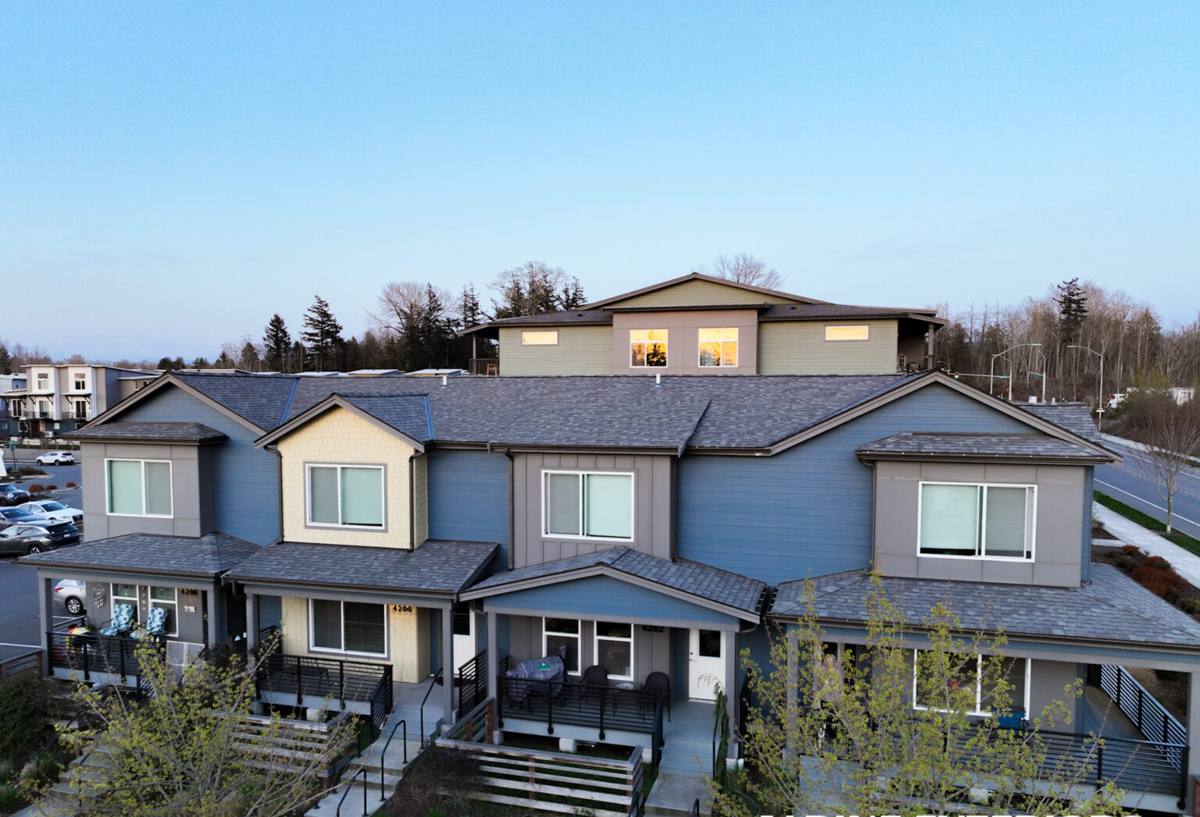
Why We Install Only James Hardie Fiber Cement Siding Here
We install one siding system: James Hardie fiber cement. We don't offer vinyl, LP SmartSide, Cemplank, Allura, primed spruce, or cedar, and that's a deliberate professional standard rather than a lack of options. Each of those products has a legitimate place in the market, and other contractors install them competently. But after years of working exteriors in this specific corner of Whatcom County, we settled on one system we can fully stand behind rather than offering alternatives that shift more long-term maintenance and moisture risk onto the homeowner.
Engineered for Wet, Salt-Exposed Conditions
James Hardie's HZ5 product line is engineered for climates with sustained moisture and freeze-thaw cycling, which describes Birchwood's winters more accurately than a product built primarily for hot, dry regions. Fiber cement itself is an inorganic blend of Portland cement, sand, and cellulose fiber, so it doesn't have a wood-based core that can absorb water, swell, or feed rot the way organic siding materials can.
A Factory Finish That Doesn't Depend on Field Paint
Hardie's ColorPlus finish is baked on in multiple coats at the factory before the boards ever reach a job site, rather than painted on site after installation. That matters directly in a climate where salt air and UV exposure break down a lower-grade field-applied coating faster than the marketing usually accounts for. The finish carries its own warranty, separate from the substrate warranty on the boards themselves, and both are transferable if you sell the home before the coverage period ends.
What a Correct Siding Installation Actually Involves
Siding installation isn't just removing old material and hanging new boards. Done right, it's a layered system, and skipping any one layer tends to show up as a real problem a few wet seasons later, not on installation day.
Full Removal and Substrate Inspection
Stripping the old siding down to the sheathing is the only reliable way to find rot, soft spots, or hidden moisture damage that's been developing quietly behind the old wall covering. Installing new siding directly over an existing layer skips this step and simply seals whatever problems already exist underneath a fresh surface.
Weather-Resistive Barrier and Drainage Plane
A properly lapped house wrap or weather-resistive barrier goes on before any siding, and a drainage gap or rain screen behind the boards gives any moisture that does get past the surface a way to drain and dry instead of sitting against the wall. That gap earns its keep specifically in a climate where wind-driven rain is a routine condition, not an occasional event.
Fastening and Manufacturer Clearances
Fastener type, placement, and spacing have to follow Hardie's published installation spec for this climate zone, and the boards need the clearance the manufacturer calls for from grade, decks, and roof lines. Skipping clearance is one of the most common corner-cutting mistakes we see on re-inspections, because it looks fine on day one and only becomes a problem once splash-back and standing moisture start working on the board edge.
Flashing and Trim Detailing
Most siding failures don't start in the open field of a wall — they start at the transitions. Windows, doors, corners, and the point where siding meets the roofline all need flashing that's integrated with the weather-resistive barrier and properly lapped, not caulked over afterward as a substitute for real flashing work.
Comparing Siding Materials for a Birchwood Home
| Material | Moisture Behavior | Maintenance in This Climate | Realistic Lifespan |
|---|---|---|---|
| James Hardie fiber cement | Dimensionally stable; doesn't swell, warp, or cup | Low; factory finish resists moss staining and fading | 30+ years with correct install |
| Vinyl siding | Expands and contracts with temperature; seams rely on lapped, unsealed joints | Low upfront, but hidden moisture at seams is hard to catch | 20-30 years, variable |
| LP SmartSide / engineered wood | Wood-fiber core is sensitive to moisture at cut edges and fastener holes | Moderate; edge sealing needs consistent upkeep | 15-25 years, climate-dependent |
| Cedar / primed wood | Absorbs and releases moisture readily at every seam | High; repainting or resealing on a recurring cycle | 15-25 years with consistent maintenance |
The pattern that matters most for Birchwood isn't which material looks best in a showroom. It's how each one behaves after a decade of salt air, wind-driven rain, and a moss season that doesn't take much of a break. Fiber cement's dimensional stability is the property that holds up best against all three at once.
Cost Factors Worth Understanding
Two bids for the same siding job can land far apart, and the gap is usually real differences in scope rather than one contractor simply padding a number. Knowing what actually drives cost makes it much easier to compare estimates that look nothing alike on paper.
| Factor | What It Affects |
|---|---|
| Full removal vs. installing over existing siding | Whether hidden substrate damage gets found and repaired before new siding goes up |
| Weather-resistive barrier and drainage plane | How well the wall resists wind-driven rain that gets past the surface |
| Siding profile and trim complexity | Labor time and the number of flashing and cut details required |
| Existing wall condition | Rot or moisture damage found during removal that needs repair first |
| Home size and wall complexity | Corners, dormers, and window/door count directly affect material and labor |
| Access and site conditions | Steep lots or limited access can add staging time and labor |
A written estimate that breaks these components out separately tells you far more than a single lump-sum number. It's worth asking any contractor to walk you through what's actually included, line by line, before comparing two prices side by side.
How Our Installation Process Works
- On-site walkthrough: We look at the actual walls involved, which ones take direct weather, which stay shaded and slow to dry, and whether the existing wall assembly already has moisture issues that need addressing first.
- Written estimate: You get a clear, itemized bid covering removal, barrier and drainage detailing, material, flashing, and cleanup, not one vague total.
- Scheduling around weather: We build reasonable flexibility into the timeline, because wet-season delays are a normal part of exterior work in this region, not an excuse we reach for later.
- Removal and substrate repair: Old siding comes off completely, and any rot or damage we find gets repaired before anything new goes on.
- Barrier, drainage, and siding installation: Every layer goes on to Hardie's published spec for this climate zone, with extra attention at windows, corners, and roof transitions.
- Final walkthrough: We review the finished exterior with you in person and cover what little ongoing maintenance the material actually needs.
Why Hiring a Crew That Already Works in Birchwood Matters
A crew that regularly installs siding in and around Birchwood has already seen how salt air corrodes underspecified fasteners, how wind-driven rain finds its way through poorly lapped barriers, and which wall orientations hold moss longest through the wet months. That's practical, earned knowledge that shows up in dozens of small decisions over the course of a job, decisions a crew unfamiliar with this specific stretch of the county might not think to make at all.
It also matters after the job is finished. A warranty is only as good as the company standing behind it years later, and a contractor with an established, ongoing presence in the area is one you can actually reach if a question comes up down the road.
A Practical Checklist Before You Choose a Siding Contractor
- Do they perform a full removal with substrate inspection, not just an install over the existing siding?
- Does the estimate specify barrier type, drainage detailing, and siding product, not just "new siding"?
- Is flashing work at windows, doors, and corners explicitly written into the bid?
- Do they carry current WA contractor licensing, liability insurance, and workers' compensation?
- Can they point to recent, real work in or near Birchwood?
- Does the bid clearly separate the manufacturer's product warranty from the contractor's own workmanship warranty?
Signs Your Current Siding May Already Be Struggling
Siding rarely fails all at once. It tends to give warning signs well before water actually gets inside the house, and catching those signs early is often the difference between a repair and a full re-side.
- Cupping, warping, or visible gaps at seams and joints
- Dark streaking or moss buildup that keeps returning on shaded or north-facing walls
- Paint or finish that's peeling, chalking, or fading unevenly
- Soft spots or give when you press on the siding near the base of the wall
- Water staining on interior walls near exterior corners or window openings
If any of that sounds familiar, it's worth having the siding looked at before the next stretch of wet weather rather than waiting for a leak to force the decision.
If you'd like an honest, no-pressure look at your Birchwood home's siding and a written estimate you can compare against anything else you've received, we're glad to come take a look. Use the form below to request a free estimate.