 Bellingham Roofing
 Why Birchwood Homes Wear Out Siding Faster Than Expected
Birchwood sits in a part of Bellingham that takes a harder hit from the weather than a lot of homeowners realize. You've got salt-laden air drifting in off Bellingham Bay, driving rain that comes in sideways during the wetter months, and a tree canopy that keeps a lot of siding shaded and damp for weeks at a stretch. Any one of those on its own is manageable. Together, they wear siding out faster than the manufacturer's warranty paperwork tends to suggest.
Salt air is corrosive to exposed metal fasteners and trim, and it accelerates the breakdown of lower-grade paint finishes. Driving rain finds every gap, seam, and nail hole that wasn't sealed correctly the first time, and it drives moisture behind siding that isn't installed with proper clearance and flashing. Add in Whatcom County's long moss season — shaded, north-facing walls and siding near mature trees can stay damp for months — and you get the perfect setup for algae staining, soft trim, and paint failure well before a home's siding should be showing its age.
None of this means Birchwood is a bad place to own a home. It means the siding on that home has to be chosen and installed with this specific climate in mind, not a generic one.
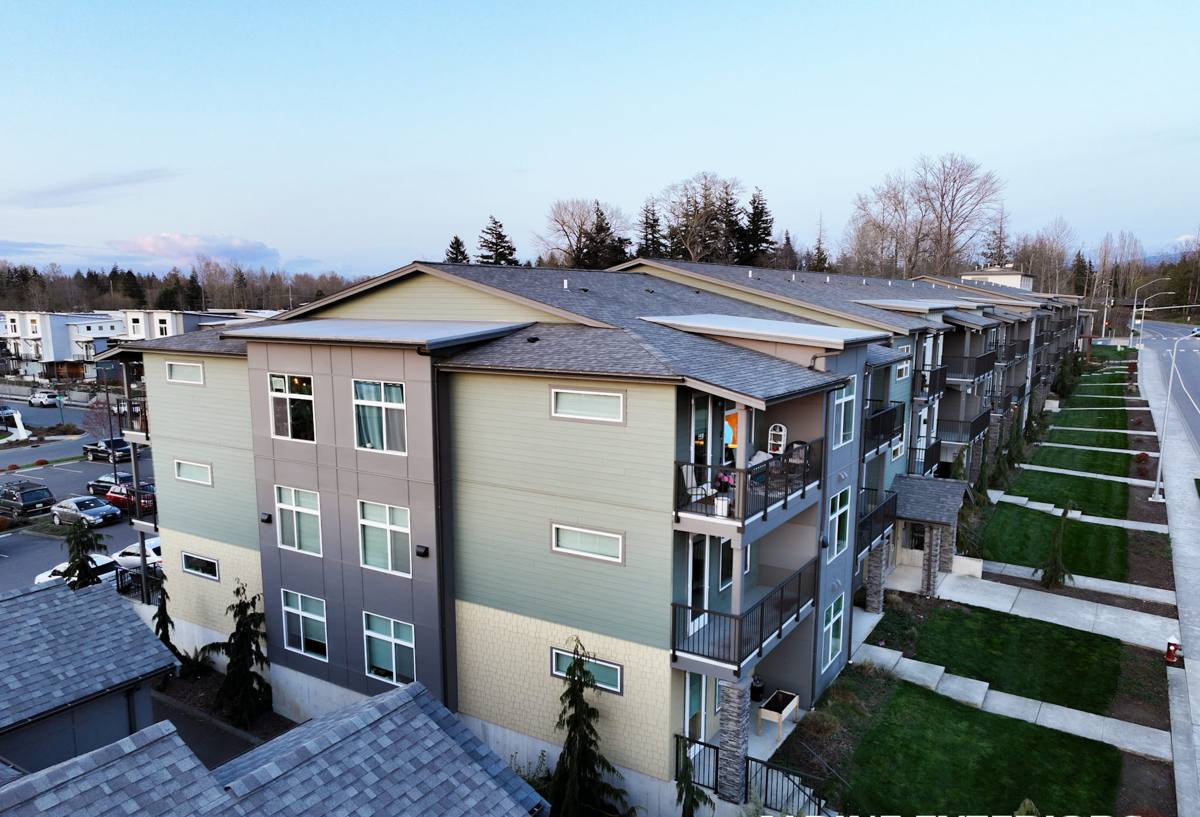
Signs Your Birchwood Home Needs Replacement, Not Just Repair
A lot of siding problems can be patched. But patching the wrong problem just delays a bigger repair bill later, especially once moisture has gotten behind the cladding. Here's what tells us a home needs a full replacement rather than a repair:
- Soft, spongy, or crumbling boards, especially near the bottom courses and around windows and doors
- Persistent black or green staining that comes back within weeks of being cleaned or power-washed
- Paint that's peeling, bubbling, or chalking across large sections rather than one isolated spot
- Visible gaps, warping, or cupping in the boards themselves
- Rising heating or cooling bills that can't be explained by anything else, which often points to a failing moisture barrier
- Siding that's original to a home built more than 20-25 years ago, particularly if it's wood, engineered wood, or older vinyl
If you're only seeing one or two of these in a small area, a repair may genuinely be the right call. If you're seeing several at once, or the damage is spread across multiple walls, that's usually a sign the whole system — not just the surface — has been compromised.
Why We Install Only James Hardie Fiber Cement
We get asked fairly often why we don't offer vinyl, LP SmartSide, or primed wood siding as options. It's not that these products don't have a place in the market — it's that after years of installing and repairing siding in this climate, we made a decision to standardize on one product system we can stand behind completely: James Hardie fiber cement.
Vinyl is inexpensive and low-maintenance in mild climates, but it softens and warps in direct heat, becomes brittle in cold snaps, and its seams and J-channels give driving rain an easy path behind the wall if installation isn't precise. Engineered wood products like LP SmartSide perform reasonably well when kept dry, but they rely on an intact factory coating and careful field sealing at every cut edge — miss one, and moisture gets into the wood strand core, which doesn't dry out or recover the way solid material does. Primed wood and cedar look great on day one but need a repaint or restain cycle every few years to hold up against salt air and constant moisture, which adds up in labor cost over the life of the siding.
James Hardie fiber cement is non-combustible, doesn't expand and contract with temperature swings the way vinyl does, and holds its factory-applied ColorPlus finish far longer than field-applied paint. Hardie also engineers specific product lines — its HZ5 and HZ10 climate designations — for regions that deal with sustained moisture and temperature swings, which describes Whatcom County well. It's a heavier, denser material to work with, and it demands correct fastening and clearances to perform the way it's designed to. That's exactly why we treat installation as seriously as product selection.
What Fiber Cement Doesn't Solve On Its Own
It's worth being straightforward here: no siding product, including Hardie, will protect a home if it's installed poorly. Fiber cement's strength comes from the combination of the material itself and a moisture-managed installation underneath it. That's the part we'll walk through next, because it matters more than most homeowners are told.
What a Correct Siding Replacement Actually Involves
Tear-Off and Sheathing Inspection
Replacement starts with removing the old siding down to the sheathing, not just covering over it. This is the point where hidden rot, soft sheathing, or old moisture damage gets found — and it needs to get found now, not five years from now. Any compromised sheathing gets replaced before anything new goes up, because new siding installed over damaged sheathing just locks the problem inside the wall.
Moisture Barrier and Flashing
A weather-resistant barrier goes over the sheathing, with flashing detailed at every window, door, and roofline intersection. This layer is what actually keeps driving rain out of the wall assembly — the siding itself is the second line of defense, not the first. Given how much wind-driven rain Whatcom County sees, this step is not optional or something to rush.
Fastening and Clearances to Manufacturer Spec
James Hardie publishes specific fastening patterns, nail spacing, and minimum clearances from grade, roofline, and decks. Skipping these specs is one of the most common reasons fiber cement siding fails early — not because the material was wrong, but because it was hung incorrectly. We install to Hardie's published specifications, full stop, because that's what preserves both performance and warranty coverage.
Finish and Caulking Details
ColorPlus finished boards come factory-painted and color-matched, which means field touch-up is limited to cut edges and specific trim details rather than entire walls. Correct caulking at butt joints and trim intersections is still essential, especially in a climate where those joints see constant moisture cycling.
Our Process, From Estimate to Finished Job
- On-site assessment — we walk the exterior, check for soft or damaged areas, and look at how the home is currently handling moisture, sun exposure, and shade from surrounding trees.
- Written estimate — you get a clear scope of work and pricing before anything is scheduled, including any sheathing repair that's likely based on what we found.
- Prep and protection — landscaping, walkways, and windows are protected before tear-off begins.
- Tear-off and sheathing repair — old siding comes off, sheathing is inspected, and any necessary repairs happen before the new barrier goes on.
- Barrier, flashing, and installation — moisture barrier, flashing, and Hardie siding go on to manufacturer spec.
- Final walkthrough — we go over the finished job with you directly, including care and maintenance specific to your home's exposure.
Cost Factors for Siding Replacement in Birchwood
Every home is different, so we don't quote off a flat per-square-foot number until we've actually seen the house. But most of the variation between one Birchwood home's estimate and another's comes down to a handful of factors:
| Factor | Why It Affects Cost |
|---|---|
| Extent of sheathing damage | Hidden rot found at tear-off requires repair before new siding goes on; older homes near heavy shade see this more often |
| Home size and wall complexity | More corners, dormers, and trim details mean more cutting, fitting, and flashing work |
| Current siding material | Removing old wood, aluminum, or vinyl differs in labor time from removing existing fiber cement |
| Siding profile and plank exposure | Wider plank exposures and certain textures cost more per square foot than standard lap profiles |
| Trim and accent work | Board-and-batten accents, trim boards, and soffit work add labor beyond the flat wall area |
| Access and site conditions | Steep grades, tight lot lines, or heavy tree cover can add setup and protection time |
The honest range for a full siding replacement on a typical single-family home varies widely based on these factors, which is why we walk every property before giving a number rather than quoting sight-unseen.
Why Hiring a Crew That Already Works in Birchwood Matters
Siding installation isn't identical everywhere. A crew that mostly works drier inland climates may not think twice about clearances, flashing details, or moss-prone shaded walls, because they've rarely had to. A crew that works Bellingham and greater Whatcom County regularly has already seen what happens when those details get skipped here specifically — which siding failures show up first in this climate, which walls need extra attention because of shade or wind exposure, and how salt air affects fasteners and trim over time.
That local pattern recognition doesn't show up on a spec sheet, but it shows up in how a job gets built. It's also why we'd rather walk your property and give you a straight answer about what your home actually needs than sell you on a product or package that doesn't fit your specific exposure.
Caring for New Siding Through Bellingham's Moss Season
Even the right siding, installed correctly, benefits from a little seasonal attention in this climate. A gentle rinse to knock down surface algae or moss buildup on shaded walls once or twice a year goes a long way, and it's far easier on ColorPlus finish than a stiff brush or high-pressure wash. Keeping tree branches trimmed back from exterior walls helps reduce the shade and standing moisture that feed moss growth in the first place. And a quick annual look at caulking around trim and penetrations catches small gaps before driving rain turns them into bigger problems.
None of this is heavy maintenance — that's part of the point of choosing a factory-finished fiber cement system in the first place. It's just enough attention to make sure the siding keeps doing its job for the decades it's built to last.
If your Birchwood home is showing signs of wear, or you just want a straight answer about whether repair or replacement makes more sense, we're happy to walk the property with you. Reach out for a free, no-pressure estimate — there's no obligation, and you'll leave the conversation with a clearer picture of what your siding actually needs.