 Bellingham Roofing
 Board and Batten Siding in Edgemoor: A Look That Fits the Setting
Edgemoor sits along the wooded bluffs and shoreline south of downtown Bellingham, and the homes here tend to lean toward a clean, vertical, architectural look — the kind of exterior that board and batten siding was made for. The strong vertical lines and shadow relief of board and batten read as more custom and more deliberate than flat lap siding, which is part of why we get asked about it so often in this neighborhood specifically. It pairs well with the mature tree canopy, waterfront-adjacent lots, and mix of older character homes and newer custom builds you see throughout the area.
But board and batten isn't just a look — it's a siding profile with its own set of moisture and installation considerations, and Whatcom County's marine climate does not go easy on it. Any contractor installing board and batten in Edgemoor needs to be thinking about salt air, driving wind-driven rain off the bay, and a shaded, moss-prone microclimate under all that tree cover, not just how the finished wall looks from the street.
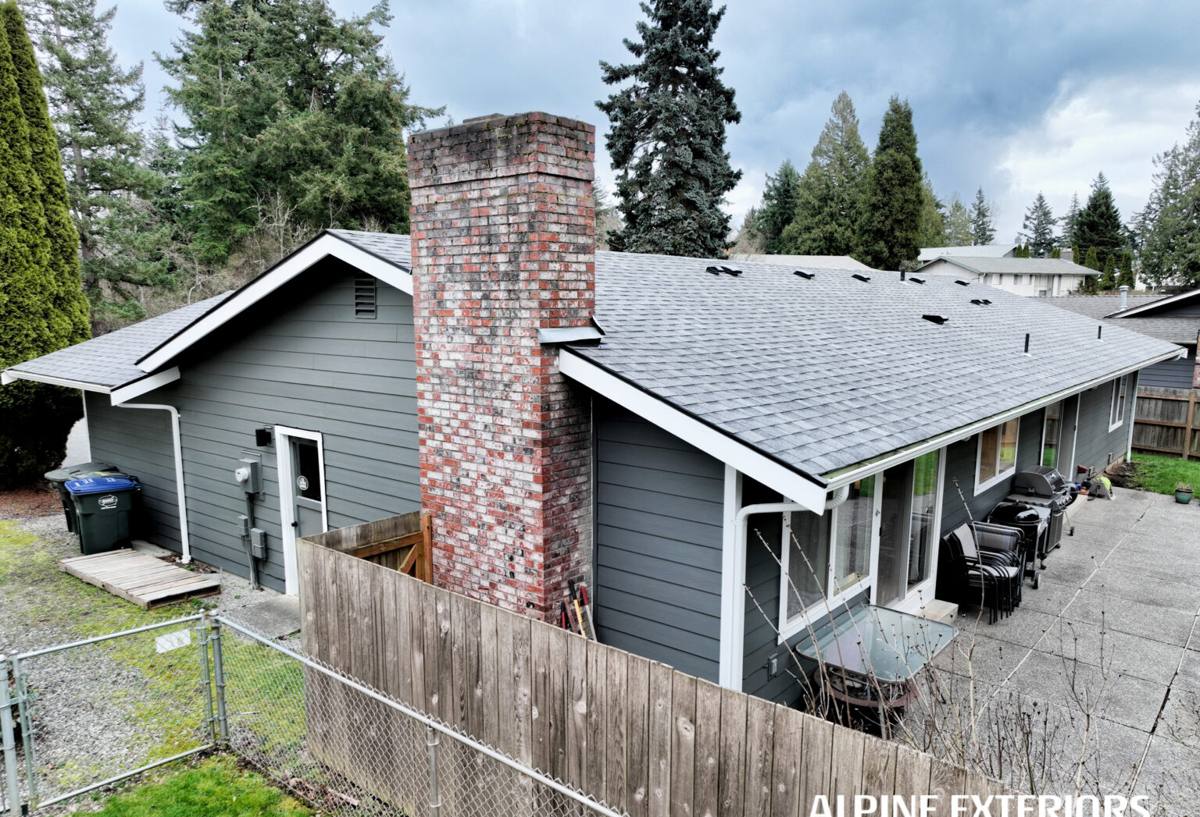
What "Board and Batten" Actually Means With James Hardie
Board and batten isn't a single product — it's a siding pattern: wide vertical panels with narrower strips (battens) covering the seams between them. Historically that was done with solid wood boards. Today, when we build this look, we do it exclusively with James Hardie fiber cement — typically HardiePanel vertical siding paired with HardieTrim battens, or in higher-design applications, Hardie's Artisan-tier trim components. The vertical panel carries the wall, the battens cover the seams and add the shadow line, and the whole system is engineered to be non-combustible, dimensionally stable, and factory-finished.
That distinction matters more in Edgemoor than in a lot of other neighborhoods, because homes here often sit closer to salt spray and full weather exposure than homes further inland. A board and batten system built from real wood or from lower-grade composite trim is going to show that exposure a lot faster than one built from climate-engineered fiber cement.
Why the Pattern Is More Installation-Sensitive Than Lap Siding
Every horizontal batten-to-panel seam and every vertical joint is a potential water entry point if it isn't detailed correctly. Board and batten has more linear feet of seam per square foot of wall than standard lap siding, which means:
- Panel joints need proper flashing and correct overlap — not just caulk covering a gap
- Battens need consistent, code-compliant fastening patterns so they don't work loose in wind
- A drainage plane (rainscreen or weather-resistive barrier with a gap) behind the siding matters more, because any moisture that gets past the surface needs somewhere to go
- Butt joints between panel lengths need to be flashed, not just butted and caulked
Done right, this is a durable, low-maintenance exterior. Done as a "nail boards to the wall and caulk the seams" job, it's a callback waiting to happen — and in a wet, shaded climate like Bellingham's, that callback tends to arrive as a moisture or moss problem within a few winters.
What Edgemoor's Climate Actually Does to a Board and Batten Wall
Three things stack up against exterior siding in this part of Whatcom County, and Edgemoor gets a concentrated version of all three:
Salt air
Proximity to Bellingham Bay means airborne salt settles on exterior surfaces and accelerates corrosion of fasteners and metal flashing, and it can degrade lower-grade trim and paint finishes faster than the same product would wear inland.
Driving, wind-driven rain
Storms coming off the water don't fall straight down — they drive rain sideways into vertical siding seams and trim edges. Board and batten's vertical joint lines are directly in the path of that kind of weather, which is exactly why joint detailing and drainage planes aren't optional extras here.
A long moss season
Between the marine humidity and heavy tree cover common on Edgemoor's wooded lots, siding here spends a good part of the year staying damp in shaded areas. Moss and algae growth on siding isn't just cosmetic — sustained moisture against a wall surface is what eventually finds its way into a poorly sealed seam.
None of this means board and batten is a bad choice for Edgemoor. It means the product and the installation both need to be built for this specific climate, not a generic one.
Why James Hardie Is the Only Way We Build This Look
We get asked why we won't do board and batten in cedar, in vinyl, or in LP SmartSide, and the honest answer is trade-offs, not brand loyalty.
Real wood board and batten looks great on day one. It also needs regular repainting or staining, is vulnerable to moisture absorption at end grain and joints, and in a wet, shaded climate like this one, it's one of the higher-maintenance exterior choices available. Vinyl board and batten avoids the rot issue but it's a thin, flexible material that can look visibly cheap up close, shows heat and cold distortion, and isn't repairable in sections the way fiber cement is. Engineered wood products like LP SmartSide perform reasonably well when properly sealed and maintained, but they're wood-based at the core, meaning cut edges and joints still need diligent field sealing to keep moisture out over the long run — a real risk in a climate this wet.
James Hardie's fiber cement is cement-based, not wood-based. It doesn't absorb water the way wood products do, it's non-combustible, and it carries a factory-applied ColorPlus finish that's engineered to hold up under UV and moisture exposure without the repaint cycle wood siding demands. Hardie also builds its panel products in climate-specific HZ formulations — the Pacific Northwest falls under HZ5 engineering, meaning the product itself is manufactured with this region's moisture and temperature swings in mind, not a one-size-fits-all national spec.
Board and Batten Siding Options Compared
| Material | Moisture behavior | Maintenance | Fire rating | Longevity in this climate |
|---|---|---|---|---|
| Solid wood | Absorbs moisture at joints and end grain | Repaint/restain every few years | Combustible | Shortest without vigilant upkeep |
| Vinyl | Doesn't absorb water, but seams can trap it | Low, but can't be spot-repaired well | Combustible | Moderate; can warp/fade |
| LP SmartSide | Engineered wood core, needs sealed edges | Moderate; edge sealing is critical | Combustible | Good if maintained diligently |
| James Hardie fiber cement | Cement-based, doesn't absorb/swell | Low; factory finish, no repainting cycle | Non-combustible | Longest when installed to spec |
Color and Finish for a Board and Batten Exterior
One advantage of doing this style in Hardie versus wood: the ColorPlus finish is baked on at the factory under controlled conditions, not brushed on-site. For board and batten specifically, that matters because you've got two surfaces — panel and batten — that need to match perfectly and weather evenly together over time. A factory-matched system holds its color and sheen consistently across both, rather than a field-painted batten slowly drifting from a field-painted panel as UV and salt air work on them differently. Hardie's ColorPlus palette runs from deep, modern charcoals and greens to warmer traditional tones, which gives Edgemoor's mix of contemporary and traditional home styles real flexibility without sacrificing the factory finish's durability.
Our Process for an Edgemoor Board and Batten Job
We already work in this neighborhood regularly, which means we're not learning Edgemoor's wind exposure, tree cover, or bluff-adjacent weather patterns on your project. Our process:
- On-site assessment — we look at your specific exposure: how close to the water, how much tree canopy and shade, which walls take the worst of the driving rain
- Tear-off and sheathing check — we inspect what's underneath before covering it up; existing moisture damage gets addressed, not sealed over
- Drainage plane installation — a proper weather-resistive barrier and drainage gap behind the panel, not just siding nailed straight to sheathing
- Panel and batten installation to Hardie's fastening and joint specifications — correct nailing pattern, correct joint flashing, correct clearances at grade and trim
- Final detailing — caulking only where Hardie's install guide calls for it, not as a substitute for proper flashing
What to Check Before Hiring Anyone for Board and Batten Siding
- Ask specifically how they'll detail the drainage plane behind the panels — not just what siding brand they use
- Confirm they're following James Hardie's published fastening and clearance specifications, not a generic install
- Ask how they handle butt joints on longer wall runs — this is where a lot of amateur board and batten work fails first
- Get clarity on which HZ product line they're specifying — this region calls for HZ5-engineered product
- Ask whether they've worked on homes with similar shade and moisture exposure, not just similar square footage
What This Means for Your Edgemoor Home
Board and batten is a strong architectural choice for the wooded, waterfront-adjacent character of Edgemoor, but it only pays off long-term if the material and the installation both account for salt air, driving rain, and a shaded, moss-heavy climate. That's the whole reason we standardized on James Hardie rather than offering wood, vinyl, or engineered wood alternatives — we'd rather build one system correctly than offer three and hope the cheapest one holds up.
If you're weighing board and batten for a home in Edgemoor, we're happy to come take a look, walk the exposure on your specific lot, and put together a straightforward, no-pressure estimate — use the form below to get started.