 Bellingham Roofing
 Board & Batten Siding for Sunnyland Homes
Sunnyland sits close enough to Bellingham Bay and the surrounding tree canopy that its homes take on a specific mix of weather stress: salt-tinged marine air, wind-driven rain off the water, and long stretches of shade that keep siding damp far longer than homes in drier parts of Whatcom County. Board and batten siding is a popular choice in this neighborhood because of its clean, vertical lines and the way it suits the mix of older bungalows and newer infill homes found here — but the style only performs as well as the material and installation behind it. A batten is, structurally, a strip of material fastened over a seam or a panel joint. If the material underneath that batten swells, rots, or lets water track behind it, the siding fails from the inside out long before it looks bad from the street.
We install board and batten siding exclusively in James Hardie fiber cement, and this page walks through what that means specifically for a Sunnyland property: what the local climate does to vertical siding over time, what a correct installation actually involves, and why the material choice matters as much as the crew doing the work.
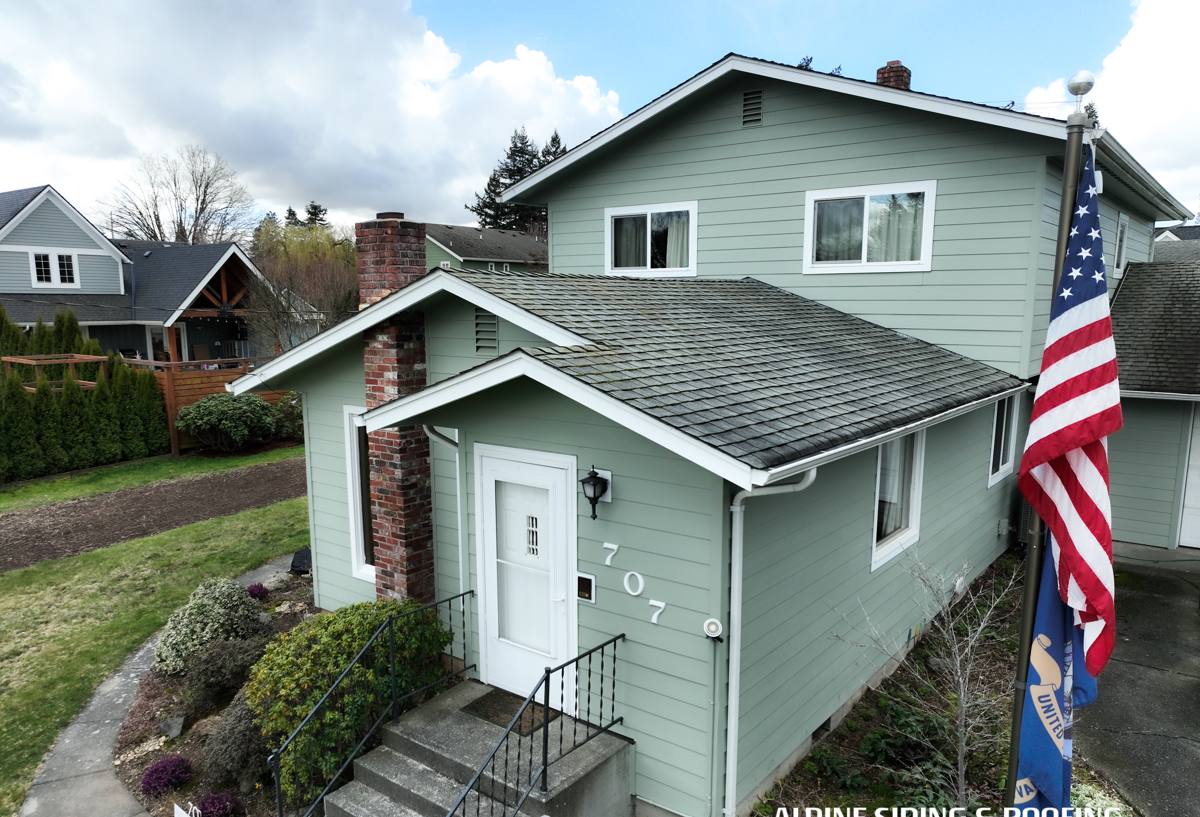
Why Sunnyland's Climate Is Hard on Vertical Siding
Salt Air and Coastal Moisture
Homes anywhere near Bellingham Bay live with a low but constant dose of salt-laden air. Salt is hygroscopic — it pulls moisture out of the atmosphere and holds it against whatever surface it lands on. On board and batten siding, that means the vertical battens and the panel seams beneath them stay slightly damp more often than a flat wall would. Over years, that steady low-grade moisture is what breaks down materials that aren't engineered to shrug it off.
Driving Rain and Wind-Driven Water
Bellingham's rain rarely falls straight down. Storms off the water tend to drive rain sideways, and vertical board and batten profiles catch that wind-driven water differently than horizontal lap siding does. Every batten edge and every panel joint is a potential entry point if the flashing and water-resistive barrier behind it aren't detailed correctly. This is less about how much rain Whatcom County gets and more about the angle it arrives at.
Moss, Algae, and a Long Shade Season
Sunnyland's mature trees are part of the neighborhood's character, but they also mean many homes get filtered light for a large part of the year. Combined with the region's long moss season, north-facing and tree-shaded walls stay damp for extended stretches between rain events. Siding materials that absorb moisture give moss and algae something to root into; materials that don't absorb moisture just get rinsed clean.
What a Correct Board & Batten Installation Involves
The Panel-and-Batten System
Proper board and batten siding is a system, not just a decorative pattern of vertical strips. It starts with a backing panel installed over a code-compliant water-resistive barrier, followed by vertical battens fastened at engineered spacing over the panel seams. Every layer has a job: the barrier stops bulk water from reaching the wall sheathing, the panel provides the structural surface, and the battens both create the visual reveal and shield the seams underneath from direct weather.
Water Management Behind the Battens
The part homeowners never see is the part that determines whether the siding lasts. Battens need to allow any moisture that does get behind them to drain and dry out — not trap it. That means correct fastener placement, proper gapping at panel joints, and flashing details at every window, door, and roofline intersection where the vertical siding meets another surface. Skipping or rushing these details is the single most common cause of siding failure we see, regardless of the material installed over top.
Fastening and Flashing Details
Fiber cement has specific fastening requirements — nail or screw type, spacing, and penetration depth all affect long-term performance and warranty coverage. Manufacturer installation instructions exist for a reason, and with James Hardie products, following them precisely is what keeps the factory warranty intact. We follow those specifications on every board and batten job, including the corner boards, trim, and transitions that are easy to shortcut but are usually where problems start.
Why We Only Install James Hardie Fiber Cement
We've made a standing decision not to install vinyl, LP SmartSide, Cemplank, Allura, primed spruce, or raw cedar board and batten siding. That's not a knock on every homeowner who has one of these products on their house today — it's a reflection of what we've seen hold up over time in a climate like Bellingham's, and what we're willing to put our name behind.
| Material | Moisture & Salt-Air Behavior | Moss/Algae Resistance | Typical Maintenance | Fire Rating |
|---|---|---|---|---|
| James Hardie fiber cement | Cement-based, does not swell or rot from moisture exposure | Non-organic surface resists growth better than wood-based products | Occasional rinse; ColorPlus finish is factory-baked, not field-painted | Non-combustible |
| LP SmartSide (engineered wood) | Wood-fiber core is vulnerable if edges or cuts aren't fully sealed | Organic wood content can support growth if surface stays damp | Periodic inspection of seams, caulk, and field-applied finish | Combustible (treated wood product) |
| Vinyl | Won't rot, but flexes/warps with heat and can let water track behind panels | Smooth surface resists growth reasonably well when clean | Low, but damaged panels are hard to color-match and replace | Combustible, can deform in heat |
| Cedar / primed spruce | Natural wood absorbs moisture; performance depends heavily on upkeep | Organic material is naturally susceptible without consistent maintenance | Regular re-staining or repainting, sealing cut ends | Combustible |
James Hardie's fiber cement is engineered specifically to resist moisture absorption, which is the root cause behind most of the siding problems we see in shaded, damp neighborhoods like Sunnyland. It's also non-combustible, holds a factory-applied ColorPlus finish that doesn't need repainting on the same schedule as field-finished wood products, and carries a strong transferable warranty when installed to Hardie's specifications. That combination is why we standardized on it rather than offering a menu of siding materials.
Our Board & Batten Process for Sunnyland Properties
- On-site assessment: We look at your home's exposure — shade, wind direction, proximity to the water — and check the current wall assembly for any existing moisture or rot issues before proposing a scope.
- Product and reveal selection: We help you choose panel width, batten spacing, and ColorPlus color based on your home's style and what performs well in this climate.
- Tear-off and inspection: Removing the existing siding lets us inspect and, if needed, repair sheathing before anything new goes on — covering a hidden problem never ends well.
- Water-resistive barrier and flashing: This layer gets installed and detailed at every penetration, window, and door before a single panel goes up.
- Panel and batten installation: Fastened to James Hardie's specifications for spacing, penetration, and clearance.
- Final finish and walkthrough: Trim, caulking, and touch-up work completed, followed by a walkthrough so you know what to expect from the material going forward.
Choosing Reveal and Color for a Sunnyland Home
Board and batten reads differently depending on batten spacing and panel reveal — wider spacing gives a bolder, more modern look, while tighter spacing reads closer to traditional farmhouse styling. Because ColorPlus finishes are baked on at the factory rather than sprayed or brushed on-site, the color holds its tone through Bellingham's wet winters and won't need repainting on the timeline that field-applied paint or stain does. We'll walk through available profiles and colors during your estimate so the finished look fits both your home and the surrounding street.
Maintaining Board & Batten Siding in a Moss-Prone Climate
Fiber cement is low-maintenance compared to wood-based alternatives, but "low-maintenance" doesn't mean "no maintenance" — especially on shaded walls in a neighborhood like Sunnyland. A little seasonal attention goes a long way toward keeping the siding, and the trim work around it, performing the way it should.
- Rinse siding (especially north- and tree-facing walls) once or twice a year to clear early moss and grime before it takes hold
- Keep vegetation and tree limbs trimmed back so walls get airflow and sunlight to dry out between rains
- Inspect caulking around windows, doors, and trim annually and re-caulk any cracked or separated joints
- Check that gutters and downspouts are directing water away from siding, not draining down the wall face
- Look at panel bottoms and corner boards each fall for any signs of moisture staining before winter storms set in
Why Hire a Crew That Already Works Sunnyland
Siding performance in Bellingham isn't generic — it depends on which direction a wall faces, how much tree cover it sits under, and how exposed it is to weather coming off the bay. A crew that already works in and around Sunnyland has a feel for those variables and doesn't have to guess at flashing and water-management details that matter more here than they would in a drier inland climate. That familiarity shows up in the details you won't see for years: the flashing behind a window, the gap at a panel seam, the fastener spacing on a shaded wall that stays damp longer than the rest of the house.
If you're planning a siding project in Sunnyland and want to talk through what board and batten in James Hardie fiber cement would look like on your home, we're happy to walk the property with you and put together a straightforward, no-pressure estimate.