 Bellingham Roofing
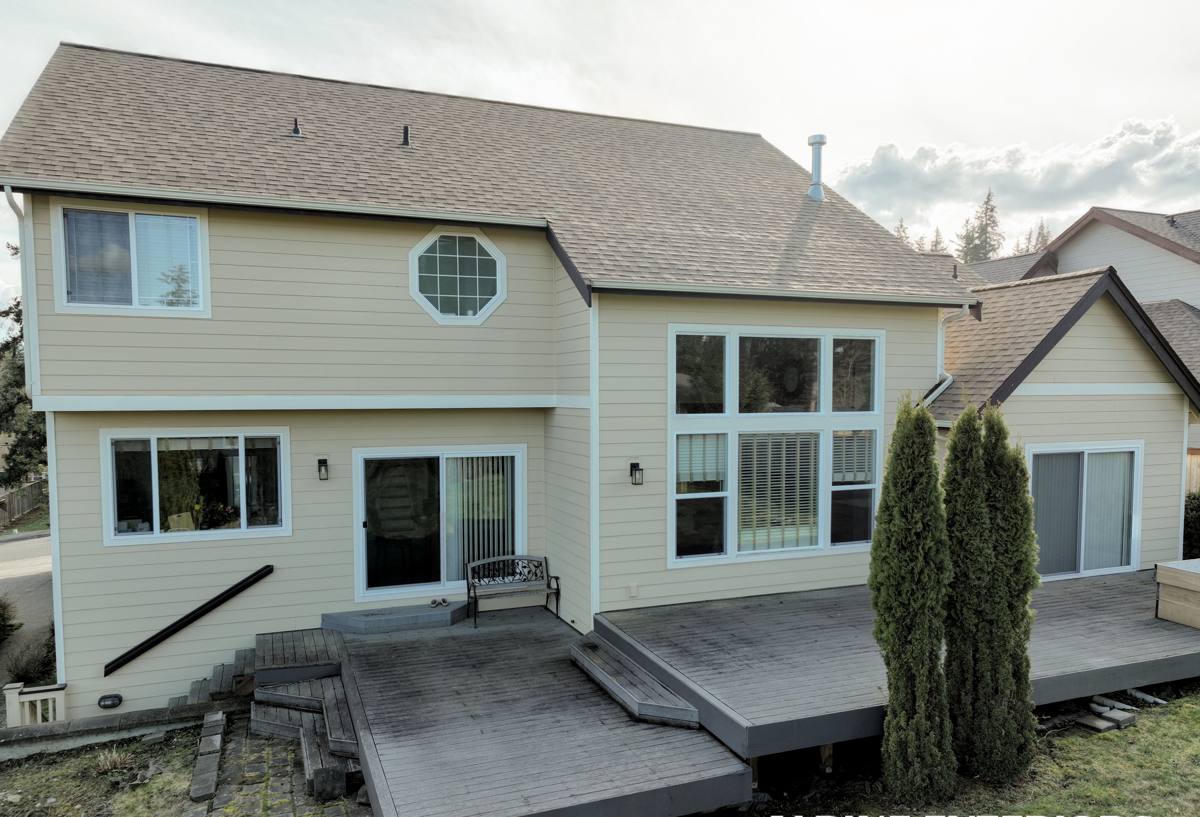
 Decks in Columbia Face a Specific Kind of Wear
The Columbia neighborhood sits close enough to Bellingham Bay that salt-laden air is part of daily life, and it's shaded by enough mature trees that a lot of decks here almost never get a full day of direct sun. That combination — salt air, heavy tree cover, and Whatcom County's long, wet winters — is hard on exterior wood and hardware in ways that don't show up the same way in drier parts of the state. Decks don't fail because the wood was bad or the original build was careless. They fail because moss, moisture, and driving rain get into places builders didn't expect them to, year after year, until something gives.
A deck repair here isn't just about swapping a few boards. It's about understanding where water actually travels once it lands on a deck surface in this climate, and fixing the parts of the structure that are quietly absorbing that damage out of sight.
Why Moss, Rain, and Salt Air Matter More Than You'd Think
Moss season is longer here
In shaded yards like many in Columbia, moss and algae can hold moisture against decking boards for months at a time. That constant dampness softens wood fibers, breaks down fastener coatings, and creates a slick, slippery surface long before any rot is visible from the top.
Driving rain finds the gaps
Wind-driven rain off the bay doesn't just fall straight down — it gets pushed sideways into ledger boards, stair stringers, and the underside of railings. Over time it works into joints and seams that were fine when the deck was new but have since opened up slightly with normal wood movement.
Salt air accelerates metal fatigue
Fasteners, joist hangers, and post brackets all corrode faster in salt-exposed air. A hanger that would last decades inland can weaken sooner here, and a corroded hanger under a deck board looks fine until it's tested by weight.
Signs Your Deck Needs Repair, Not Just Cleaning
Some deck problems are obvious. Others hide until someone steps in the wrong spot. Here's what we look for, and what homeowners should check for themselves between professional inspections:
- Boards that feel spongy, bouncy, or slightly soft when you press on them with your foot
- Persistent moss or black-green staining that comes back within weeks of cleaning
- Gaps opening up where the deck meets the house (the ledger board connection)
- Rust streaks running down from fasteners or metal connectors
- Railings or guardrails that wiggle or flex when leaned on
- Stair treads or stringers that feel uneven or slightly loose underfoot
- Visible daylight or gaps where support posts meet the ground or a concrete footing
- A musty smell coming from underneath the deck, especially after rain
Any one of these on its own might be minor. Several together usually mean moisture has been working on the structure for a while.
What a Correct Deck Repair Actually Involves
A repair that just replaces the boards you can see is a temporary fix if the framing underneath is compromised. A proper repair works from the structure outward:
1. Check the ledger board connection first
This is the board that bolts the deck to the house, and it's the single most common source of hidden rot on older decks in wet climates. If flashing was never installed here, or has failed over the years, water can run behind the ledger and into the house's rim joist without ever being visible from outside.
2. Inspect joists, beams, and posts
Framing lumber that's been sitting under a deck surface for years can look sound from a quick glance and still be soft or delaminating where it's been holding water. We probe suspect areas rather than assume they're fine because the top boards look okay.
3. Evaluate posts at grade and footings
Where a post meets the ground or a concrete pier is one of the wettest spots on any deck. Posts set directly in soil or sitting in standing water at the base are a common weak point we check closely.
4. Address fasteners and hardware
Corroded nails, screws, and joist hangers get replaced with hardware rated for exterior and, where relevant, coastal-adjacent exposure — not just whatever matches what's already there.
5. Rebuild guardrails and stairs to code
Railing height, baluster spacing, and stair rise-and-run all have code requirements. A repair is a natural point to bring older construction up to current standard, especially if the deck was built before current codes were adopted.
Common Problem Areas We See on Columbia Decks
Every deck is different, but in this neighborhood's mix of mature-tree shade and bay-influenced weather, a few problem areas come up repeatedly:
| Area | Typical Issue | Why It Happens Here |
|---|---|---|
| Ledger board | Hidden rot behind the deck-to-house connection | Missing or failed flashing lets driving rain track behind the board |
| Under-deck framing | Soft or delaminating joists | Shade from trees slows drying between rain events |
| Posts at grade | Base rot or corrosion of post brackets | Standing moisture and salt-air exposure at ground level |
| Decking surface | Persistent moss, slick footing | Limited direct sun keeps boards damp longer |
| Fasteners/hardware | Rust staining, weakened hangers | Salt air speeds up corrosion of exposed metal |
Repair vs. Replace
Not every deck problem calls for a full teardown, but not every deck is worth patching either. This is usually a judgment call based on how much of the structure is affected:
| Factor | Favors Repair | Favors Full Replacement |
|---|---|---|
| Framing condition | Isolated soft spots, mostly sound joists/beams | Widespread rot across multiple joists or beams |
| Ledger board | Solid, properly flashed | Rotted or never flashed correctly |
| Age of deck | Newer construction with a localized issue | Older deck already near the end of its service life |
| Code compliance | Railings/stairs already meet current code | Multiple code issues that would need reworking anyway |
| Budget goal | Extend usable life a number of years | Want a longer-term reset and possible layout changes |
We'll tell you honestly which category your deck falls into rather than defaulting to the bigger job. Plenty of decks with a rotted ledger board and otherwise sound framing are good candidates for a targeted, more affordable repair.
Our Deck Repair Process
- Inspection. We walk the full deck, probe suspect framing, and check the ledger connection, posts, and hardware — not just the visible surface.
- Written scope. You get a clear explanation of what's failing, why, and what's actually needed to fix it — no upsizing the job unnecessarily.
- Structural repair first. Framing, ledger flashing, and posts get addressed before any surface work, since surface boards are only as good as what's underneath them.
- Surface and safety work. Decking, railings, and stairs get repaired or replaced and brought up to current code where applicable.
- Moisture management. Flashing, fastener choice, and drainage details are handled with this area's rain and humidity in mind, not a generic install.
Material Considerations for Repairs
When we replace framing or decking, the material choice matters more in this climate than in drier regions:
- Pressure-treated framing lumber is the standard for structural repairs — it resists rot better than untreated wood in ground-contact or damp conditions.
- Cedar is a common choice for visible decking on older homes wanting to match existing wood, but it needs regular maintenance to hold up to moss and moisture here.
- Composite decking resists moss staining and moisture absorption better than wood, though it comes with a higher upfront cost and its own installation requirements around ventilation and fastening.
- Flashing tape and metal flashing at the ledger board are non-negotiable in our repairs — this single detail is behind most of the hidden rot we find.
- Stainless or coated exterior-rated hardware is worth the modest upcharge anywhere exposed to salt air, including most of Columbia.
We'll walk through the trade-offs honestly based on your deck's exposure, your maintenance appetite, and your budget — there's no single right answer for every home.
Timing Repairs Around the Wet Season
Whatcom County's wettest months make new construction and major repairs harder to schedule and cure properly. Late spring through early fall gives framing lumber and any sealants or coatings the best chance to dry and set correctly. That said, urgent structural issues — a soft ledger board, a failing post, a wobbly railing — shouldn't wait for ideal weather. We handle those on the timeline safety requires and work around conditions as needed; it's the cosmetic and non-urgent work that benefits most from waiting for a drier stretch.
Why Hire a Crew That Already Works in Columbia
A contractor who's worked on decks throughout Bellingham and greater Whatcom County knows which problems show up in shaded, bay-adjacent neighborhoods like Columbia before they even start the inspection. That means checking the ledger flashing first instead of last, knowing which hardware actually holds up to this air, and not being surprised by how much moisture can be trapped under a deck that looks dry on top. It also means familiarity with local permitting expectations, since deck repairs involving structural framing or railings can require a permit through the City of Bellingham depending on scope.
If your deck in Columbia is showing soft spots, moss that won't quit, or a railing that doesn't feel as solid as it used to, we're happy to take a look. We offer free, no-pressure estimates — use the form below to get one scheduled.