 Bellingham Roofing
 Why Windows Take a Different Kind of Beating in Columbia
The Columbia neighborhood sits close enough to Bellingham Bay that its houses deal with a climate load most inland Whatcom County homes don't see in the same combination: salt-laden air off the water, wind-driven rain that hits window assemblies sideways instead of straight down, and a moss season that can stretch across most of the year in shaded, north-facing exposures. None of these are dramatic on their own. Together, over a decade or two, they're exactly what wears out window seals, frames, and glazing units faster than the manufacturer's warranty paperwork suggests.
A lot of the housing stock in and around Columbia is older — original wood windows, early-generation aluminum, or a first round of vinyl replacements installed decades ago before flashing details and glazing technology caught up to what's standard now. That mix means every property we look at in this neighborhood tends to need a slightly different answer, not a one-size install.
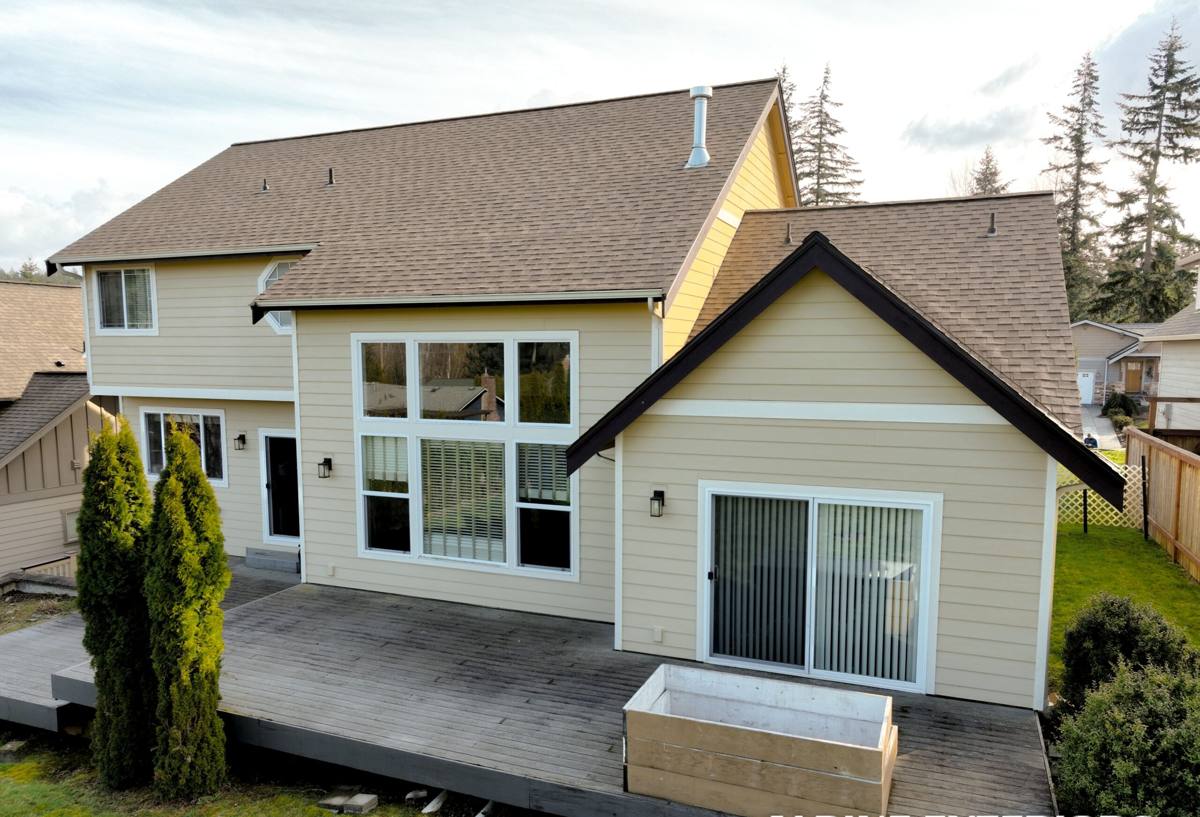
What "Energy-Efficient" Actually Means Here
Energy-efficient windows aren't just about a lower heating bill, though that matters. In a marine climate like Bellingham's, the more important job a window does is manage moisture and pressure — because a window that's leaking heat is usually also a window that's letting in bulk water or trapping condensation, and that's the failure that actually rots a frame or a wall cavity.
The specs that matter in this climate
- U-factor — how much heat passes through the window assembly. Lower is better for our winters, but it's only half the story here.
- Condensation resistance — how well the glazing and frame resist interior fogging and frost during our cold, damp stretches. This matters more here than it does in a dry climate.
- Air infiltration rating — how tight the sash and frame seal against wind-driven rain, not just drafts.
- Glazing package — double-pane with low-E coating and argon or krypton gas fill is the practical baseline for this region; triple-pane can make sense on north- and west-facing walls that take the worst of the weather.
Salt air accelerates corrosion on hardware, weep systems, and lower-quality metal components, so we also weigh hardware finish and weep design more heavily on properties within a few blocks of the water than we would inland.
Signs Your Current Windows Are Underperforming
Most homeowners don't notice window failure until it's visible, but there are earlier signs worth checking for — especially before winter storm season.
- Condensation or fogging between the panes (a sign the seal has failed and the gas fill is gone)
- Visible moss or dark staining building up on sills, especially on shaded or north-facing walls
- Drafts you can feel with a hand near the frame on a windy day
- Paint or trim around the window peeling or bubbling, which often points to trapped moisture behind the casing
- Difficulty opening, closing, or latching — frames can swell or warp with repeated wet-dry cycles
- A noticeably colder room near the window even when the rest of the house is comfortable
Any one of these on its own isn't an emergency. Two or three together, especially on the same window, usually means the assembly is past the point where caulk and weatherstripping will fix it.
What a Correct Installation Actually Involves
The window unit itself is only part of the job. In a wind-driven-rain climate, the installation details around the window are what determine whether it performs for twenty years or starts leaking in three.
Flashing and water management
Every opening needs proper flashing integration with the existing wall assembly — sill pan flashing at minimum, with head and jamb flashing that ties into the house wrap or building paper correctly. This is the step that gets rushed on lower-end replacement jobs, and it's the one that causes hidden rot behind the wall years later. It doesn't show up as a problem on install day; it shows up as a problem when someone opens up the wall for an unrelated repair.
Sealing without trapping moisture
Sealant has to go in the right places and be left open in others. A window that's sealed on all four sides with no way for incidental moisture to escape will trap water instead of shedding it. Getting this balance right is a judgment call based on the specific wall assembly, not a step you can standardize across every house.
Fit and shimming
Older Columbia homes often have openings that have shifted slightly out of square over the decades. A correct install accounts for that with proper shimming and leveling rather than forcing a factory-square unit into an opening that isn't, which stresses the frame and shortens the life of the seals.
Comparing Frame Materials for This Climate
There isn't one universally "best" frame material — the right choice depends on the home's exposure, budget, and how much upkeep you want to take on. Here's how the common options stack up for a salt-air, high-rainfall setting like Columbia.
| Material | Moisture & Salt Air Behavior | Maintenance | Typical Cost Position |
|---|---|---|---|
| Vinyl | Good — won't rot or corrode; performs well in this climate | Low — occasional cleaning | Lower to mid |
| Fiberglass | Very good — dimensionally stable through wet-dry and temperature swings | Low | Mid to higher |
| Wood-clad (exterior clad) | Good if cladding and flashing details are correct; interior wood offers a traditional look | Moderate — clad exterior is low-upkeep, but any exposed wood or damaged cladding needs prompt attention | Higher |
| Aluminum | Prone to corrosion in salt air unless it's a marine-grade finish; also a weaker thermal performer | Moderate to high depending on finish | Lower to mid |
For most Columbia homes we recommend vinyl or fiberglass as the practical default given the salt exposure and rainfall — not because other materials are bad products, but because they hold up with the least ongoing attention in this specific environment. Wood-clad remains a solid choice for homeowners who want that look and are willing to keep an eye on the cladding and any exposed wood trim.
Our Process for a Columbia Window Project
We keep the process straightforward and try to minimize disruption to the house, especially since most replacement work happens room by room in an occupied home.
- On-site assessment — we look at every opening individually, checking for existing water damage, out-of-square framing, and exposure direction, since a west-facing window on an unshaded wall needs a different approach than a sheltered one.
- Measurement and product selection — we walk through glazing package, frame material, and grille or hardware options based on the home's exposure and your budget, not a default upsell.
- Removal and opening prep — old units come out carefully so we can inspect the framing and sheathing underneath before anything new goes in. If there's hidden rot, we address it before installing, not after.
- Flashing and installation — proper sill pan, jamb, and head flashing integrated with the existing water-resistive barrier, then the window is set, shimmed, and fastened per manufacturer spec.
- Sealing and finish work — exterior and interior trim, sealant, and a final check of operation and weatherproofing before we call it done.
- Cleanup and walkthrough — we clear debris and walk you through how the new windows operate and what maintenance, if any, they'll need.
Why Local Experience with Columbia Homes Matters
A crew that's worked this specific neighborhood knows things a generic install team doesn't — which blocks tend to have older wall assemblies that need extra flashing attention, which orientations take the worst of the wind off the bay, and how moss and moisture build differently on shaded lots than on open ones. That familiarity shows up in fewer surprises during the job and fewer callbacks after it.
It also matters for code and permitting. Bellingham and Whatcom County have their own permit requirements and inspection expectations for window replacement, particularly when the work involves altering the opening size or affects egress requirements in bedrooms. Knowing that process ahead of time keeps a project from stalling partway through.
Maintaining Energy-Efficient Windows in a Salt-Air, Moss-Prone Climate
Even a well-installed window benefits from basic upkeep in this environment:
- Rinse salt residue off frames and hardware periodically, especially on water-facing elevations
- Clear moss and organic debris from sills and tracks before it holds moisture against the frame
- Check and clean weep holes so water can drain out rather than pool
- Inspect exterior caulking annually and touch up any cracked or separated sealant
- Operate hardware occasionally through the wet season so mechanisms don't seize
None of this is heavy work, but skipping it is how a well-installed window ends up with an avoidable problem a few years down the line.
Get a Straightforward Assessment
If you're not sure whether your current windows are worth repairing, resealing, or replacing, we're happy to take a look and give you an honest read on where things stand. Reach out for a free, no-pressure estimate using the form below.