 Bellingham Roofing
 Roof Repair Built for Columbia's Weather, Not Just Any Weather
Homes in the Columbia neighborhood face a specific combination of conditions that a lot of roofing advice online simply doesn't account for. You're close enough to the water to get salt-laden air working on your metal flashing and fasteners, you're in a part of Whatcom County that sees long stretches of driving, wind-blown rain, and you're under enough tree cover in places that moss and moisture have months at a time to work into a roof system. None of that is unusual for Bellingham. But it does mean a roof repair here has to solve for a different failure pattern than a repair in a drier, sunnier climate, and it's why we treat Columbia roof repairs as their own category rather than a one-size-fits-all fix.
This page focuses on one job: repairing an existing roof on a Columbia-area home correctly, not tearing it off and starting over. Full replacement has its place, and we'll be straight with you about when that's the smarter move, but most of the calls we get from this neighborhood are about a leak, a soft spot, missing shingles after a windstorm, or moss that's finally caught someone's attention. Here's what a correct repair actually involves.
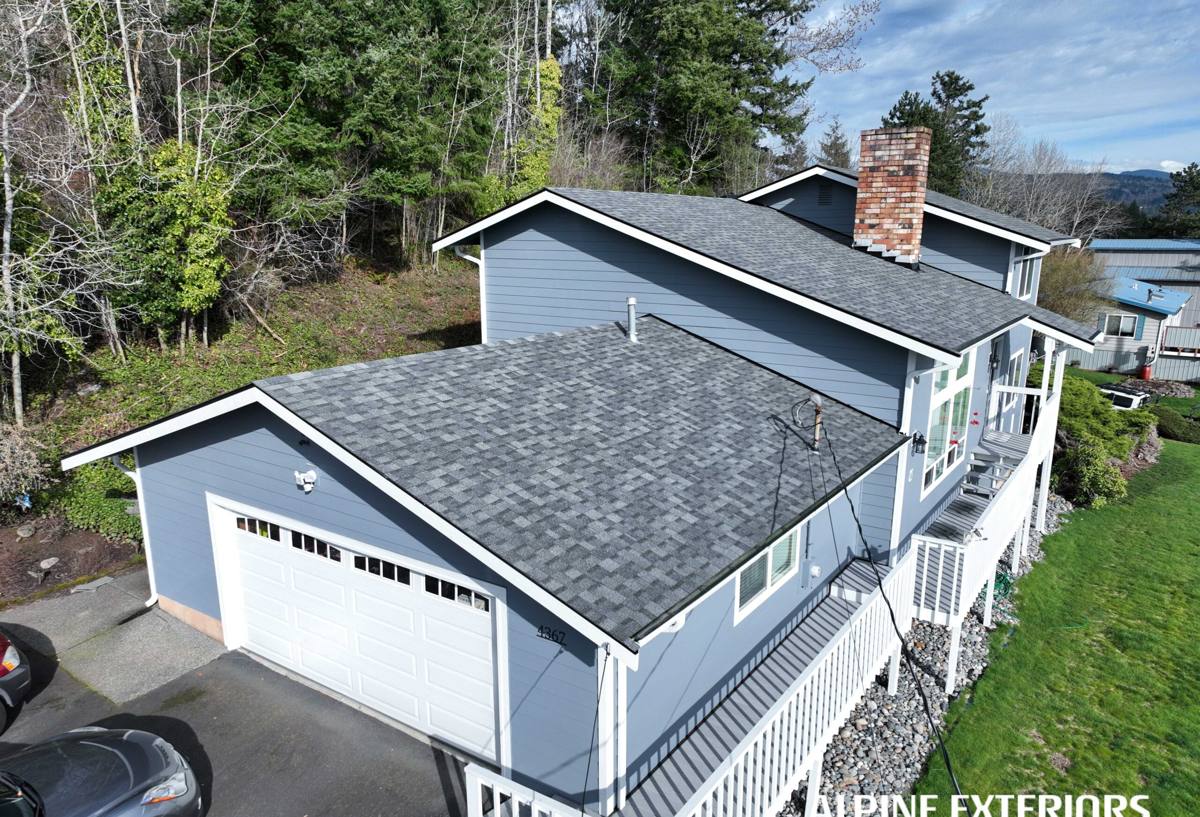
Why This Climate Is Hard on Roofs
Three things do most of the damage to roofs in this part of Whatcom County, and they compound each other.
Salt Air
Even a few miles inland from Bellingham Bay, airborne salt accelerates corrosion on exposed metal — nail heads, drip edge, flashing seams, and any fasteners that aren't rated for it. A repair that uses the wrong fastener or flashing metal might look fine for a year or two, then fail quietly at the exact spots most likely to cause a leak.
Driving Rain
Bellingham doesn't just get rain, it gets wind-driven rain that hits roof surfaces at an angle instead of falling straight down. That matters because it pushes water sideways into laps, valleys, and any gap in flashing that would stay dry in a calmer climate. A repair that isn't detailed at the valleys and penetrations can pass a dry-day inspection and still leak the first time a real Pacific storm rolls through.
Moss Season
Shade, moisture, and mild temperatures give moss and algae a long growing window on Bellingham roofs, and Columbia's tree cover makes this worse in the shadier lots. Moss isn't just cosmetic — it holds moisture against the roofing material, lifts shingle edges as it grows, and works its way under laps over time. By the time it's visible from the ground, it's often already affecting the roof underneath it.
Signs a Columbia Home Needs Roof Repair
Most roof problems give warning signs well before they become emergencies. Here's what we tell homeowners in this area to watch for:
- Moss buildup along ridges, valleys, or the north-facing slope of the roof
- Granules collecting in gutters or at the base of downspouts
- Curling, cracked, or missing shingles, especially after a windstorm
- Rust staining or visible corrosion on flashing, vents, or metal valleys
- Water stains on interior ceilings, especially near chimneys, skylights, or where two roof planes meet
- Daylight visible through the roof deck from inside the attic
- Sagging or spongy spots when walking the roof surface
- Gutters pulling away from the fascia or overflowing during normal rain
If you're seeing more than one of these, it's worth having someone look at the whole system, not just the spot that's obviously failing — leaks often show up several feet from where the water actually got in.
What a Correct Repair Actually Involves
Diagnosis Before Anything Gets Touched
A repair is only as good as the diagnosis behind it. We look at the roof from the deck up: the shingles or roofing material, the underlayment where it's exposed, the flashing at every penetration and valley, and the condition of the roof deck itself where we can access it. A leak that shows up in one room can easily originate several feet away, so we trace it rather than patching the first thing that looks wrong.
Moss and Debris Removal, Done Carefully
Moss has to come off without damaging the granule surface underneath it, which rules out pressure washing directly on asphalt shingles. We use methods that lift moss without stripping the shingle's protective granules, then treat the area to slow regrowth. This matters more in Columbia than in sunnier parts of town, simply because the shade means moss comes back faster if it isn't addressed properly the first time.
Flashing and Valley Work
Given how much of Bellingham's roof damage traces back to wind-driven rain, flashing detail is where a repair earns its keep. We replace corroded or undersized flashing at chimneys, skylights, and wall intersections, and we make sure valleys are lapped and sealed to shed water moving sideways, not just straight down.
Shingle, Underlayment, and Deck Repair
Damaged shingles get replaced with matching material where possible. Where underlayment has failed or the deck has soft spots from sustained moisture exposure, we address that layer too — patching over a wet or rotting deck just traps the problem under new material.
Fasteners and Metal Matched to the Environment
Because of the salt air near the water, we use fasteners and flashing metals suited to a coastal-influenced climate rather than whatever is cheapest. It costs a little more up front and saves the homeowner an early second repair.
Repair or Replace? An Honest Look at the Factors
Not every roof problem needs a full replacement, and not every roof is a good candidate for another repair. Here's how we think through it with homeowners:
| Factor | Leans Toward Repair | Leans Toward Replacement |
|---|---|---|
| Age of roof | Roof is under two-thirds of its expected service life | Roof is near or past its expected service life |
| Extent of damage | Damage is localized to one section or penetration | Damage is widespread across multiple slopes |
| Moss/algae history | First significant moss issue, deck still sound | Repeated moss damage with deck or underlayment compromise |
| Underlying deck condition | Deck is solid where exposed | Deck shows rot or soft spots in multiple areas |
| Budget timeline | Need a durable fix now, replacement planned later | Ready to solve the roof long-term in one project |
We'll always give you our honest read on which side of this table your roof falls on, including when a repair is genuinely the right call rather than a stopgap before a sale we'd rather make.
Our Repair Process, Step by Step
- Free on-site inspection of the roof, attic access where available, and any interior signs of leaking
- Written explanation of what we found, in plain language, with photos where useful
- A clear estimate that separates repair scope from any additional issues we found
- Scheduling that accounts for Bellingham's weather windows, so work isn't rushed into a storm
- The repair itself: removal of damaged material, deck check, correct flashing and fastener choices, and matching material installed to blend with the existing roof
- A final walk-through so you know exactly what was done and what to watch going forward
Materials We Work With
Columbia has a mix of roof types, and repair technique changes depending on what's already on the house.
Composition Shingle
The most common material in the neighborhood. Repairs focus on matching existing shingle profile and color as closely as possible and making sure the repaired section ties into the surrounding underlayment correctly.
Cedar Shake
Older homes in this area sometimes still have cedar. Repairs here require replacing individual shakes without disturbing the surrounding course, and paying close attention to moss and moisture retention, since cedar is less forgiving of trapped water than composition shingle.
Metal Roofing
Metal repairs are almost always about seams, fasteners, and flashing rather than the panels themselves. In a salt-air environment, we check for early corrosion at fastener points even when the panels look fine.
Why a Crew That Already Works Columbia Matters
A roofer who works this specific area regularly already knows which slopes tend to hold moss the longest, which flashing details fail first in a driving rain, and roughly what condition a roof of a given age is likely to be in before we ever climb a ladder. That local pattern recognition shortens the diagnosis and reduces the chance of a repair that solves the symptom but misses the cause. It also means we're not guessing at what "normal" looks like for a Bellingham roof versus a roof somewhere with a completely different climate.
Simple Maintenance That Extends a Repair
A good repair lasts longer with a little basic upkeep, especially in a moss-prone, high-rainfall climate like this one:
- Keep gutters and downspouts clear so water isn't backing up under the roof edge
- Trim back overhanging branches to cut down on shade and debris that feed moss growth
- Have the roof looked at after any major windstorm, even if nothing looks obviously wrong from the ground
- Address small moss patches early, before they spread across a full slope
- Check the attic occasionally for daylight, staining, or musty odors between scheduled inspections
Get a Straight Answer About Your Roof
If you're dealing with a leak, storm damage, or moss that's gone from a nuisance to a real concern, we're happy to come take a look and tell you honestly whether repair or replacement makes sense for your home. There's no pressure and no obligation — just a clear assessment from a crew that knows what this Bellingham climate does to a roof over time. Use the form below to request a free estimate.