 Bellingham Roofing
 Composite Decking Built for Puget's Marine Climate
Homes in the Puget area of Bellingham sit close enough to the water that the weather does things a deck in a drier inland town never has to deal with. Salt-laden air moves through year-round, driving rain comes in sideways off the Sound for months at a stretch, and a long, low-sun moss season turns any shaded or north-facing deck green if it isn't built and maintained with that in mind. A deck here isn't just an outdoor living space — it's an exterior structure that has to survive Whatcom County's marine climate the same way your siding and roofing do.
Composite decking has become the practical answer for a lot of homeowners in this area, not because it's trendy, but because it holds up to conditions that chew through untreated or poorly finished wood within a few seasons. This page covers what that climate actually does to a deck, what a correctly built composite deck involves, and how we approach the work for Puget homeowners specifically.
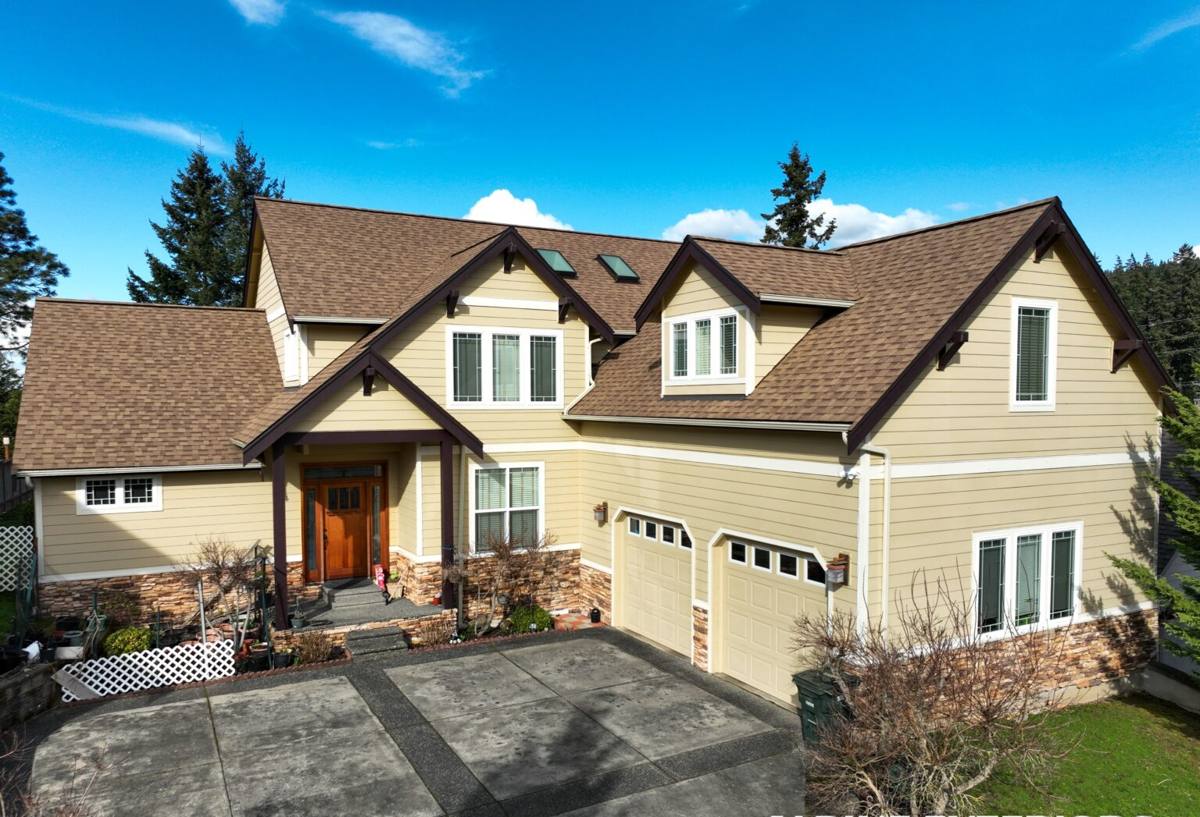
What Salt Air, Rain, and Moss Season Do to a Deck
Salt Air and Hardware
Airborne salt doesn't just affect homes right on the waterfront — it travels inland on wind and settles on any exposed surface, including deck hardware. Standard fasteners and connectors corrode faster in this environment than manufacturers' generic ratings assume. A deck built with the wrong grade of screws, joist hangers, or flashing can develop rust streaks and weakened connections well before the decking itself shows any wear.
Driving Rain and Rot at the House
Most deck failures we see don't start in the decking boards — they start where the deck meets the house. Driving rain forces water behind ledger boards and around poorly flashed connections, and that's where rot takes hold in the framing you can't see from the surface. In a climate that gets sustained wind-driven rain, that detail matters more here than it would in a calmer inland location.
Moss, Algae, and Slippery Boards
Bellingham's long stretch of overcast, wet months gives moss and algae plenty of time to establish on any deck surface that stays damp — especially boards under trees, on the shaded side of the house, or with poor airflow underneath. Beyond the appearance issue, a mossy deck surface gets genuinely slick, which is a real slip hazard on stairs and landings through fall and winter.
Wood vs. Composite: What Actually Holds Up Here
Both materials can work in this climate if they're installed correctly, but they ask very different things of a homeowner over time. Here's the honest comparison for a Puget-area deck specifically.
| Factor | Pressure-Treated Wood | Composite Decking |
|---|---|---|
| Moisture response | Absorbs water, swells and checks with wet/dry cycles | Resists water absorption, especially capped boards |
| Moss and algae growth | Textured grain gives moss more to grip in shaded, damp spots | Smoother, denser surface is harder for moss to establish on |
| Maintenance | Annual cleaning, sealing or staining to keep water out | Periodic washing; no sealing or staining required |
| Upfront cost | Lower material cost | Higher material cost |
| Long-term cost | Ongoing maintenance and earlier board replacement | Little to no recurring maintenance cost |
| Appearance over time | Grays and roughens unless consistently refinished | Color and texture stay stable with age |
Wood isn't a wrong choice — some homeowners like the look and don't mind the upkeep. But given the moss season and salt exposure specific to this area, we're upfront that composite is the lower-maintenance, more climate-appropriate option for most Puget homes, and we build it as our professional standard here.
What a Correct Composite Deck Installation Involves
Substructure and Framing
Composite boards are only as good as what's underneath them. Joist spacing has to match the manufacturer's requirements for the specific board profile — composite typically needs tighter joist spacing than wood decking, especially on angled or picture-frame layouts. We use framing hardware and fasteners rated for coastal/marine exposure, not generic hardware-store grade, because that's the detail that fails first under salt air.
Hidden Fastening and Board Spacing
Composite boards expand and contract with temperature more than wood does, so gapping between boards has to account for that movement — too tight and boards can buckle, too loose and the deck looks and feels sloppy. Hidden fastener systems keep the surface free of exposed screw heads, which also removes another point where water and salt residue can sit and corrode.
Flashing and Ledger Attachment
Where the deck attaches to the house is the single most important detail for a wet climate. Correct flashing directs water away from the ledger board and the house's wall assembly instead of letting it pool and work its way in. This is the step that gets rushed on cheap installs and is almost always the source of hidden rot problems years later.
Drainage and Airflow Underneath
A deck built low to the ground or without gaps for airflow traps moisture underneath, which feeds moss and mildew growth on the underside of boards and on the framing. We account for ventilation and drainage in the layout so the structure can actually dry out between the region's wet stretches instead of staying damp for weeks at a time.
Our Process for Puget Homeowners
Site Walk and Assessment
We look at sun exposure, shade patterns, proximity to the water, existing drainage around the foundation, and the condition of any structure we'd be tying into. A deck on the shaded, wetter side of a Puget lot gets a different plan than one on a sunny, more sheltered side of the same house.
Material Selection
We walk you through board tiers and finishes with the local climate as the deciding factor, not just budget or looks — though both matter too. If a lower-tier board is genuinely fine for your situation, we'll say so; if your site's moss and moisture exposure calls for a capped board, we'll explain why.
Installation
Framing, flashing, and fastening are done to the standards above, not just to pass a minimum inspection. We check joist spacing, flashing details, and board gapping against manufacturer specs at each stage rather than only at the end.
Final Walkthrough
Before we call it done, we walk the finished deck with you, cover basic care specific to this climate, and go over anything covered under the manufacturer's warranty versus our workmanship.
Choosing the Right Composite Board for This Climate
Not every composite board is built the same, and in a marine climate the differences matter more than they would somewhere drier. Broadly, expect installed composite decking in this region to run roughly $35–$65 per square foot depending on the factors below — wide ranges because board tier and structural complexity change the number a lot.
| Factor | Why It Matters Here |
|---|---|
| Capped vs. uncapped composite | A capped polymer shell resists moisture absorption and staining far better in wet, mossy conditions |
| Board density and profile | Denser boards resist swelling and are less prone to surface mold in shaded, damp spots |
| Fastener and hardware grade | Marine-rated fasteners resist salt-air corrosion better than standard exterior-grade hardware |
| Warranty structure | Fade, stain, and structural warranties vary by manufacturer — worth reading before choosing on price alone |
| Substructure material | Composite or treated-wood framing rated for ground contact affects long-term durability under the deck |
Maintaining a Composite Deck in a Moss-Prone, Salt-Air Environment
Composite decking is low-maintenance, not no-maintenance. A little seasonal attention goes a long way toward keeping it looking and performing the way it should in this climate.
- Rinse or lightly scrub the deck surface a few times a year, more often on shaded areas prone to moss
- Keep gutters and downspouts near the deck clear so runoff isn't dumping extra water onto or under it
- Sweep leaves and debris off the surface and out of board gaps before wet fall weather sets in
- Check hidden fasteners and railing hardware periodically for early signs of corrosion
- Trim back overhanging branches and vegetation to cut down on shade and moisture buildup
- Avoid pressure washing at close range or high pressure, which can damage the board surface
Why a Crew That Already Works Puget Matters
A deck built to a generic spec sheet can still fail in a place like this if the crew installing it hasn't accounted for what the local climate actually does over time. We work exterior structures in Bellingham and around Puget regularly, which means we're already thinking about salt-air hardware, moss-season drainage, and driving-rain flashing before the first board goes down — not troubleshooting them after a callback. Getting the structural details right the first time is what keeps a composite deck low-maintenance instead of becoming another repair job in a few years.
If you're considering a new composite deck or replacing an aging one in the Puget area, we're glad to walk the site with you and give you a straight assessment — no pressure, no upsell. Use the form below to request a free estimate.