 Bellingham Roofing
 Asphalt Shingles in Cordata: A Roof That Has to Work Hard All Year
Cordata sits in north Bellingham, close enough to the water and the lowland weather patterns that move through Whatcom County to feel every season change on the roofline. Asphalt shingles are still the most practical, cost-effective option for most homes here — but "practical" only holds up if the roof is installed and maintained with this specific climate in mind. A shingle roof that would do fine in a dry inland climate can underperform in Cordata within a decade if it wasn't detailed for salt-tinged air, driving wind-and-rain events, and the long stretch of damp shoulder-season weather that lets moss and algae take hold.
This page is about that one job, done right, in this one neighborhood: what local homes actually need from an asphalt shingle roof, what a correct installation includes, how we handle the work from first look to final cleanup, and why it matters to hire a crew that already knows how Bellingham weather treats a roof.
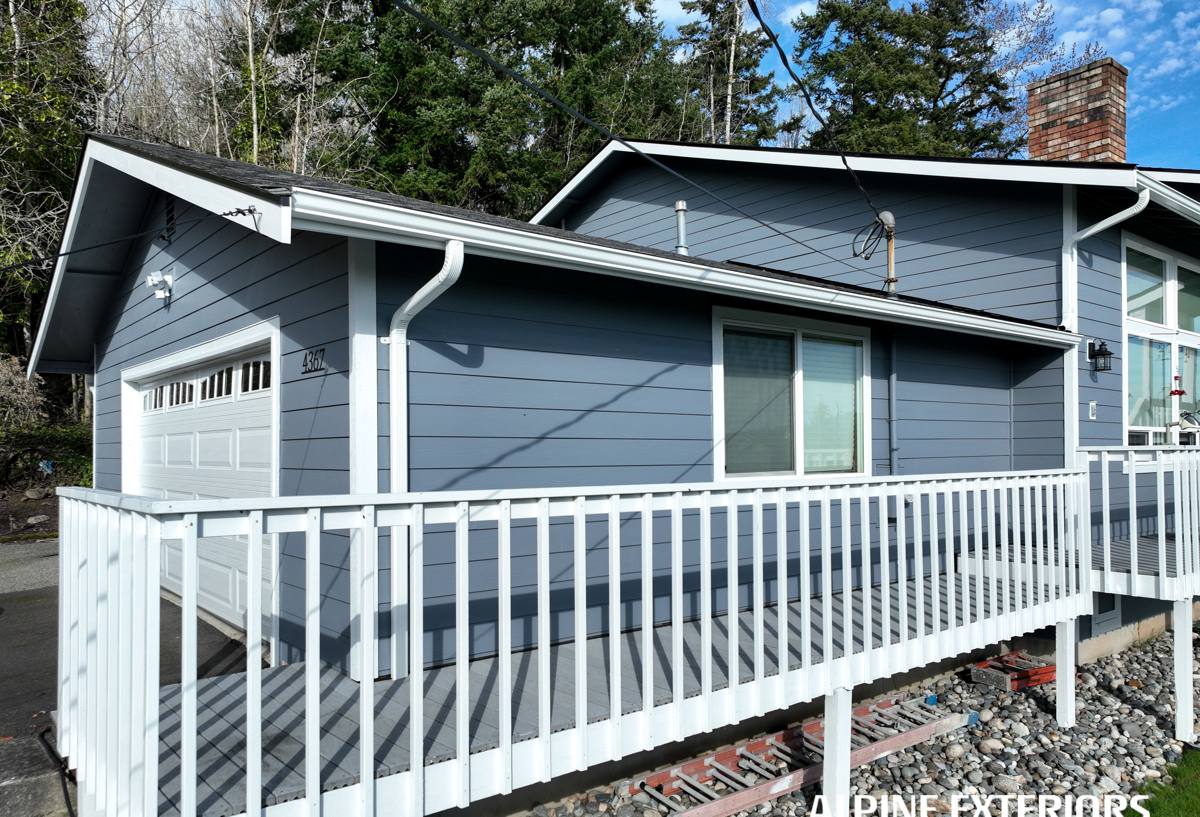
What Bellingham's Climate Actually Does to a Shingle Roof
Whatcom County doesn't get extreme heat or heavy snow most winters, but it makes up for that with persistence. The combination that wears on asphalt shingles here is fairly specific:
Moisture that never fully lets up
Long stretches of overcast, drizzly weather keep roof surfaces damp far more often than they're bone dry. That constant low-grade moisture is what feeds moss and algae growth, and it's also what finds its way into any gap in flashing, underlayment, or nailing that wasn't done correctly the first time.
Driving rain and wind together
Storms coming off the water don't just drop rain straight down — wind pushes it sideways, up under shingle tabs, and into valleys and roof-to-wall transitions. A roof that's fine in a calm rain can still leak in a wind-driven one if the flashing details and shingle sealing weren't built for that.
Salt-influenced air
Homes in and around Bellingham get some exposure to salt-laden marine air moving in off the Salish Sea. It's not the same corrosive load you'd see on a beachfront property, but over years it accelerates the breakdown of exposed metal fasteners, flashing, and vents that aren't rated or protected for it.
A long moss season
Cordata's tree cover and the region's damp, mild climate add up to a moss season that runs much longer than a few weeks in spring. Moss doesn't just sit there — it holds moisture against the shingle surface, lifts tabs as it grows, and works its way toward the deck if it's left unaddressed.
What a Correct Asphalt Shingle Installation Includes Here
An asphalt shingle roof is a system, not just a layer of shingles. In a climate like this, every layer underneath the shingles matters as much as the shingles themselves.
- Ice-and-water shield at eaves, valleys, and roof penetrations — the areas most likely to see standing or driven water, reinforced with a self-sealing membrane rather than felt alone.
- Synthetic underlayment across the full deck — a secondary water barrier that holds up better than old-style felt under repeated wet-dry cycles.
- Correct nailing pattern and fastener count — under-nailed shingles are one of the most common causes of wind-related failures, and Bellingham gets enough wind events to expose that shortcut.
- Properly formed valleys and step flashing — where two roof planes or a roof and wall meet is where driving rain finds weak spots first.
- Balanced attic ventilation — intake at the eaves and exhaust at the ridge, sized to the attic volume, so moisture from inside the home doesn't condense against the underside of the deck.
- Corrosion-resistant metal — flashing, drip edge, and fasteners chosen with the region's moisture and salt exposure in mind, not the cheapest option that happens to pass inspection.
Skip any one of these and the shingles on top can look fine for a few years while the roof underneath is already taking on damage.
Choosing the Right Shingle for a Cordata Home
Not every asphalt shingle is built for the same conditions, and the right choice depends on your roof's exposure, tree cover, and how long you plan to stay in the home. Here's how the common options compare for this climate:
| Shingle Type | Typical Lifespan Here | Moss/Algae Resistance | Best Fit |
|---|---|---|---|
| 3-Tab (standard) | Shorter end of the range, faster wear on exposed slopes | Standard granules only, no built-in resistance | Budget-driven projects, secondary structures |
| Architectural / Dimensional | Noticeably longer, better wind performance | Often available with algae-resistant granules | Most Cordata homes — the standard recommendation |
| Algae-Resistant (AR) Granules | Same as base shingle line | Copper- or zinc-infused granules slow algae growth | Shaded lots, north-facing slopes, heavy tree cover |
| High Wind-Rated | Depends on line, engineered fastening zone | Varies by product | Exposed or elevated lots that catch more wind |
For most homes in this neighborhood, we steer people toward a mid-to-upper tier architectural shingle with algae-resistant granules. It costs more up front than 3-tab but holds its appearance and its seal longer under Bellingham's damp cycle, which usually makes it the better value over the life of the roof rather than a purely cosmetic upgrade.
Moss and Algae: Ongoing Care, Not a One-Time Fix
Even a well-installed roof with algae-resistant shingles will need periodic attention here — that's the reality of a long moss season, not a sign of a bad roof. What actually helps:
- Soft washing rather than pressure washing, which can strip granules and shorten shingle life.
- Clearing debris and overhanging branches that keep the roof surface shaded and damp longer than it needs to be.
- Checking and clearing gutters so water isn't backing up under the shingle edge.
- Catching moss early, while it's still a surface issue, rather than after it's lifted tabs or worked into the deck.
We treat this as part of owning an asphalt shingle roof in this climate, not an upsell — a five-minute look during a routine visit catches most moss problems before they become a repair.
Repair or Replace? How We Help You Decide
Not every issue on a Cordata roof means a full replacement, but it's easy to either over-spend on premature replacement or under-spend on a repair that doesn't hold. We walk homeowners through the real trade-offs:
| Factor | Leans Toward Repair | Leans Toward Replacement |
|---|---|---|
| Age of roof | Under roughly two-thirds of expected shingle life | Near or past expected lifespan for the shingle type |
| Damage pattern | Isolated — one slope, one flashing area, storm damage | Spread across multiple slopes or recurring in the same spots |
| Granule loss | Minimal, shingles still sealing properly | Widespread, bald patches, curling tabs |
| Deck condition | Solid, no soft spots found on inspection | Soft decking or signs of moisture intrusion below |
We'll always tell you honestly which side of that line your roof falls on, including when a repair is genuinely the right call and a full replacement would be spending money you don't need to spend.
Our Process, Start to Finish
1. On-site inspection
We look at the shingles, flashing, ventilation, and — where accessible — the attic side of the deck, not just what's visible from the ground.
2. Straight answer, in writing
You get a clear explanation of what we found, what it means for the roof, and the options available, with a written estimate that spells out materials and scope.
3. Scheduled work, protected property
We tarp and protect landscaping, siding, and gutters before tear-off begins, and we keep the work area contained through the job.
4. Correct installation
Deck inspected and repaired as needed, underlayment and ice-and-water shield installed to the standards above, shingles installed to manufacturer spec and local wind conditions, flashing and ventilation done properly — not shortcuts hidden under new shingles.
5. Full cleanup and final walkthrough
Magnetic sweep for nails, debris hauled off, and a walkthrough so you know exactly what was done and what to expect going forward.
Why It Matters to Hire a Crew That Already Works Cordata
A roofer who works this neighborhood regularly already knows which slopes tend to hold moss longest, which older homes have ventilation that was never brought up to modern standards, and how the local wind-and-rain pattern actually behaves on a roof rather than in a manufacturer's spec sheet written for a different climate. That local pattern recognition shows up in fewer surprises during the job and a roof that's actually detailed for what it will face, not a generic install dropped onto a house in a different kind of weather.
Before you hire anyone for a roof in this area, it's worth checking a few basics:
- Current Washington State contractor license and active insurance, verifiable through the state — not just a claim on a business card.
- A written estimate that specifies underlayment, ice-and-water shield coverage, flashing materials, and ventilation plan — not just "tear off and replace."
- A manufacturer warranty that's actually backed by proper installation, since most shingle warranties can be voided by incorrect installation regardless of shingle quality.
- Local references or a local track record you can ask about, rather than a crew passing through the county for one job.
- A clear answer on cleanup and debris disposal included in the price.
If a bid skips over these details or seems unusually low, ask why — on a roof, the parts you can't see from the ground are usually the parts that determine whether it lasts.
Get a Straight Answer About Your Roof
If you're weighing a repair, planning ahead for a replacement, or just want an honest read on where your roof stands, we're glad to take a look. Use the form below to request a free, no-pressure estimate — we'll tell you what we actually see, not just what sells a job.