 Bellingham Roofing
 Why Decks in Cordata Wear Out the Way They Do
Cordata sits in the same wet, marine-influenced weather pattern as the rest of Bellingham and Whatcom County, which means decks here are dealing with more than just rain. Salt-laden air drifting in off the Sound accelerates corrosion on fasteners, joist hangers, and any exposed metal hardware. Driving rain gets pushed sideways by wind and works its way into seams, ledger boards, and stair stringers that a calmer climate would leave alone. And the long moss season — stretching from fall through spring in a lot of years — turns any shaded or low-airflow deck surface into a slip hazard and a magnet for moisture retention.
None of this is unique to one house. It's a function of the climate, and it means a deck built or repaired without that climate in mind is on a shorter clock than the homeowner expects. When we replace a deck in this neighborhood, we're building for these specific conditions, not just swapping old boards for new ones.
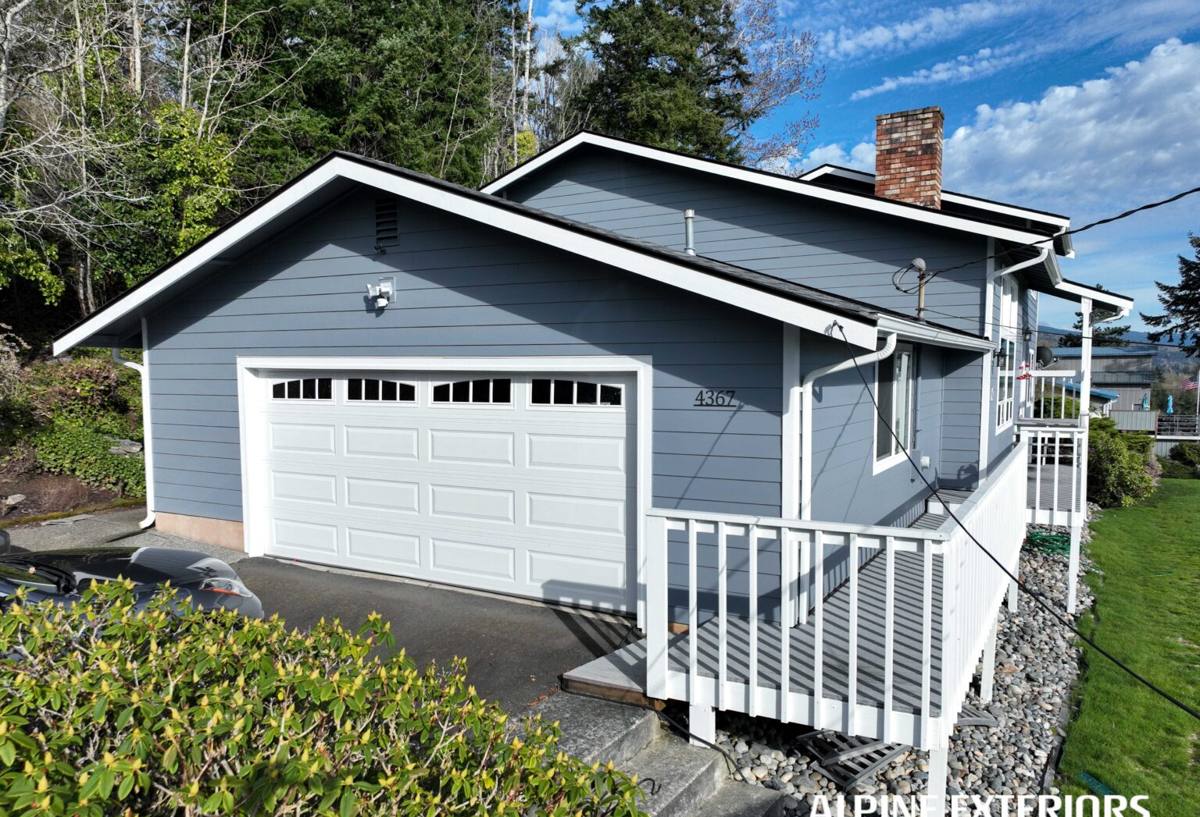
How to Tell You Need a Replacement, Not Another Repair
Repair makes sense when the problem is isolated — a cracked board, a wobbly rail, a few popped screws. Replacement becomes the honest recommendation when the damage has reached the structure itself or when repairs would just be chasing the same failure points year after year. Some signs point clearly toward replacement:
- Soft, spongy, or discolored decking in more than one area, not just a single board
- Rot or rust visible at the ledger board where the deck attaches to the house
- Joist hangers or fasteners that are heavily corroded or missing altogether
- Persistent moss or algae growth that comes back within weeks of cleaning
- Visible sagging, bounce, or movement when you walk across the deck
- Stairs or railings that feel loose or unstable, which is a safety issue, not a cosmetic one
- A deck older than 20-25 years that has never had the substructure inspected
If you're only seeing one or two of these, a repair may still buy you time. If you're seeing several at once, especially anything involving the ledger board or framing, that's usually a sign the deck's structural life is closer to over than it looks from the surface.
What a Correct Deck Replacement Actually Involves
The Substructure Comes First
The decking boards are the part everyone sees, but the framing underneath is what determines whether the deck lasts. That means checking post footings for movement or rot, confirming joist spacing meets current code, and paying close attention to the ledger board connection — the single most common failure point on attached decks in wet climates. A ledger that isn't properly flashed will let water track behind it and rot the rim joist of the house itself, which turns a deck problem into a house problem.
Flashing and Drainage
Given how much driving rain this area gets, flashing detail isn't optional. Every point where the deck meets the house, where posts meet footings, and where boards meet each other needs a clear path for water to shed rather than pool. We also think about airflow underneath the deck, since stagnant, damp conditions under low decks are exactly what accelerates rot and feeds moss growth on the surface above.
Fasteners and Hardware
Salt air corrodes standard hardware faster than most homeowners expect. Coated or stainless structural screws and connectors cost more up front but are the difference between hardware that's still solid in fifteen years and hardware that's rusted and weeping stains onto the decking in five.
Choosing the Right Decking Material for This Climate
There isn't one "best" decking material — there's a best fit for how you use the deck, your maintenance appetite, and your budget. Here's how the common options stack up against Bellingham's wet, mossy conditions specifically:
| Material | Moisture & Moss Resistance | Maintenance | Typical Lifespan |
|---|---|---|---|
| Pressure-treated wood | Good if sealed regularly; grain traps moisture if neglected | Annual cleaning and re-sealing recommended | 10-15 years with upkeep |
| Cedar | Naturally moisture-resistant but softer surface, can stay damp in shade | Periodic staining or sealing to hold color and resist rot | 15-20 years with upkeep |
| Composite decking | Very good — doesn't absorb water like wood, resists rot | Occasional washing to keep surface film and moss from building up | 25-30+ years |
| PVC/capped polymer | Excellent — fully sealed surface sheds water and resists staining | Low; mainly periodic washing | 25-30+ years |
We're upfront that wood costs less to install but costs more in ongoing attention, especially with the amount of shade and moisture Cordata sees for a good chunk of the year. Composite and PVC decking cost more initially but hold up better against moss and driving rain without annual sealing. Which one makes sense depends on your budget, how much maintenance you actually want to do, and how the deck is oriented — a full-sun deck has very different needs than a shaded one under trees.
A Note on Fastener and Board Systems
Hidden fastener systems give a cleaner look and eliminate the screw-head pockets where water and grime collect on the surface — a real advantage in a climate where surface moisture retention drives moss growth. Face-screwed boards are more affordable and easier to spot-repair down the line. We'll walk you through both so the choice fits how you actually want to maintain the deck, not just how it looks on day one.
Our Deck Replacement Process
- On-site evaluation. We look at the existing deck, footings, ledger connection, and surrounding drainage to understand why it failed and what the replacement needs to solve.
- Material and layout discussion. We go over decking material, fastener systems, railing style, and any layout changes you want, with honest tradeoffs for each option.
- Permitting. Most deck replacements in and around Bellingham require a permit, particularly for decks attached to the house or elevated above a certain height. We handle that paperwork rather than leaving it on you.
- Demolition and structural inspection. Once the old deck is off, we inspect footings, framing, and the ledger area, which sometimes reveals hidden rot that wasn't visible from the surface.
- Rebuild. Framing, flashing, decking, stairs, and railings go in following code and built for local drainage and airflow needs.
- Final walkthrough. We go over the finished deck together, including basic care guidance specific to whatever material you chose.
Permits and Code Basics for This Area
Whether your permit is pulled through the City of Bellingham or Whatcom County depends on exactly where your property sits, but the general rule holds either way: most attached decks, and any deck raised much above grade, need a permit and an inspection before and after the work. This isn't paperwork for its own sake — it's what confirms footings are sized correctly, railings meet height and spacing requirements, and the ledger connection is done in a way that won't let water into your home's framing. We handle the permit process as part of the job rather than treating it as an extra step.
What Drives the Cost of a Deck Replacement
There's no honest way to give a firm number without seeing the deck, but the major cost drivers are consistent from job to job:
| Factor | Why It Matters |
|---|---|
| Deck size and shape | More square footage and complex angles mean more material and labor |
| Decking material | Composite and PVC cost more upfront than pressure-treated wood, less over time |
| Height and stairs | Elevated decks need more substantial framing, footings, and railing work |
| Substructure condition | Rotted framing or footings found during demo adds scope beyond the surface |
| Railing and fastener choices | Hidden fastener systems and upgraded railing styles add labor and material cost |
We'd rather walk your deck in person and give you real numbers than throw out a broad range that doesn't mean much once we see what's actually going on with the framing.
Why It Matters to Hire a Crew That Already Works in Cordata
A deck built without accounting for this area's rain patterns, shade, and moss cycle tends to show problems earlier than one built with them in mind — even if both look identical on installation day. Working regularly in Bellingham and the surrounding Whatcom County neighborhoods means we're not guessing at how a ledger connection or a fastener choice will hold up here; we've seen how decks in this climate age, both the ones that were built right and the ones that weren't. That local pattern recognition shows up in small decisions — flashing details, drainage slope, hardware selection — that don't show up on a spec sheet but make a real difference five and ten years down the line.
Get a Straightforward Estimate
If your deck in Cordata is showing rot, persistent moss, loose framing, or you're just planning ahead before it becomes a safety issue, we're happy to take a look and give you an honest assessment of repair versus replacement. Fill out the form below for a free, no-pressure estimate.