 Bellingham Roofing
 Roof Repair Built for Cordata's Weather, Not a Generic Climate
Cordata sits in north Bellingham, close enough to the water and the lowland weather patterns that move through Whatcom County to get the full mix of what makes roofs fail here: salt-laden air off the Sound, driving rain that comes in sideways during winter storms, and a moss season that runs longer than most homeowners expect. None of that is dramatic on its own. What it does is compound. A roof that would last two extra years in a dry inland climate instead spends most of the year damp, which is exactly the condition moss, algae, and slow leaks need to take hold.
A roof repair page that just says "we fix leaks" doesn't tell you much. What matters is understanding why Cordata roofs fail the way they do, what a repair actually needs to address to hold up through the next wet season, and why local experience changes the outcome. That's what this page covers.
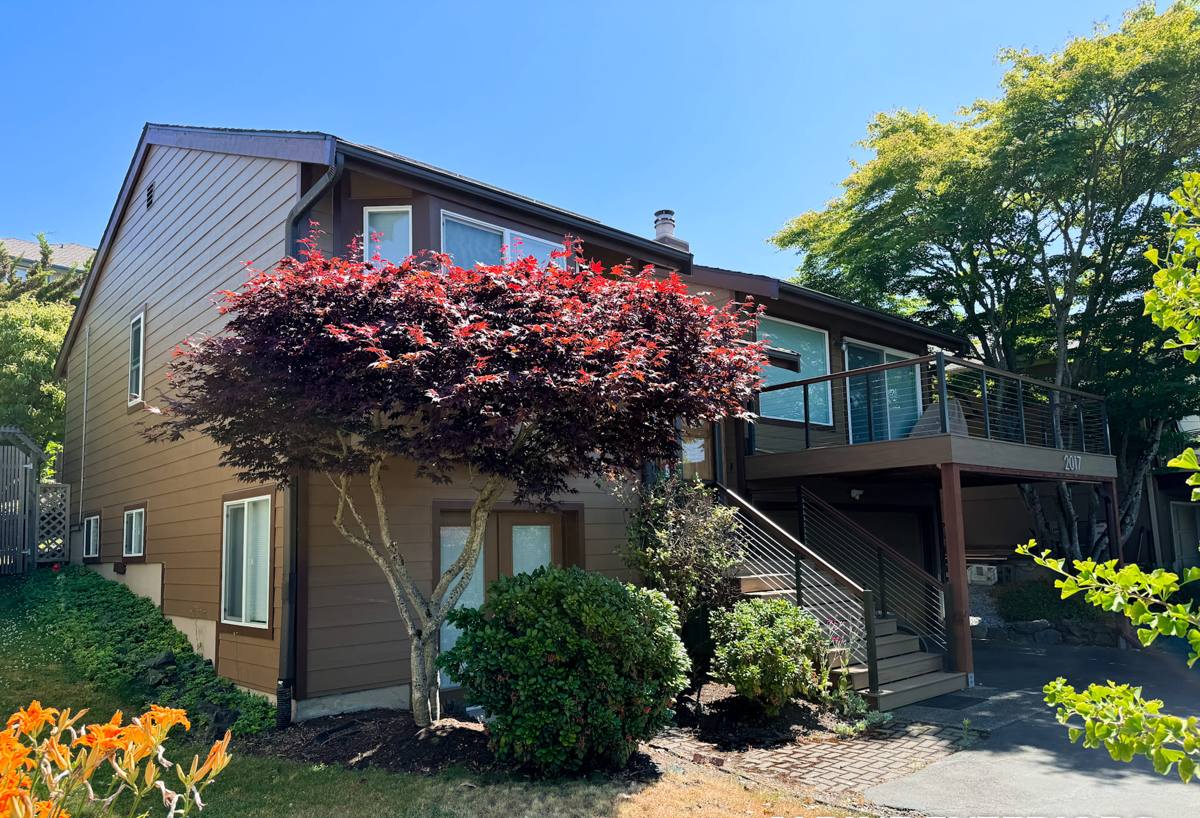
Why Local Roofs Take a Beating: Salt Air, Driving Rain, and Moss
Salt Air and Metal Fatigue
Even at a distance from open water, airborne salt accelerates corrosion on exposed metal roofing components — flashing, fasteners, gutter hardware, and vent caps. Galvanized fasteners and thin flashing are the first things to show it, usually as rust streaks or pinholing years before the shingles themselves are worn out. A repair that replaces shingles but reuses corroded flashing or fasteners is a repair that fails again within a season or two.
Driving Rain and Wind-Driven Intrusion
Bellingham storms don't always drop rain straight down. Wind-driven rain gets pushed sideways and upward under shingle edges, around chimney step flashing, and through any gap in a roof-wall transition that wouldn't leak in calmer weather. This is why leaks often show up at valleys, sidewalls, and penetrations rather than in the open field of the roof — those are the spots where wind pressure and water intersect.
A Moss Season That Doesn't Really End
Consistent moisture and shade — common on north-facing slopes and roofs tucked under mature trees, which are common throughout this part of Whatcom County — give moss a long growing window. Moss doesn't just sit on top of shingles; its root structure lifts granules and shingle edges, holding water against the roof deck instead of shedding it. Left alone, moss growth turns a cosmetic problem into a structural one.
Common Roof Repair Needs We See in This Neighborhood
Moss and Organic Growth Damage
Lifted shingle tabs, granule loss, and soft spots along moss-covered sections. Repair here usually means moss removal, deck inspection underneath, and replacement of any shingles that have lost their seal or granule protection — not just a surface treatment.
Flashing Failures
Chimney flashing, skylight flashing, and step flashing along dormers or sidewalls are common leak points. Flashing is thin metal doing a precise job; once it corrodes, gaps open, or old caulk-only "repairs" fail, water finds a path in.
Aging Composition Shingle Roofs
Composition shingle is the most common roofing material in the area, and most of what we repair is shingle roofing reaching the back half of its service life — curling edges, cracked tabs, granule loss, and nail pops from age and repeated wet-dry cycling.
Gutter and Edge-Related Damage
Clogged or undersized gutters back water up under the roof edge during heavy rain. What looks like a roof leak at the eave is sometimes actually a drainage problem making an aging roof edge fail faster than it should.
What a Correct Repair Actually Involves
A roof repair that holds up isn't just "find the leak, cover it." A correct repair addresses the cause, not just the symptom:
- Diagnose before opening anything up — trace the actual water path, which is often several feet from where the stain shows up inside.
- Inspect the deck — soft, delaminated, or rotted decking under a leak needs to be addressed, not covered over.
- Match materials correctly — shingle profile, color line, and weight should match the surrounding roof as closely as possible so the repair doesn't stand out or perform differently.
- Replace flashing, don't just reseal it — caulk over failing flashing is a temporary fix, not a repair.
- Re-check fastening and sealing — corroded or under-driven fasteners are a common repeat-leak cause.
- Confirm drainage — a repair near a valley, gutter line, or edge should be checked against how water actually moves off that section of roof.
Our Roof Repair Process
- Inspection and diagnosis. We look at the roof from the surface and, where access allows, from inside the attic to trace the real source of a leak or damaged area.
- Honest scope of work. We tell you plainly whether this is a targeted repair, a larger section replacement, or a case where repair isn't the responsible long-term call.
- Written estimate. Clear scope, materials, and price before any work starts — no surprise add-ons once we're on the roof.
- Repair work. Removal of damaged material, deck inspection and repair as needed, new underlayment where exposed, correct flashing, and matched shingle or roofing material installed to manufacturer specifications.
- Cleanup and walk-through. Job site cleaned, debris and old materials hauled off, and the completed repair reviewed with you before we consider it done.
Repair or Replace? How We Help You Decide
Not every roof problem needs a full replacement, and not every roof is a good candidate for another round of patching. The honest answer depends on the roof's age, how widespread the damage is, and how many prior repairs it's already had.
| Factor | Repair Usually Makes Sense | Replacement Should Be Considered |
|---|---|---|
| Roof age | Under roughly 15-18 years, within expected lifespan | At or beyond the shingle's rated service life |
| Damage extent | Localized — one leak, one flashing area, one storm-damaged section | Widespread granule loss, curling, or multiple active leak points |
| Repair history | First or second repair in that area | Same spot has already been patched more than once |
| Decking condition | Solid, dry decking under the damaged area | Soft, delaminated, or rotted decking found during inspection |
| Moss/algae extent | Surface growth, shingles still sealed underneath | Moss has lifted tabs and compromised the seal across large areas |
When repair is the right call, we do the repair. We don't upsell a full roof to a homeowner who has a legitimately fixable problem — that's a fast way to lose trust in a neighborhood where word gets around.
Materials and Matching
For composition shingle repairs, matching matters more than people expect. Shingle color lines change over the years, and granule blends vary by manufacturer and batch. We source shingles as close to the existing roof as reasonably possible and are upfront when an exact match isn't available — better to know that going in than to be surprised by a visible patch after the work is done.
For flashing, we use corrosion-resistant metal appropriate for this climate rather than reusing pitted or thinned material just because it's still technically in place. Given how much salt air and sustained moisture this area sees, that's not an upsell — it's what keeps a repair from becoming a repeat call.
Why a Crew That Already Works in Cordata Matters
Roofing knowledge that's specific to this area isn't abstract — it shows up in small decisions that affect whether a repair lasts. Knowing which roof orientations in this part of Bellingham hold moss longest. Knowing that a flashing detail that would be fine in a drier climate needs to be built heavier here. Knowing how to schedule repair work around the wetter stretches of the year so materials seal properly instead of being installed in marginal conditions.
A crew that regularly works in and around Whatcom County also understands local permitting expectations and how weather windows actually work here, rather than relying on a generalized approach that doesn't account for how much this coastal, rain-heavy climate demands from a roof.
A Simple Pre-Repair Checklist for Homeowners
Before you call anyone about a roof repair, a quick visual check can help you describe the problem accurately and get a faster, more accurate assessment:
- Note where inside the house any stain, drip, or discoloration shows up, and whether it changes size after rain.
- Look at the roof from the ground for visible moss patches, especially on shaded or north-facing slopes.
- Check gutters for overflow marks or sagging, which can point to drainage-related edge damage.
- Note any recent storm activity — high wind or heavy rain right before a leak appeared is a useful clue.
- Avoid walking on the roof yourself to inspect it; wet, moss-covered shingles are slippery and easy to damage further.
Get a Straight Answer on Your Roof
If you're dealing with a leak, moss damage, or a roof that's just showing its age in Cordata, we're glad to take a look and give you a clear, honest assessment — repair, not repair, or something in between. Reach out for a free, no-pressure estimate using the form below.