 Bellingham Roofing
 South Hill's Older Homes Face a Tougher Climate Than Most Window Crews Plan For
South Hill is one of Bellingham's older, established neighborhoods, and that means a lot of the housing stock still has its original windows or a mismatched set of replacements installed over the decades by whoever was doing the cheapest job at the time. Add in the neighborhood's elevation and closeness to Bellingham Bay, and you get a combination that's harder on windows than most inland parts of Whatcom County: more direct exposure to weather blowing in off the water, more shade from mature trees, and more of the freeze-thaw and wet-dry cycling that comes with a marine climate. Windows that would hold up fine in a newer development further from the water often fail early here.
We're not going to pretend every window problem on South Hill is unique to the neighborhood — plenty of it is standard Pacific Northwest wear and tear. But the combination of age, exposure, and shade does mean a "one size fits all" installation approach leaves a lot of these homes underprotected. This page is about what actually holds up, and what a correct installation looks like on this kind of property.
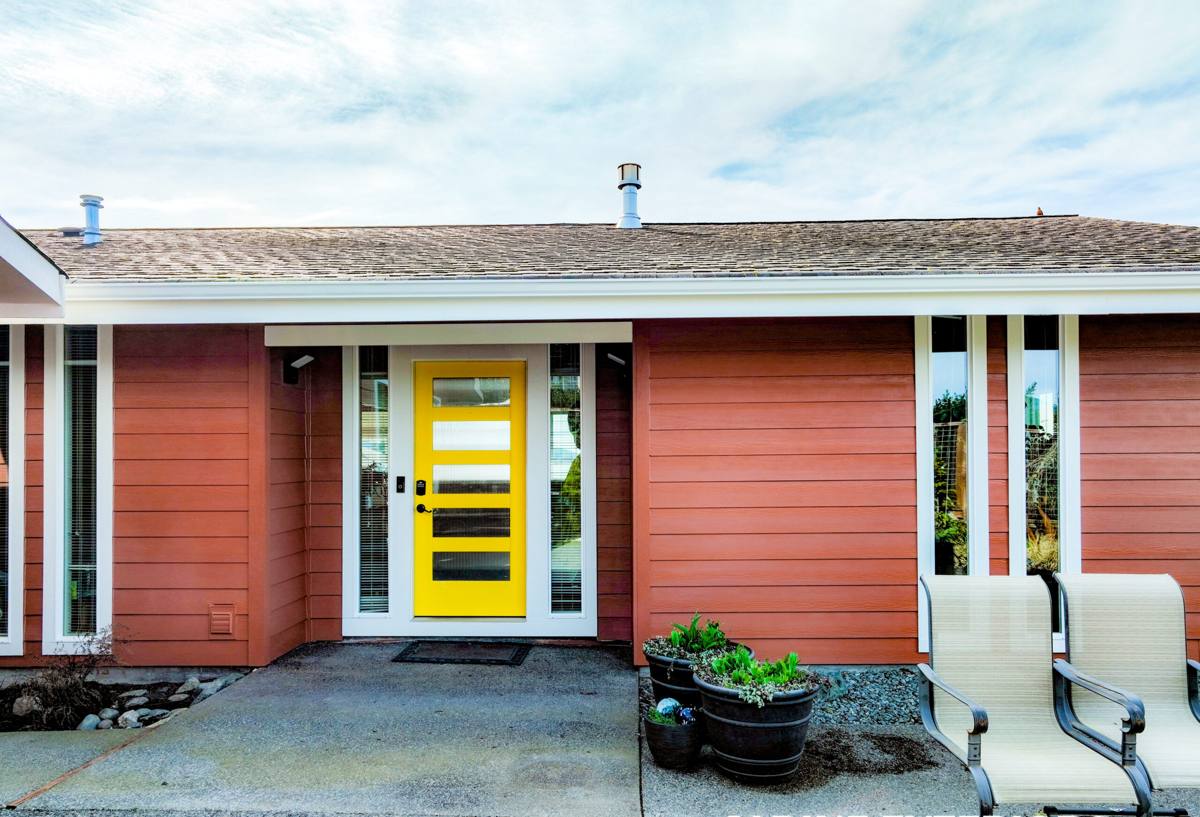
What Salt Air, Driving Rain, and Moss Season Actually Do to a Window
Salt Air and Hardware Corrosion
Homes with any exposure toward Bellingham Bay pick up airborne salt, even at a distance. It's not enough to eat through a window frame overnight, but it accelerates corrosion on hinges, cranks, balance systems, and any exposed fasteners. Once hardware starts seizing or pitting, windows get harder to open and close properly, seals stop compressing evenly, and that's when water starts finding its way in.
Driving Rain and Water Intrusion
Whatcom County doesn't just get rain — it gets rain pushed sideways by wind off the water, and elevated lots on South Hill often catch more of that wind-driven rain than sheltered inland properties. Driving rain finds any gap in flashing, caulking, or the window-to-wall transition and works it wider over time. Most water damage we find isn't from a single storm — it's from years of small amounts getting past a marginal seal.
Moss Season and Trapped Moisture
Mature tree cover is one of the things people like about South Hill, but it also means longer moss season around window trim, sills, and anywhere shade keeps surfaces from drying out fully between rains. Moss and algae growth on wood trim isn't just cosmetic — it holds moisture against the surface far longer than open sun would, which speeds up rot in wood-framed windows and trim, and it keeps the whole window assembly damp for more of the year.
Signs Your South Hill Home's Windows Are on Borrowed Time
Most homeowners don't notice window failure until it's visible from the inside, but there are earlier signs worth checking for, especially on a home with any original or older windows:
- Wood trim or sills that feel soft, spongy, or discolored when pressed
- Visible moss or dark staining on exterior sills, especially on shaded sides of the house
- Windows that are hard to open, close, or lock — often a sign of corroded or swollen hardware
- Condensation or fogging between panes on double-glazed units (a sign the seal has failed)
- Drafts or noticeable temperature difference near the window even when it's closed
- Paint that's peeling or bubbling on interior trim, which often points to moisture getting through from outside
- Visible gaps or cracked caulking where the window frame meets the siding or trim
Any one of these on its own might not mean much. Two or three together, especially on a home that hasn't had its windows replaced in a couple of decades, usually means it's worth having someone take a real look rather than waiting for a leak to show up on the inside wall.
Choosing Window Materials That Actually Hold Up on South Hill
There's no single "best" window material for every home — it depends on the home's age, exposure, and how much upkeep the owner wants to do. Here's how the common options actually compare for a coastal, shaded property like the ones on South Hill:
| Material | Salt Air & Moisture Resistance | Maintenance | Best Fit |
|---|---|---|---|
| Vinyl | Good — won't corrode or rot, handles moisture well | Low — no painting or sealing needed | Budget-conscious replacements, rental properties, straightforward openings |
| Fiberglass | Very good — dimensionally stable, resists both moisture and temperature swings | Low to moderate | Homes wanting a longer-term investment with minimal upkeep |
| Aluminum-clad wood | Good exterior protection, but interior wood still needs to stay sealed | Moderate — exterior is low-maintenance, interior trim needs occasional attention | Homes wanting a wood interior look with better weather protection outside |
| Solid wood | Weakest in this climate unless maintained closely — vulnerable to the rot and moss issues described above | High — regular painting/sealing required | Historic character homes where matching original wood trim matters more than low maintenance |
We'll be honest about the trade-off with solid wood windows specifically: they can be the right call on a home where matching original character is the priority, but only if the owner understands the maintenance commitment. On a shaded, moss-prone lot, an unmaintained wood window will lose that fight faster than it would in a drier, sunnier spot. We'd rather tell you that up front than sell you a window that looks right for two years and rots at the sill by year five.
What a Correct Custom Window Installation Involves
Flashing and Water Management
The window itself is rarely where a leak starts — it's usually the flashing and the seal between the window frame and the wall assembly. Correct installation means integrating new flashing with the existing wall's water management, not just caulking around the edges and hoping. On a home taking direct driving rain, this step matters more than which brand of window you pick.
Sealing and Insulation
Gaps around the window frame need proper insulation and air sealing, not just cosmetic trim. A window can be top-quality and still perform poorly if the gap between the frame and the rough opening was packed wrong or left open to convective air movement.
Sizing for Older, Non-Standard Openings
Many of South Hill's older homes have window openings that don't match modern standard sizes. That's where "custom" actually matters — either a window built to the exact opening, or a careful reframe done correctly, rather than forcing a stock size into a gap and filling the difference with trim and hope.
Matching New Windows to an Older Home's Character
A lot of homeowners on South Hill are working with a house that has real architectural character — trim profiles, proportions, or grille patterns that a generic modern window doesn't match. Custom windows let you keep that look while upgrading everything behind the glass: better seals, better glazing, better hardware, without the home ending up looking like a newer subdivision house wearing an old one's trim. We treat that as part of the job, not an upcharge afterthought — matching sightlines and trim reveals so the new windows read as belonging to the house.
Our Process for South Hill Window Projects
- On-site assessment. We look at the actual openings, existing flashing and trim condition, and any moisture or rot already present — not just the glass.
- Honest scope and options. We'll tell you what's cosmetic, what's structural, and where a cheaper option would genuinely be fine versus where it would just fail early on this particular home.
- Material and sizing plan. Custom sizing where openings are non-standard, and a material recommendation based on the home's actual sun/shade and wind exposure, not a one-size answer.
- Removal and inspection. Old windows come out carefully so we can check the framing and sheathing underneath for hidden rot before anything new goes in.
- Correct installation. Proper flashing integration, air sealing, and fastening — the parts that determine whether the window still performs in year ten, not just year one.
- Final check and cleanup. Operation, seal, and trim are all checked before we consider the job done.
What Custom Windows Typically Cost — and What Changes the Number
Costs vary widely based on size, material, number of openings, and how much existing damage or reframing is involved, so we won't quote a number without seeing the home. What generally moves the price:
| Cost Factor | Why It Matters |
|---|---|
| Material choice | Vinyl is generally the most affordable; fiberglass and clad-wood cost more but hold up longer with less upkeep |
| Custom vs. standard sizing | Non-standard openings (common in older South Hill homes) cost more than stock sizes |
| Existing damage | Rot found in framing or sheathing during removal adds repair cost before new windows go in |
| Number of openings | Doing multiple windows in one project usually costs less per window than one-offs done separately |
| Trim and character matching | Custom trim profiles to match an older home's existing look add labor beyond a basic install |
Why It Matters That We Already Work in South Hill
Every neighborhood in Bellingham has its own quirks, and South Hill's are pretty specific: the mix of older housing stock, the shade from established trees, and the exposure that comes with elevation near the bay. A crew that mostly installs windows in newer, sunnier, more sheltered parts of Whatcom County isn't necessarily going to catch a moss-related rot issue at the sill, or know to plan for driving rain on a particular exposure. Working this neighborhood regularly means we've already seen what tends to go wrong here and what actually holds up, so we're not guessing or learning on your home.
If your windows are original, drafty, hard to operate, or just showing their age, we're happy to come take an honest look. There's a free, no-pressure estimate form below — no hard sell, just a straight assessment of what your home actually needs.