 Bellingham Roofing
 Building Decks That Hold Up in Birchwood's Climate
A deck in Birchwood works harder than it looks like it should. Between the salt-laden air moving off the water, long stretches of driving rain through the fall and winter, and a moss season that can run for months, the structure underneath a beautiful deck is under constant, quiet attack. Wood fibers absorb moisture and release it again and again through the year, fasteners corrode faster than they would inland, and any surface that stays shaded and damp becomes a growing medium for moss and algae. None of that is a reason to avoid building a deck here — it just means the deck has to be designed and built with this specific climate in mind, not built the same way a crew in a dry inland state would build one.
We build and repair decks across Bellingham and Whatcom County, and Birchwood homes in particular tend to share a few traits: mature tree cover that keeps parts of the yard shaded and slow to dry, older housing stock with additions and grade changes over the years, and a mix of lot sizes that call for decks ranging from a modest back porch replacement to a larger multi-level outdoor living space. A deck built for this neighborhood needs to account for all of it.
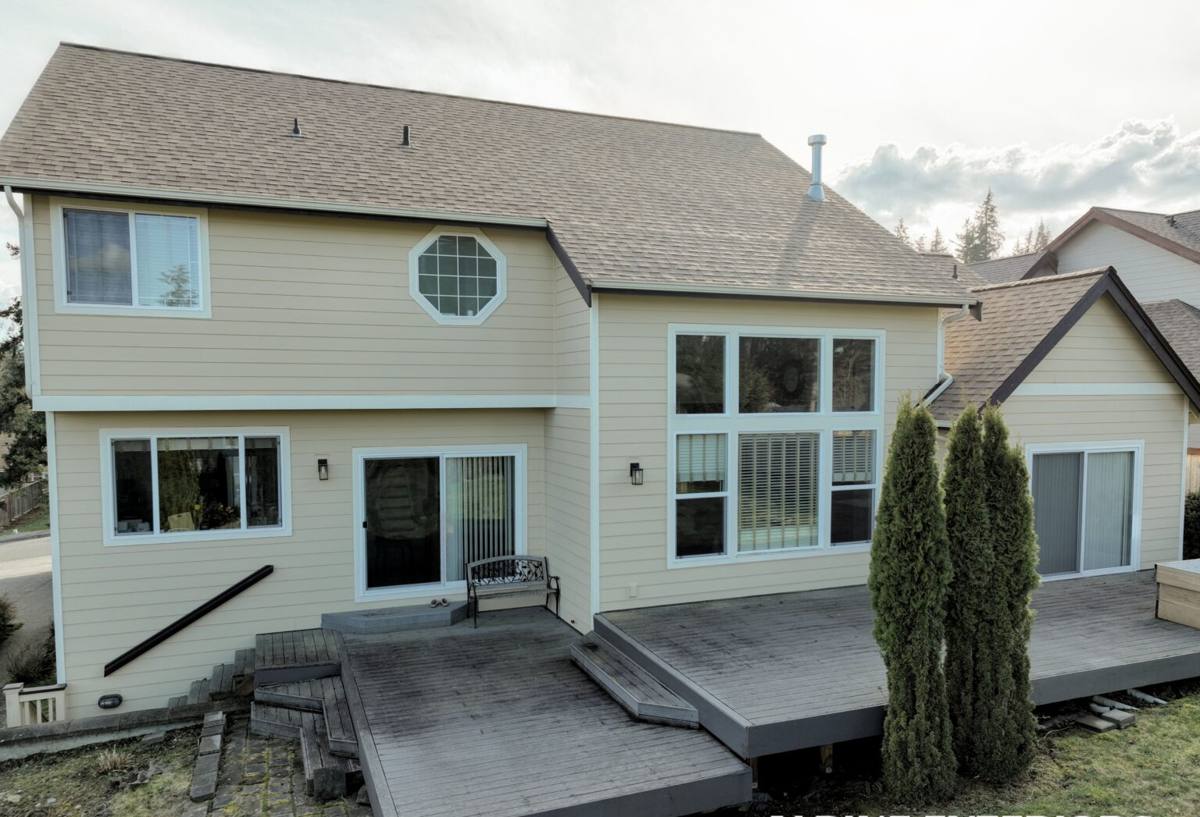
What a Correctly Built Deck Needs Here
Framing and Structure
The framing is the part nobody sees once the decking boards go down, and it's also the part that determines whether the deck is still solid in fifteen years. In a wet climate, that means pressure-treated framing lumber rated for ground contact where it's close to grade, proper spacing between joists so air can move underneath, and flashing at every point where the deck ties into the house. A ledger board that isn't properly flashed and fastened is one of the most common causes of deck failure we see in this region — water gets behind it, the rim joist rots from the inside, and the problem stays invisible until it isn't.
Footings and Ledger Attachment
Footings need to be sized and set to local frost and soil conditions, not guessed at. We set footings deep enough and use post bases that keep the wood post off the concrete and off standing water, since a post sitting in a puddle every winter is a post that's rotting from the bottom up. Ledger attachment to the house gets proper flashing tape and lag bolts or through-bolts sized for the load — screws alone aren't enough for a structural ledger connection.
Decking Material and Fasteners
Whatever decking material is chosen, it needs hardware that can take the salt air without corroding out early. We use stainless steel or coated fasteners rated for coastal and treated-lumber use, and we pay attention to how the boards are spaced so water sheds instead of pooling in the gaps.
Choosing the Right Decking Material for a Birchwood Home
There's no single right answer here — it depends on your budget, how much upkeep you want to do, and how the deck will be used. Here's how the common options compare for a home in this climate:
| Material | Upfront Cost | Maintenance | Moisture Behavior | Typical Lifespan |
|---|---|---|---|---|
| Pressure-treated wood | Lowest | Annual cleaning, periodic staining/sealing | Absorbs and releases moisture; needs sealing to control cupping and checking | 10–15 years before major boards need replacing |
| Cedar or other natural wood | Moderate | Regular sealing to hold color and resist graying | More naturally rot-resistant than treated pine, still needs a sealed finish here | 15–20 years with upkeep |
| Capped composite | Higher | Occasional washing, no staining or sealing | Doesn't absorb water or rot; can still grow surface moss/algae in shaded, damp areas without cleaning | 25+ years |
| PVC decking | Highest | Occasional washing | Fully moisture-resistant material, though the framing beneath it still needs the same protection | 25–30+ years |
Composite and PVC cost more up front, and that's a real budget conversation, not a sales pitch — we'll walk through it honestly. In a yard with a lot of shade and slow-drying areas, the lower-maintenance materials tend to earn their cost back in time saved and fewer callbacks for refinishing. In a sunnier, more open spot, well-maintained wood can perform just fine for a lot less money.
Moss, Mildew, and the Long Wet Season
Moss doesn't care what your decking is made of — it grows wherever there's shade, moisture, and organic debris (fallen leaves and needles) sitting on a surface long enough. What changes by material is how much it affects the deck's structure versus just its appearance. On wood, trapped moisture under moss and debris accelerates rot. On composite or PVC, moss is a surface and slip-hazard problem rather than a structural one, but it still needs to be kept off.
The best defense is built in during construction, not added afterward: adequate board spacing, joist spacing and ventilation that let air move underneath the deck, and a layout that doesn't trap water against the house or against fence lines. Where a deck sits under heavy tree cover, we'll talk about realistic maintenance expectations up front rather than promising a low-maintenance result a shaded, wet corner of the yard can't actually deliver.
Our Deck Building Process
- Site visit and design. We look at your yard's grade, drainage, shade patterns, and how the deck connects to the house before recommending a layout or material.
- Permitting. We handle the permit conversation with your local jurisdiction and make sure the design meets structural and guardrail requirements before we build.
- Demolition and footings. If we're replacing an existing deck, we remove it and inspect the ledger and rim joist area for hidden rot before setting new footings.
- Framing. Treated structural lumber, properly flashed ledger, and hardware rated for wet, salt-air conditions.
- Decking and railings. Boards, railings, and any stairs are installed with attention to spacing, drainage, and fastener corrosion resistance.
- Final walkthrough. We go over the finished deck with you, including what maintenance it actually needs going forward.
Permits, Codes, and Structural Requirements
Most new decks and many deck replacements in Whatcom County require a building permit, and the exact threshold depends on the size, height above grade, and whether it's attached to the house — that's a conversation we have with your local building department as part of the process, not something we skip. Guardrails are required on most decks once they reach a certain height above grade, and stair and railing spacing have to meet code for safety, not just style. We design to code from the start so you're not stuck with a change order or a failed inspection partway through the build.
Why Hire a Crew That Already Works in Birchwood
A contractor who's worked this neighborhood already knows the kinds of grade changes, older foundations, and drainage quirks that show up on a lot of Birchwood lots. That means fewer surprises once we start digging footings, a design that accounts for how shaded your yard actually gets through the year, and material recommendations based on what's actually held up on similar homes nearby rather than a one-size-fits-all sales script. We're also close enough to respond quickly if you need a warranty check or have a question after the build is done — that matters more in a climate that keeps testing a deck year-round.
Keeping Your New Deck in Good Shape
Whatever material you choose, a little seasonal attention goes a long way in this climate. A simple yearly routine will keep the deck looking good and catch small problems before they become expensive ones:
- Sweep off leaves and debris regularly, especially in fall — trapped organic matter is what feeds moss and holds moisture against the boards
- Rinse or gently wash the deck surface at least once or twice a year to keep moss and algae from establishing
- Check and re-seal or re-stain wood decking every 1–2 years, sooner in shaded areas
- Inspect fasteners, railings, and stair connections annually for corrosion or looseness
- Confirm gaps between boards are clear and draining, not packed with debris
- Look underneath the deck once a year for signs of moisture, rot, or pest activity at the ledger and posts
What Affects the Cost of a New Deck
Every deck is priced around a handful of factors, and it helps to know what actually drives the number before you start comparing quotes:
Size and Footprint
Square footage is the biggest single factor — more decking, more framing, more footings.
Material Choice
As shown in the comparison above, wood costs less up front while composite and PVC cost more but ask less of you over time.
Height and Access
A deck built high off a sloped Birchwood lot needs more substantial framing, taller posts, and stairs — all of which add cost compared to a low deck close to grade.
Railings and Extras
Railing style, built-in benches or lighting, and multi-level layouts all add to the total, and we'll price those as clearly identified options rather than folding them into a vague number.
If you're planning a new deck or need to replace one that's showing its age, we're happy to walk your property, look at what the site actually needs, and put together a straightforward estimate — no pressure, no obligation. Use the form below to get started.