 Bellingham Roofing
 Roofing Edgemoor Homes for Coastal Bellingham Conditions
Edgemoor sits close enough to the water that the air itself works against a roof year-round. Salt-laden air off Bellingham Bay accelerates corrosion on fasteners, flashing, and any metal component that isn't rated for it. Add Whatcom County's long wet season — months of driving rain pushed sideways by wind off the water — and a heavy shade canopy in older sections of the neighborhood that keeps roofs damp and feeds moss growth well past when other parts of town have dried out, and you have a roof environment that punishes shortcuts. A new roof installed here needs to be built differently than one going up in a drier, more sheltered part of the county.
When we install a new roof in Edgemoor, we're not just matching code minimums. We're accounting for the specific combination of salt exposure, wind-driven rain, and moss pressure that this stretch of Bellingham deals with every year. That shapes material choice, flashing detail, ventilation design, and fastener selection from the first day of the job.
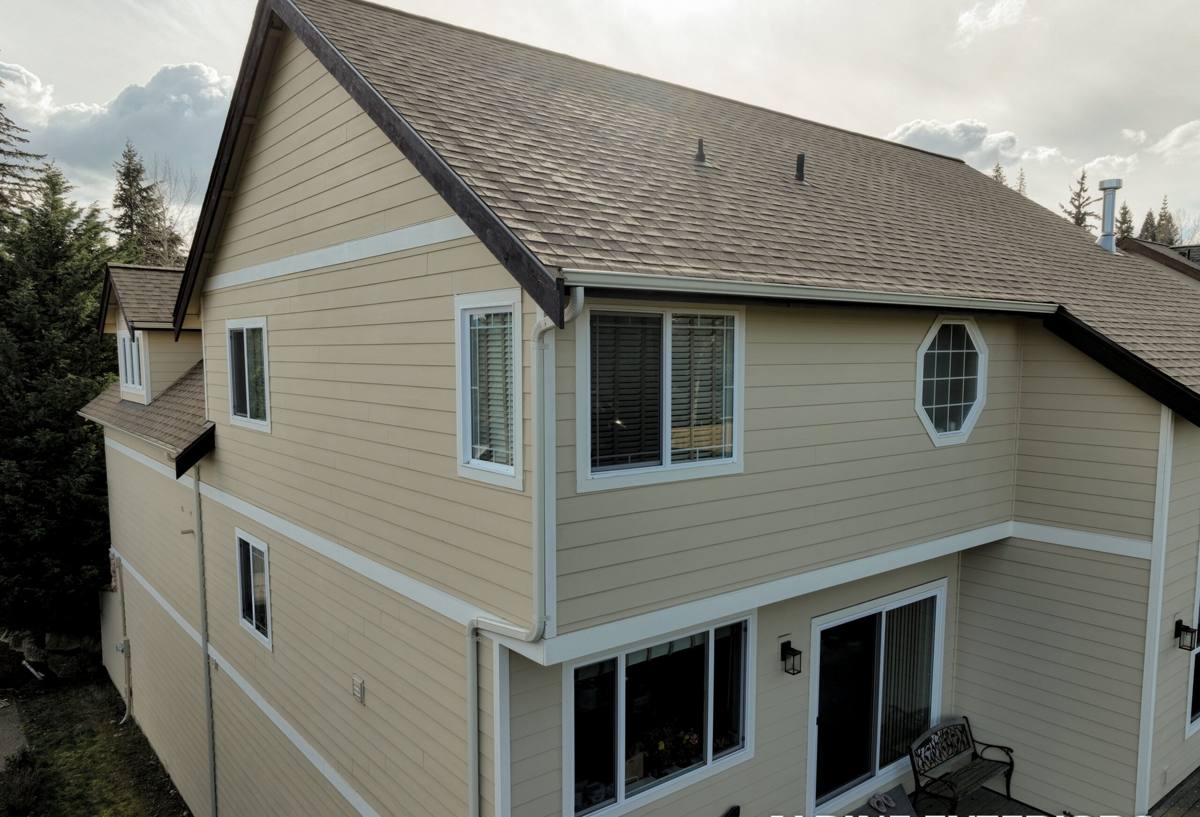
What a Correct New Roof Installation Involves
A roof replacement is more than stripping old shingles and nailing down new ones. Done right, it's a system — deck, underlayment, flashing, ventilation, and roof covering all working together. Skipping or rushing any one of those pieces shortens the life of the whole roof, no matter how good the shingles are.
Tear-Off and Deck Inspection
We remove the old roofing down to bare decking rather than layering over it. That's the only way to actually see what's underneath. In a wet climate like ours, hidden deck rot is common — especially around old flashing points, valleys, and eaves where water has been finding its way in slowly for years. Any soft, delaminated, or water-stained sheathing gets replaced before anything new goes down. Roofing over a compromised deck just hides the problem for a while.
Underlayment
Underlayment is the roof's backup defense, and in a region with as much annual rainfall as Whatcom County, it matters as much as the visible roofing material. We use synthetic or self-adhered underlayment at eaves, valleys, and other vulnerable areas rather than relying on older felt products that break down faster under sustained moisture.
Flashing
Flashing failures are the single most common cause of roof leaks — not worn-out shingles. Every place the roof plane is interrupted (chimneys, skylights, walls, valleys, vent pipes) needs properly formed, correctly lapped flashing, not just a bead of sealant. Sealant is a backup, never the primary water barrier.
Ventilation
Balanced intake and exhaust ventilation keeps the attic dry and temperature-regulated. Without it, moisture gets trapped, which speeds up deck rot from the underside and creates ideal conditions for moss and mold to take hold even faster than the exterior climate already encourages.
Choosing a Roofing Material for Edgemoor's Conditions
There's no single "best" roofing material for every house — it depends on the home's style, budget, and how much long-term maintenance the owner wants to take on. What we can tell you honestly is how common options perform against salt air, sustained moisture, and moss pressure, since those are the three factors that matter most here.
| Material | Moss & Moisture Resistance | Salt Air Durability | Typical Lifespan | Maintenance Load |
|---|---|---|---|---|
| Architectural asphalt shingle | Good with proper ventilation and periodic cleaning | Good — minimal exposed metal to corrode | 25–30 years | Low to moderate |
| Standing seam metal | Excellent — sheds moisture, resists moss growth on the panel itself | Requires coastal-rated coating and fasteners | 40–50+ years | Low |
| Cedar shake | Moderate — needs regular treatment and cleaning to prevent moss and rot | Moderate — natural material weathers but can hold salt-laden moisture | 20–30 years with upkeep | High |
| Synthetic/composite shake | Good — engineered to resist moisture absorption | Good | 30–40 years | Low to moderate |
For most Edgemoor homes we recommend architectural asphalt shingle or standing seam metal as the practical middle ground between upfront cost, appearance, and how much the roof will fight the local climate on its own without constant homeowner maintenance. Cedar shake can still be the right call on a home where it's part of the architectural character — it just needs an honest conversation about the upkeep involved before installation, not after.
Fastener and Metal Selection: Where Salt Air Does the Most Damage
This is the detail that gets skipped most often, and it's the one that matters most this close to the water. Standard galvanized fasteners and flashing can start showing corrosion within a few years in a salt-air environment; stainless steel or hot-dip galvanized components rated for coastal exposure cost more upfront but hold up for the life of the roof. We spec fastener and flashing material for Edgemoor jobs the same way we would for any waterfront property in Whatcom County, because the exposure is functionally the same.
Moss: Managing It From Day One, Not After It's a Problem
Moss isn't just cosmetic. Once it establishes on a roof surface, its root structure holds moisture against the shingles or shakes, and in freezing weather that moisture expands and accelerates granule loss and material breakdown. Shaded, north-facing sections of a roof — common on tree-covered Edgemoor lots — are the areas most at risk.
A new installation gives us the chance to build in moss resistance from the start:
- Zinc or copper strips installed near the ridge, which release trace metals with each rain that inhibit moss growth over time
- Proper attic ventilation so the deck and shingle underside stay dry, which removes the moisture moss needs to establish
- Material selection that accounts for how much shade a given roof plane gets
- Clear guidance on a realistic cleaning interval based on the home's tree cover, rather than a generic maintenance schedule
Our Installation Process
- On-site assessment — we walk the roof and attic, check the deck condition where visible, and discuss material options against your home's exposure and budget
- Written estimate — a clear scope of work and pricing before anything is scheduled, no surprise add-ons buried in fine print
- Permitting — we pull the required City of Bellingham or Whatcom County permits, whichever applies to the property
- Tear-off and deck inspection — full removal of old roofing, replacement of any compromised sheathing
- Underlayment and flashing installation — the moisture-management layer goes in before any finish material
- Roof covering installation — shingles, metal, or shakes installed to manufacturer specification and local code
- Ventilation check — intake and exhaust venting confirmed balanced for the attic volume
- Cleanup and final walkthrough — site cleared of debris and old material, roof reviewed with the homeowner before we consider the job done
Timeline and Scheduling Around Bellingham Weather
Most residential roof replacements take one to three days of active work once material is on site, depending on roof size and complexity. The bigger scheduling factor in this area is weather. Whatcom County's wettest stretch typically runs late fall through early spring, and we plan installations around dry weather windows so the deck and underlayment aren't exposed to rain mid-job. We'll give you a realistic timeframe up front rather than a date we can't actually hit given the forecast.
What Drives the Cost of a New Roof
Every roof is different, and we won't quote a number without seeing the property, but the main variables are consistent from job to job:
| Factor | Why It Matters |
|---|---|
| Roof size and pitch | More surface area and steeper pitches increase material and labor |
| Deck condition | Rotted sheathing found during tear-off adds material and labor to replace |
| Material choice | Asphalt, metal, and shake carry very different material and installation costs |
| Roof complexity | Valleys, dormers, chimneys, and skylights all add flashing work and time |
| Access | Steep lots, mature trees, or limited driveway access can affect staging and labor |
We'd rather walk you through these factors on your specific roof than quote a range that doesn't mean much without seeing the property.
Why It Matters to Hire a Crew That Already Works in Edgemoor
A contractor who works this part of Bellingham regularly already knows what a roof here is up against — the salt exposure off the bay, the shaded lots that hold moisture longer, the permitting process through the City of Bellingham, and how weather windows actually play out through a Whatcom County winter. That's not something you can fully substitute with a generic checklist. It shows up in small decisions during the job: which flashing detail to use on a specific roof intersection, whether a given fastener spec is worth the extra cost on this particular property, when to push a start date back a few days for a cleaner weather window. Those judgment calls come from having done the work here before, not from a script.
After Installation: Protecting the Investment
A new roof holds up best with a little basic attention, especially in a climate that doesn't give it much of a break:
- Have gutters cleared at least twice a year — clogged gutters back water up under the roof edge
- Watch shaded and north-facing roof sections for early moss growth and address it before it spreads
- Keep overhanging branches trimmed back to reduce shade, debris buildup, and physical damage risk
- Schedule a roof check after any major windstorm, which are common off the water in fall and winter
- Address any interior ceiling stains or attic moisture immediately rather than waiting for a bigger sign of trouble
If you're weighing a roof replacement on an Edgemoor property, we're glad to come take a look and give you a straightforward, no-pressure estimate — just fill out the form below.