 Bellingham Roofing
 Edgemoor's Roofs Work Harder Than Most
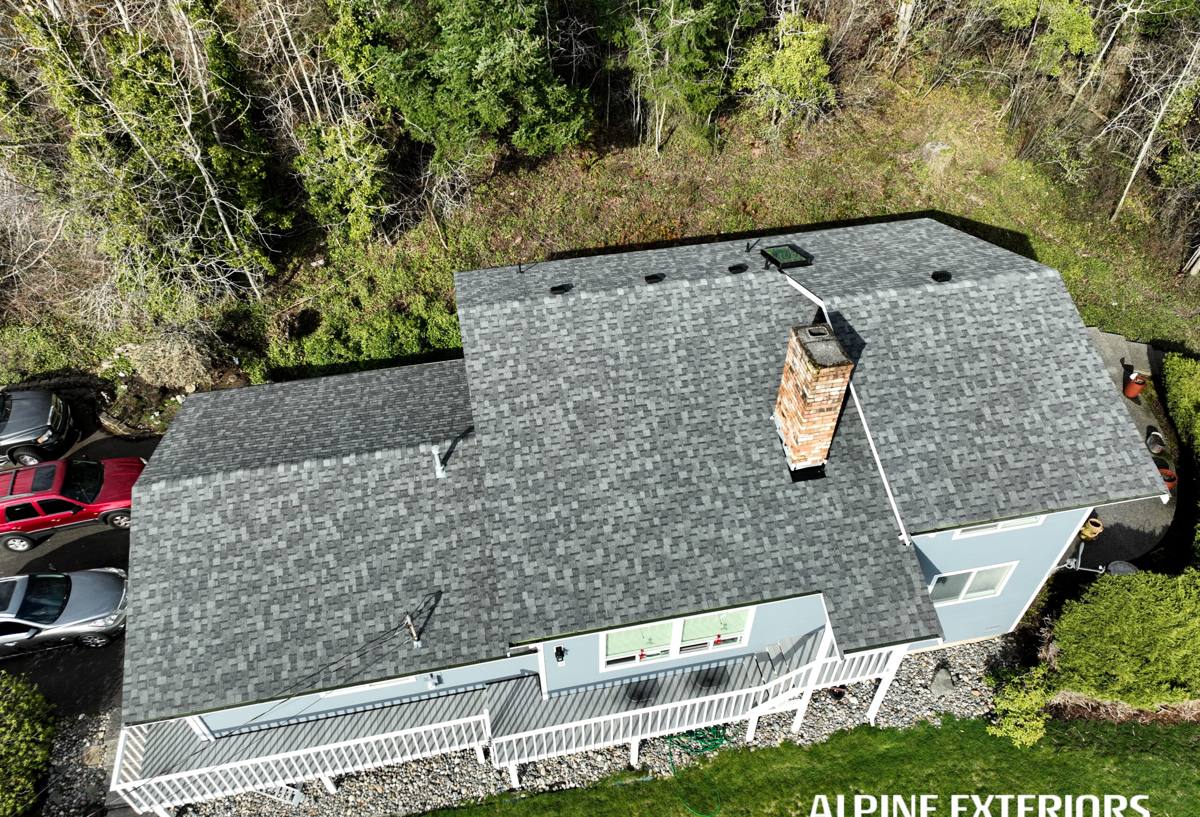
Edgemoor sits close enough to Bellingham Bay that salt-laden air is a daily fact of life, and the neighborhood's tall stands of fir and cedar keep large sections of most roofs shaded for much of the year. That combination — salt air, heavy tree canopy, and the driving rain that rolls in off the water during fall and winter storms — creates a roofing environment that's noticeably tougher on materials than a roof out on open, sun-exposed ground. Add in Whatcom County's long, damp moss season, and you've got a recipe for the specific kinds of wear we're called out to fix again and again in this part of Bellingham.
None of this means Edgemoor roofs are doomed to constant trouble. It means repairs here need to account for conditions that a generic, one-size-fits-all repair approach often misses. That's the difference between a patch that lasts a season and a repair that actually holds up through the next several winters.
What Salt Air, Rain, and Moss Actually Do to a Roof
Salt Air
Airborne salt accelerates corrosion on exposed metal — flashing, fasteners, gutter hardware, and vent caps. Once corrosion starts eating into a nail head or a flashing seam, water finds its way in long before the surrounding shingles or panels show obvious damage. This is one of the most common causes of hidden leaks we find on Edgemoor homes: the roofing material itself looks fine, but the metal holding it together doesn't.
Driving Rain
Storms coming off the water don't just fall straight down — wind-driven rain gets pushed sideways under shingle edges, around chimney flashing, and into any gap that a calm, vertical rain would never reach. Roofs that pass a casual visual inspection can still leak badly in a real Pacific Northwest windstorm if the underlayment, flashing laps, and seal strips weren't installed with that sideways force in mind.
Moss and Shade
Heavy tree cover keeps roof surfaces damp longer after every rain, which is exactly what moss and algae need to establish. Moss doesn't just look bad — its root structure works into shingle granules and seams, lifting edges and holding moisture against the roof deck. Left alone through a full moss season, that trapped moisture leads to soft spots, granule loss, and eventually deck rot underneath.
Common Repair Issues We See Around Edgemoor
- Corroded or lifted flashing around chimneys, skylights, and roof-to-wall transitions
- Moss-related granule loss and lifted shingle tabs on shaded, north-facing slopes
- Wind-driven rain intrusion at ridge caps and hip lines during winter storms
- Clogged or corroded gutters and downspouts backing water up under the roof edge
- Soft or spongy decking discovered under long-neglected moss growth
- Nail pops and fastener corrosion from years of salt-air exposure
- Punctures or abrasion from falling branches and debris in wooded lots
What a Correct Roof Repair Actually Involves
A proper repair isn't just replacing whatever's visibly broken — it's tracing the problem back to its actual cause. A stained ceiling patch, for example, can originate several feet away from where the water is dripping inside, especially on a roof with a moss mat directing runoff sideways under the shingle line. We treat every repair as a small diagnostic job first, then a fix.
A Correct Repair Typically Includes
- Identifying the true entry point, not just the visible damage — water travels along the deck before it drips through
- Removing and replacing damaged decking, not just covering over soft spots
- Re-flashing with corrosion-resistant materials suited to a salt-air environment
- Matching shingle or panel repairs as closely as possible to existing material, color, and exposure
- Clearing moss and debris from the surrounding area so the repair isn't undermined again within a season
- Checking adjacent fasteners, seams, and underlayment for early-stage wear while the area is already open
Skipping any of these steps is how a "repaired" roof ends up leaking again the following winter — often in a spot close to, but not exactly at, the original patch.
Repair or Replace? How We Help You Decide
Not every roof problem calls for a full replacement, and not every leak is fixable with a simple patch. We walk Edgemoor homeowners through the honest trade-offs before recommending either path.
| Factor | Points Toward Repair | Points Toward Replacement |
|---|---|---|
| Roof age | Under roughly 15 years, or well-maintained | Approaching or past manufacturer's expected service life |
| Extent of damage | Localized — one slope, one flashing detail, one leak source | Multiple slopes or recurring leaks in different spots |
| Decking condition | Solid, dry decking under the damaged area | Widespread soft spots or rot found during inspection |
| Moss/algae history | Isolated growth, roof otherwise intact | Heavy, long-term moss damage across shaded slopes |
| Underlayment condition | Still intact and doing its job | Brittle, failing, or original to a very old roof |
When repair is the right call, we say so — a smaller, correctly done repair is often the more honest recommendation than pushing a full replacement a homeowner doesn't need yet.
Our Repair Process
- Inspection: We get on the roof, not just the ground, to check flashing, moss lines, gutter drainage, and decking condition around the reported problem area.
- Honest assessment: We explain what's actually causing the issue, what it will take to fix it correctly, and what it would cost to leave it alone versus repair it now.
- Written estimate: A clear scope of work and price before anything is touched — no surprise add-ons mid-job.
- The repair: Damaged material and decking removed, correct flashing and underlayment installed, matching roofing material applied, and the surrounding area cleared of moss and debris.
- Final check: We confirm drainage paths are clear and the repair area is fully sealed before calling the job done.
Materials We Use for Repairs
For a repair to actually last in this climate, the materials matter as much as the workmanship. We use flashing and fasteners rated for coastal, high-moisture exposure rather than standard-grade hardware that corrodes faster near salt air. When matching shingles or panels, we work to get as close a match as possible to your existing roof's material, weight, and color line — though some exact matches become harder to find as a roof ages and manufacturers update their product lines. We'll tell you upfront if a perfect match isn't available and what the realistic options are, rather than promising something we can't deliver.
For moss-prone slopes, we also talk through options like zinc or copper control strips as part of a repair, since these can meaningfully slow regrowth on shaded roof sections without relying on repeated chemical treatments.
Why a Crew That Already Works This Neighborhood Matters
Roofing crews that regularly work Edgemoor and the surrounding Bellingham area develop a feel for which flashing details fail first in this specific microclimate, which slopes hold moss longest, and how wind-driven rain off the bay tends to find its way in. That's not something a crew coming from a drier, less wooded area typically has dialed in. It also means we're familiar with the tree cover, tight lot access, and drainage patterns common to this part of town — details that affect how a repair job gets staged and completed cleanly.
Being local also means we're not far away if a repair needs a follow-up check after the next big storm. That kind of accountability is part of doing the job right, not an afterthought.
Homeowner Maintenance Checklist
Between professional inspections, a few simple habits go a long way toward protecting an Edgemoor roof from the conditions it faces every year:
- Clear gutters and downspouts at least twice a year, more often under heavy tree cover
- Remove overhanging branches that keep roof sections shaded and damp
- Watch for moss lines forming along shaded slopes and address them before they spread
- Check attic spaces after major storms for any sign of new staining or moisture
- Have flashing and seals inspected periodically, since corrosion often starts before it's visible from the ground
- Don't ignore small, slow leaks — they're almost always cheaper to fix early than after they've reached the decking
Get an Honest Look at Your Roof
If you're dealing with a leak, moss buildup, or just want a second opinion on whether a section of your Edgemoor roof needs attention, we're happy to take a look. Reach out for a free, no-pressure estimate using the form below, and we'll give you a straight answer about what's going on and what it would take to fix it right.