 Bellingham Roofing
 Edgemoor's Roofs Face a Specific Kind of Wear
Edgemoor sits close to the water on Bellingham's south side, tucked under mature tree canopy with a direct line to the weather coming off the Salish Sea. That combination — salt-laden air, driving rain off the bay, and heavy shade from tall conifers — puts a different kind of stress on a roof than you'd see on an open lot a few miles inland. Salt air accelerates corrosion on fasteners, flashing, and metal components. Wind-driven rain finds its way under poorly sealed laps and worn flashing. And the shade that makes Edgemoor's lots so pleasant also keeps roof surfaces damp far longer after a storm, which is exactly what moss and moisture-loving growth need to take hold.
None of this means Edgemoor roofs fail faster across the board. It means they need to be replaced with those specific conditions in mind — not with a generic install that would work fine somewhere dry and open, but doesn't account for what this neighborhood actually deals with every winter.
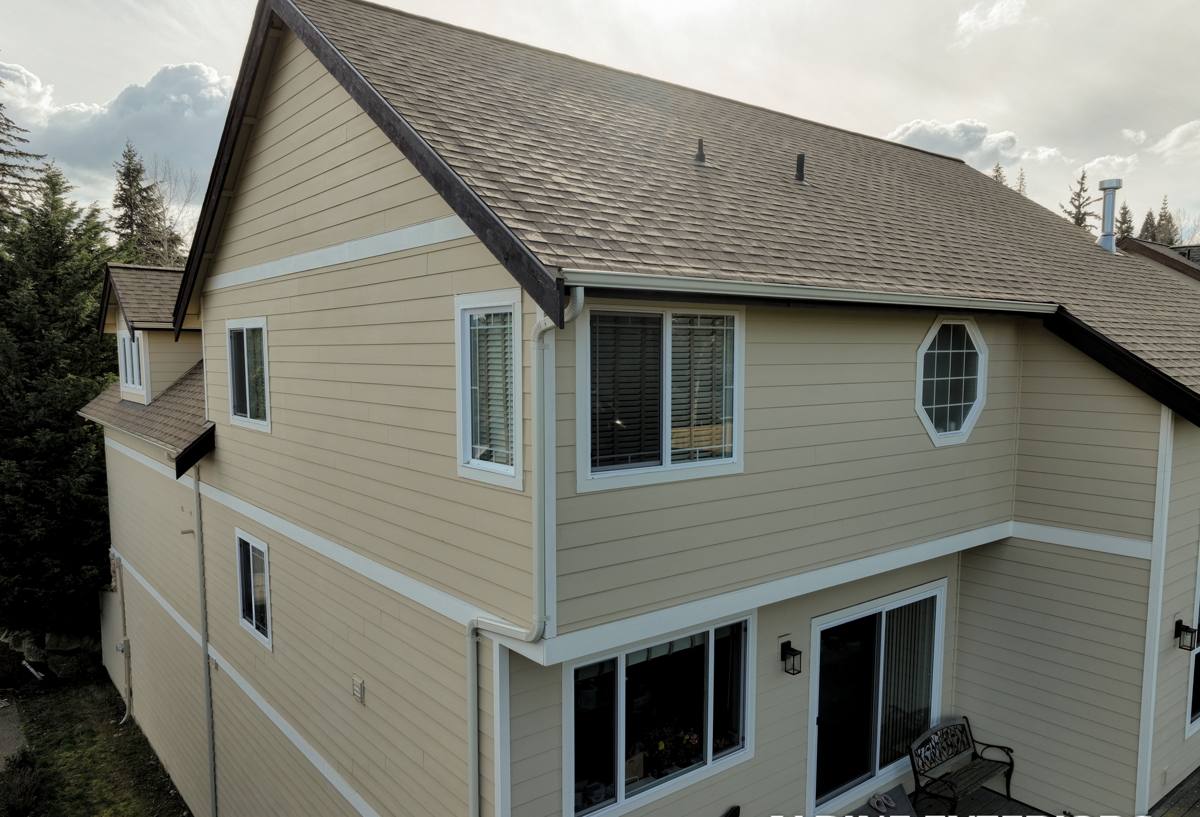
What a Correct Roof Replacement Looks Like Here
A roof replacement is only as good as what happens underneath the shingles or panels. In a wet, wooded, coastal neighborhood like Edgemoor, a handful of details matter more than they would elsewhere.
Full Tear-Off and Deck Inspection
We don't recommend layering new shingles over old ones, and we won't do it on a home in this area. A full tear-off is the only way to see the actual condition of the roof deck. Long-term moss growth and trapped moisture can quietly rot sheathing over years, and that damage is invisible until the old roofing is off. Any soft, delaminated, or water-stained decking gets replaced before anything new goes down — patching over bad sheathing just moves the problem forward a few years.
Underlayment That Handles Wind-Driven Rain
Standard felt underlayment is a minimum, not a solution, for a roof exposed to sustained rain and wind off the bay. We use synthetic or self-adhered underlayment along eaves, valleys, and any low-slope transitions where wind-driven water is most likely to work its way backward under the roofing material. This is a small cost difference at install time and a meaningful difference in what happens during a bad January storm.
Ventilation That Fights Moisture, Not Just Heat
Roof ventilation usually gets talked about in terms of summer attic heat, but in a shaded, damp climate like Bellingham's, its bigger job is moving moisture out before it condenses in the attic and works its way into the deck from underneath. A correctly balanced intake-and-exhaust system matters as much here as good exterior weatherproofing does.
Flashing and Penetrations Done Right, Not Fast
Chimneys, skylights, vent stacks, and roof-to-wall transitions are where almost every leak actually starts. On a tree-covered, salt-air lot, we use corrosion-resistant flashing and take the extra time to step-flash and seal these details properly, rather than relying on caulk or sealant as the primary defense. Caulk fails over time; correctly formed flashing doesn't rely on it to do the work.
Choosing Materials for a Coastal, Tree-Covered Lot
There's no single "right" roofing material for Edgemoor — the right choice depends on your home's exposure, your tree cover, and how much long-term maintenance you want to take on. Here's how the common options actually compare for a lot like this.
| Material | How It Handles Salt Air & Moss | Typical Lifespan | Maintenance Reality |
|---|---|---|---|
| Architectural asphalt shingle | Good with algae-resistant granules; moss still needs periodic removal under heavy shade | 25–30 years | Low to moderate; occasional cleaning under tree cover |
| Standard 3-tab shingle | More prone to moss and granule loss in shaded, wet conditions | 15–20 years | Higher; shorter service life in this climate |
| Standing seam metal | Excellent shedding of moisture; sheds moss more easily due to slick surface, but needs coastal-rated fasteners and coatings | 40–50+ years | Low once installed correctly |
| Cedar shake | Attractive but absorbs moisture and is more susceptible to rot and moss under heavy shade | 20–30 years with upkeep | High; regular treatment and inspection needed |
We're upfront about trade-offs rather than pushing one product. Cedar can look great on the right lot, but under dense, damp shade it demands a maintenance commitment a lot of homeowners underestimate. Metal costs more up front but shrugs off both salt corrosion and moss when it's detailed and fastened correctly. For most Edgemoor homes, a quality architectural shingle with algae-resistant granules hits the right balance of cost, appearance, and realistic upkeep — but we'll walk your specific roof and tree cover with you before recommending anything.
Moss, Shade, and Roof Longevity
Moss isn't just cosmetic. It holds moisture directly against the roofing surface, works its way under shingle tabs and shakes as it grows, and can lift edges enough for wind-driven rain to get underneath. On a heavily treed lot, moss season effectively runs most of the year rather than a few weeks — surfaces facing away from the sun or shaded by mature trees rarely get the dry-out time they'd get on an open roof.
During a replacement, we address the conditions that feed moss growth as much as the moss itself: proper granule selection, adequate slope and drainage in valleys, and, where it makes sense, discussing tree trimming with you to improve airflow and sun exposure over the roof. A new roof installed without addressing why the old one grew moss in the first place just restarts the same cycle.
Our Process, Start to Finish
- On-site assessment — we inspect the existing roof, attic ventilation, decking access points, and tree/shade exposure specific to your property.
- Written estimate — clear scope, material options, and pricing, with trade-offs explained in plain terms, no pressure to decide on the spot.
- Scheduling around weather — we plan installs to avoid exposing an open roof to Bellingham's wetter stretches whenever possible.
- Full tear-off and deck repair — old roofing removed, sheathing inspected, and any damaged decking replaced before new materials go down.
- Underlayment, flashing, and ventilation installed to spec — the details that matter most in this climate, done first and done right.
- New roofing installed — per manufacturer specification, to keep warranty coverage intact.
- Site cleanup and final walkthrough — including magnetic sweep for debris and a review of the finished work with you before we consider the job done.
Why Local Experience in Edgemoor Matters
A roofing crew that's worked this neighborhood already knows what to expect before the tear-off even starts — how much moss buildup is typical under this kind of tree cover, which flashing details tend to fail first on homes exposed to bay wind, and how local permitting and disposal work in Whatcom County. That familiarity shows up in fewer surprises mid-job and a more accurate estimate up front. It also means we're not guessing at material choices; we're recommending what's actually held up on roofs like yours, in this exact setting.
Signs an Edgemoor Roof Needs Replacement, Not Just Repair
- Moss coverage that returns quickly after cleaning, especially in shaded valleys and north-facing slopes
- Granule loss visible in gutters or on the ground after storms
- Curling, cupping, or cracked shingles, particularly on sun-exposed sections
- Soft or spongy spots when walking the roof, or sagging visible from the ground
- Rusted or deteriorating flashing around chimneys, vents, or skylights
- Water stains or damp spots on interior ceilings, especially after wind-driven rain
- Roof age approaching or past the material's expected service life
One or two of these on their own might mean a targeted repair is enough. Several together, especially combined with a roof that's already past 20–25 years, usually mean replacement is the more cost-effective path — repeated repairs on an aging roof add up fast without solving the underlying problem.
Cost Factors for Edgemoor Roof Replacement
We won't quote a number without seeing the roof, but a few factors consistently move the price on homes in this area:
- Roof size and pitch — steeper roofs take longer and require more safety setup
- Tree cover and access — dense canopy can mean more careful staging and cleanup, and sometimes coordination around trimming
- Material choice — asphalt, metal, and cedar carry very different material and labor costs
- Decking condition — hidden rot found during tear-off adds material and labor not visible from the ground
- Number of penetrations — chimneys, skylights, and multiple vents each add flashing labor
- Water and moisture protection upgrades — synthetic underlayment and enhanced ice/water barrier in vulnerable areas
Most full replacements on homes this size land in a broad mid-range once these factors are known, but the only honest way to give you a real number is to walk the roof in person.
Protecting the Investment After Installation
A correctly installed roof still benefits from occasional attention in a climate like this. Keeping gutters clear of needles and debris, scheduling moss treatment or removal before it builds up rather than after, and having flashing and penetrations checked every few years all extend the life of the work. We're happy to talk through a simple maintenance rhythm that fits your property when we're out for the estimate.
If your roof is showing wear, growing moss faster than it should, or is simply getting close to the end of its expected life, we'd rather look at it in person than guess from a description. We offer free, no-pressure estimates for Edgemoor homeowners — use the form below to get one scheduled.