 Bellingham Roofing
 Siding Repair for Edgemoor Homes
Edgemoor sits close to the water, with mature tree cover, quiet residential streets, and a lot of homes that have been well cared for over many years. That combination — coastal exposure plus heavy shade on parts of most lots — is exactly the mix that wears on exterior siding faster than homeowners expect. Salt-tinged air off the bay, wind-driven rain that doesn't fall straight down, and a moss season that runs long on shaded north walls all chip away at a home's siding a little at a time, usually well before anyone notices from the street. By the time a soft spot or a stained seam is obvious at eye level, there's often more going on behind the surface than a quick caulk-and-paint fix will solve.
We repair siding on Edgemoor homes the same way we install it: to spec, with the right materials and the right sequence, not just patched to look okay until the next wet season. We work exclusively in James Hardie fiber cement, and that shapes how we approach every repair — matching existing material correctly, tying new work into old flashing properly, and making sure a repair actually solves the underlying moisture problem instead of covering it up.
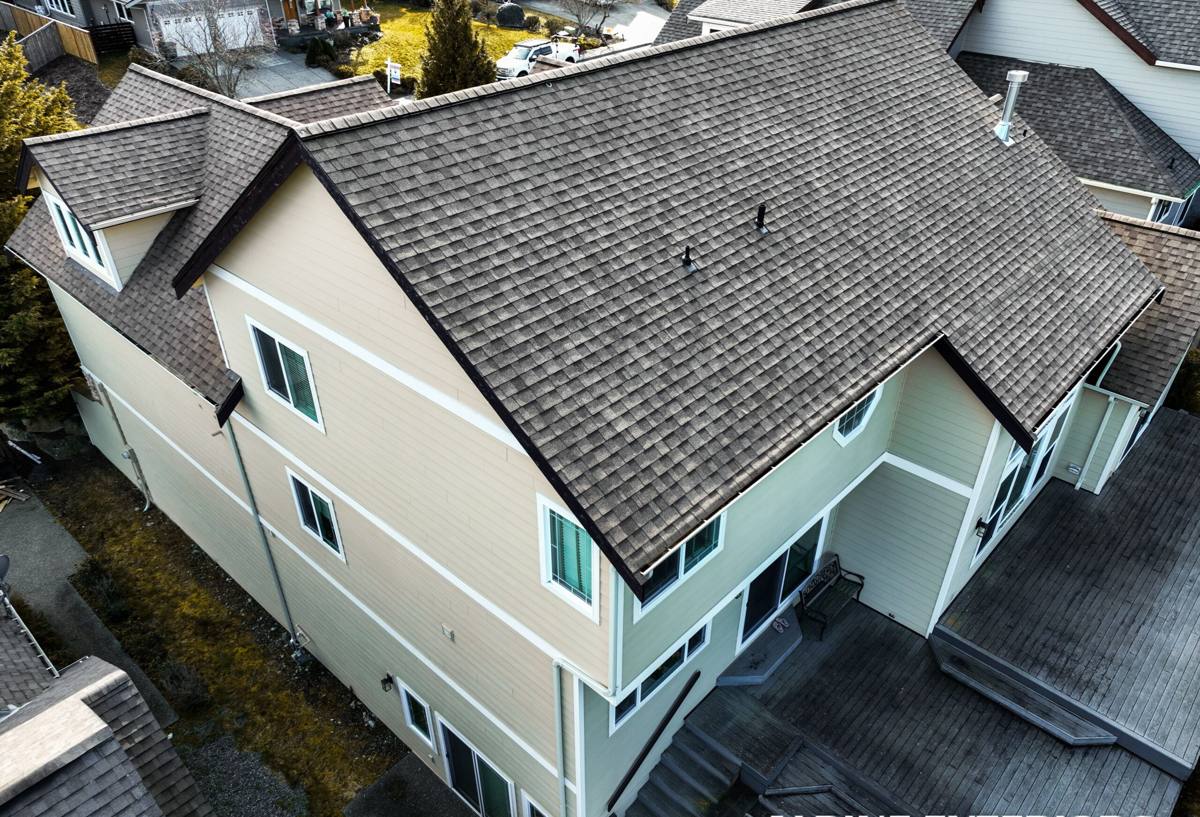
What Edgemoor's Setting Does to Siding Over Time
Salt Air and Fastener or Trim Corrosion
Homes close to the water in this part of Whatcom County see steady salt exposure, which is harder on exposed fasteners, trim, and any metal flashing than most homeowners realize. A repair that reuses corroded fasteners or skips corrosion-resistant hardware because "it's just a small patch" tends to fail again within a few seasons, right at the same spot.
Wind-Driven Rain Finding Weak Seams
Rain off the bay rarely falls straight down — wind pushes it sideways and up under laps, trim, and any seam that isn't sealed or flashed correctly. Once a seam opens even slightly, wind-driven rain will find it repeatedly, which is why so many siding repair calls in this area trace back to one small failure point that's been feeding moisture behind the wall for a while before it becomes visible.
Shade, Moss, and Slow-Drying Walls
Edgemoor's mature trees are part of what makes the neighborhood attractive, but they also mean shaded and north-facing walls stay damp longer after every rain. That extended damp period is exactly what moss and mildew need to establish, and moss holding moisture against siding for weeks at a time is one of the more common causes of soft, failing material we find once we open a wall up.
Common Siding Problems We Find in This Neighborhood
| Problem | Typical Cause | Why It Matters |
|---|---|---|
| Soft or spongy siding near the ground | Splash-back moisture, poor grade slope, or missing kick-out flashing | Often means the substrate underneath is already compromised, not just the visible board |
| Staining or dark streaks at seams and laps | Water tracking behind an improperly lapped or caulked joint | Signals an active moisture path that will keep feeding the same spot |
| Moss buildup on shaded walls | Extended dry time under tree cover, especially on north sides | Traps moisture against the surface and accelerates finish and substrate wear |
| Cracked or separated caulk at trim and window edges | Normal material movement plus UV and moisture cycling over time | Small gaps let wind-driven rain in even when the siding field looks fine |
| Mismatched or visibly different repair patches | Prior repairs using different material, profile, or unmatched color | Suggests the underlying moisture issue may not have been fully addressed the first time |
What a Correct Repair Actually Involves
A siding repair that holds up in this climate is rarely just about the visible board. Here's what we check and address on every repair call in Edgemoor:
- Confirming how far the damage extends — moisture rarely stops exactly at the edge of the visible stain or soft spot
- Checking the house wrap or weather-resistive barrier behind the affected area for tears or gaps once siding is removed
- Inspecting and correcting flashing at the point of failure, whether that's a window, door, deck ledger, or wall base
- Matching replacement material correctly — profile, exposure, and color — so the repair doesn't stand out or perform differently than the surrounding wall
- Using corrosion-resistant fasteners at the correct spacing, especially given the salt exposure common to homes near the water
- Restoring or re-establishing a drainage gap behind the siding so any future moisture can dry out instead of sitting against the wall
- Priming any field-cut edges on factory-finished material so the repaired section weathers the same way as the original installation
Skipping any of these steps can leave a repair that looks fine on the day it's finished but fails again in the same spot within a season or two, because the actual moisture path was never addressed.
Repair or Replace? How We Make That Call
Not every siding problem in Edgemoor needs a full re-side, and not every problem is a simple patch either. We look at a few things before recommending one over the other:
- How localized the damage is — a single window transition or wall section with isolated moisture damage is usually a straightforward repair
- What's happening behind the siding — if the house wrap and framing underneath are sound, repair makes sense; if moisture has been getting in for years, a larger section may need to come off to fix it right
- The age and condition of the rest of the siding — repairing one section of siding that's otherwise near the end of its service life is a different conversation than repairing a small area on a wall with plenty of life left
- Whether the original material is still available to match — this matters most with older siding products where profiles or colors have since changed
We'll always tell you honestly which side of that line your home is on. A repair that's really just delaying an unavoidable re-side isn't doing you any favors, and we'd rather have that conversation upfront than sell a patch we don't believe in.
Why We Repair Only in James Hardie Fiber Cement
We install and repair James Hardie fiber cement exclusively — we don't do repair work in LP SmartSide, vinyl, Cemplank, Allura, primed spruce, or cedar. That's a professional standard, not a comment on those products; other contractors work in them competently. For us, standardizing on one system means our crews know its behavior, its fastening spec, and its moisture tolerances inside and out, which matters when the job is correcting somebody else's — or nature's — mistake rather than starting from a clean wall.
James Hardie's fiber cement core is dimensionally stable, meaning it doesn't swell, cup, or soften the way wood-based siding can when it takes on moisture — a real advantage on repair work, where the surrounding material has often already been exposed to whatever caused the original damage. The factory-applied ColorPlus finish also means a correctly matched repair section should hold its color and finish the same way the rest of the wall does, rather than fading or weathering differently over the following years.
Our Repair Process
- Assessment — we walk the affected area and identify how far the damage and moisture path actually extend, not just what's visible from the ground
- Diagnosis — we determine the root cause, whether that's a flashing failure, a caulk joint that's opened up, grade or drainage issues, or long-term moss exposure
- Scope and estimate — we tell you honestly what needs to happen, what it will cost, and whether repair or a larger replacement makes more sense for your home
- Removal and correction — damaged material comes off, the underlying issue gets fixed first, and only then does new siding go back on
- Match and finish — replacement material is matched for profile and color, fastened to spec, and cut edges are primed so the repair weathers consistently with the rest of the wall
What Drives Siding Repair Cost
| Factor | Why It Matters |
|---|---|
| Extent of hidden moisture damage | Damage found once siding is removed often extends beyond the visible problem area |
| Accessibility of the affected wall | Second-story sections, tight side yards, or landscaping can add labor time |
| Availability of matching material | Matching an older profile or discontinued color can require more sourcing time |
| Flashing and trim work involved | Repairs at windows, doors, or wall bases often require more than a simple board swap |
| Number of separate repair areas | Several smaller repair sites across a home add setup and material handling versus one contiguous section |
We give real numbers based on a walk of your specific property, not a rough guess based on square footage — two homes with a similar-looking problem can have very different scopes once we know what's actually happening behind the wall.
Why Hiring a Crew That Already Works Edgemoor Matters
Repair work rewards familiarity in a way new installation doesn't always demand as heavily. A crew that's worked on homes in this neighborhood already understands how the combination of shade, tree cover, and proximity to the water plays out on real walls here — which orientations tend to hold moisture longest, where moss shows up first, and what kind of flashing details tend to fail on homes of a certain age in this specific setting. That local pattern recognition means less time spent guessing and more time spent fixing the actual cause the first time.
It also matters for matching. A contractor unfamiliar with the products commonly installed in this area may struggle to match an existing James Hardie profile or color correctly, leaving a repair that's structurally sound but visually obvious. Working in this neighborhood regularly means we've seen a wide range of what's already on these homes and know how to tie new work into it cleanly.
Get an Honest Look at Your Siding
If you're seeing a soft spot, a stained seam, moss buildup on a shaded wall, or trim that's separated at the edges, it's worth having someone look at it before another wet season passes. We're happy to walk the property, explain what we're seeing and why, and give you a straightforward, no-pressure estimate for the repair your home actually needs. There's a form below — reach out and we'll set up a time to take a look.