 Bellingham Roofing
 Building a Deck That Holds Up in Fairhaven
Fairhaven sits close to Bellingham Bay, and that proximity to salt water changes what a deck needs to survive here compared to a deck built inland. Salt-laden air accelerates corrosion on fasteners and hardware, wind-driven rain finds its way into joints that would stay dry elsewhere, and the shade from mature trees on many Fairhaven lots keeps surfaces damp long enough for moss and algae to take hold. None of that means a deck can't last for decades in this neighborhood. It means the build has to account for those conditions from the footings up, not just at the surface.
A deck that looks right the day it's finished but wasn't built for this climate usually shows its problems within a few wet seasons — soft spots near the ledger, rust bleeding through fastener heads, a slick green film on the boards by November. The fixes for all of that are known and not expensive to build in up front. They're expensive to retrofit later.
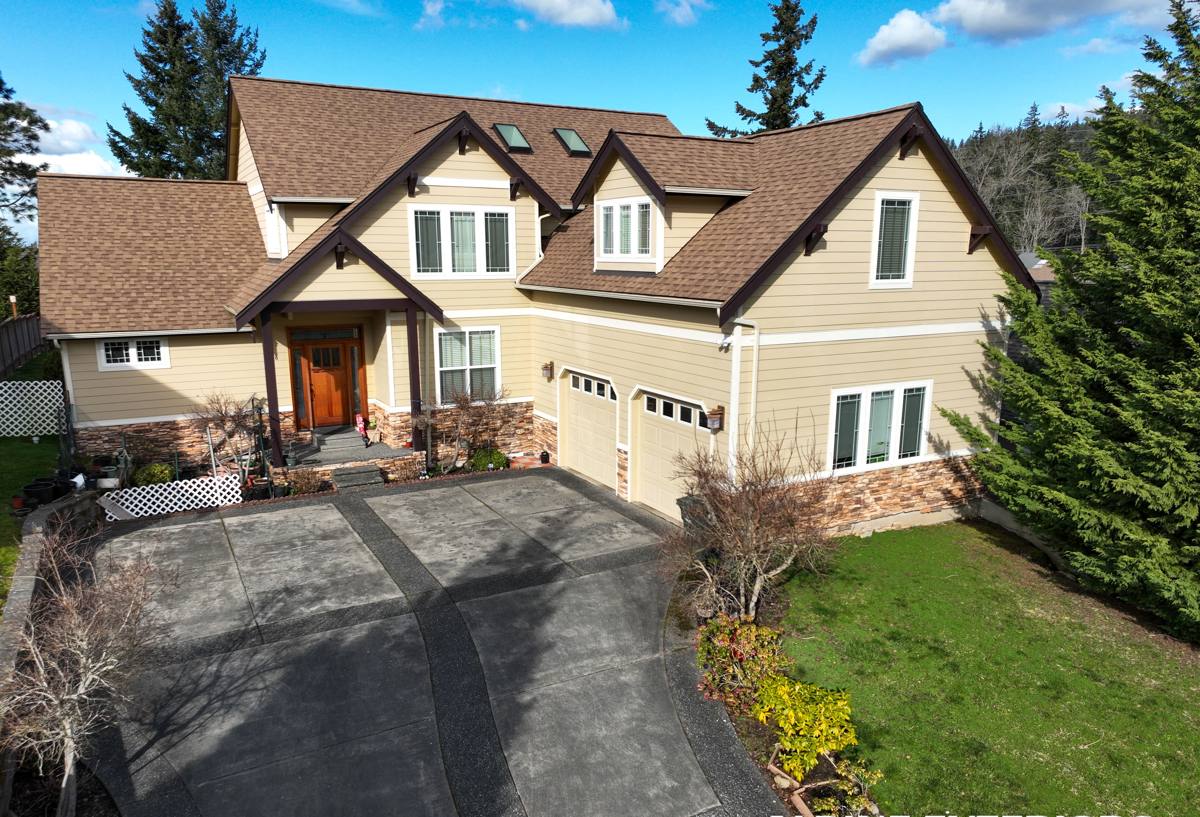
What Fairhaven's Site Conditions Demand
Salt Air and Corrosion
Bare or lightly coated steel hardware corrodes noticeably faster within a mile or two of the water. Screws, joist hangers, post bases, and structural bolts all need a corrosion rating suited to that exposure — this is a spec decision made before the first board goes down, not something a homeowner can inspect after the fact without pulling decking.
Driving Rain and Wind
Storms off the Sound tend to push rain sideways, which means flashing details at the house connection and around any structural posts matter more here than on a deck built in a drier, calmer part of the county. Water that would simply run off a flat, still rain elsewhere gets driven into gaps and gets there is when problems start.
Shade, Moisture, and Moss
Many Fairhaven properties have tree cover or sit close to neighboring structures, both of which slow how quickly a deck surface dries out after rain. Combined with our long wet season, that's ideal moss and algae territory. Board spacing, airflow underneath the deck, and surface texture all affect how much of a moss problem a given deck develops over time.
Sloped Lots and Foundations
A fair number of lots in and around Fairhaven have grade changes — hillside terrain isn't unusual this close to the bay. That affects footing depth, post height, and sometimes whether a deck needs additional bracing for lateral stability. It's a site-specific engineering question, not a one-size answer.
Getting the Substructure Right
The framing is the part of a deck nobody sees once it's finished, and it's also the part that determines whether the deck is still solid in fifteen years. A few things we treat as non-negotiable on every Fairhaven project:
- Footings sized and set to the depth required for the soil and load on that specific lot, not a generic minimum
- Ledger board attachment properly flashed and sealed where it meets the house, since this is the single most common source of hidden rot on older decks
- Joist tape or an equivalent moisture barrier on top of every joist, so fastener penetrations don't become entry points for water
- Corrosion-resistant structural hardware rated for coastal or treated-lumber contact, appropriate for this exposure
- Proper spacing and slope away from the house so water sheds instead of pooling under the decking
Any one of these skipped doesn't usually cause a visible problem right away. It causes one in three to five years, hidden under the decking boards, which is exactly why it has to be done correctly the first time.
Choosing a Decking Material
There's no single "best" decking material — the right choice depends on budget, how much upkeep you're willing to do, and how the deck will be used. Here's how the common options compare for a Fairhaven property specifically:
| Material | Upfront Cost | Maintenance | Moisture/Moss Resistance | Typical Lifespan |
|---|---|---|---|---|
| Pressure-treated wood | Lowest | Annual cleaning, periodic staining/sealing | Fair — needs consistent upkeep to shed moss and prevent rot | 10–15 years |
| Cedar | Moderate | Regular sealing to hold color and resist moisture | Good naturally, but still needs maintenance in this climate | 15–20 years |
| Composite decking | Higher | Occasional washing, no staining/sealing | Very good — doesn't absorb water or rot, though surface texture affects moss grip | 25–30+ years |
| Tropical hardwood | Highest | Periodic oiling to maintain appearance | Excellent density and rot resistance | 25+ years |
For a shaded or waterfront-adjacent lot in Fairhaven, we lean toward recommending composite or a well-installed hardwood specifically because they tolerate the wet, low-sun conditions with less ongoing maintenance. Pressure-treated and cedar are honest, cost-effective choices too — they just require the homeowner to stay on top of cleaning and sealing to get a full lifespan out of them.
Fasteners and Hidden Details
Most deck failures we see near the water trace back to fasteners, not the decking material itself. Standard exterior screws can start showing rust streaks within a couple of seasons this close to salt air, and once a fastener starts to corrode, the hole around it loosens and starts letting water into the wood. We spec coated or stainless fasteners rated for this exposure, and we use hidden fastener systems where the decking product supports it — both for appearance and because fewer surface penetrations means fewer places for water to get in.
The same logic applies to post bases, joist hangers, and any structural connector. It costs more up front than a generic hardware package. It's a small fraction of what it costs to tear out and rebuild a deck that rusted from the inside out.
Railings, Stairs, and Code Requirements
Any deck attached to a home in Fairhaven falls under City of Bellingham building code, which follows the International Residential Code (IRC) for guardrail height, baluster spacing, and stair geometry, along with local permitting requirements. A permitted deck typically needs:
- Guardrails at the required height for any walking surface more than 30 inches above grade
- Baluster spacing that meets the code maximum gap, a common miss on older or DIY-built decks
- Stair rise and run within code tolerance, plus a graspable handrail where required
- Structural connections and footings that pass inspection before decking goes on
We handle the permit process as part of the job rather than leaving it to the homeowner. That includes pulling the permit, scheduling the required inspections, and building to pass them the first time — not something to skip even on a straightforward rebuild, since an unpermitted deck can complicate a future home sale or insurance claim.
How We Approach a Fairhaven Deck Project
1. Site Visit and Assessment
We look at grade, drainage, sun exposure, existing structure condition if it's a rebuild, and any access constraints specific to the lot — which matters more in a dense, older neighborhood like Fairhaven than it does on a wide-open suburban lot.
2. Design and Material Selection
We walk through decking, railing, and hardware options against your budget and how much maintenance you actually want to do, being direct about the trade-offs rather than upselling the most expensive option by default.
3. Permitting
We pull the required City of Bellingham permit and schedule inspections around the build timeline so the project isn't held up waiting on paperwork.
4. Framing and Substructure
Footings, ledger flashing, joist layout, and hardware go in to the standard described above — this is the stage that determines the deck's real lifespan, and we don't rush it.
5. Decking, Railing, and Finish Work
Surface material and railings go on, fastener lines are kept clean and consistent, and everything is checked for level and proper drainage slope before we call it finished.
6. Final Walkthrough
We walk the finished deck with you, cover basic care for whatever material you chose, and make sure final inspection sign-off is complete.
Maintenance That Actually Matters Here
Because of the moss and moisture load in this part of Whatcom County, a Fairhaven deck needs a slightly more attentive maintenance routine than one built somewhere drier. A simple annual checklist covers most of it:
- Clear leaves and debris from between boards and off the surface before fall rains set in
- Check that gaps between boards are still clear enough for drainage and airflow underneath
- Look at the ledger flashing line where the deck meets the house for any gaps or staining
- Wash off moss and algae early in the season before it gets established and slick
- Inspect fastener heads and hardware for early rust, especially on older or non-coastal-rated hardware
- Reseal or restain wood decking on the manufacturer's recommended schedule, not just when it looks faded
- Check railings and stair connections for any looseness after freeze-thaw cycles
None of this takes long, and catching a small issue during an annual check is a lot cheaper than discovering it as a soft board or a rusted-through hanger years later.
Why Local Fairhaven Experience Matters
A deck built to a generic inland spec doesn't necessarily fail in Fairhaven — but it ages faster, needs more upkeep, and is more likely to develop hidden problems in the framing before they show on the surface. A crew that already works this neighborhood knows which hardware holds up near the water, how the local grade and drainage patterns tend to run, and what the City of Bellingham inspectors expect to see on a permit. That local knowledge shows up less in what the deck looks like on day one and more in how it's still performing ten or twenty years out.
If you're planning a new deck or replacing an aging one in Fairhaven, we're happy to take a look at your property and talk through what makes sense for your budget and how you'll use the space. Reach out for a free, no-pressure estimate using the form below.