 Bellingham Roofing
 Why Fairhaven's Climate Is Hard on Windows
Fairhaven sits close to Bellingham Bay, which means homes here take on a combination most inland neighborhoods never deal with: salt-laden air off the water, wind-driven rain that hits window frames at an angle instead of straight down, and a long wet season that keeps north- and west-facing walls damp for months at a time. Add in the moss and algae growth that thrives in Whatcom County's mild, moist winters, and you have an environment that finds every weak point in a window installation — usually within a few years, not decades.
Salt air accelerates corrosion on hardware, fasteners, and lower-grade aluminum components. Driving rain finds gaps in flashing and caulking that would never leak in a drier climate. And moss doesn't just grow on roofs — it takes hold in window sill channels, behind trim, and anywhere organic debris collects moisture against wood. None of this is unusual for Bellingham. It's just why a window that performs fine in a showroom can fail early once it's installed on a home a few blocks from the water.
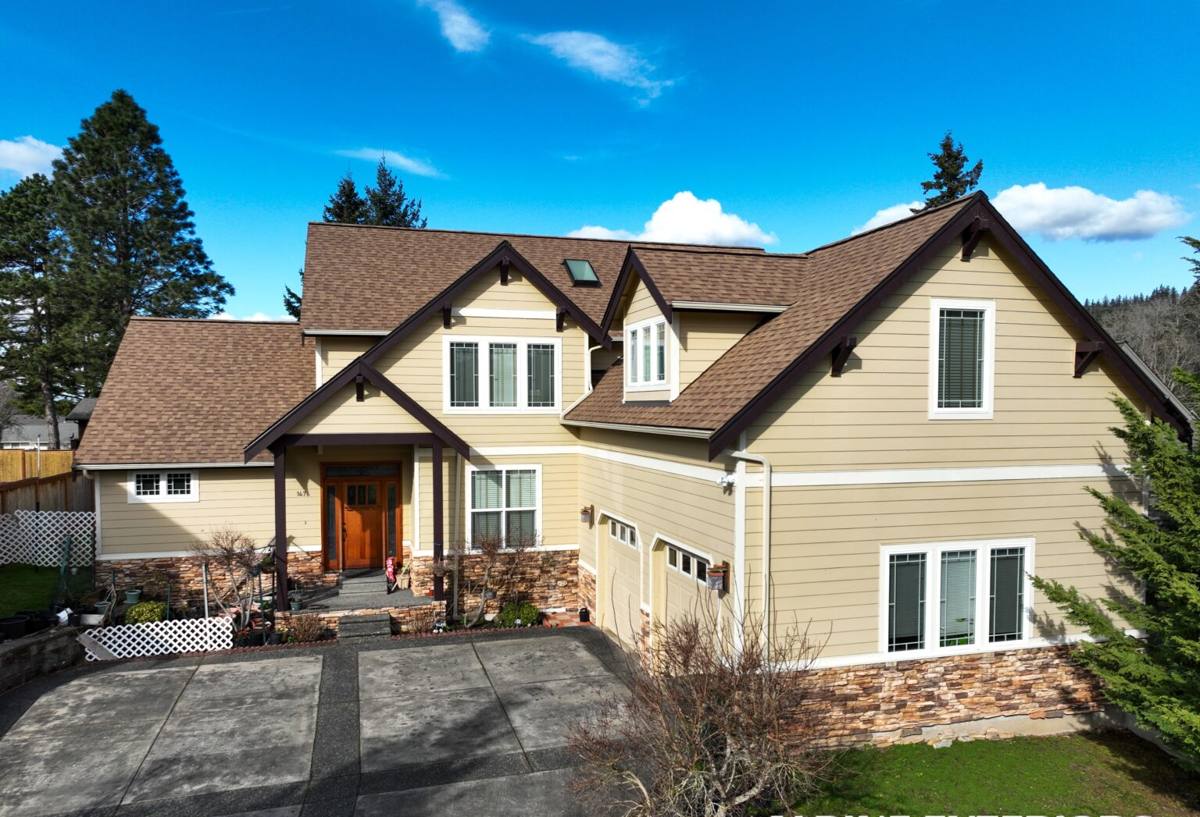
What "Energy-Efficient" Should Mean for a Fairhaven Home
Energy efficiency in windows comes down to a few measurable properties, and it's worth understanding them before you compare quotes:
- U-factor — how well the window resists heat loss. Lower is better for our heating-dominated climate.
- SHGC (Solar Heat Gain Coefficient) — how much solar heat passes through. Bellingham doesn't get intense summer sun, so this matters less here than in hotter regions, but it still affects comfort on south-facing walls.
- Glazing package — double-pane with a low-E coating and argon gas fill is the practical baseline for our region; triple-pane adds further insulation value but at a real cost premium.
- Air infiltration rating — how much air leaks around the sash even when it's closed. This one matters as much as glazing in a windy, wet climate.
The number on a spec sheet is only half the story, though. A high-performance window installed with poor flashing or a gappy rough opening will underperform a mid-grade window installed correctly. In Fairhaven especially, installation quality and glazing quality carry roughly equal weight.
Signs Your Windows Are Already Costing You
Older homes throughout Fairhaven — many built with original wood-frame single-pane windows — often show the same pattern of wear. Watch for:
- Condensation or fogging between panes (a sign the seal has failed on a dual-pane unit)
- Visible moss, algae, or black staining building up in the sill channel or exterior trim
- Cold drafts near the frame even when the sash is fully latched
- Soft or discolored wood at the sill, especially on walls facing the prevailing weather
- Difficulty opening or closing sashes due to swollen or warped frames
- Noticeably higher heating bills in units that were once comparable across a home
Any one of these on its own isn't an emergency. Several of them together, especially on a home's weather-exposed side, usually mean the glazing and the flashing have both started to give out.
What a Correct Installation Actually Involves
Replacing a window is not just pulling out the old unit and caulking in a new one. In a climate that drives rain sideways and keeps humidity high for months, the details around the window matter more than the window itself. A correct job includes:
- Removing the old unit and inspecting the rough opening for rot, mold, or framing damage before anything new goes in
- Installing a sill pan flashing so any water that does get past the window sheds outward instead of pooling against the framing
- Integrating flashing tape with the home's existing weather-resistive barrier, shingle-lapped so water always moves down and out, never behind the siding
- Setting the window level, plumb, and square with proper shimming — a slightly out-of-square window strains the seals and hardware for the rest of its life
- Insulating the gap between the frame and the rough opening without overpacking it, which can bow the frame
- Sealing and trimming with materials rated for exterior exposure, not general-purpose caulk that breaks down in a few UV seasons
Skipping the flashing and moisture-management steps is the single most common shortcut in window installation — and it's invisible from the outside for years. It's also the step most responsible for hidden rot damage behind a home's siding.
Frame Materials: What Holds Up Near the Water
Frame material matters more in Fairhaven than in a drier, inland neighborhood, because it's dealing with salt exposure and sustained moisture, not just cold. Here's how the common options compare:
| Frame Material | Salt Air & Moisture Behavior | Energy Performance | Typical Cost Position | Maintenance |
|---|---|---|---|---|
| Vinyl | Won't corrode or rot; performs well near the coast | Good, especially with multi-chamber designs | Lowest to mid-range | Low — occasional cleaning |
| Fiberglass | Excellent — very stable in wet, temperature-swinging conditions | Very good to excellent | Mid to higher | Low |
| Wood (unclad) | Vulnerable without diligent upkeep; moss and moisture find exposed wood fast | Good with proper glazing | Higher, plus ongoing upkeep cost | High — regular painting/sealing |
| Aluminum-clad wood | Better protected than bare wood, but cladding seams need attention | Good | Higher | Moderate |
| Bare aluminum | Corrodes faster in salt air; conducts heat/cold readily | Weaker unless thermally broken | Lower | Moderate |
We don't push one brand or material on every job. What we won't do is install a bare wood or unclad aluminum frame on a home with direct salt exposure without being upfront that it's going to demand more maintenance than a vinyl or fiberglass alternative — that's a trade-off homeowners should make with full information, not one we make quietly for them.
Our Process for Fairhaven Homes
We keep the process straightforward:
- On-site assessment — we look at existing window condition, sill and framing health, and which walls take the most weather so we can flag anything that needs attention beyond the windows themselves
- Honest options — we walk through frame material, glazing package, and installation scope in plain terms, without steering you toward the most expensive option by default
- Written estimate — clear scope and pricing before any work starts, no surprise add-ons mid-job
- Installation — proper flashing, sealing, and finish work as outlined above, with daily cleanup so your home isn't left exposed overnight
- Final walkthrough — we check operation, seals, and exterior finish work with you before calling the job done
Why a Crew That Already Works Fairhaven Matters
Fairhaven has a mix of older character homes and newer construction, often on smaller lots with limited street parking and tighter access than a typical suburban job site. A crew that's worked in the neighborhood before knows how to plan material staging and access without turning a job into a disruption for the block. More importantly, we've seen how the local combination of salt air, wind-driven rain, and moss buildup actually plays out on real installations here — which sills fail first, which walls take the worst weather, and where a shortcut on flashing shows up two winters later as a soft spot behind the siding.
That local pattern recognition is hard to substitute with a generic install crew unfamiliar with Whatcom County's coastal conditions. It's the difference between a window that's technically installed and one that's installed to actually hold up here.
Maintenance to Protect Your Investment
Even a correctly installed, high-quality window benefits from basic upkeep in this climate. A simple seasonal routine goes a long way:
- Clear moss, leaves, and debris from sill channels and weep holes each fall
- Rinse salt residue off exterior frames periodically, especially on water-facing walls
- Check exterior caulking and trim seals once a year for cracking or separation
- Test operation of sashes and locks so hardware doesn't seize from disuse or corrosion
- Watch for early condensation between panes — it's cheaper to address a failing seal than a failing window
None of this requires special tools or a service contract — it's the kind of maintenance most homeowners can handle in twenty minutes, twice a year, and it meaningfully extends the life of the installation.
Get a Straightforward Estimate
If your windows are drafty, fogged, or showing wear from Fairhaven's salt air and wet winters, we're glad to take a look and give you an honest read on what's actually going on — no pressure, no inflated scope. Fill out the form below and we'll set up a time to assess your home and put together a clear, written estimate.