 Bellingham Roofing
 Puget's Coastal Climate Puts Real Stress on Exterior Walls
Homes in the Puget area sit close enough to the water that the weather isn't an abstract concern, it's a daily condition your siding has to manage. Salt-laden air moves in off the Sound and works on finishes and fasteners year-round. Rain here rarely falls straight down; wind pushes it sideways into laps, corners, and trim joints, which is a harder test for a wall assembly than a simple rainfall total suggests. And because temperatures stay mild and shaded areas stay damp for long stretches, moss and algae get a growing season that runs most of the year instead of a few wet months. Any siding material you put on a Puget home has to hold up to all three of those conditions at once, not just one of them.
This page is specifically about fiber cement siding for homes in this neighborhood — what the climate demands, what a correct installation actually involves, and why we standardized on James Hardie as the only product we put on Puget-area walls.
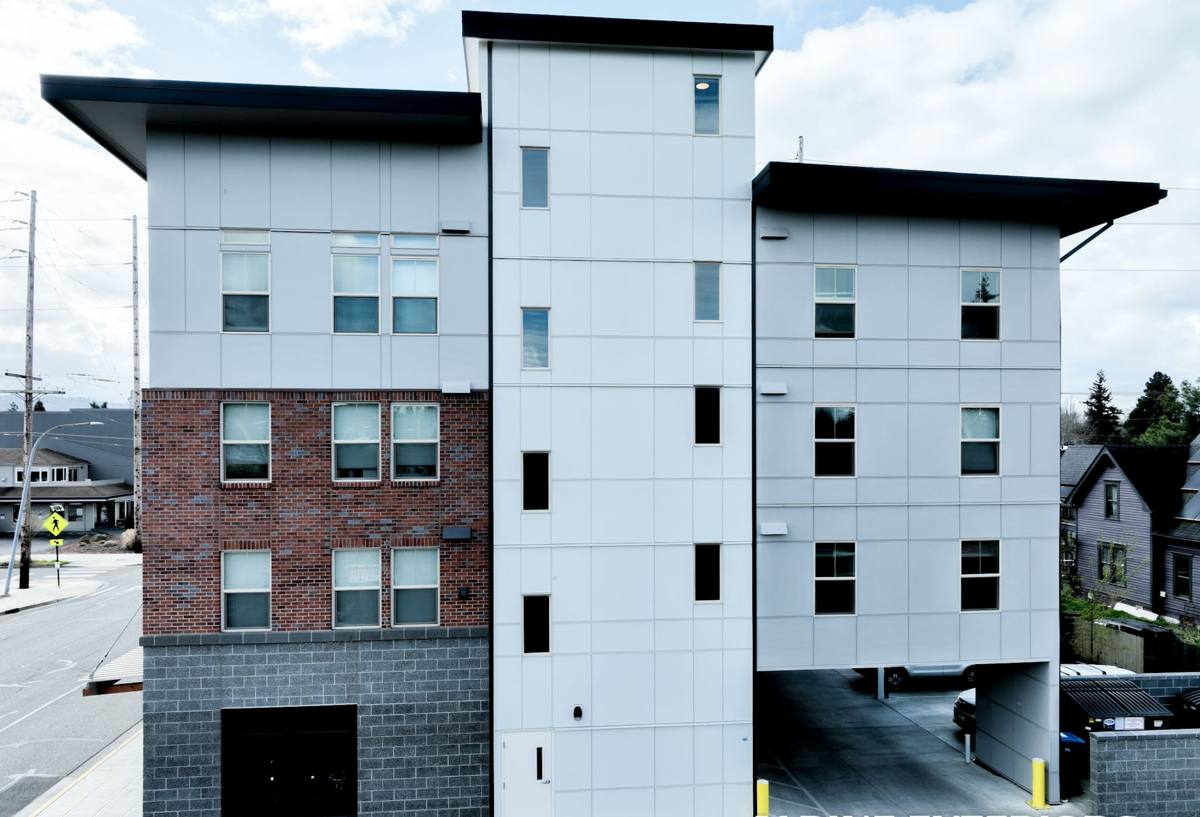
Why We Recommend James Hardie Fiber Cement for This Neighborhood
An Inorganic Core That Doesn't Feed Moss or Absorb Water
James Hardie siding is a cement-based composite: portland cement, sand, and cellulose fiber, formed and cured into planks and panels. That core is inorganic, which matters a great deal in a climate like this one. It doesn't swell or cup when it takes on moisture the way wood-based products can, and it doesn't give moss, algae, or fungus an organic surface to feed on the way untreated or lightly treated wood siding does. On a wall that stays damp for weeks at a stretch during a long moss season, that difference shows up in how the siding actually looks and performs ten or fifteen years in, not just on day one.
The ColorPlus Factory Finish
Most Hardie product we install carries the factory-applied ColorPlus finish — a coating cured under controlled conditions at the factory rather than brushed on in the field after installation. Field-applied paint is more vulnerable to salt air and UV breaking it down at the surface, and once a field finish starts to fail, moisture gets a path into whatever is underneath it. A factory-cured finish holds its integrity longer under that kind of sustained coastal exposure, which is exactly the exposure a Puget-area wall deals with.
HZ5 Engineering for Coastal Exposure
Hardie's HZ5 product line is engineered specifically for regions with heavier moisture load and freeze-thaw cycling than the national average formulation assumes. Coastal Whatcom County is squarely that kind of region. Specifying the right HZ line for a given property isn't a marketing detail, it's a real formulation difference that affects how the material performs under this exact combination of salt air and wind-driven rain.
What Correct Installation Looks Like on a Puget Home
Fiber cement's performance depends on installation discipline as much as it depends on the material itself. A quality product installed loosely to spec can still develop problems early, and the details that matter most are the ones a homeowner usually can't see once the job is finished.
Fastening and Clearance from Grade
Hardie specifies exact fastener types, spacing, and penetration depth, and those specs aren't optional if you want the manufacturer's warranty to stay valid. Clearance from grade, roofline, and any horizontal surface below the siding also has to be correct — too little clearance and splashback moisture gets a direct path to the bottom edge of the boards, which is one of the most common places siding starts to fail on homes near water.
Flashing, House Wrap, and Water Management
Fiber cement is not a waterproof membrane by itself; it's one layer in a water management system that includes house wrap, flashing at windows and doors, and proper integration at every penetration through the wall. In a climate where wind drives rain sideways into every joint, gaps or shortcuts in this layer are what eventually let water behind the siding, regardless of how good the siding itself is.
Joint Lapping and Caulking at Seams
Every lap joint and butt seam is a potential entry point for moisture if it isn't lapped, gapped, and sealed correctly. This is detail work that takes more time to do right than to do quickly, and it's the kind of thing that's invisible from the curb but obvious to a crew doing a tear-off ten years later on a house where it wasn't done right the first time.
Fiber Cement vs. Other Siding Options for This Climate
| Factor | James Hardie Fiber Cement | Vinyl | Cedar / Untreated Wood |
|---|---|---|---|
| Moisture response | Inorganic core; doesn't swell or absorb water | Doesn't absorb water, but can warp and gap with temperature swings | Absorbs moisture; prone to rot without diligent maintenance |
| Moss and algae growth | Inorganic surface doesn't feed organic growth | Resists growth but shows staining over time | Organic surface; growth is a persistent maintenance issue in shaded, damp areas |
| Salt air durability | Factory finish holds up well to salt exposure | Can chalk and become brittle over time near the coast | Finish breaks down faster; needs frequent refinishing near salt air |
| Combustibility | Non-combustible | Combustible; can deform in heat | Combustible |
| Maintenance burden | Low; factory finish, no repainting cycle in most cases | Low, but limited repair options if damaged | High; regular sealing, staining, or painting required |
None of these products are inherently bad — plenty of homes around the region wear vinyl or cedar without major issues. The comparison above is about how each material tends to behave specifically under Puget's combination of salt air, wind-driven rain, and a long wet season, which is the standard we weigh every siding decision against.
Our Process for a Puget Siding Project
- On-site assessment: we walk the property, look at current siding condition, exposure direction, and any visible moisture or moss patterns before quoting anything.
- Tear-off and substrate inspection: removing the old siding is the only way to see what's actually happening underneath — sheathing condition, house wrap integrity, and any hidden rot get identified at this stage.
- Substrate repair: any damaged sheathing or framing gets addressed before new siding goes on; covering over a compromised substrate just hides a problem instead of solving it.
- Installation to Hardie's specification: fastening, clearances, flashing integration, and joint detailing are all done to the manufacturer's spec, which is what keeps the warranty intact and the wall performing as designed.
- Final walk-through: we go over the finished work with the homeowner before considering the job done.
Why a Crew That Already Works in Puget Matters
Whatcom County's exposure isn't uniform. A property closer to open water deals with a more direct salt and wind load than one set back a few blocks, and a crew that regularly works this specific area develops a feel for those differences that's hard to get from a generic regional playbook. That shows up in small but real ways — recognizing which elevations of a Puget home are going to need the most attention at flashing and joints, knowing what the typical construction and age of homes in this area tends to look like once the old siding comes off, and being familiar with local permitting so a project doesn't stall on paperwork. A crew that's already doing this work in the neighborhood also isn't learning the area's quirks on your project.
Cost Factors for a Puget Fiber Cement Re-Side
| Factor | What It Affects | Why It Matters Here |
|---|---|---|
| Material selection | Upfront cost per square | The right HZ line and finish for coastal exposure costs more than a generic spec, but it's what actually performs here |
| Substrate condition | Repair costs before new siding goes on | Years of trapped moisture behind aging siding can rot sheathing, which isn't visible until tear-off |
| Home complexity | Labor time and detailing | More corners, dormers, and trim mean more joints exposed to wind-driven rain and more time spent on flashing details |
| Site exposure | Prep and protection needs | Homes with more direct water exposure need more careful sequencing to avoid exposing open walls during wet weather |
| Finish choice | Long-term maintenance cost | Factory ColorPlus finish costs more upfront but avoids a repainting cycle that field-applied finishes eventually need |
These are the variables that move a quote up or down — there's no honest way to give a firm number without seeing the actual house, which is why we walk the property before quoting rather than pricing off a square-footage formula.
Signs Your Current Siding May Already Be Struggling
- Persistent moss or dark staining on north-facing or shaded walls that keeps returning after cleaning
- Soft spots or give when you press on the siding, especially near the bottom courses or below windows
- Paint or finish that's peeling, bubbling, or chalking, particularly at seams and cut edges
- Visible cupping, warping, or gaps opening up between boards
- Rising energy bills or drafts that suggest the wall assembly behind the siding isn't sealing the way it should
- Caulking at trim and joints that's cracked, shrunk, or missing altogether
Any one of these on its own might be minor. Several together, especially on a home that's had the same siding for two or three decades, is usually worth a closer look before another wet season adds to the damage.
Get a Free, No-Pressure Estimate
If you're weighing a siding replacement for a home in Puget, we're glad to come take a real look, tell you honestly what condition your current siding is in, and walk you through what a James Hardie installation would involve for your specific property. Reach out using the form below to schedule a free estimate — no pressure, no upsell script.