 Bellingham Roofing
 Board and Batten Siding in Happy Valley: Built for This Climate, Not Just This Look
Happy Valley sits close enough to Bellingham Bay and the Salish Sea that salt-laden air is simply part of the local weather, and that air is hard on exterior building materials. Add Whatcom County's long wet season, driving rain that blows in off the water during winter storms, and the shaded, damp conditions that let moss and algae take hold on north- and west-facing walls, and you have a climate that tests every seam, joint, and fastener in a siding system. Board and batten siding, with its bold vertical lines and deep shadow reveals, is one of the most requested looks for homes in this neighborhood, and it can perform beautifully here for decades — but only if it's built from the right material and installed correctly for this specific climate.
This page covers what board and batten needs to hold up in Happy Valley, what a correct installation actually involves, and why we install it only in James Hardie fiber cement.
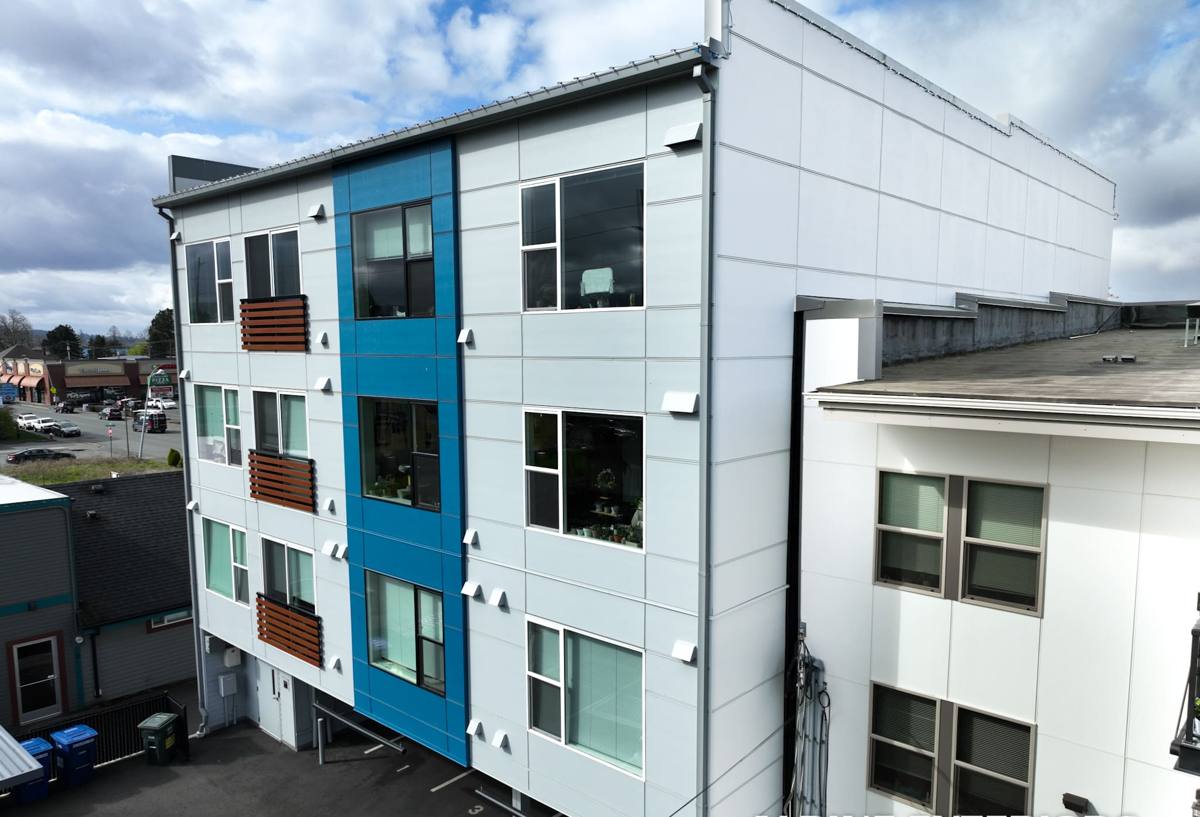
Why Board and Batten Fits Happy Valley Homes
Board and batten works on a wide range of house styles found around Bellingham, from older bungalows to newer construction, because the vertical battens break up a facade and add texture without relying on ornate trim work. It's also a popular choice for accent walls, gable ends, and porch surrounds paired with horizontal lap siding elsewhere on the same house. That mixed-material look is common in this part of Whatcom County and reads as clean and current when it's detailed correctly.
The trade-off is that board and batten has more vertical seams and more places for water to find a way in than a plain lap profile does. In a dry climate that's a minor concern. In a marine climate with sustained rain events, it's the detail that determines whether the siding lasts fifteen years or fifty.
What "Correct" Really Means Here
A board and batten wall that looks right on installation day can still fail early if the assembly behind it wasn't built for wind-driven rain and constant humidity. The batten strips, the fastening pattern, the gap behind the panel, and the flashing at every horizontal transition all matter more in Happy Valley than they would in a drier region.
What Bellingham's Climate Actually Does to This Siding Style
We install and inspect siding across Bellingham and Whatcom County, and the failure patterns on board and batten jobs are consistent enough to predict. Understanding them is the whole reason our process looks the way it does.
- Salt air accelerates corrosion. Standard fasteners, unprotected trim, and lower-grade caulks break down faster this close to Bellingham Bay than they would inland.
- Driving rain finds vertical seams. Winter storms push rain sideways, not straight down, which means the vertical joints between boards and the battens covering them take on more water pressure than a horizontal lap seam ever sees.
- Shade plus moisture equals moss and algae. Mature trees and neighboring structures common in this neighborhood keep some walls damp for days after a storm, which is exactly the environment moss needs to establish on any porous or textured surface.
- Freeze-thaw cycling is mild but real. Whatcom County doesn't get hard, sustained freezes most winters, but the repeated damp-cold-thaw pattern still stresses any material that absorbs moisture.
- UV exposure is lower but not zero. Even with our cloud cover, south- and west-facing walls fade and chalk over time if the finish isn't engineered to hold color.
None of this means board and batten is a bad choice for this area. It means the material and the installation details need to be matched to these conditions, not to a generic national spec sheet.
Why We Only Install This in James Hardie Fiber Cement
We get asked regularly about wood board and batten and about vinyl board and batten panels, because both are widely available and both can look good in a photo. Here's the honest trade-off analysis that led us to standardize on James Hardie for every board and batten job we do, including in Happy Valley.
Wood Board and Batten
Real wood — cedar or primed spruce — gives an authentic texture and can be a fine product when it's properly maintained. The trade-off in this climate is maintenance frequency. Wood siding this close to the water needs regular re-staining or re-painting, careful caulk maintenance at every seam, and prompt attention to any spot where paint fails, because once moisture gets behind bare wood in a damp climate, rot can spread before it's visible from the ground. We're not willing to hand a homeowner a siding system that punishes a missed maintenance cycle that severely.
Vinyl Board and Batten
Vinyl is inexpensive and low-maintenance in the sense that it doesn't need painting, but it's a thin plastic panel that expands and contracts with temperature swings, can crack on impact in cold weather, and doesn't hold up structurally the way a rigid material does. It also doesn't take paint if a homeowner ever wants to change the color, and its appearance — especially in a bold vertical profile meant to look substantial — often reads as visibly synthetic up close.
Why James Hardie Wins on This Job Specifically
James Hardie fiber cement is engineered specifically for climates like ours. It's non-combustible, it doesn't rot, and Hardie's HZ5 product line is formulated for regions with prolonged moisture exposure — which is exactly what Whatcom County delivers. The factory-applied ColorPlus finish is baked on under controlled conditions and resists fading and chalking far better than field-applied paint, which matters on the sun-facing walls of a Happy Valley home even with our relatively mild UV exposure. It also carries a strong transferable warranty backed by the manufacturer, not just by the installing contractor. We stopped installing the alternatives because we don't want to build something in this climate that we can't stand behind for the long term.
What a Correct Board and Batten Installation Involves
The material is only half the equation. A James Hardie board and batten wall installed without attention to detail can still leak. Here's what we consider non-negotiable on every job:
- A drainage plane behind the panel. Board and batten should be installed over a weather-resistive barrier with a vertical furring strip or approved rainscreen gap, so any moisture that does get past the surface has a way to drain and dry instead of sitting against the wall sheathing.
- Correct fastener spacing and type. James Hardie specifies fastener size, spacing, and embedment depth for board and batten assemblies. Skipping this to save time is one of the most common causes of early failure we see when we inspect other contractors' work.
- Flashing at every horizontal interruption. Window heads, roof-to-wall transitions, and any horizontal trim band need proper flashing so water is directed out and away, not absorbed into the panel edge.
- Batten placement over panel joints, not decoration. The battens exist to cover and protect the seams between boards. Placement that ignores the actual joint locations undermines the whole system, even if it looks fine from the street.
- Factory-cut and factory-primed edges wherever possible. Field cuts expose raw fiber cement, which should be sealed per manufacturer spec before installation to prevent moisture wicking at the cut edge.
- Proper caulking at panel-to-trim transitions, using a sealant rated for the movement and exposure involved — not a generic caulk pulled off a shelf.
Our Process for Happy Valley Homes
Every board and batten project we run in this neighborhood follows the same sequence, because skipping steps is how climate-related failures happen five or ten years down the road instead of on day one.
- On-site assessment. We look at existing siding condition, wall orientation, shade patterns, and any moisture or moss issues already present before we recommend anything.
- Moisture and substrate check. Before new siding goes on, we confirm the sheathing underneath is sound. Covering a wet or damaged substrate with new siding just hides a problem instead of fixing it.
- Removal and prep. Old siding comes off, the weather-resistive barrier and drainage gap are installed correctly, and any flashing details are addressed at this stage, not patched in afterward.
- Installation to manufacturer spec. Panels and battens go up following James Hardie's fastening, spacing, and flashing requirements for our climate zone.
- Final walkthrough. We go over the finished job with the homeowner, including what routine maintenance actually looks like for this product — which is minimal, but not zero.
Cost Factors for Board and Batten in This Area
Every home is different, so we don't quote firm numbers on a page like this. What we can do is explain what actually moves the price on a board and batten job in Happy Valley, so you know what you're evaluating when you get an estimate.
| Factor | Why It Affects Cost |
|---|---|
| Existing siding removal | Tear-off, disposal, and any substrate repair needed once old siding comes down |
| Wall complexity | Dormers, gables, and multiple roof-to-wall transitions require more flashing and cutting |
| Full-wall vs. accent application | A gable accent costs far less than board and batten across an entire elevation |
| Trim and corner detailing | Corner boards, window trim, and batten spacing choices affect both material and labor |
| Access and site conditions | Slopes, tight lot lines, and mature landscaping common in this neighborhood can affect staging and labor time |
| Color and finish selection | Standard ColorPlus color options versus custom finishes can shift material cost |
Why Hiring a Crew That Already Works Happy Valley Matters
Board and batten installation isn't unique to any one neighborhood, but the specific combination of salt exposure, storm direction, shade patterns, and moss pressure in Happy Valley is something a crew learns by working here repeatedly, not by reading a spec sheet once. A contractor who regularly works this part of Bellingham already knows which walls tend to hold moisture longest, which exposures need extra attention to flashing, and how the local climate behaves across a full year, not just on the day of installation. That local pattern recognition is what separates a board and batten job that still looks and performs well after a decade of Whatcom County winters from one that needs early repairs.
Maintenance: What Ownership Actually Looks Like
James Hardie board and batten is genuinely low-maintenance compared to wood, but "low" doesn't mean "none." Here's the realistic upkeep routine for a home in this climate:
- Rinse the exterior annually to clear salt residue and organic buildup before it becomes established moss or algae
- Inspect caulking at trim and panel joints every year or two and re-caulk any cracked or separated sections
- Keep gutters clear so overflow doesn't run down the wall face and concentrate moisture on specific panels
- Trim back vegetation that keeps any section of wall shaded and damp for extended periods
- Address any impact damage or exposed cut edges promptly rather than leaving raw material exposed
Let's Look at Your Home
If you're weighing board and batten siding for a home in Happy Valley, we're glad to come take a look, walk the exterior with you, and give you a straight answer on what your specific walls need. There's no pressure and no obligation — just fill out the form below to request a free estimate.