 Bellingham Roofing
 Siding Repair Built for Happy Valley's Specific Conditions
Happy Valley is one of Bellingham's older, well-established residential neighborhoods, with a mix of home ages, mature tree cover, and lots that often slope enough to complicate drainage around the foundation and lower walls. That combination matters when we're talking about siding repair, because the damage we find in this neighborhood doesn't look identical to what we find on a newer subdivision with open sun and flat lots. Shade from mature trees keeps wall surfaces wetter for longer after a storm. Sloped lots can direct runoff toward siding at grade level instead of away from it. And Bellingham's proximity to the bay means salt-laden air reaches even homes that aren't waterfront, slowly working on fasteners, trim, and any exposed wood.
None of that is unique to Happy Valley in isolation — but the combination of tree shade, drainage patterns, and coastal air is what shapes how we diagnose and repair siding here specifically. A repair that holds up on a dry, sun-exposed wall in another part of Whatcom County can fail fast on a shaded, moss-prone wall in this neighborhood if it's not addressed correctly.
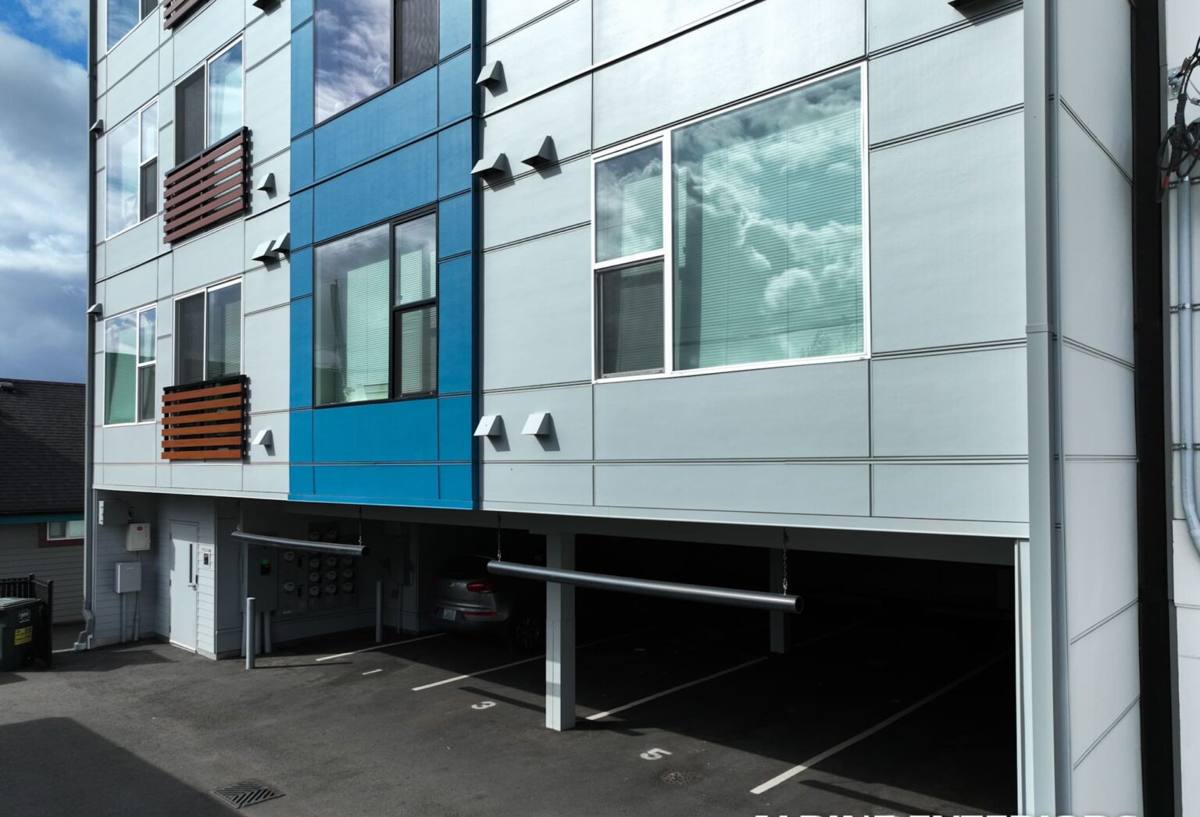
What Bellingham's Climate Does to Siding Over Time
Salt Air
Salt in the air accelerates corrosion on fasteners, flashing, and any metal trim components. When those fail quietly behind the siding, the siding itself can look fine on the surface while the attachment underneath is compromised. This is one of the reasons a visual-only inspection isn't enough — we check what's holding the siding on, not just what it looks like from the driveway.
Driving Rain
Bellingham doesn't just get rain, it gets wind-driven rain that pushes water sideways into laps, seams, and butt joints instead of letting it run straight down. Siding systems that rely on gravity alone to shed water — with weak seams or insufficient overlap — are the ones we see failing first in driving-rain conditions.
The Long Moss Season
Whatcom County's moss season runs long, and shaded neighborhoods like Happy Valley see it worse than open, sunny lots. Moss and algae hold moisture directly against the siding surface for extended periods. On some materials that's mostly cosmetic. On others, prolonged moisture contact is exactly what leads to swelling, delamination, or rot underneath the growth. Part of a correct repair is figuring out which category the existing siding falls into before deciding how aggressive the fix needs to be.
Common Signs of Siding Damage We Find in Happy Valley
Homeowners often call us about one visible problem, and we frequently find one or two more once we get a ladder up. Here's what we watch for during an inspection:
- Soft or spongy spots when you press on the siding, especially near the bottom courses and around windows
- Persistent moss or algae staining that returns quickly after cleaning
- Visible gaps, cracks, or separation at seams and corner boards
- Bubbling, peeling, or discolored paint in isolated patches
- Rust streaking below nail heads or trim fasteners
- Warping or bowing panels, particularly on shaded walls
- Water stains or discoloration on interior walls near exterior siding damage
- A musty smell in a room that shares a wall with damaged siding
Any one of these can be minor. Several together, especially on a shaded or low-lying wall section, usually mean water has been getting behind the siding for a while.
What a Correct Siding Repair Actually Involves
Finding the Cause, Not Just the Symptom
Patching a visible crack without figuring out why it formed is a short-term fix. We look at flashing, caulking, grade slope, gutter performance, and how water is actually moving across that section of wall before we touch the siding itself. A repair that ignores the underlying cause tends to fail again within a year or two, often in the same spot.
Checking What's Behind the Siding
Once a section is opened up, we look at the water-resistive barrier, sheathing, and framing underneath. If moisture has already reached the sheathing or framing, the siding repair is only part of the job — that structural moisture has to be dealt with first, or the new siding will fail for the same reason the old siding did.
Matching Materials and Reveal
Repairs that don't match the existing plank width, reveal, or texture stand out visually and can also create water-shedding inconsistencies at the transition. When we're patching into existing James Hardie siding, matching is straightforward because the product lines are consistent and well documented. When we're repairing sections of a different material, we're honest with homeowners about what can be matched closely and what can't.
Sealing and Flashing Details
Most siding failures in this climate trace back to a flashing or sealant detail, not a flaw in the siding material itself. Window and door flashing, kick-out flashing at roof-wall intersections, and properly lapped house wrap matter more to long-term performance than almost anything else in the repair. We treat these details as the actual repair, not an afterthought to it.
Repair Signs, Likely Causes, and Our Approach
| What You See | Likely Cause | Typical Repair Approach |
|---|---|---|
| Soft or spongy siding near the base of the wall | Splash-back moisture, poor grading, or failed caulking at the bottom edge | Remove and inspect sheathing, correct drainage path, replace damaged sections |
| Recurring moss on shaded walls | Limited sun exposure, moisture held against the surface | Clean, inspect for underlying damage, address ventilation/clearance where possible |
| Cracked or separated seams | Material movement, original installation gaps, storm impact | Re-seal or replace affected boards with proper expansion allowance |
| Rust streaking at fasteners | Incorrect fastener material for coastal exposure | Replace with corrosion-resistant fasteners rated for the exposure |
| Interior water stains | Long-term moisture intrusion through failed flashing or siding | Full diagnostic opening, sheathing/framing repair, then siding repair |
Repair or Replace: How We Help You Decide
Not every damaged section needs to come off the wall entirely, and not every home needs full re-siding just because one area failed. We look at three things when making this call: how much of the wall is actually affected, whether the underlying structure is sound, and how much longer the existing siding material has left in it regardless of the current damage. A small, isolated repair on siding that's otherwise performing well is usually the right call. Widespread moss staining combined with soft spots in multiple locations, especially on an older wood or composite product nearing the end of its service life, is often a sign that repair dollars are better spent moving toward replacement of that wall section instead.
When replacement does make sense — whether for a single wall or the whole exterior — we install James Hardie fiber cement exclusively. We don't offer vinyl, LP SmartSide, or primed wood siding as repair or replacement options, because in a climate defined by driving rain, long moss seasons, and salt air, we've found Hardie's non-combustible fiber cement construction and factory-applied ColorPlus finish hold up with far less ongoing maintenance than the alternatives. That's a standard we apply on every job, not just new construction.
Our Process for a Happy Valley Repair Job
1. On-Site Inspection
We walk the affected walls, check moisture levels where we can, and look at drainage, flashing, and grading around the home — not just the damaged siding itself.
2. Honest Scope and Estimate
You get a clear explanation of what's actually wrong, what needs to be repaired versus what can wait, and a written estimate before any work starts. No pressure to replace more than the home needs.
3. Correct the Cause First
If the damage traces back to flashing, sealant, or drainage issues, we fix those first. Replacing siding over an unresolved moisture source just delays the same failure.
4. Repair or Replace the Affected Sections
Damaged boards are removed, the sheathing and barrier underneath are inspected and repaired as needed, and new material is installed to match existing reveal and profile as closely as the materials allow.
5. Final Check
We walk the completed repair with you, confirm seams and flashing are sealed correctly, and explain what to watch for going forward.
Why It Matters That a Crew Already Knows This Neighborhood
A crew that's worked other homes in Happy Valley already understands how tree cover affects drying time on specific walls, how sloped lots in the area tend to move water, and which repair shortcuts don't hold up once the rainy season sets in. That familiarity shows up in small decisions — where to add a bit more flashing overlap, which corners need extra attention on a shaded lot, which fastener spec actually holds up under Bellingham's coastal air — that a crew unfamiliar with the neighborhood might not think to make. It's the difference between a repair that looks fine at handoff and one that's still performing correctly three moss seasons later.
After the Repair: Keeping It From Happening Again
A good repair reduces future maintenance, but a few habits help protect the investment, especially in a climate like this one:
- Keep gutters clear so water isn't overflowing directly onto siding below
- Trim back branches and shrubs that keep wall sections in constant shade and moisture
- Rinse moss and algae buildup before it has a chance to hold moisture long-term
- Check caulking at trim, windows, and corner boards annually, since sealant is a wear item
- Watch for early signs — soft spots, new staining, gaps — rather than waiting for visible failure
If you're noticing any of the warning signs above on a Happy Valley home, or you just want an honest read on how a section of siding is holding up, we're happy to take a look. The estimate is free, there's no pressure to do more work than the home actually needs, and you'll get a straight answer about what's causing the problem before we talk about fixing it.