 Bellingham Roofing
 Siding Replacement in Happy Valley: A Different Climate Challenge
Happy Valley sits close enough to Bellingham Bay that salt-laden air is a real factor in how exterior materials age here, and the neighborhood's tree-covered, hillside lots add another layer of difficulty: shade that never fully dries out after a storm. Between the salt air, the driving rain that blows in off the water during winter storms, and a moss season that can stretch from fall through spring, siding in this part of Bellingham works harder than siding almost anywhere else in Whatcom County. Paint fails faster. Caulk joints open up. Moss and algae streak north-facing walls that rarely see direct sun. None of that is unusual for the Pacific Northwest, but it means a siding replacement here has to be planned around the actual conditions of the lot, not a generic install.
We've replaced siding on enough Happy Valley homes to know which details matter most: how the house sits relative to the tree canopy, which walls take the worst wind-driven rain, and where moisture tends to collect against trim and corners. That local knowledge shapes the product we use, the flashing details we insist on, and the way we sequence the job.
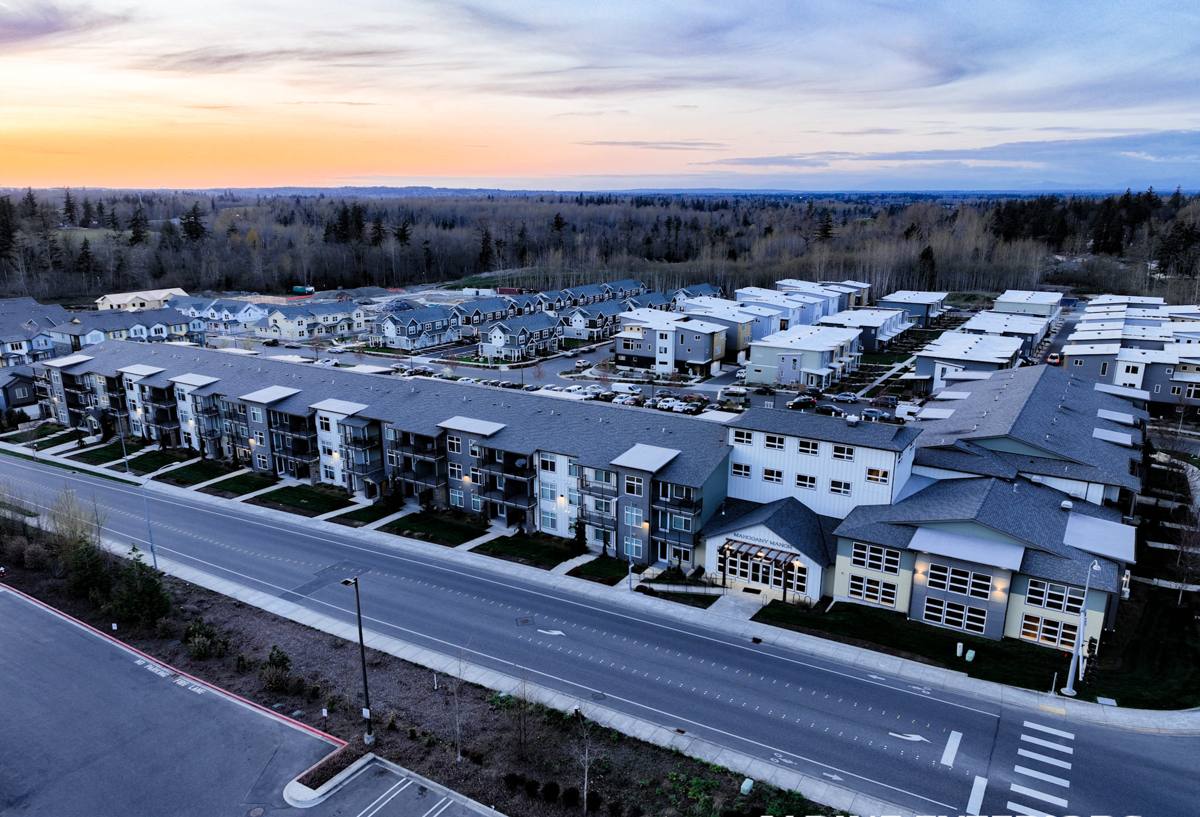
Signs Your Happy Valley Home Needs Siding Replacement
Siding rarely fails all at once. It usually shows a handful of warning signs first, and in a shaded, damp neighborhood like Happy Valley those signs often show up earlier than homeowners expect.
- Soft, spongy, or bubbling spots when you press on the siding, especially near the bottom courses or below windows
- Paint that peels or blisters again within a year or two of repainting
- Persistent moss, algae, or black streaking that comes back no matter how often it's cleaned
- Visible gaps, cracks, or warping at panel seams and trim boards
- Rising heating bills, which can point to a compromised weather barrier letting moisture and air past the siding
- Rot or discoloration around window and door trim, a common early failure point on older wood and composite siding
Any one of these on its own might just need a repair. Several at once, especially on a home more than fifteen or twenty years old, usually means the siding system itself is past the point where patching makes sense.
Why We Install Only James Hardie Fiber Cement Siding
We standardized on James Hardie fiber cement siding for every job we do, including here in Happy Valley, and the climate is a big part of why. Hardie's HZ5 product line is engineered specifically for wetter, more humid regions like ours, which matters on a lot with heavy shade and slow-drying walls. It's non-combustible, it holds paint and color far longer than wood or engineered wood products in damp conditions, and the factory-applied ColorPlus finish means fewer repaint cycles over the life of the siding, which matters when moss and mildew show up fastest on faded, chalking paint.
We don't install vinyl, LP SmartSide, cedar, primed spruce, or other fiber cement brands, and we're upfront about why. Vinyl expands and contracts with temperature swings and can crack or warp over time, and it doesn't hold up as well against sustained moisture exposure at seams. Wood and engineered wood products like cedar and LP SmartSide need more diligent maintenance to keep moisture out, which is a harder standard to meet on a shaded, damp lot. We'd rather put one product on every home, install it correctly, and stand behind it, than offer a lineup of materials we don't fully trust in this climate.
What a Correct Siding Job Actually Involves
Weather-Resistive Barrier and Rainscreen
Every siding replacement starts underneath the siding itself. A properly lapped weather-resistive barrier (WRB) is the backup layer that keeps water out if it ever gets past the siding, and on a house that takes regular wind-driven rain, that layer needs to be installed without shortcuts. We also install a rainscreen gap behind the siding wherever conditions call for it, a small air space that lets any moisture that does get behind the panels drain and dry out instead of sitting against the sheathing.
Flashing and Trim Details
Most siding failures we see start at a flashing detail that was skipped or done wrong, not the siding field itself. That means correct flashing above windows and doors, kickout flashing where a roofline meets a wall, and proper head flashing at trim boards, all detailed to shed water down and away from the wall assembly rather than behind it.
Fastening and Sealant
Fiber cement has to be fastened, gapped, and caulked to the manufacturer's specification to perform and to keep the warranty intact. That includes correct nail placement and depth, proper panel gaps for expansion, and quality sealant at the joints and penetrations that actually see movement and moisture, not just a bead of caulk run down every seam whether it needs it or not.
Our Siding Replacement Process for Happy Valley Homes
- On-site assessment. We walk the whole exterior, check for soft spots and rot, and look at how the lot's shade and drainage are affecting the current siding.
- Sheathing and structural check. Once the old siding comes off, we inspect the sheathing underneath for rot or water damage and repair or replace anything compromised before anything new goes on.
- Weather barrier and flashing install. We install the WRB, rainscreen gap where called for, and all flashing details before a single piece of siding goes up.
- Hardie siding installation. Panels or lap siding go on to manufacturer spec, with correct fastening, gapping, and sealant at every joint and penetration.
- Trim, caulking, and finish work. Trim boards, corner details, and touch-up painting are finished out to match the ColorPlus finish where field painting is required.
- Final walkthrough and cleanup. We walk the job with the homeowner, address anything on the punch list, and clear the site completely.
Comparing Siding Options for Happy Valley's Climate
| Factor | James Hardie Fiber Cement | Vinyl | Cedar / Wood | LP SmartSide |
|---|---|---|---|---|
| Moisture resistance | Engineered for wet climates (HZ5) | Moderate, seams vulnerable | Requires diligent upkeep | Moderate, moisture-sensitive edges |
| Moss / algae resistance | Holds finish well, resists growth longer | Can trap moisture at laps | Prone to growth in shade | Prone to growth if finish fails |
| Maintenance | Low, factory finish | Low, but brittle over time | High, regular refinishing | Moderate to high |
| Fire resistance | Non-combustible | Combustible | Combustible | Combustible |
| Typical lifespan | 30+ years installed to spec | 20-30 years | 15-25 years with upkeep | 20-30 years |
What Affects the Cost of Siding Replacement
| Cost Factor | Why It Matters |
|---|---|
| Home size and wall complexity | More square footage and more corners, gables, and trim details mean more material and labor |
| Sheathing or rot repair | Damage found once old siding is removed adds material and time to fix correctly before new siding goes on |
| Product line (HZ5 vs. standard) | Climate-engineered product lines are built for our conditions and priced accordingly |
| Color and finish | Factory ColorPlus finish costs more upfront than field-painted siding but lasts longer between repaints |
| Site access | Hillside lots, mature landscaping, and tight setbacks can add time for staging and protection |
We give every Happy Valley homeowner a specific, written estimate after seeing the house in person. Broad ranges without an on-site look aren't useful, because the two biggest cost drivers, hidden rot and access, only show up once we're actually there.
Why Local Happy Valley Experience Matters
A siding contractor who already knows this neighborhood shows up with a head start. We know which walls in Happy Valley tend to take the worst of the wind-driven rain, how tree canopy affects drying time and moss growth on different sides of a house, and how to stage a job efficiently on the hillside lots and mature landscaping common in this part of Bellingham. We're also familiar with the local permitting process, so there's no learning curve slowing your project down.
That familiarity also shapes product recommendations. On a heavily shaded lot, we'll often steer homeowners toward colors and finishes that show moss and mildew staining less between cleanings. On a more exposed lot closer to the water, wind and salt exposure move up the priority list instead. It's the kind of judgment that only comes from working this specific area, not a one-size-fits-all approach applied to every job in Whatcom County.
Questions to Ask Before You Hire a Siding Contractor
- Are they licensed, bonded, and insured to work in Washington State?
- Are they a factory-trained installer for the siding product they're proposing?
- Do they pull the required permits, or expect you to?
- Will they put warranty terms, both material and labor, in writing before work starts?
- Do they inspect and repair sheathing and rot, or just cover the existing wall as-is?
- Can they point to other work they've done in Bellingham or Whatcom County?
- Does the written contract specify the exact product line, color, and finish, not just "siding replacement"?
If a contractor can't answer these clearly, that's worth treating as a red flag before you sign anything.
If your Happy Valley home is showing any of the signs above, or you'd just like an honest look at what your siding needs, we're happy to come out, walk the exterior with you, and put together a free, no-pressure estimate. There's no obligation, just a straight answer about what your home actually needs.