 Bellingham Roofing
 Edgemoor's Location Puts Real Demands on Exterior Siding
Edgemoor sits close to Bellingham Bay, on wooded, often bluff-adjacent lots that catch weather most inland Whatcom County neighborhoods don't see as directly. That proximity to open water is part of what makes the neighborhood desirable — and it's also exactly why siding here has to work harder than siding on a home ten miles inland. Salt-laden air, wind-driven rain off the water, and the deep shade from mature evergreens all combine to create conditions that punish the wrong siding material and reward the right one.
We install James Hardie fiber cement siding exclusively, and we've worked enough homes along Bellingham's waterfront-adjacent neighborhoods to know that a siding choice made for a dry climate, or installed by a crew that treats every job the same regardless of exposure, tends to show problems early in a place like Edgemoor. This page covers what the local climate actually does to siding, what a correct James Hardie installation looks like for this specific setting, and how our process works from first estimate to finished job.
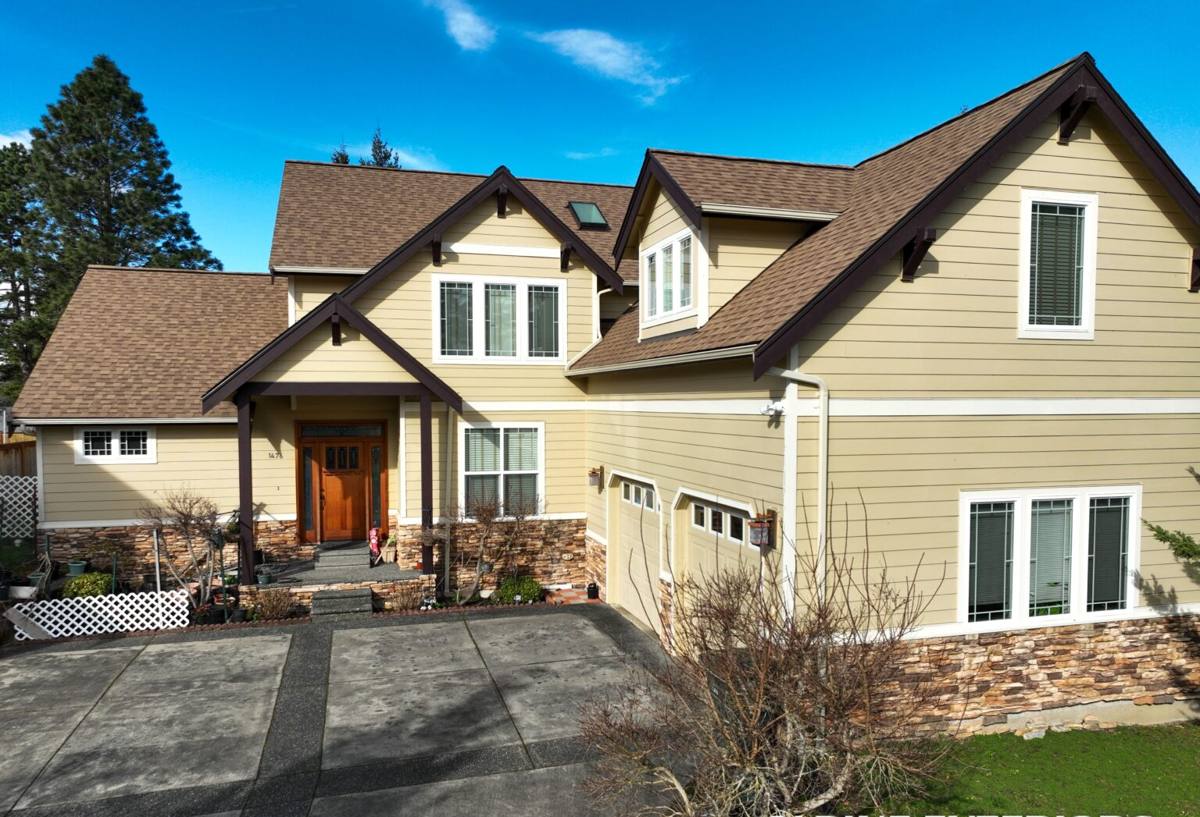
What Salt Air, Driving Rain, and Moss Season Do to a House
Salt Air and Corrosion
Homes near Bellingham Bay are exposed to airborne salt that settles on exterior surfaces and accelerates corrosion of fasteners, flashing, and any metal trim. Over years, that corrosion can compromise the very hardware holding siding in place — which is why fastener choice and flashing details matter more here than they would on a home well away from the water.
Wind-Driven Rain
Storms coming off the Salish Sea don't just drop rain straight down — wind pushes it sideways, driving moisture into laps, seams, and any gap in the weather barrier. A siding system that relies on paint film alone to keep water out, rather than a properly engineered water-management system behind the cladding, is more likely to let moisture find its way to the sheathing over time.
Moss and Algae Season
Bellingham's long, wet, mild winters create an extended window — often eight months or more — where shaded, north-facing, or tree-covered walls stay damp enough to support moss and algae growth. Edgemoor's tree canopy makes this worse in spots than more open Bellingham neighborhoods. Materials that absorb and hold moisture give moss more to grow on and stay damp longer, which shortens paint life and can accelerate rot in wood-based products.
Why James Hardie Fiber Cement Is What We Put on Edgemoor Homes
We made the decision to install only James Hardie fiber cement siding, and we don't install vinyl, LP SmartSide, cedar, primed spruce, or other fiber cement brands. That's not a marketing position — it's a standard we hold because of what we've seen hold up in this exact climate and what hasn't.
Fiber cement is a mix of cement, sand, and cellulose fibers, engineered to resist moisture absorption far better than wood-based siding products. It doesn't feed moss the way organic wood fiber can, it won't warp or delaminate the way some engineered wood products can when a seam takes on water, and it's non-combustible — a real consideration anywhere in Washington given wildfire season concerns, even in a coastal county like Whatcom.
HardieZone HZ5 and the Pacific Northwest
James Hardie engineers its products by climate zone under its HardieZone system, and the products specified for our region are built for exactly the freeze-thaw cycles, sustained moisture, and damp-cold conditions Whatcom County sees. That's a meaningful difference from a generic siding product that isn't formulated with regional moisture exposure in mind.
ColorPlus Factory Finish
Most Hardie siding we install uses the ColorPlus finish — a baked-on, multi-coat color process applied at the factory under controlled conditions, rather than field-painted after installation. In a salt-air, high-moisture environment like Edgemoor, a factory finish with a stronger bond and better fade resistance than typical field paint means fewer repaints over the life of the siding, which matters when you're weighing long-term cost, not just install-day cost.
What a Correct Installation Actually Involves
Fiber cement siding is only as good as the installation behind it. James Hardie's own installation instructions are detailed for a reason — get flashing, fastening, or clearances wrong and you can undermine a product that's otherwise built for this climate. This is where a lot of the real-world difference between a good and a bad siding job shows up, and it's usually invisible until years later.
| Detail | Correct approach | Common shortcut we won't take |
|---|---|---|
| Fasteners | Corrosion-resistant nails or screws, per Hardie spec and climate exposure | Standard fasteners that corrode faster in salt air |
| Flashing | Properly lapped, sealed flashing at windows, doors, and roof lines | Reused or improvised flashing that leaves gaps for wind-driven rain |
| Ground clearance | Minimum clearance maintained per manufacturer spec to prevent wicking | Siding installed too close to grade, decks, or roofs |
| Caulking | Used only where specified, with the right sealant and joint prep | Over-caulking as a substitute for correct flashing |
| Panel gaps | Manufacturer-specified gaps at butt joints to allow for expansion | Butted tight, leading to buckling or cracking over time |
None of this is exotic — it's James Hardie's published installation standard. But it takes discipline to follow it on every wall, every time, especially on the shaded or water-facing sides of a house where the consequences of a shortcut show up first.
Choosing the Right Hardie Product Line for an Edgemoor Home
James Hardie makes several siding profiles, and the right one depends on the home's style and exposure, not just personal preference.
HardiePlank Lap Siding
The most common choice for traditional and craftsman-style homes in the area. Available in several plank widths and textures, it gives a classic horizontal lap look while carrying the full moisture and impact resistance of the fiber cement system.
HardiePanel Vertical Siding
Used for board-and-batten looks or as an accent on gable ends and entry features — common on more modern or mixed-material exteriors in the Bellingham area.
HardieShingle
For homes going for a shingle-style look, particularly on accent gables, without the moisture vulnerability of actual wood shingles in a damp, shaded lot.
Color Selection
ColorPlus colors are chosen to hold up under UV and salt exposure, and darker, more saturated colors show less visible discoloration from the fine airborne residue that settles on homes near the water. We'll walk through color and texture options relative to sun exposure and tree cover on your specific lot.
Our Process, Start to Finish
Every Edgemoor job starts with a walk-around of the specific exposures on that lot — which walls face the water and prevailing wind, which stay shaded most of the year, where the existing siding or trim shows the earliest wear. That assessment shapes the flashing detail, fastener spec, and product recommendation before we ever write an estimate.
- On-site evaluation of existing siding, moisture exposure, and problem areas
- Written estimate covering product line, color, and scope — including any necessary repair to sheathing or framing found during tear-off
- Removal of old siding and inspection of the weather barrier and sheathing underneath
- Repair of any moisture-damaged sheathing or framing before new siding goes on
- Installation of house wrap or weather-resistive barrier, flashing, and Hardie siding to manufacturer spec
- Final walkthrough and cleanup
We don't install over a compromised weather barrier or damaged sheathing just to keep a job moving — if we find rot or moisture damage during tear-off, we'll show it to you and address it before the new siding goes up. Covering up an existing problem with new siding just delays a much more expensive repair.
Maintenance After Installation
Fiber cement siding is low-maintenance compared to wood, but "low-maintenance" doesn't mean "no maintenance," especially in a climate that supports moss growth most of the year. A little attention keeps a correctly installed system performing for decades.
- Rinse siding periodically to remove salt residue and organic buildup, especially on shaded or water-facing walls
- Keep gutters and downspouts clear so runoff doesn't sheet down siding walls
- Trim back branches and vegetation that keep a wall shaded and damp longer than necessary
- Inspect caulking at trim and penetrations annually and re-seal if it's cracking or pulling away
- Address any impact damage or chips promptly so the substrate underneath isn't exposed to moisture
- Watch for moss starting at the bottom edge of panels or in shaded corners and clean it before it spreads
Why Local Installation Experience Matters in Edgemoor
A siding crew that mostly works drier, more inland jobs can install a technically correct system and still miss the details that matter most on a bay-adjacent lot — the extra flashing attention at a water-facing gable, the fastener upgrade worth specifying near salt spray, the color choice that will actually hold up under heavier moss pressure. We work Bellingham and Whatcom County regularly, which means we're not guessing at how a given wall orientation or tree cover pattern will perform over time — we've seen it on other homes in the same conditions.
That local experience also means knowing what tends to fail first on older Edgemoor homes we're re-siding, and building the new installation to correct for it rather than just replacing what's there with the same weak points.
If you're weighing a siding project on your Edgemoor home, we're happy to walk the property, look at your specific exposure, and put together a straightforward, no-pressure estimate — use the form below to get started.