 Bellingham Roofing
 What "New-Construction" Windows Actually Means
The term gets used loosely, so it's worth being precise. A new-construction window has a nailing fin (sometimes called a flange) built into the frame. That fin gets fastened directly to the wall sheathing and integrated with the weather-resistant barrier before siding goes on. This is different from a pocket or retrofit replacement window, which slides into an existing frame after the original sash is removed and relies on the old frame's flashing to keep water out.
For Happy Valley, this distinction matters most on new builds, additions, garage conversions, and any project where the wall is open down to the studs. When the wall is open, you get one real chance to get the water management right before it's buried behind siding and drywall. That's the job we're describing here — not a retrofit swap, but a from-the-studs install done correctly the first time.
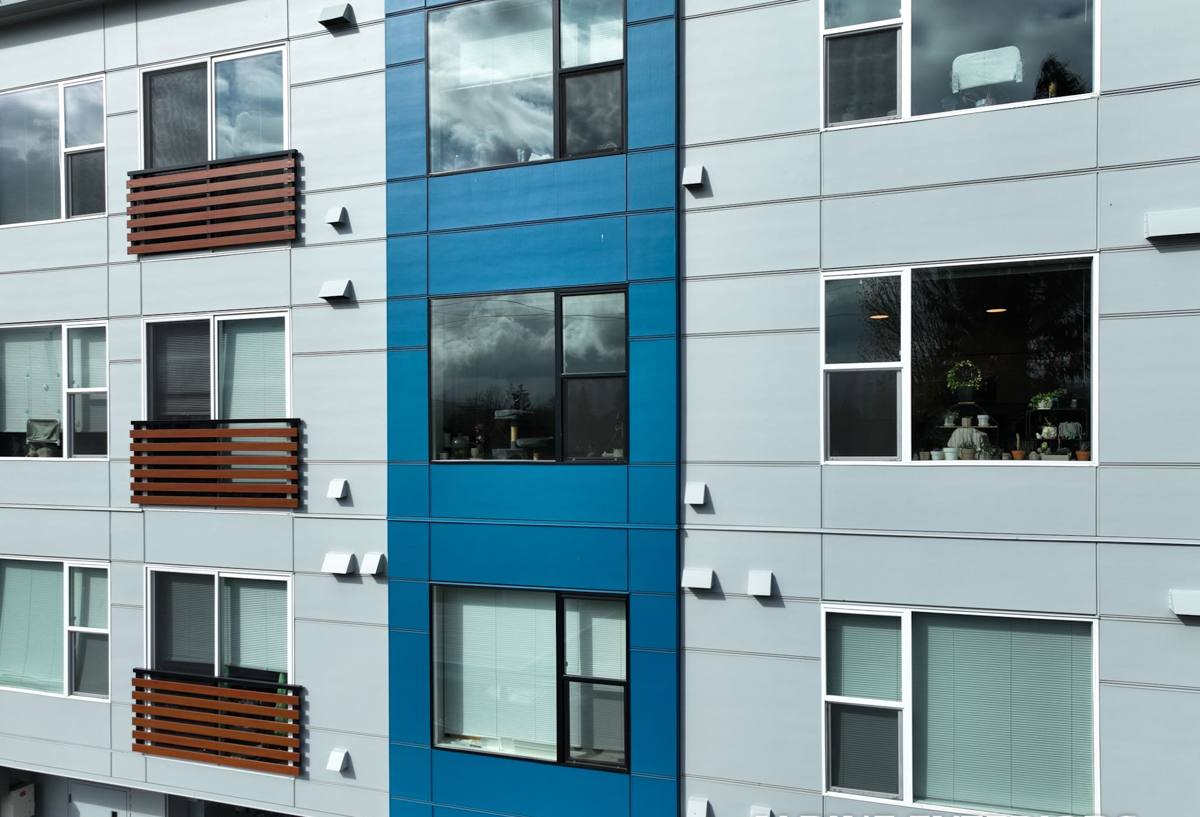
What Bellingham's Marine Climate Asks of a New Window Install
Whatcom County sits in a wet, marine climate, and Happy Valley's mix of mature tree cover and proximity to Bellingham Bay adds a few specific stresses on top of the general Pacific Northwest wet season.
Salt Air and Metal Components
Homes closer to the bay deal with a low but steady level of salt in the air. Over years, that accelerates corrosion on unprotected fasteners, hinges, and hardware that aren't rated for coastal exposure. It's a slow problem, which is exactly why it gets missed — the window looks fine for the first several years, then hardware starts failing early.
Wind-Driven Rain and Water Path
Rain here doesn't just fall, it drives sideways during winter storms. That means water gets pushed up and under trim, not just straight down a wall. A window that would be fine in a drier climate with basic flashing can leak here if the laps, sill pan, and head flashing aren't sequenced to shed water downhill and outward at every layer.
Shade, Moss, and Slow-Drying Surfaces
Happy Valley's tree canopy is part of its character, but shaded, damp surfaces are also where moss, algae, and mildew take hold fastest. Window sills, sashes, and trim in shaded spots stay wet longer after a storm than a sun-exposed wall across town. Materials and finishes that shrug off a Bellingham summer can still struggle through a long, shaded, damp winter.
What a Correct Installation Involves
A good new-construction window install is mostly about sequence — getting the layers in the right order so water always has a path out, never in.
- Sill pan flashing with a back dam so any water that gets past the window has a sloped path back outside instead of pooling on the rough sill.
- Weather-resistant barrier integration in proper shingle-lap order — each layer overlapping the one below it, never reversed, so water always sheds downward and outward.
- Head flashing or a drip cap above the window that directs water away from the top of the frame and the wall cavity behind it.
- Correct nailing-fin fastener schedule, following the manufacturer's spacing and fastener type so the frame stays square and doesn't rack over time.
- Sealant used where it's designed to work — at specific joints, not smeared across a flashing gap as a substitute for doing the flashing correctly.
- Interior air sealing with a backer rod and appropriate sealant, separate from the exterior water management layer.
Skip or reorder any of these steps and the window can still look perfect from the curb for years while a slow leak works on the framing behind it.
Choosing Frame Material and Glass for This Site
There isn't one "best" window for every home — the right call depends on budget, sun exposure, and how much upkeep you want to take on. Here's how the common options compare for a damp, shaded Whatcom County lot:
| Frame Material | Moisture Tolerance | Maintenance | Best Fit |
|---|---|---|---|
| Vinyl | Good — won't rot, low corrosion risk | Low — occasional cleaning | Budget-conscious builds, most Happy Valley homes |
| Fiberglass | Very good — stable in wide temperature and moisture swings | Low | Larger openings, higher-exposure walls |
| Wood-clad | Depends heavily on cladding and detailing quality | Higher — finish and joints need periodic attention | Homeowners prioritizing a specific interior wood look |
On glass, most Happy Valley homes do fine with a quality double-pane, Low-E, argon-filled unit. Our winters are wet more than they are brutally cold, so the marginal energy gain from triple-pane glass often doesn't justify the added cost and weight for a typical single-family home here — though it can make sense on a north-facing wall with heavy shade and constant exposure. We'll talk through the actual trade-off for your specific openings rather than defaulting to the upsell.
Our Process on a Happy Valley Job
New-construction window work only goes well when it's coordinated with the framing and siding trades around it, not treated as an isolated task.
- Confirm rough openings are level, square, and sized correctly before a single window arrives on site — catching a framing error now is far cheaper than after siding is up.
- Inspect the weather-resistant barrier and sill pan work before install, whether we or another crew put it in.
- Set and fasten each window to manufacturer specification, checking for square and proper reveal as we go.
- Tie flashing into the surrounding WRB in correct shingle-lap order so the wall assembly reads as one continuous water path.
- Coordinate the handoff with the siding crew so window flashing and siding weather barrier overlap correctly rather than butting or reversing.
- Walk every opening before drywall closes the interior, since that's the last point where a flashing mistake is easy and cheap to fix.
Mistakes We See — and Avoid — on This Type of Install
Most window callbacks we get asked to fix trace back to a handful of repeat issues:
- Weather-resistant barrier layers lapped backward, letting water track behind the barrier instead of over it.
- No sill pan or back dam, so any water that gets past the window sits directly on the framing.
- Caulk used to bridge a flashing gap instead of doing the flashing correctly — it looks fine on install day and fails a year or two later.
- Wrong fastener spacing or type on the nailing fin, which lets the frame shift or rack under wind load.
- Mismatched metals at flashing and hardware, which accelerates corrosion in salt-influenced air over time.
None of these show up on inspection day. They show up two, five, or ten years later as stains, soft trim, or a sash that won't operate smoothly — which is exactly why sequence and detailing matter more than they might seem to at the time.
Why a Bellingham Crew That Already Works Happy Valley Matters
A window installed correctly on a sunny, open lot in a drier climate can still fail on a shaded, wind-exposed Happy Valley lot if the crew doesn't adjust for it. Working this neighborhood regularly means knowing which walls take the worst of the wind-driven rain, which lots hold moisture longest under tree cover, and which hardware and fastener choices actually hold up here rather than just on a spec sheet. It also means familiarity with Whatcom County permitting and inspection expectations, and established working relationships with the builders and framing crews we coordinate alongside on local jobs. That local repetition is what turns "installed to code" into "still performing correctly a decade from now."
Cost Factors to Expect
| Factor | Why It Matters Here | Typical Impact |
|---|---|---|
| Number and size of openings | More or larger windows mean more flashing detail work, not just more units | Scales cost directly |
| Frame material | Vinyl, fiberglass, and wood-clad carry different material costs | Vinyl lowest, wood-clad highest |
| Glass package | Double-pane Low-E covers most needs; triple-pane adds cost for marginal gain in most locations | Moderate |
| Site access and lot conditions | Tree cover, slope, and staging space affect labor time | Site-dependent |
| Trade coordination timing | Windows scheduled tightly with framing and siding avoid delays and exposure | Affects schedule more than price |
Because every home and lot is different, we'd rather walk the actual openings than quote a number that doesn't reflect your project.
Protecting the Investment After Install
A correctly installed window shouldn't need much attention, but a little seasonal upkeep goes a long way in this climate:
- Clear moss and debris from sills and tracks before it holds moisture against the frame through the wet season.
- Check exterior sealant lines once a year for cracking or separation, especially after a hard winter.
- Make sure gutters and downspouts are still directing water away from window heads, not dumping it onto trim.
- Keep an eye on painted or clad trim in shaded spots, where finishes wear faster than on sun-exposed walls.
If you're building, adding on, or converting space in Happy Valley and need windows installed as part of that framing work, we're happy to take a look at your plans or your open walls and walk you through the right approach for your specific lot. Reach out for a free, no-pressure estimate using the form below.