 Bellingham Roofing
 Board & Batten in Puget: A Look That Has to Work as Hard as It Looks Good
Board and batten siding has a strong, clean, vertical look that a lot of homeowners in the Puget area want — it reads as craftsman, farmhouse, or modern depending on the trim and color choices around it. But in this part of Whatcom County, board and batten is not just a style decision. The vertical seams, the batten strips, and the wider exposed panel faces all interact with our climate in ways that either hold up for decades or turn into a maintenance headache within a few years, depending entirely on the material and the installation behind it.
Puget sits close enough to open water and tidal air that salt-laden moisture is a real factor on siding, trim, and fasteners. Add Bellingham's long stretch of driving rain each fall and winter, plus the shaded, damp conditions that let moss and algae take hold on north-facing walls and lower courses, and you've got a siding assignment that punishes shortcuts. We only install James Hardie fiber cement board and batten systems, and this page walks through why that matters specifically for homes in Puget, what a correct installation actually involves, and how we handle the job from first look to final walk-through.
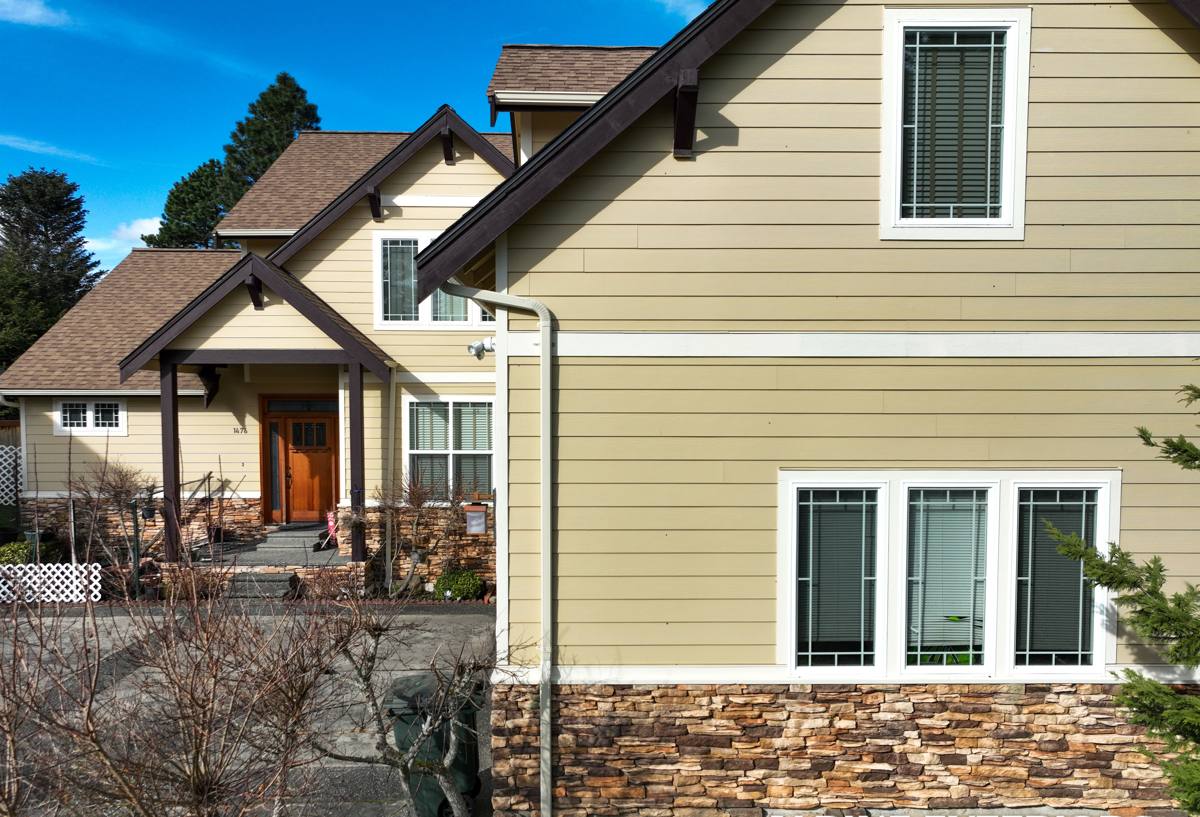
What Board & Batten Siding Actually Is
Board and batten is a two-layer siding pattern: wide vertical panels (or boards) installed first, then narrower strips — the "battens" — fastened over the seams between them. Done right, it hides the panel joints, sheds water down the face of the wall instead of letting it pool at a seam, and gives you crisp shadow lines that read well from the street.
Done wrong — wrong fastener spacing, no drainage plane behind the panels, battens nailed straight through into sheathing without room for the material to move — it becomes one of the harder siding styles to keep watertight. Every batten strip is a potential water entry point if it isn't flashed and fastened correctly, and every panel seam behind it needs to be sealed or lapped in a way that actually manages moisture rather than just hiding it from view.
The James Hardie System We Install
We install James Hardie board and batten using factory-engineered components rather than site-cut lumber pretending to be siding. Depending on the look a homeowner wants, that generally means HardiePanel vertical siding paired with HardieTrim battens, or the Artisan board and batten collection for a more refined, tighter-reveal appearance. Both are non-combustible fiber cement, both come pre-primed or with Hardie's factory ColorPlus finish, and both are engineered as part of a matched system — panel, batten, and trim designed to work together rather than assembled from mismatched parts.
James Hardie also makes climate-specific formulations (their HZ5 product line is engineered for regions with more moisture and freeze-thaw cycling), which matters here. Whatcom County isn't the harshest freeze-thaw climate in the country, but the combination of near-constant damp air, salt exposure, and heavy seasonal rain is exactly the kind of environment fiber cement was engineered to outperform wood or engineered wood products in. We don't install LP SmartSide, vinyl, Cemplank, Allura, primed spruce, or cedar board and batten — not because those products can't look good on day one, but because we've standardized on the one system that holds its finish, resists moisture intrusion at the seams, and comes with a strong transferable warranty when installed to spec. That's a call we've made as a company, not a knock on every homeowner who has one of those products already on their house.
Why We Don't Install Wood or Engineered Wood Board & Batten Here
Real cedar and primed spruce board and batten can look excellent, but in a climate with this much sustained moisture and a long moss season, wood siding needs consistent recoating, caulking, and moisture monitoring to avoid rot at the battens and panel bottoms — exactly the areas that take the most water. Engineered wood products close some of that gap but are still more sensitive to sustained moisture exposure at cut edges and fastener penetrations than fiber cement is. For a coastal-adjacent community like Puget, we think the maintenance math favors fiber cement.
Climate-Specific Details That Matter for Puget Installations
The technical details below are what actually separate a board and batten job that lasts 30+ years from one that starts showing problems in five.
Drainage Plane and Rain Screen
Behind every panel we install a proper water-resistive barrier, and on most Puget homes we recommend a rain screen gap — a small standoff space between the sheathing and the siding that lets any moisture that does get behind the panels drain and dry out instead of sitting against the wall assembly. Given how much driving rain this area gets, that gap is one of the highest-value details on the whole job.
Fastener Spacing and Batten Attachment
James Hardie specifies exact fastener patterns and edge clearances for board and batten assemblies, and battens need to be attached in a way that allows for normal material movement without cracking the panel underneath. We follow Hardie's published fastening schedules rather than field-guessing spacing, which is one of the most common places installers cut corners.
Flashing at Every Horizontal Transition
Window heads, door casings, roof-to-wall intersections, and the base of the wall all need proper flashing integrated with the siding — not just caulk. Caulk is a maintenance item that needs periodic renewal; flashing is a permanent water management detail. On a vertical siding pattern like board and batten, these transitions carry more of the waterproofing burden than they do on horizontal lap siding.
Moss and Algae Resistance
Bellingham's shaded, damp conditions are ideal for moss and algae growth on siding, especially on north- and west-facing walls that don't get much direct sun. James Hardie's ColorPlus factory finish is baked on and resists the kind of surface breakdown that gives moss and algae something to grip. It won't stop biological growth entirely — nothing does in this climate — but it holds up to washing far better than a field-applied paint finish does.
Comparing Your Siding Options for a Puget Home
| Factor | James Hardie Fiber Cement | Wood / Engineered Wood | Vinyl |
|---|---|---|---|
| Moisture resistance in coastal/salt air conditions | Strong — engineered for wet climates (HZ5) | Moderate — needs ongoing sealing/coating | Good at shedding water, but seams and fasteners can trap moisture behind panels |
| Finish longevity | Factory ColorPlus finish, long repaint intervals | Repaint/recoat every few years | Color molded in, but can fade and chalk |
| Fire performance | Non-combustible | Combustible | Combustible, can deform in high heat |
| Resistance to moss/algae staining | Good, especially with factory finish | Poor without regular maintenance | Moderate |
| Typical warranty structure | Long-term, transferable when installed to spec | Varies widely by product | Varies, often limited/prorated |
This isn't to say every alternative product fails on every home — it's why, as a company, we chose to build our entire installation practice around one system we can stand behind fully.
Our Process for a Puget Board & Batten Project
- On-site assessment: we look at the existing siding, sheathing condition, moisture history, sun/shade exposure on each elevation, and any rot or damage that needs to be addressed before new siding goes on.
- Prep and repair: any compromised sheathing or framing gets fixed first — new siding over a bad substrate just hides the problem.
- Water-resistive barrier and rain screen: installed per manufacturer spec, tailored to each wall's exposure.
- Panel and batten installation: Hardie panels and battens installed to the fastening schedule, with proper clearances at grade, roof lines, and penetrations.
- Flashing and trim detailing: every window, door, and transition flashed before it's closed up.
- Final finish and walk-through: caulking where appropriate, cleanup, and a walk-through so you know what was done and why.
Why a Crew That Already Works in Puget Matters
Siding crews that mostly work drier, inland climates tend to under-detail rain screens and flashing because they can get away with it where they're used to working. A crew that regularly works Bellingham and the surrounding Whatcom County communities builds those details in as standard practice, not an upsell — because we've seen what happens on local homes when they're skipped. We also know the practical side of working in this area: typical permitting expectations, how to sequence a job around our wetter months, and what exposure conditions look like on a given lot before we ever price the work.
Maintenance Homeowners Should Actually Expect
- Rinse siding annually, especially shaded and lower-level areas prone to moss and algae buildup
- Keep gutters clear so overflow doesn't run down wall faces
- Trim back vegetation and landscaping that keeps siding shaded and damp
- Inspect caulking at trim and penetrations every couple of years and re-caulk as needed
- Have any impact damage or cracked panels repaired promptly rather than left to let moisture in
Compared to wood board and batten, this is a noticeably lighter maintenance load — one of the main reasons we recommend fiber cement for this climate in the first place.
Get a Straight Answer for Your Home
Every Puget property is a little different — sun exposure, wall height, existing siding condition, and how close you are to open water all factor into the right approach. If you're weighing board and batten for a home in the area, we're happy to take a look and give you a straightforward, no-pressure estimate using the form below.