 Bellingham Roofing
 Why Puget Siding Wears Out Faster Than the Manufacturer's Numbers Suggest
Every siding product carries a "lifespan" number on its spec sheet, and almost none of those numbers were tested against the conditions a home in Puget actually deals with. This part of Bellingham sits close enough to the water that homes take on a steady diet of salt-laden air, and Whatcom County's weather pattern means long stretches where siding simply doesn't get a chance to fully dry out. That combination is harder on exterior materials than most manufacturer testing accounts for, and it's the reason siding that might last two or three decades elsewhere can start failing noticeably sooner here.
Salt Air and Marine Exposure
Airborne salt from Bellingham Bay doesn't just sit on the surface of your siding — it works into fasteners, seams, and any spot where the factory finish has been compromised. Over years, that accelerates corrosion in metal fasteners and trim, and it breaks down lower-grade paints and caulks faster than their warranties assume. Siding that isn't engineered or finished with that exposure in mind tends to chalk, fade, and develop soft spots earlier than homeowners expect.
Driving Rain and Wind-Driven Moisture
Storms coming off the water don't just fall straight down — they drive rain sideways into lap joints, trim seams, and anywhere a wall penetration wasn't flashed correctly. On a well-built wall, that moisture sheds and drains. On a wall where the siding, flashing, or house wrap was installed as an afterthought, that same rain finds its way behind the cladding, and once it's in, it can sit there for a long time before anyone notices a problem.
A Long Moss and Mildew Season
Bellingham's wet season runs long, and siding that stays damp for days at a stretch becomes a good host for moss, algae, and mildew — especially on north-facing walls and areas shaded by trees, which describes a lot of lots around Puget. Wood-based products are particularly vulnerable because organic growth can actually feed on the material itself, not just sit on top of it. Even siding that resists moisture can still collect surface growth if it's not designed with a smooth, factory-sealed finish.
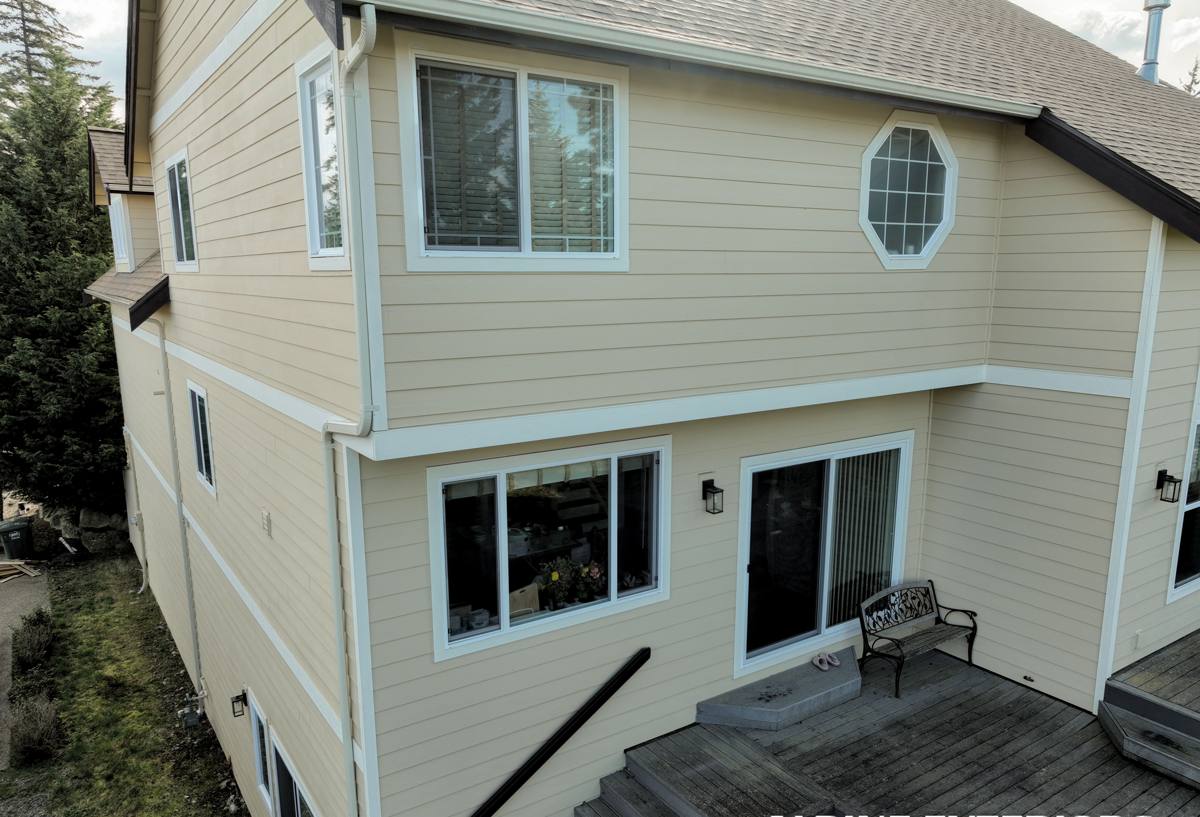
Signs Your Siding Needs Replacement, Not Another Repair
Spot repairs make sense when the problem is isolated. But once damage shows up in multiple places, or keeps coming back after cleaning and patching, it's usually a sign the underlying material or installation has run its course. Here's what we look for when we're deciding whether a home needs a repair or a full replacement:
- Boards that feel soft, spongy, or give slightly when pressed
- Paint that won't hold — peeling, bubbling, or needing repainting every few years
- Moss or algae that returns within a season or two of being cleaned off
- Visible cracking, warping, or buckling, especially on sun- or rain-exposed walls
- Gaps opening up at seams, corners, or around windows and doors
- A noticeable rise in heating costs, which can point to moisture-compromised insulation behind the siding
- Siding that's already older than its expected service life for this climate
If you're seeing two or more of these at once, it's worth having someone look at the wall assembly itself, not just the surface.
Why We Install Only James Hardie Fiber Cement Siding
We don't install vinyl, LP SmartSide, primed wood, cedar, or other fiber cement brands. That's a deliberate standard, not a lack of options. In a climate that mixes salt air, sustained moisture, and a long moss season, the material matters more than it does in a drier region, and James Hardie is the product we're willing to stand behind here.
Hardie siding is fiber cement — a mix of cement, sand, and cellulose fiber — which means it's non-combustible and doesn't provide the organic food source that lets moss and mildew take hold the way wood-based products can. Hardie's HZ5 product line is engineered specifically for regions with heavier moisture exposure, which fits western Washington far better than a general-purpose product line does. The factory-applied ColorPlus finish is baked on under controlled conditions, giving it more consistent resistance to fading and chalking from salt air and UV exposure than field-applied paint. And because it's backed by a strong, transferable warranty, it protects the investment for whoever owns the home next, not just the current owner.
None of this means other products are worthless — vinyl is inexpensive, cedar has real appeal, and engineered wood has its fans. But for a wall that has to hold up against Bellingham Bay's air and Whatcom County's wet season year after year, we think fiber cement is the more honest recommendation, and Hardie is the version of it we trust enough to install.
What a Correct Installation Actually Involves
Siding material is only half the equation. A lot of the siding failures we see in this area weren't caused by bad material — they were caused by installation shortcuts that don't show up until a few wet seasons in. In a climate with this much driving rain, the details behind the siding matter as much as what's visible from the street.
Drainage Behind the Siding
A correctly built wall includes a drainage gap — sometimes called a rain screen — between the siding and the weather-resistive barrier underneath. That gap lets any moisture that does get past the siding drain and dry out instead of sitting against the sheathing. Skipping this step is one of the most common ways siding jobs fail early in wet climates.
Flashing at Every Penetration
Windows, doors, hose bibs, vents, and light fixtures all break the plane of the wall, and each one needs proper flashing to direct water back out instead of letting it track inward. Wind-driven rain finds these gaps first, so this is not a step to rush.
Fasteners and Fastening Patterns
Corrosion-resistant fasteners, installed at the manufacturer's specified pattern and depth, keep the siding secured without cracking the board or leaving gaps that let moisture in. Hardie publishes specific fastening requirements for exactly this reason, and following them is what keeps the warranty valid.
Joints, Caulking, and Expansion
Fiber cement needs room to expand and contract slightly with temperature and moisture changes. Proper joint treatment and the right caulking products — placed only where the manufacturer calls for them — prevent both premature caulk failure and trapped moisture.
Comparing Siding Options for a Climate Like Puget's
Homeowners comparing quotes often see very different prices without understanding why. Here's how the main siding categories stack up against the specific conditions Puget deals with:
| Factor | Vinyl | Wood / Cedar | Engineered Wood (LP-type) | James Hardie Fiber Cement |
|---|---|---|---|---|
| Moisture resistance | Good on surface, poor at seams | Absorbs moisture, prone to rot | Moderate, edges vulnerable if cut/exposed | Strong, especially HZ5 line |
| Moss/algae resistance | Moderate | Low — organic material | Low to moderate | High with factory finish |
| Salt air durability | Can become brittle over time | Finish breaks down faster | Finish breaks down faster | Factory ColorPlus holds up well |
| Fire resistance | Low — melts/deforms | Combustible | Combustible | Non-combustible |
| Typical maintenance | Low, but limited repair options | High — regular sealing/painting | Moderate — finish upkeep | Low with correct install |
This is a general comparison, not a claim about any specific product failing — every material has trade-offs. It's simply why, for the conditions in this area, we've standardized on one product rather than offering all of them.
Our Siding Replacement Process
- Inspection. We look at the existing siding, sheathing, and any moisture-damaged areas before quoting anything, so the estimate reflects the actual wall condition, not just a guess from the outside.
- Tear-off. Old siding and trim come off carefully so we can assess the sheathing and framing underneath for hidden rot or damage.
- Sheathing and structural repair. Any compromised sheathing or framing gets repaired before new siding goes on — covering up a damaged wall with new siding just hides the problem.
- Weather barrier and drainage plane. A new weather-resistive barrier and rain screen gap go in to manage moisture the way this climate requires.
- Hardie installation. Siding is installed to manufacturer specifications for fastening, gapping, and flashing at every penetration.
- Trim, caulking, and finish details. Trim work and joint treatment are finished to both look right and perform correctly over time.
- Cleanup and final walkthrough. We clear the site and walk the finished job with you before calling it done.
What Affects the Cost of a Siding Replacement
Every home is different, and we don't quote real numbers without seeing the house, but these are the factors that typically move the price up or down:
| Cost Factor | Why It Matters |
|---|---|
| Home size and wall complexity | More square footage and more corners, gables, or dormers mean more material and labor |
| Condition of existing sheathing | Hidden rot or damage found during tear-off adds repair work before new siding can go on |
| Siding style and profile | Lap width, shingle-style panels, and trim details all affect material and install time |
| Trim and detail work | Homes with more windows, doors, and architectural trim take longer to flash and finish correctly |
| Access and site conditions | Tight lots, multiple stories, or limited equipment access can add labor time |
Why a Crew That Already Works in Puget Matters
Siding installation isn't identical everywhere in Whatcom County — a wall that faces the water and takes on salt air and driving rain needs different attention to drainage and flashing than a home tucked further inland. A crew that's already worked on homes in and around Puget has a feel for how exposed a given wall really is, which sides of a house tend to hold moisture longest, and where moss tends to come back no matter how often it's cleaned. That local pattern recognition doesn't replace following manufacturer specs — it just means fewer surprises once the old siding comes off.
If your Puget home's siding is showing its age, we're happy to take a look and give you a straight, no-pressure estimate — no obligation, just an honest read on what the wall actually needs.