 Bellingham Roofing
 Roof Repair in South Hill, Bellingham
South Hill sits above the rest of Bellingham, which means the roofs up here take on weather a little differently than roofs down near sea level. The elevation and tree cover catch more wind-driven rain, hold shade and dampness longer after a storm, and sit close enough to Bellingham Bay that salt-laden air is a real factor in how fast metal fasteners, flashing, and vents age. Add in Whatcom County's long, gray moss season and you've got a neighborhood where roofs work harder than the national averages assume. A repair that's "good enough" somewhere drier usually isn't good enough here.
This page is about roof repair specifically — patching, fixing, and restoring an existing roof rather than replacing it outright. If your roof is fundamentally sound but has a leak, damaged section, or a maintenance issue that's gotten away from you, repair is almost always the right first move, and doing it correctly the first time matters more in this climate than in most.
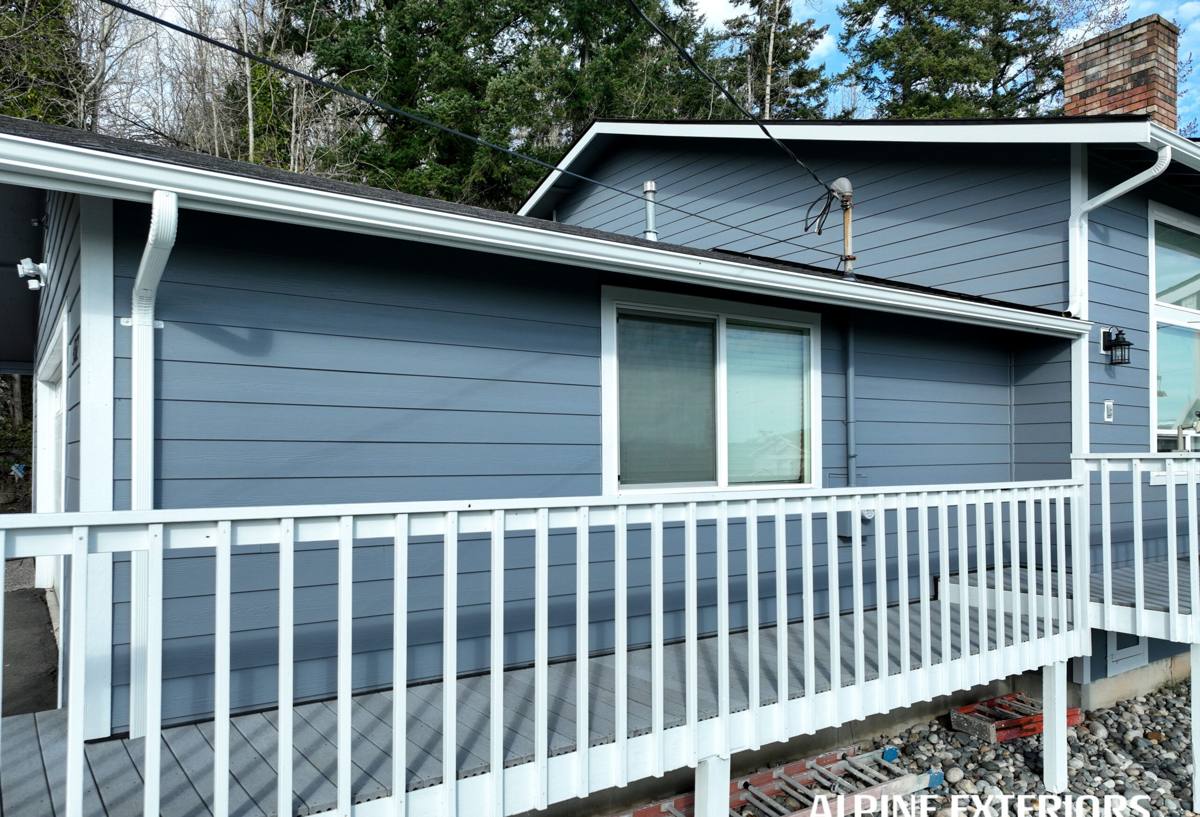
Why South Hill's Climate Is Hard on Roofs
A few things stack up against roofs on South Hill specifically:
- Salt air: Proximity to Bellingham Bay means airborne salt accelerates corrosion on exposed metal — nail heads, flashing, vent boots, and gutter hardware age faster than inland installations.
- Driving rain: Storms coming off the water often arrive at an angle, not straight down. That pushes water sideways under shingles, into gaps around chimneys and skylights, and into any flashing that isn't properly lapped and sealed.
- Long moss season: Cool, damp conditions for much of the year let moss and algae establish quickly on north-facing and shaded slopes. Moss doesn't just look bad — it holds moisture against the roofing material and lifts shingle edges over time.
- Tree cover: Many South Hill lots have mature trees nearby, which means more shade (slower drying), more needle and leaf debris in valleys and gutters, and occasional branch impact.
None of this means South Hill roofs fail faster than roofs anywhere else in Whatcom County. It means the maintenance and repair standard has to account for constant moisture exposure rather than occasional rain events.
Signs a South Hill Roof Needs Repair
Most roof problems announce themselves quietly before they become expensive. Homeowners who catch these early save money — repairs are cheaper than the water damage that follows a delay.
- Water stains or discoloration on ceilings, especially near chimneys, skylights, or where two roof planes meet
- Granules collecting in gutters or at the base of downspouts (a sign of shingle wear)
- Shingles that are curling, cracked, or missing after a windy storm
- Thick moss growth, particularly on shaded or north-facing slopes
- Rusted, lifted, or gapped flashing around chimneys, vents, or wall intersections
- Sagging or soft-feeling spots when walked (a sign of decking damage underneath)
- Daylight visible through the attic roof deck or unexplained attic dampness
- Higher heating bills with no other obvious cause, which can point to moisture-compromised insulation
If you're seeing more than one of these at once, it's worth having someone look before the next heavy rain rather than after.
Older vs. Newer South Hill Homes: Different Repair Needs
South Hill has a mix of housing stock — older homes with decades of roof history and newer builds with more modern materials. The repair approach differs for each.
| Home Age | Common Roof Issues | Typical Repair Focus |
|---|---|---|
| Older homes (pre-1990s) | Aging flashing, undersized or missing ice-and-water protection, layered or brittle shingles, outdated ventilation | Flashing replacement, deck inspection for rot, ventilation correction, careful shingle matching |
| 1990s–2010s builds | First-generation shingle wear, moss buildup on shaded slopes, sealant failure at penetrations | Moss treatment and removal, resealing penetrations, targeted shingle replacement |
| Newer homes | Isolated storm or impact damage, occasional installation defects, gutter/roof interface issues | Spot repair, flashing correction, drainage adjustments |
Older homes in particular deserve a closer look before any repair begins. Layering a patch over a flashing system that was never right to begin with just delays the same leak from coming back.
What a Correct Roof Repair Actually Involves
A roof repair that lasts isn't just replacing a shingle or two. It requires finding the actual source of the problem, which is often several feet away from where the water shows up inside the house — water travels along the roof deck and framing before it drips somewhere visible.
Diagnosis Before Anything Else
We start by tracing the leak or damage back to its source, not just its symptom. That means checking flashing, underlayment condition, ventilation, and the roof deck itself, not just the shingle layer.
Matching Materials Correctly
Repairs should use materials and installation methods that match or improve on what's already there — proper flashing metal, correctly lapped underlayment, and shingles that are a reasonable match in type and weight so the repaired section performs the same as the rest of the roof.
Addressing the Cause, Not Just the Symptom
If moss caused shingle lift, the repair should include moss removal and treatment, not just replacing the lifted shingles. If poor ventilation is cooking the underside of the deck, that gets addressed too. Otherwise the same failure shows up again in a year or two.
Our Roof Repair Process
We keep the process straightforward because homeowners dealing with a leak don't need extra complexity added on top.
- Inspection: We walk the roof (weather permitting) and check the attic where accessible, looking for the actual source of the issue rather than just the visible damage.
- Honest assessment: We tell you what we find, including if a section is beyond a reasonable repair and heading toward needing replacement instead.
- Written estimate: Clear scope of work and pricing before anything is touched — no surprise add-ons mid-job.
- Repair: We fix the identified cause, not just the visible symptom, using materials appropriate for this climate.
- Cleanup and walkthrough: Debris removed, work area cleared, and we show you what was done.
Repair or Replace? How We Help You Decide
Not every roof problem calls for a full replacement, and not every roof is a good candidate for another round of patches. The honest answer depends on the roof's age, how many previous repairs it's had, and how widespread the damage is.
| Factor | Favors Repair | Favors Replacement |
|---|---|---|
| Roof age relative to material lifespan | Early-to-mid life | At or past expected service life |
| Extent of damage | Localized to one area or system (flashing, one slope) | Widespread across multiple slopes |
| Repair history | First or second repair | Repeated repairs to the same areas |
| Underlying deck condition | Solid, no rot found | Soft spots or rot present in multiple areas |
| Budget and timeline | Lower upfront cost, shorter timeline | Higher upfront cost, longer-term value |
We'll give you a straight answer either way. If repair is the right call, we won't push you toward a replacement you don't need — and if the roof is genuinely past the point where repair makes financial sense, we'll explain why rather than let you keep spending on patches.
Moss, Debris, and Keeping a Repair From Becoming a Repeat Job
Given how much of the year South Hill roofs stay damp, maintenance between repairs matters more here than in drier parts of the state. A few habits go a long way:
- Keep gutters and valleys clear of needles and leaves, especially on tree-shaded lots
- Have moss treated before it establishes a thick mat, not after
- Trim back branches that keep a roof section shaded and slow to dry
- Check flashing and sealant at penetrations every year or two, since these are usually the first thing to fail
- Address small leaks immediately rather than waiting for the next dry stretch
A well-timed repair paired with basic upkeep can add years of useful life to a roof that would otherwise be heading toward premature replacement.
Why Hire a Crew That Already Works South Hill
Roofing knowledge doesn't transfer perfectly from one climate to another. A crew that mostly works drier inland regions may not think twice about ventilation, moss, or salt-air corrosion — because where they usually work, those things barely matter. On South Hill, they're often the actual root cause of a leak.
Working this neighborhood regularly means we're familiar with the housing stock's common ages and roof types, the local drainage and moss patterns tied to elevation and tree cover, and how Bellingham Bay's salt air affects metal components over time. That familiarity shows up in faster, more accurate diagnosis and in repairs built to hold up to the specific conditions this hillside sees, not generic conditions from somewhere else.
We're also a local, licensed and insured Whatcom County contractor, which means we're accountable if something isn't right — not a storm-chasing crew that's out of the area by the time a repair needs a follow-up.
Get a Free, No-Pressure Estimate
If you're dealing with a leak, storm damage, or a roof that's just showing its age, we're happy to take a look and give you an honest read on what it needs — repair or otherwise. Use the form below to request a free estimate for your South Hill home.