 Bellingham Roofing
 Roof Replacement Built for Columbia's Conditions
Columbia is one of Bellingham's older, more established neighborhoods, and that shows in its roofs. A lot of homes here were built with materials and ventilation standards that made sense decades ago but don't hold up well against what Whatcom County weather does to a roof today. Add in mature tree canopy, proximity to the water, and long stretches of gray, damp weather, and you get a specific set of failure patterns that a generic "we replace roofs" approach doesn't always account for. When we quote a roof replacement in Columbia, we're looking at the same handful of stress points on almost every house: moss and organic growth from shade and moisture, salt-laden air off Bellingham Bay accelerating corrosion on metal components, and driving wind-rain that finds every weak seam in flashing and underlayment.
A roof replacement is one of the biggest single investments a homeowner makes in a house, and it's also one of the easiest to get wrong in ways that don't show up for five or ten years. This page walks through what we look at, what a correct job actually involves, and why local experience in this specific neighborhood changes the outcome.
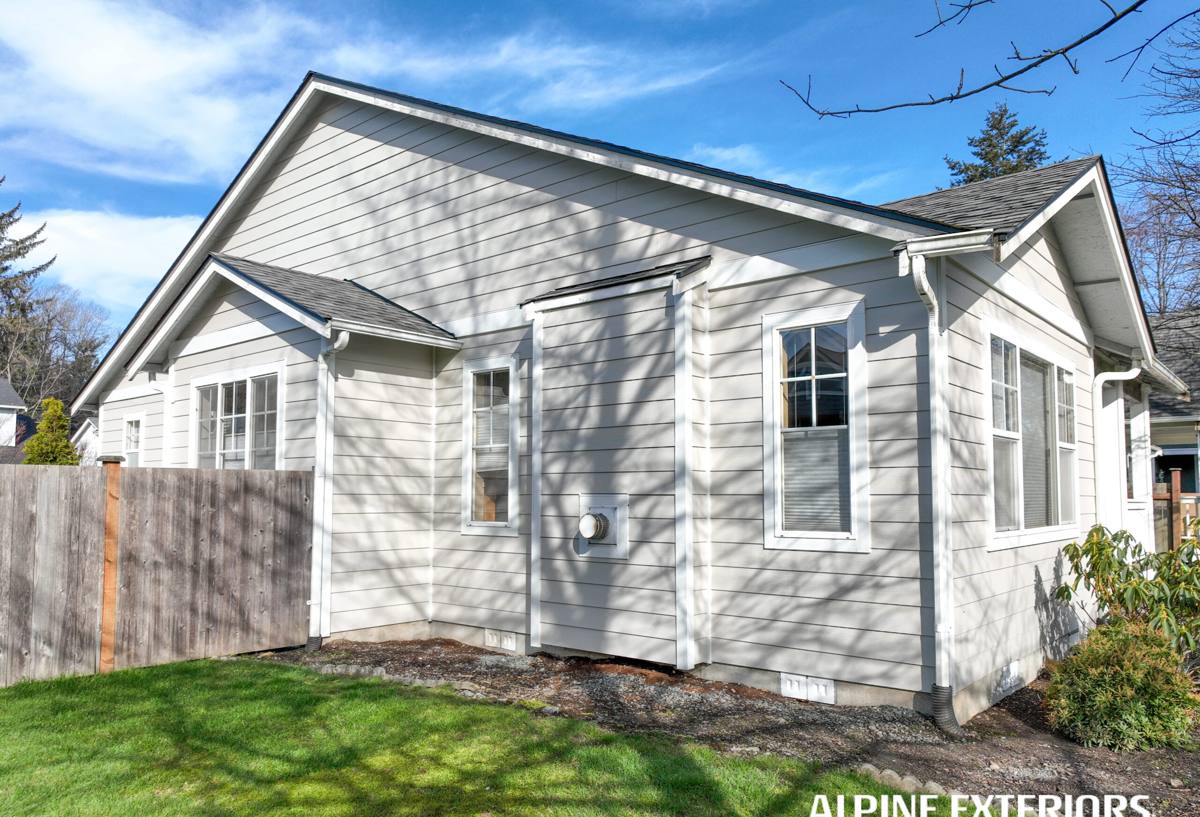
What Bellingham's Climate Does to a Columbia Roof
Salt Air and Corrosion
Columbia's elevation and tree cover vary block to block, but most of the neighborhood still sits close enough to the water that salt-laden air is a real factor. Salt air speeds up corrosion on exposed fasteners, flashing, and any metal roofing components that aren't rated for coastal exposure. Over years, this shows up as rust streaking, pitted metal, and fastener failure well before the shingles themselves are worn out.
Driving Rain
Whatcom County doesn't just get a lot of rain — it gets a lot of wind-driven rain, which behaves very differently than rain falling straight down. Wind-driven rain gets pushed sideways and even slightly upward under shingle edges, into valleys, and around vent penetrations. A roof that would be fine in a calmer climate can leak in Bellingham because the underlayment and flashing details weren't built with that lateral water movement in mind.
Moss Season
Because so much of Columbia has mature tree cover, roofs here stay shaded and damp for long stretches of the year, sometimes most of the year on north-facing slopes. That's exactly what moss and algae need to establish. Moss doesn't just look bad — it holds moisture against the roofing surface, works its way under shingle tabs, and lifts material as it grows, which is one of the more common reasons we see otherwise decent-looking roofs failing early in this neighborhood.
Repair, or Is It Time to Replace?
Not every roof problem in Columbia means a full replacement, but there's a point where patching becomes a losing game — throwing money at a roof that's going to keep generating new leak points every wet season. Here's how we think about that line:
- Shingles are cupping, cracking, or losing granules across large sections, not just one isolated spot
- Moss has been present for multiple seasons and has visibly lifted shingle edges rather than just sitting on the surface
- You've had more than one leak repair in the last two to three years in different locations
- Flashing around chimneys, skylights, or valleys is original and showing rust or gaps
- The roof is approaching or past the expected lifespan for its material
- There's visible sagging in the roofline, or soft spots underfoot on inspection
- Attic inspection shows daylight, water staining, or damp insulation
If you're seeing two or more of these at once, replacement is usually the more honest recommendation — and often the more affordable one over a five-year horizon once you account for repeated repair calls.
What a Correct Roof Replacement Actually Involves
A roof replacement is more than swapping old shingles for new ones. The parts of the job you don't see are what determine whether the roof holds up through a Bellingham winter or starts leaking in year three. A correct job includes:
- Full tear-off to bare decking, not layering over existing material — layering traps moisture and hides deck damage
- Deck inspection and repair of any rotted or soft sheathing found underneath
- Ice-and-water shield or high-quality synthetic underlayment at eaves, valleys, and other vulnerable areas, sized for driving-rain exposure rather than the manufacturer's bare minimum
- New flashing at every penetration — chimneys, skylights, pipe boots, and valleys — rather than reusing old flashing that's already corroding
- Proper ventilation at the ridge and soffits so the attic can actually dry out between rain events
- Correct fastening and nailing pattern matched to the region's wind exposure, not just the manufacturer's minimum spec
Skipping any one of these is how a roof ends up needing attention again in five years instead of twenty.
Choosing Materials for Columbia's Conditions
There's no single "best" roofing material for every house — it depends on the home's structure, budget, shade exposure, and how long you plan to stay. Here's how the common options compare for a moss-prone, salt-air, driving-rain environment like this neighborhood:
| Material | Typical Lifespan | Moss/Moisture Behavior | Best Fit |
|---|---|---|---|
| Architectural asphalt shingles | 25–30 years | Good when paired with proper ventilation and algae-resistant granules; still needs periodic moss treatment in heavy shade | Most homes; best value-to-durability balance |
| 3-tab asphalt shingles | 15–20 years | More prone to curling and granule loss in constant damp shade | Budget-driven replacements on lower-slope, less shaded areas |
| Standing seam metal | 40–50+ years | Sheds moss and moisture well due to smooth surface, but requires coastal-rated fasteners and coatings to manage salt air corrosion | Homeowners planning to stay long-term, or homes with heavy shade |
| Composite/synthetic shingles | 30–50 years | Resists moisture absorption better than wood alternatives; performance varies by manufacturer | Homes wanting a traditional look with less maintenance |
Whatever material a homeowner chooses, we won't cut corners on the underlayment and ventilation underneath it — that's what actually determines how the roof performs in wet, shaded conditions, more than the shingle brand printed on the wrapper.
Our Roof Replacement Process
1. On-Site Inspection and Honest Assessment
We walk the roof and the attic, not just look from the ground. We tell you plainly if repair is a reasonable option before recommending full replacement.
2. Written Estimate with Real Scope
You get a clear breakdown of materials, underlayment, flashing work, and ventilation changes — no vague line items.
3. Tear-Off and Deck Repair
Old material comes off completely so we can inspect the deck and fix any rot or soft spots before anything new goes down.
4. Underlayment, Flashing, and Ventilation
This is where driving-rain and moss resistance actually get built in — done right the first time, not as an afterthought.
5. Final Walkthrough
We go over the finished roof with you, including how to keep an eye on moss regrowth in shaded areas going forward.
Ventilation and Moisture: The Part Homeowners Don't See
A shaded, damp neighborhood like Columbia puts extra demand on attic ventilation. Without enough intake at the soffits and exhaust at the ridge, moisture from daily living — showers, cooking, laundry — gets trapped in the attic and condenses against the underside of the roof deck from below, while moss and rain work at it from above. That double pressure is a major reason decks rot out faster than the shingles wear out in homes with poor ventilation. Correcting airflow during a replacement is one of the highest-value parts of the job and one of the easiest to overlook if a contractor is just focused on the visible shingle layer.
Why Local Experience in Columbia Matters
A crew that regularly works this neighborhood already knows which blocks sit in heavier tree shade, which house styles from this era tend to have undersized original ventilation, and how far inland the salt air effect still matters for fastener choice. That's not something you get from a general estimate — it comes from having done the work here before. It also means faster, more accurate quoting, because we're not guessing at how Bellingham's specific rain patterns and moss pressure will treat a given roof design.
Get a Straightforward Estimate
If your roof in Columbia is showing moss buildup, aging shingles, or recurring leaks, we're happy to take a look and give you an honest read on repair versus replacement — no pressure, no inflated scope. Use the form below to request a free estimate and we'll walk the roof with you.