 Bellingham Roofing
 Roof Replacement for Happy Valley Homes
Happy Valley sits close enough to Bellingham Bay that its homes take on a different kind of weather load than roofs further inland. The salt-tinged air off the water, the steady drip of Pacific Northwest rain through fall and winter, and a moss season that seems to start earlier and last longer every year all add up on a roof's surface. A roof replacement here isn't just about swapping old shingles for new ones — it's about specifying and installing a system that's actually built for this specific stretch of Whatcom County.
This page covers what a correct roof replacement looks like for a Happy Valley home: the warning signs, the material trade-offs, our process from estimate to cleanup, and why working with a crew that already knows this neighborhood's conditions matters more than it might seem.
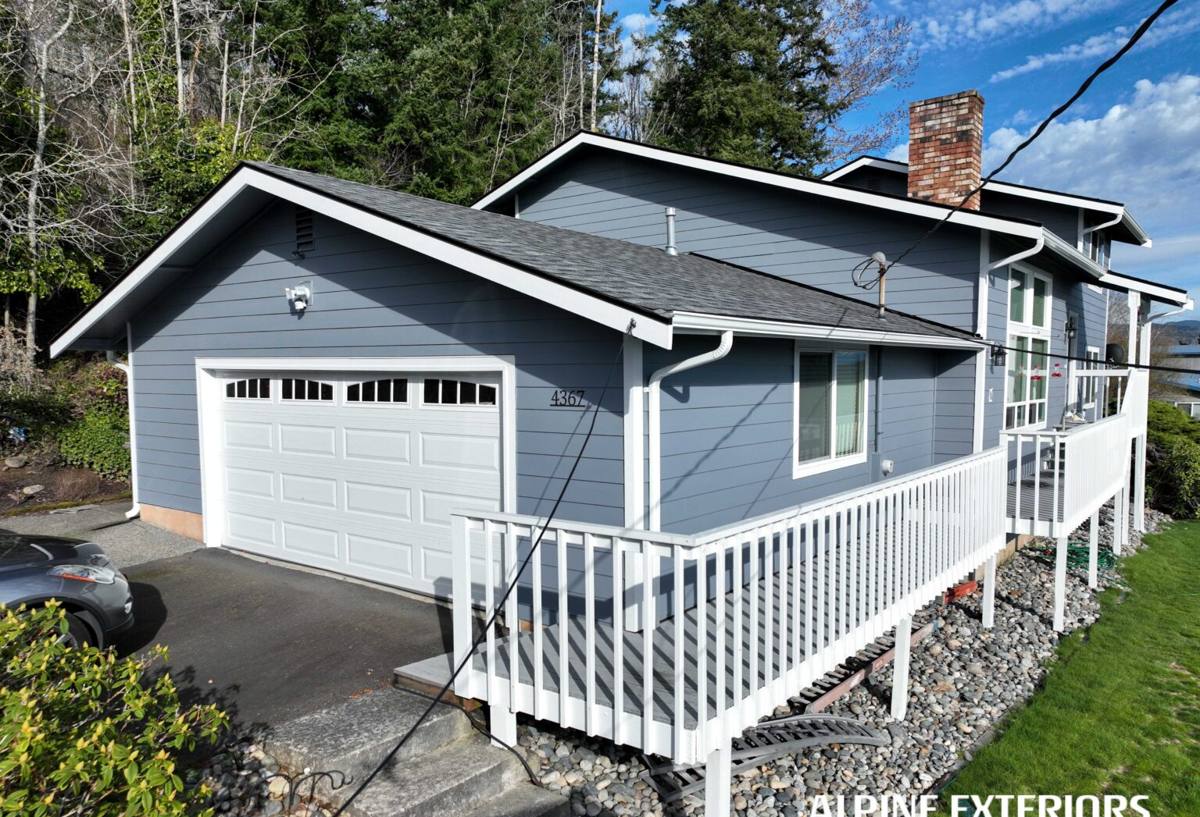
Signs a Happy Valley Roof Is Ready for Replacement
Roofs rarely fail all at once. They tell you first, usually through a handful of signs that are easy to miss from the ground.
- Shingles that are cupping, curling at the edges, or losing their granules in the gutters
- Dark streaking or thick moss growth that keeps coming back within a season or two of cleaning
- Soft or spongy spots underfoot when walking the roof, which usually means the decking underneath has taken on moisture
- Daylight visible through the attic roof boards, or a musty smell in the attic space
- Granule buildup in gutters and downspouts, a sign the shingles are wearing thin
- Roof age in the 20-25 year range for standard asphalt shingles, even if it looks fine from the street
Any one of these on its own might just call for a repair. Several together, or a roof already past its expected service life, usually mean replacement is the more honest recommendation — repeated patch repairs on a roof that's fundamentally worn out end up costing more over time than doing the job once, correctly.
What Bellingham's Climate Actually Does to a Roof
Salt Air
Homes closer to the water deal with airborne salt that settles on roofing materials and accelerates corrosion on any exposed metal — flashing, fasteners, vents, and gutter hardware. Over years, standard fasteners and thin-gauge flashing can degrade faster here than they would on a roof ten miles inland. That's why material and fastener selection matters more in Happy Valley than it might in other parts of Whatcom County.
Driving Rain
Bellingham doesn't just get a lot of rain — it gets wind-driven rain that pushes water sideways under normal circumstances, testing every seam, valley, and penetration on a roof. A roof that isn't properly sealed at the valleys, around chimneys, and at wall-to-roof transitions will eventually let that water in, even if the field of the roof looks fine.
Moss Season
Shaded, north-facing slopes and roofs under tree cover hold moisture longer, which gives moss a long window to establish itself — often nine months of the year in this climate. Moss doesn't just look bad; it lifts shingle edges, traps water against the roof surface, and works its way into seams over time. A roof replacement is the right moment to address the underlying causes of moss growth, not just the moss itself.
Choosing the Right Roofing Material
There's no single "best" roofing material — the right choice depends on the home's exposure, roof pitch, budget, and how much long-term maintenance the homeowner wants to take on. Here's how the common options stack up for a Happy Valley property specifically.
| Material | Typical Lifespan | Moss & Moisture Behavior | Salt Air / Coastal Performance |
|---|---|---|---|
| Standard 3-tab asphalt | 15-20 years | More prone to moss anchoring in the tab gaps | Adequate with proper fasteners; budget option |
| Architectural (dimensional) asphalt | 25-30 years | Denser mat resists moisture uptake better | Good; the most common upgrade choice locally |
| Standing seam metal | 40-50+ years | Sheds moss and moisture very well due to smooth surface | Excellent when properly coated and fastened |
| Synthetic/composite shake | 30-50 years | Good moisture resistance, low maintenance | Good; higher upfront cost |
For most Happy Valley homes, architectural asphalt shingles remain the most balanced choice — a meaningful step up in durability and moss resistance over 3-tab shingles without the cost jump to metal. Metal roofing earns its higher price tag on homes where the owner wants the longest possible service life and the lowest long-term maintenance, particularly on simpler roof lines where the material's strengths are easiest to install correctly.
A Note on Cedar Shake
Cedar shake has a strong traditional look that fits a lot of Pacific Northwest homes, but it carries real maintenance obligations in a climate this wet — periodic treatment, more frequent moss and debris removal, and closer attention to ventilation underneath. We'll install it if that's what a homeowner wants and understands the upkeep involved, but we're upfront that it demands more attention here than composite or metal alternatives, and we'll walk through that trade-off honestly before you commit to it.
What a Correct Roof Replacement Includes
A roof replacement is only as good as what happens under the new shingles. Cutting corners on the components nobody sees is how roofs that look great fail early. A properly done replacement includes:
- Full tear-off of old roofing material down to the decking — no roofing over an existing layer
- Inspection and replacement of any water-damaged or rotted decking found underneath
- New underlayment rated for the region's rain exposure, installed with proper overlaps
- Ice-and-water shield membrane at eaves, valleys, and other vulnerable transition points
- New flashing at all penetrations — chimneys, vents, skylights, and wall intersections — sized and fastened for coastal conditions
- Proper attic and ridge ventilation to control moisture buildup and reduce moss-friendly conditions from underneath
- Corrosion-resistant fasteners and hardware throughout
- Full site cleanup, including magnetic sweep for stray nails and gutter clearing
Skipping any of these to save a day or a few hundred dollars is exactly how a roof that should last 25-30 years starts leaking at year eight.
Our Roof Replacement Process
1. On-Site Inspection and Estimate
We walk the roof and attic in person before quoting anything. That means checking decking condition, ventilation, flashing, and the specific exposure of your Happy Valley lot — how much tree cover, which direction it faces, and how close it sits to the water — since those factors change what the roof actually needs.
2. Material Selection
We go over the honest trade-offs between materials for your specific roof and budget, without steering you toward whatever's easiest for us to install.
3. Scheduling Around the Weather
Roofing in a rainy climate means working around forecast windows, not fighting them. We plan tear-off and dry-in for stretches of workable weather so your home isn't left exposed longer than necessary.
4. Tear-Off, Decking Check, and Installation
Old material comes off, decking gets inspected and repaired as needed, and the new system goes on in the sequence that keeps water out at every stage — not just once the final layer is down.
5. Final Walkthrough
We review the finished roof with you, confirm the site is cleaned up, and go over anything you should know for maintenance going forward.
Cost Factors to Expect
Every roof is different, and we won't quote a number without seeing the roof, but a few factors consistently move the price on Happy Valley homes:
| Factor | Why It Matters |
|---|---|
| Roof size and pitch | Steeper roofs take longer and require more safety setup |
| Number of penetrations | Each chimney, vent, and skylight needs individual flashing work |
| Decking condition | Rot or moisture damage found during tear-off adds material and labor |
| Material choice | Asphalt, metal, and composite options carry different material costs |
| Access and tree cover | Tight lots or heavy tree cover can slow staging and cleanup |
We'll break down these factors specifically for your roof during the on-site estimate, so you know what's driving the cost rather than just seeing a total.
Why a Crew That Already Works Happy Valley Matters
A roofing crew that regularly works this neighborhood already knows how the local terrain, tree cover, and proximity to the bay tend to affect a roof — which slopes hold moss longest, which flashing details matter most given the wind-driven rain, and how to sequence a job around Whatcom County's weather patterns instead of getting caught by them. That familiarity shows up in fewer surprises during tear-off and a system that's specified correctly the first time, instead of a generic install that has to be fixed a few years in.
It also means being reachable after the job is done. A roof replacement should come with a real warranty and a contractor who's still around — and still local — if you ever have a question about it.
Get a Free, No-Pressure Estimate
If your Happy Valley home is showing signs of an aging roof, or you just want an honest read on how many years you've got left before replacement makes sense, we're glad to take a look. The estimate is free, there's no pressure to move forward, and you'll walk away with a clear picture of your options. Use the form below to get started.