 Bellingham Roofing
 Building a Deck That Can Handle Sehome's Weather
Sehome sits close enough to Bellingham Bay that salt-laden air reaches your yard, and far enough into the Pacific Northwest's rain belt that a deck here spends a good chunk of the year wet, shaded, or both. A deck built to a generic national spec — the kind of deck that would hold up fine in a dry climate — will show problems within a few seasons in this neighborhood: soft spots at the ledger board, rust bleeding from fastener heads, and a green film of moss and algae across every board that doesn't get direct sun. Building a custom deck for Sehome means designing around that reality from the start, not patching it later.
This page covers what we've found actually matters for decks in this specific part of Bellingham: the moisture details, the material trade-offs, the site conditions common to Sehome lots, and how our process handles all of it.
What Sehome Homes Need From a Custom Deck
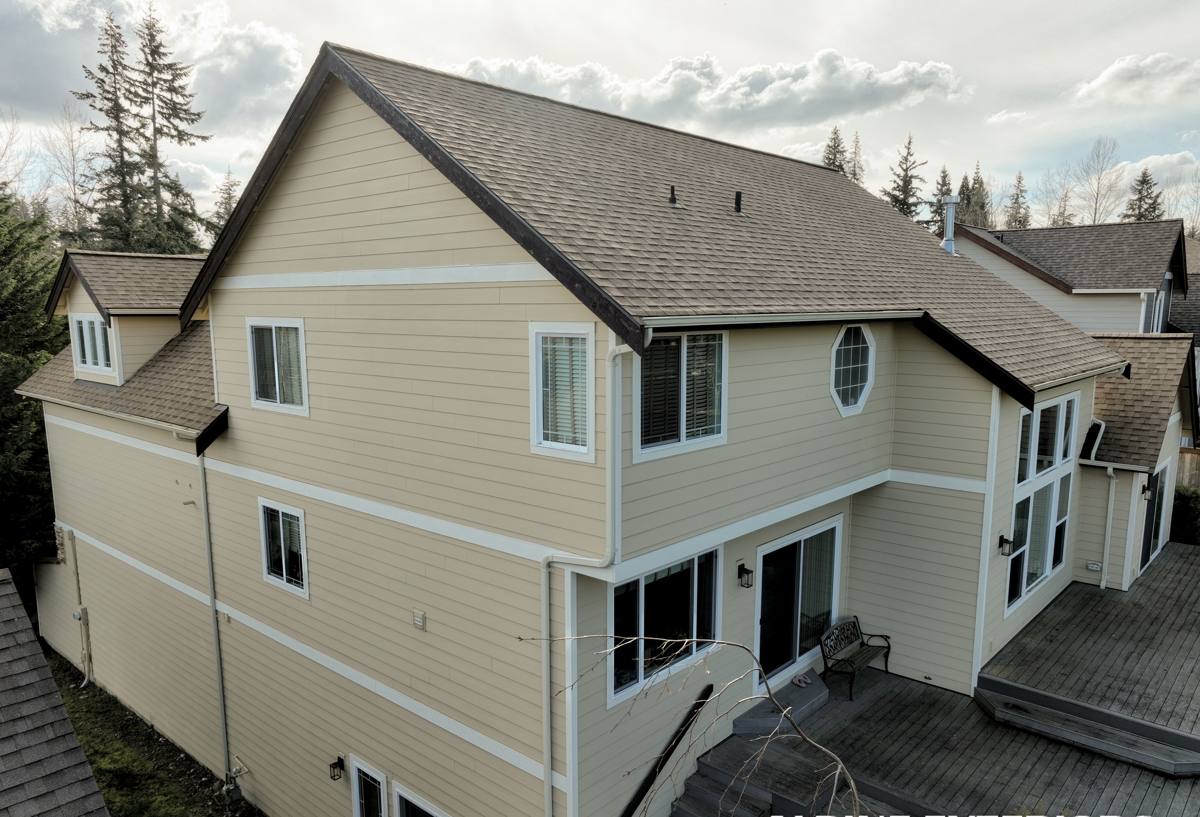
Sehome is one of Bellingham's older, more established neighborhoods, with a mix of home styles on lots that often have some slope and a fair amount of mature tree cover. That combination — established landscaping plus hillier terrain — shapes what a deck project looks like here more than people expect.
- Shade and moisture linger longer. Mature trees keep parts of many Sehome yards shaded well into the day, which means decking surfaces dry out slower and moss gets a head start.
- Sloped lots change the structure. A deck on a grade often needs taller support posts, engineered footings, and more careful guardrail and stair planning than a flat-lot deck.
- Proximity to the bay means salt exposure. Even a few miles inland, coastal air corrodes ordinary fasteners and hardware faster than people expect.
- Older homes need decks that match. A custom deck on an established home should tie into the existing roofline, siding, and grade cleanly, not look bolted on.
The Moisture Problem Every Deck in This Climate Faces
Whatcom County doesn't get extreme cold, but it gets a lot of steady, driving rain and a long stretch of the year where surfaces rarely fully dry. That's a harder environment for a deck than a place with occasional heavy storms and long dry spells in between, because the wood, fasteners, and framing are under near-constant low-grade moisture pressure rather than short bursts.
Ledger Board and House Connection
The ledger board — where the deck attaches to the house — is the single most common failure point on any deck, anywhere. In a climate like Bellingham's, it's even less forgiving. Water that gets behind an improperly flashed ledger doesn't dry out between rains; it sits there, and it will rot the rim joist and sheathing behind it long before the surface boards show any sign of trouble. We flash every ledger connection properly and never rely on caulk alone to keep water out of that joint.
Framing, Fasteners, and Hardware
Salt air accelerates corrosion on standard fasteners and hardware, and rust stains bleed down through decking and leave dark streaks that don't sand out. We use stainless steel or heavy hot-dip galvanized fasteners and connectors rated for coastal exposure, and we tape or flash the tops of joists so water doesn't sit in end grain and start rot from the inside of the frame.
Footings on Wet, Sloped Ground
Saturated soil behaves differently than dry soil, especially on the grades common in parts of Sehome. Footings need to be sized and set below the frost line and deep enough to bear on stable soil, not just poured to a minimum depth and called done. On a sloped lot, this is where a rushed install shows up years later as a deck that's started to lean or settle unevenly.
Choosing Decking Material for Bellingham's Climate
There's no single "right" decking material — it depends on how much maintenance you want to do, your budget, and how much sun the deck actually gets. Here's how the common options compare specifically for this climate:
| Material | Moisture & Moss Behavior | Maintenance | Typical Lifespan |
|---|---|---|---|
| Cedar | Naturally rot-resistant but still needs a breathable finish; moss will grow on shaded, unsealed boards | Cleaning and re-sealing every 1-2 years | 15-20 years with upkeep |
| Pressure-treated fir/pine | Treated for rot resistance but more prone to cupping and checking in wet-dry cycles | Regular sealing, more frequent board checks | 10-15 years |
| Composite decking | Won't rot, but shaded/damp composite can still grow surface algae that needs washing off | Periodic washing, no sealing or staining | 25-30 years |
| PVC/capped decking | Fully moisture-sealed surface, most moss-resistant option in heavy shade | Occasional rinsing | 25-30+ years |
In practice, we steer shaded, low-airflow parts of Sehome yards toward composite or PVC, since a natural wood deck under heavy tree cover needs far more frequent cleaning to stay ahead of moss. Sunnier, more open lots do fine with cedar if you're willing to keep up with sealing on a schedule.
Design Considerations for Sloped and View Lots
Several Sehome properties have enough grade change that a deck isn't just a platform off the back door — it's a structure that has to manage a drop in elevation, sometimes a meaningful one. That changes the engineering:
- Taller support posts need additional bracing to stay rigid under lateral load, not just vertical weight.
- Stairs down a slope need consistent rise and run and a landing that meets code, which sometimes takes more planning than a flat-lot stair run.
- Guardrails become a safety requirement rather than an aesthetic choice once a deck sits any real height above grade.
- Under-deck drainage matters more — water running off an elevated deck needs somewhere to go that doesn't erode the slope below it or pool against the foundation.
None of this is a reason to avoid building on a sloped lot — it just needs to be designed for, not improvised on site.
Permits and Code in Bellingham and Whatcom County
Most deck projects of any real size require a permit through the City of Bellingham (or Whatcom County, depending on exactly where the property sits relative to city limits), and inspections at the footing and framing stages before the decking goes down. Code requirements you should expect to be built to include:
- Footings set to the required depth and bearing on adequate soil
- Guardrails once the deck reaches the height threshold that triggers the requirement
- Proper stair rise, run, and handrail specifications
- Ledger attachment and flashing that meets current residential code, not just what was acceptable decades ago
We handle the permit application and coordinate inspections as part of the job — it's not an add-on cost you have to chase down yourself.
Our Process for a Custom Deck Build
- Site visit and design. We look at your slope, sun exposure, tree cover, and how the deck should connect to the house before we talk materials.
- Material and layout selection. We walk through the trade-offs above based on your specific lot, not a one-size answer.
- Engineering and permitting. Sloped or elevated decks get engineered footings and post layouts; we file for the permit and schedule inspections.
- Demolition or site prep. If we're replacing an existing deck, we check the ledger and rim joist condition before building over it.
- Framing. Ledger flashing, joist tape, corrosion-resistant hardware, and footings all go in before any decking is installed.
- Decking, railing, and stairs. Installed to the spacing and fastening pattern the material manufacturer specifies — this is where a lot of corner-cutting happens on rushed jobs, and where we don't cut corners.
- Final walkthrough. We go over the finished deck with you, including what maintenance it needs and when.
Maintenance Through a Long Moss Season
Whatcom County's moss season runs long, and a deck that gets shade for a good part of the day will need more attention than one in full sun, regardless of material. A simple seasonal routine keeps most problems from ever starting:
- Sweep debris and needles off the deck regularly — trapped organic matter holds moisture and feeds moss and algae growth
- Wash the surface at least once a year with a deck-safe cleaner, more often in heavily shaded areas
- Check and clear gaps between boards so water drains through instead of pooling
- Re-seal wood decking on the schedule the finish product calls for — don't wait until it visibly needs it
- Look under the deck once a year for signs of moisture at the ledger, posts, or joist hangers
Catching a small moisture issue during a yearly check is a quick fix. Finding it because a board has gone soft is a much bigger job.
Why Hire a Crew That Already Works in Sehome
A deck built by a crew that hasn't worked much in this climate tends to make the same mistakes: standard fasteners that weren't rated for coastal air, ledger flashing that was "good enough" for a drier region, or a decking material picked without accounting for how shaded the lot actually is. We work throughout Bellingham and Whatcom County, and Sehome's mix of sloped lots, mature tree cover, and older homes is familiar territory — we know what to check for before we ever start framing.
If you're planning a new deck or replacing one that's showing its age, we're happy to take a look and put together a straightforward plan for your property. Reach out for a free, no-pressure estimate using the form below.