 Bellingham Roofing
 Metal Roofing in Sehome: Built for the Neighborhood You Actually Live In
Sehome sits close enough to Bellingham Bay to catch salt-laden air off the water, and close enough to the hillside tree cover around Sehome Hill to stay shaded and damp for long stretches of the year. That combination — moist air, filtered sun, and mature trees dropping needles and leaves onto the roof deck — is exactly the environment where the wrong roofing choice shows its weaknesses fastest. We've worked enough roofs in this part of Bellingham to know what holds up here and what doesn't, and metal roofing is one of the few systems that handles this particular mix of conditions without constant babysitting.
This page is specifically about metal roofing for Sehome homes — not a general overview of every roofing material we offer. If you're weighing whether a standing seam or steel roof makes sense for your house in this neighborhood, this is the information that actually matters.
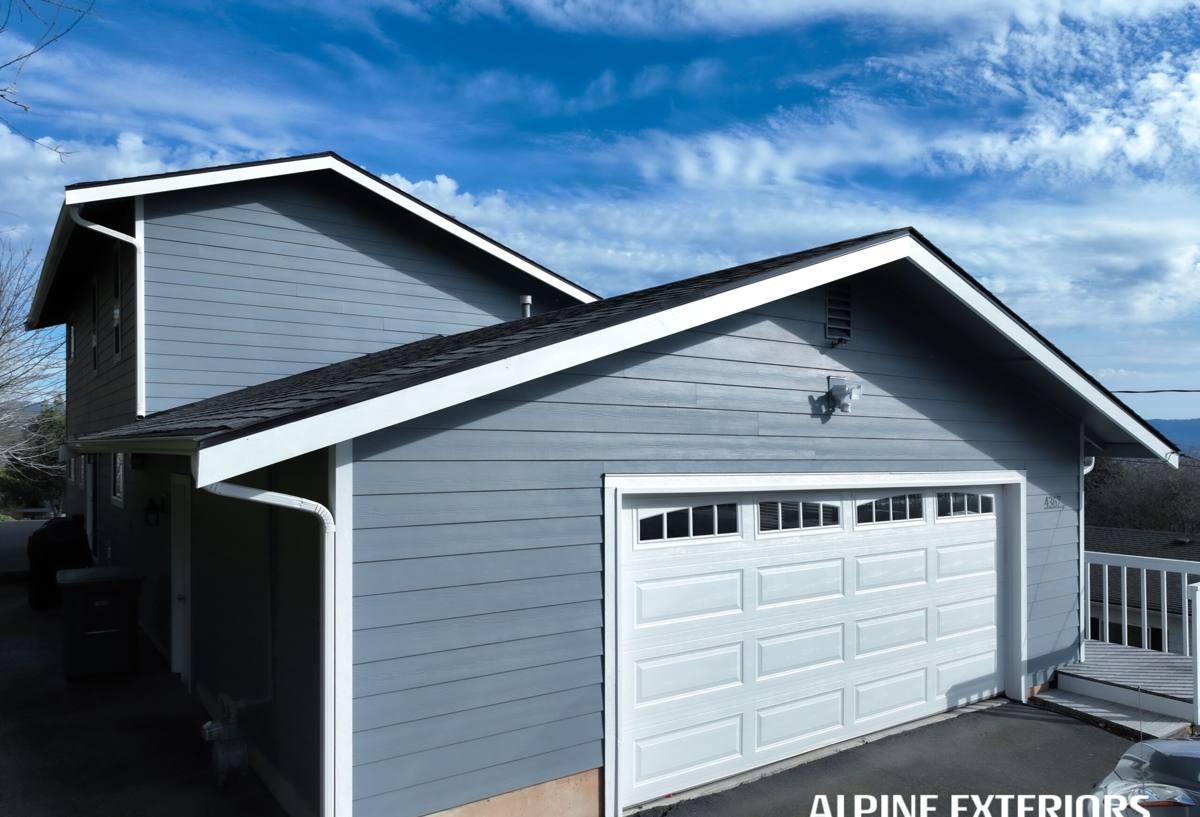
What Whatcom County's Climate Does to a Roof
Bellingham and Whatcom County get a long, wet fall-through-spring stretch, and Sehome's proximity to the bay means the air carries a fine mist of salt on windy days off the water. Add in driving rain that comes sideways during winter storms, and you've got three separate stressors working on a roof at once:
- Salt air accelerates corrosion on any exposed metal fasteners, flashing, or trim that isn't properly rated or protected.
- Driving rain tests every seam, lap, and penetration on a roof — water that's pushed sideways by wind finds gaps that a straight-down rain never would.
- Moss and moisture build up wherever shade and organic debris (needles, leaves, pollen) sit on a roof surface long enough to hold water against it.
Older roofing materials in this environment — especially standard asphalt shingles under heavy tree cover — tend to show moss growth, granule loss, and edge lifting years before they would in a drier, more open part of the county. That's not a knock on shingles everywhere; it's just what happens in a shaded, coastal-adjacent neighborhood like Sehome.
Why This Matters for Roofing Choice
A roof in Sehome needs to do three things well: shed wind-driven rain without relying on gravity alone, resist moss and organic buildup (or at least not feed it), and hold up to slow, steady corrosion exposure from salt-tinged moisture. Metal roofing, installed correctly, checks all three boxes better than most alternatives — but "installed correctly" is doing a lot of work in that sentence, which we'll get to below.
Why Metal Roofing Fits Sehome Homes Specifically
Metal doesn't give moss the same foothold that a granulated shingle surface does. There's no aggregate texture for spores to catch and no organic material in the surface itself, so moss and algae have to work a lot harder to establish themselves — usually only where debris is allowed to sit and hold moisture against the panel. Combined with proper roof pitch and clean water flow, that alone solves a big chunk of the maintenance headache that shaded Sehome lots create.
Metal panels also shed wind-driven rain more predictably than lapped shingle systems, because the seams — when done right — are mechanically locked or properly overlapped rather than relying purely on adhesive strip bond. In a neighborhood that gets its share of sideways winter storms, that's a real, practical advantage, not a marketing point.
On the corrosion side, this is where product selection and installation detail matter more than the "metal roofing is durable" headline. Not all metal roofing handles salt air equally, and not every installer accounts for it.
What a Correct Metal Roof Installation Actually Involves
A metal roof is only as good as the details underneath and around the panels. Here's what we consider non-negotiable on a Sehome job:
Underlayment and Deck Prep
We don't install metal over a deck that hasn't been checked for rot, soft spots, or trapped moisture from a prior roof. A high-temp synthetic or self-adhered underlayment goes down as a moisture barrier — this matters more in a coastal-adjacent, high-rain area than almost anywhere else, since it's the backup layer if wind ever pushes water past a seam.
Fastener and Flashing Material
Exposed fasteners, screws, and flashing need to be rated for the exposure they'll see. In a salt-air environment, mismatched metals or under-rated fasteners are where premature corrosion actually starts — not usually in the panel field itself. We match fastener and flashing material to the panel system so you don't end up with galvanic corrosion eating away at a joint five years in.
Seams, Laps, and Penetrations
Every place water can get in — ridge caps, valleys, pipe boots, chimney flashing, skylight curbs — gets more attention than the flat panel runs, because that's where failures actually happen. A roof doesn't fail in the middle of a clean panel; it fails at a transition that wasn't detailed correctly.
Ventilation
Proper intake and exhaust airflow keeps moisture from condensing on the underside of the deck, which matters in a damp climate like ours regardless of what roofing material sits on top. We check existing ventilation as part of any tear-off and correct it if it's inadequate.
Metal Roofing Systems: Comparing Your Options
Not all metal roofing is the same product wearing different colors. Here's how the common systems compare for a Sehome-style home:
| System | Best For | Salt-Air Performance | Maintenance |
|---|---|---|---|
| Standing seam (concealed fastener) | Most Sehome homes, especially under tree cover | Strong — fewer exposed penetrations to corrode | Low; occasional debris clearing |
| Exposed-fastener panel | Budget-conscious projects, outbuildings, garages | Fair — fastener seals need periodic checking | Moderate; fastener inspection over time |
| Stone-coated steel | Homeowners wanting a shake or tile look | Good, if coating and flashing are matched correctly | Low to moderate |
For most homes in this neighborhood, we lean toward standing seam because it minimizes exposed fasteners in a climate where fastener corrosion is the main long-term risk. That said, exposed-fastener panels are a legitimate, cost-effective choice for secondary structures or budget-driven projects — we'll tell you honestly when that trade-off makes sense rather than upselling a system you don't need.
Our Process on a Sehome Metal Roof
- On-site inspection — we walk the roof and attic (not just look from the ground), checking deck condition, ventilation, tree overhang, and existing moss or moisture damage.
- Honest scope and estimate — you get a clear breakdown of what needs replacing versus what's serviceable, and which metal system fits your home and budget.
- Tear-off and deck repair — old roofing comes off, and any soft or rotted decking gets replaced before anything new goes down.
- Underlayment and flashing — moisture barrier, ice/water protection at eaves and valleys, and correctly matched flashing at every penetration.
- Panel installation — panels go on with attention to seam alignment, fastener spacing, and manufacturer-specified clearances.
- Final walkthrough — we check the finished roof with you, clear debris, and make sure gutters and downspouts are clear and functioning.
Cost Factors for a Metal Roof in Sehome
Every roof is priced on its own specifics, but these are the factors that actually move the number:
| Factor | Why It Matters |
|---|---|
| Roof pitch and complexity | Steep or multi-plane roofs take longer and require more flashing detail |
| Panel system chosen | Standing seam costs more upfront than exposed-fastener panel |
| Deck condition | Rot or soft decking found during tear-off adds repair cost |
| Tree cover and access | Overhanging trees near Sehome Hill can add trimming or protection steps |
| Existing layers | Full tear-off versus re-roofing over an existing layer changes labor scope |
We'd rather walk you through these factors on your actual roof than quote a number with no context behind it — a phone-estimate for metal roofing is rarely accurate once someone gets on the roof and into the attic.
Keeping a Metal Roof Healthy in This Climate
Metal roofing needs less maintenance than most alternatives, but "less" isn't "none." A short seasonal checklist keeps a Sehome roof performing the way it should:
- Clear needles and leaf debris from valleys and low-slope sections, especially under tree cover
- Check gutters and downspouts before the fall rains ramp up
- Look for any lifted or loose flashing after major windstorms
- Watch for streaking or discoloration near fasteners, which can signal an early seal issue
- Trim back branches that overhang the roofline to reduce debris and abrasion
Why a Crew That Already Works Sehome Makes a Difference
Roofing crews that work all over Whatcom County and beyond aren't necessarily bad — but a crew that regularly works Bellingham neighborhoods like Sehome has already seen how the local mix of salt air, shade, and driving rain plays out on real roofs over years, not just in a training manual. That shows up in small decisions: which flashing detail to use at a valley that catches extra runoff, how much ventilation a shaded attic actually needs, which fastener spec holds up near the bay versus further inland. Those aren't dramatic differences on install day, but they're the difference between a roof that's still tight in fifteen years and one that needs attention in five.
If you're considering a metal roof for your Sehome home, we're happy to walk the roof with you, answer your questions honestly, and put together a no-pressure estimate based on what your home actually needs — not a generic package. Reach out using the form below to get started.