 Bellingham Roofing
 Why Puget Homes Take a Different Kind of Beating
Homes in the Puget area of Bellingham sit close enough to the water and tree cover that siding has to handle three things at once: salt-laden air moving off Bellingham Bay, long stretches of driving, wind-pushed rain, and a moss season that can stretch from fall through spring under the region's tree canopy and cloud cover. Any one of those is manageable. Together, they punish siding that isn't built or installed for the job. Salt air accelerates corrosion on fasteners and trim metal. Driving rain finds every gap in flashing and caulk. And moss doesn't just look bad — it holds moisture against the wall assembly long after a storm has passed, which is exactly the condition that rots wood-based products and lets water travel behind panels that weren't lapped or sealed correctly.
We install siding on homes in this specific environment often enough to know which failure patterns show up first, and where. This page walks through what a correct siding installation looks like for a Puget home, not a generic siding job dropped into a template.
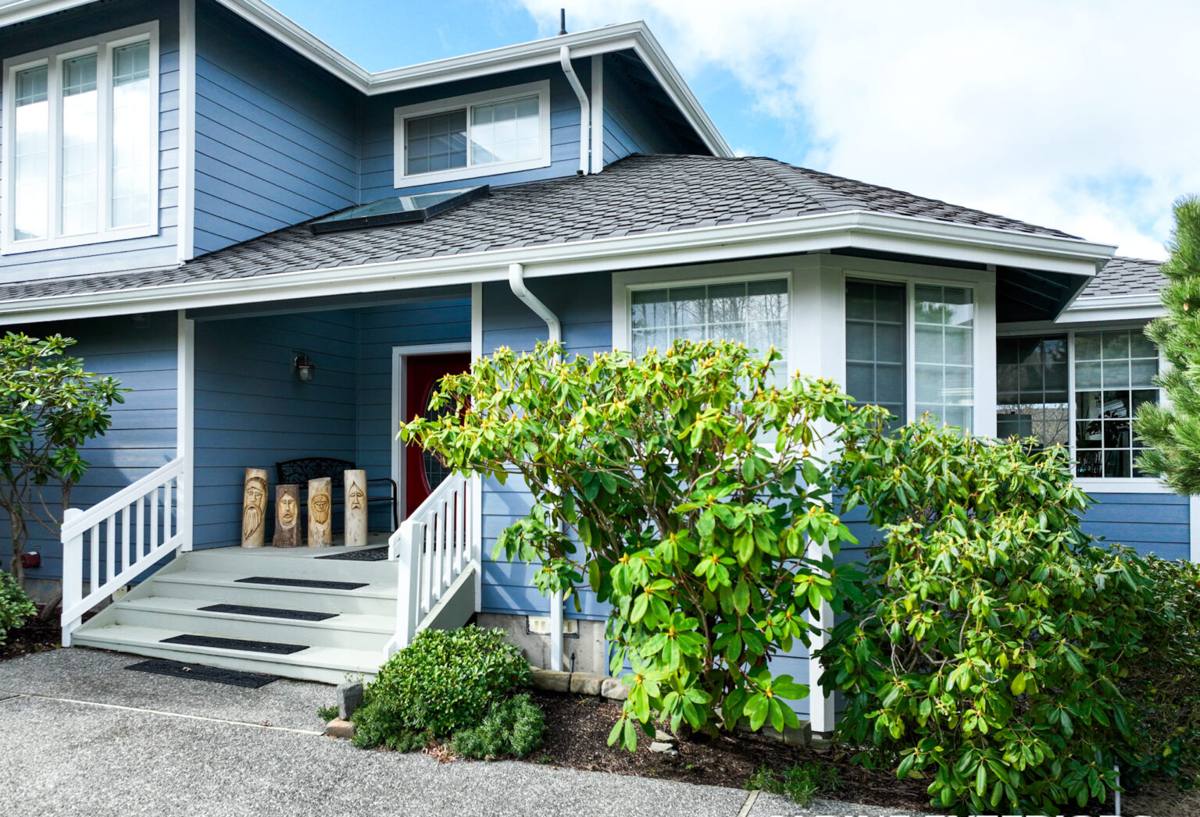
What a Correct Installation Actually Involves
Siding is a system, not a single layer. The panel itself gets most of the attention, but the parts underneath and around it — the weather-resistive barrier, the flashing, the fastener pattern, the clearances — are what actually decide whether a home stays dry for the next thirty years or starts showing trouble in five.
Water Management Details That Get Skipped
In a climate with this much sustained rain, water management is the whole game. That means:
- A continuous, properly lapped weather-resistive barrier behind the siding, with every penetration (pipes, vents, hose bibs) flashed before the barrier goes on, not after
- Window and door flashing installed in the correct shingle-lap sequence so water sheds down and out, never into the wall cavity
- Kick-out flashing at every roof-to-wall intersection, directing runoff away from the siding instead of behind it
- Proper clearance between the bottom of the siding and grade, decks, patios, and roof surfaces, so splash-back and standing moisture can't wick into the material
- Sealant used only where it belongs — at trim joints and penetrations — never as a substitute for correct flashing
Skipping any one of these doesn't cause an immediate problem. It causes a slow one, which is worse, because by the time it's visible on the interior side of a wall, the damage has usually been building for a while.
Fastening and Fit for Coastal Wind and Moisture
Fastener choice matters more here than in a dry inland climate. We use corrosion-resistant fasteners driven to the manufacturer's specified depth and spacing — over-driven or under-driven nails are one of the most common causes of early siding failure, because they either crack the material or leave it loose enough to rattle and let water track behind it. Panels are also installed with the gaps and clearances the manufacturer specifies for expansion, so the assembly can handle temperature and moisture swings without buckling or splitting at the seams.
Why We Install Only James Hardie Fiber Cement
We made a decision as a company to install one siding system: James Hardie fiber cement. We don't install vinyl, LP SmartSide, Cemplank, Allura, or primed wood species like spruce or cedar, and we're upfront about why on our other pages. For a climate like Whatcom County's, the short version is this: fiber cement doesn't rot, doesn't feed moss the way untreated wood-based products can when moisture sits against them, and is non-combustible. Hardie's HZ5 product line is engineered specifically for climates with sustained moisture exposure, and the factory-applied ColorPlus finish holds up to UV and salt air far better than field-applied paint, which means fewer repaint cycles over the life of the siding. The backing warranty is also transferable, which matters to homeowners who plan to sell.
None of that replaces correct installation — even the best material fails early if it's flashed wrong or fastened wrong. But starting with a product engineered for this exact kind of weather gives every Puget home a real head start.
How Our Process Works, Start to Finish
- On-site assessment. We walk the exterior, check the current siding and trim condition, look at drainage and roof-wall intersections, and note anything (rot, poor flashing, moss buildup) that needs addressing before new siding goes up.
- Scope and estimate. We put together a written scope covering material, trim, flashing details, and any sheathing repair, so there are no surprises once work starts.
- Tear-off and substrate check. Old siding comes off, and we inspect the sheathing underneath for hidden moisture damage before anything new goes on. This is the point where problems that caused the original failure get found and fixed.
- Weather barrier and flashing. The full water-management layer goes in first — barrier, window and door flashing, kick-outs — before a single piece of siding is hung.
- Siding installation. Panels, trim, and accessories go up to manufacturer spec, with attention to fastener pattern, clearances, and joint layout.
- Final walkthrough. We go over the finished work with the homeowner, check clearances and caulking one more time, and answer questions about care going forward.
Comparing What's Actually on the Wall
Homeowners in this area often ask how the material options stack up specifically for a wet, salt-exposed, moss-prone site. Here's an honest comparison of the trade-offs:
| Factor | James Hardie Fiber Cement | Vinyl | Untreated/Primed Wood |
|---|---|---|---|
| Moisture and rot resistance | Does not rot; engineered for wet climates (HZ5) | Won't rot itself, but traps moisture behind it if installed poorly | Vulnerable to rot, especially with moss and shade |
| Salt air / coastal exposure | Stable; factory finish resists fading and chalking | Can become brittle over time with UV and temperature swings | Finish breaks down faster; more frequent repainting |
| Fire resistance | Non-combustible | Combustible, can melt or deform near heat | Combustible |
| Maintenance cycle | Occasional wash; repaint interval is long due to factory finish | Low maintenance but can crack, warp, or fade | Regular repainting and moisture monitoring needed |
| Warranty structure | Strong, transferable manufacturer warranty | Varies widely by product tier | Typically material-only, shorter terms |
Signs Your Siding Is Already Behind on This Climate
Because moss growth and moisture damage build slowly, a lot of homeowners don't realize their siding needs attention until it's well past a simple fix. Worth checking for:
- Green or dark streaking that returns quickly after cleaning, especially on north-facing or shaded walls
- Soft spots, bubbling, or visible warping in the siding or trim
- Paint that's peeling or blistering in patches rather than evenly across a wall
- Gaps opening up at seams, corners, or around windows and doors
- Any musty smell or visible staining on interior walls that share an exterior wall with a problem area
- Siding sitting flush against grade, decking, or roofing with little to no clearance
Any one of these on its own may just be cosmetic. A few of them together usually means water has been getting behind the siding for a while.
Living With It: Maintenance in a Moss-Heavy, Salt-Air Environment
Fiber cement siding installed correctly needs relatively little upkeep, but "little" isn't "none." In this area, we recommend homeowners rinse siding down at least once a year to clear moss spores and salt residue before they get a foothold, keep gutters clear so overflow doesn't run down the wall face, and trim back vegetation that keeps a wall shaded and damp. Catching a small caulking gap or a piece of loose trim early is a five-minute fix. Left through a wet Whatcom County winter, it isn't.
Why It Matters That We Already Work in Puget
A crew that mainly installs siding in dry inland climates will do a technically fine job by their own standards and still under-detail the water management a coastal Whatcom County home actually needs — because they haven't had to solve for driving rain and moss buildup as a daily reality. Working in Puget and the surrounding Bellingham area regularly means we already know which roof-wall intersections tend to leak, which orientations grow moss fastest, and where salt air does the most damage to fasteners and trim over time. That's not a marketing point — it changes real decisions on the job, like where we add extra flashing attention or how we sequence water management around a shaded, moisture-prone wall.
If your Puget home's siding is showing wear, or you're planning ahead for a replacement, we're happy to take a look and put together a straightforward, no-pressure estimate — just fill out the form below.