 Bellingham Roofing
 Why Barkley Siding Takes a Different Kind of Beating
Barkley sits close enough to Bellingham Bay that salt-laden air is a constant factor, even on days when the weather looks calm. Add in driving rain that comes sideways off the water during winter storms, and you've got two forces working against every seam, joint, and fastener on a home's exterior. Salt air accelerates corrosion in fasteners and metal flashing, while wind-driven rain finds its way into gaps that would stay dry in a less exposed part of Whatcom County.
Then there's moss season, which in this part of Washington runs longer than most homeowners expect — often eight months or more of consistently damp, shaded conditions. Moss and algae don't just look bad on siding; they hold moisture against the surface far longer than open air would, which is exactly the condition that rots wood, delaminates engineered panels, and breaks down caulk and sealant joints faster than the product warranty ever assumed.
None of this means Barkley homes are doomed to constant repairs. It means the repairs that do happen need to account for why the damage occurred in the first place, not just patch the visible symptom.
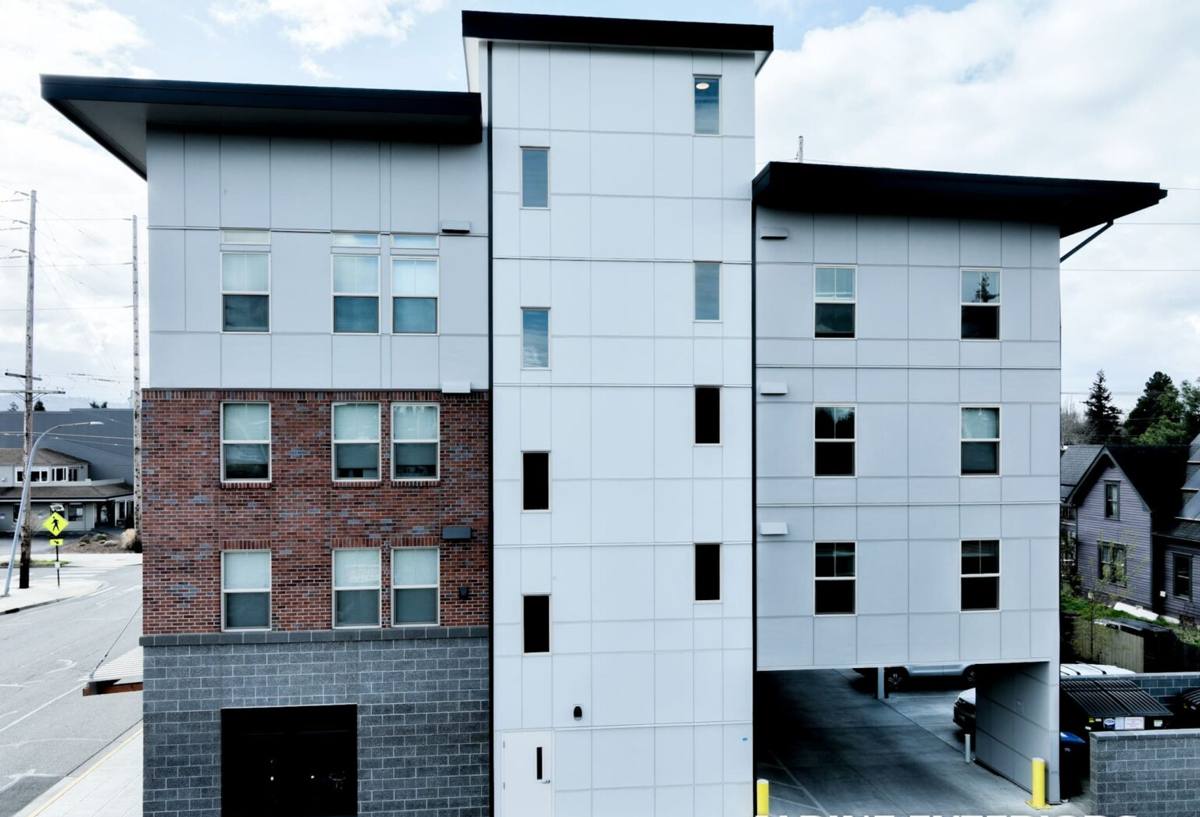
Warning Signs It's Time for Siding Repair
Most siding failures don't happen overnight. They show up as small, easy-to-dismiss signs first. If you're seeing any of the following on a Barkley home, it's worth getting a closer look before winter's rain turns a minor repair into a bigger one:
- Soft or spongy spots when you press on the siding, especially near the bottom courses or below windows
- Visible cracking, buckling, or warping in individual panels or boards
- Paint that's peeling, bubbling, or failing in one specific area rather than evenly across the whole wall
- Persistent moss or dark streaking that keeps coming back within weeks of cleaning
- Gaps opening up at seams, corners, or where siding meets trim, windows, or doors
- Rust staining below nail heads or fasteners
- A musty smell or visible staining on interior walls that share an exterior wall with damaged siding
- Siding that feels noticeably lighter or looks swollen — a sign moisture has already gotten in
Any one of these on its own might be minor. Several together, or any sign paired with interior staining, usually means water has been getting behind the siding for a while.
What Correct Siding Repair Actually Involves
Finding the Real Cause
A repair that only replaces the damaged board without asking why it failed is a repair that's likely to fail again in the same spot. Before we touch anything, we look at what's feeding the problem — a flashing detail that was never sealed right, a grade issue sending splashback up the wall, a gutter that overflows onto the siding below, or trim that's been trapping moisture against the wall for years. In a climate like Bellingham's, water intrusion is rarely a one-time event; it's usually a slow, repeating pattern.
Matching Materials and Finish
Once we know what's damaged, the next question is what to repair it with. Mismatched replacement material is one of the most common complaints we hear about past repair work — a patch that doesn't match the surrounding siding's profile, thickness, or finish sticks out and can even create a new water path if it doesn't sit flush. Getting this right sometimes means sourcing a matching product, and sometimes it means being honest with a homeowner that a true match isn't available anymore and a broader repair or partial replacement makes more sense.
Restoring the Water Management System
Siding is one part of a larger water management system that includes house wrap, flashing, and proper overlaps. A repair that replaces a board but skips reinstating the flashing and drainage plane behind it hasn't actually fixed the underlying vulnerability — it's just put fresh material over the same weak point. Correct repair work rebuilds that layered system, not just the visible surface.
Repair Approach by Siding Type
Barkley has a mix of home ages and siding materials, and the right repair approach depends heavily on what's already on the wall. Here's how we typically approach the materials we see most often:
| Siding Type | Common Failure Mode | Repair Difficulty | Matching New to Old |
|---|---|---|---|
| Vinyl | Cracking in cold snaps, warping near heat sources, fading mismatch | Low to moderate | Color fades over time, making exact matches hard on older runs |
| Cedar or wood | Rot, moisture absorption, moss retention in shaded areas | Moderate to high | Grain and weathering rarely match perfectly once boards have aged |
| Engineered wood (LP-type) | Edge swelling, delamination where moisture reaches the substrate | Moderate to high | Repair often requires full-panel replacement rather than patching |
| Fiber cement (James Hardie) | Caulk joint failure, impact damage, occasional installation-error moisture entry | Low to moderate when installed correctly | ColorPlus finish batches can vary slightly; factory-finished replacement boards match best |
We'll repair whatever material is already on your home when repair is the right call. Where we draw a firm line is on new installation: we only install James Hardie fiber cement, for reasons we get into further down.
Our Siding Repair Process in Barkley
Inspection and Diagnosis
We start by walking the exterior, checking the areas you've flagged plus the spots that tend to fail first in this climate — lower courses, anything below a roof valley or gutter, and corners exposed to prevailing wind and rain. If there's any sign moisture has gotten behind the siding, we'll check further than just the visible board.
The Repair
We remove damaged material back to sound substrate, address whatever let water in — flashing, sealant, grading, or fastener issues — and rebuild the water management layers before installing matched replacement siding. We don't caulk over a problem and call it done; caulk is a maintenance item, not a repair strategy on its own.
Cleanup and Follow-Up
We clean up debris and leave the work area tidy, and we'll tell you plainly if we saw anything else during the repair worth keeping an eye on — a small area of concern elsewhere on the home, or a maintenance step that would help the repair last, like keeping gutters clear or trimming back vegetation that's holding moisture against a wall.
Cost Factors for Siding Repair
Every repair is different, but the price generally comes down to a handful of factors. This isn't a quote — it's meant to help you understand what drives cost up or down before we ever get on-site:
| Factor | Why It Matters |
|---|---|
| Extent of hidden water damage | Repairs that stop at rotted sheathing or framing cost more than a surface-level board swap |
| Siding material | Some materials are harder to source in matching profiles or finishes than others |
| Accessibility | Second-story sections, tight side yards, or areas requiring staging take more time |
| Number of affected areas | Scattered small repairs across a home can add up to more labor than one larger contiguous section |
| Underlying cause | A repair tied to a flashing or drainage fix costs more up front but prevents repeat failures |
When Repair Isn't Enough — and What We Recommend Instead
Sometimes what looks like a spot repair turns out to be a symptom of siding that's failing broadly — widespread moisture absorption, multiple areas of rot, or a product that's simply reached the end of its practical service life. When that's the case, we'll tell you honestly rather than stack repairs on a wall that needs more.
When replacement is the right call, we install James Hardie fiber cement exclusively. We don't install vinyl, LP SmartSide, Cemplank, Allura, or unfinished wood siding, and that's a deliberate standard, not an oversight. Vinyl can crack in a hard freeze and fade unevenly over years in coastal UV and salt exposure. Engineered wood products depend heavily on flawless installation and ongoing maintenance to keep moisture out at cut edges and seams — the exact conditions that are hardest to guarantee long-term in a wet, salt-air climate like this one. Primed wood and cedar are attractive but need repeated refinishing to hold up against the moss and moisture cycle Whatcom County sees for most of the year.
James Hardie fiber cement is non-combustible, holds its factory-applied ColorPlus finish far longer than field-painted materials, and its HZ5 product line is engineered specifically for the wet, freeze-prone Pacific Northwest climate. It also carries a strong transferable warranty when installed to manufacturer spec — something that matters if you ever sell the home. We're not saying other products don't have their place; we're saying that after years of doing repair work on this coastline, Hardie is the one we're willing to stand behind for new installations.
Why Hire a Crew That Already Works Barkley
Siding repair done wrong is worse than no repair at all — a bad patch can trap moisture instead of shedding it, turning a $400 fix into a $4,000 one within a couple of seasons. A crew that already does repair work in Barkley and the surrounding Bellingham area knows which details fail first in this specific climate: which corners take the worst wind-driven rain, which siding runs sit in enough shade to grow moss year-round, and which older repair techniques from drier climates simply don't hold up here.
That local pattern recognition is the difference between a repair that lasts and one you'll be calling about again next winter.
If you're seeing warning signs on your Barkley home, or just want a second opinion on a repair another contractor proposed, we're happy to take a look. Request a free, no-pressure estimate below and we'll give you a straight answer on what your siding actually needs.