 Bellingham Roofing
 Siding Repair Built for York's Climate
York sits close enough to Bellingham Bay and the Salish Sea that homes here take a different kind of beating than siding further inland. Salt-laden air works on fasteners, trim, and paint film. Driving rain off the water finds every gap in flashing and caulk. And the long, damp moss season that Whatcom County is known for keeps siding wet for weeks at a time rather than drying out between storms. None of this means your siding is doomed — it means repairs have to be done with that environment in mind, not treated as a generic patch job.
A lot of siding repair goes wrong not because the crew did bad work, but because they fixed the symptom and left the cause. In York, the cause is almost always moisture that had somewhere to go and nowhere to escape. Good repair work starts with figuring out why the damage happened before anyone touches a caulk gun.
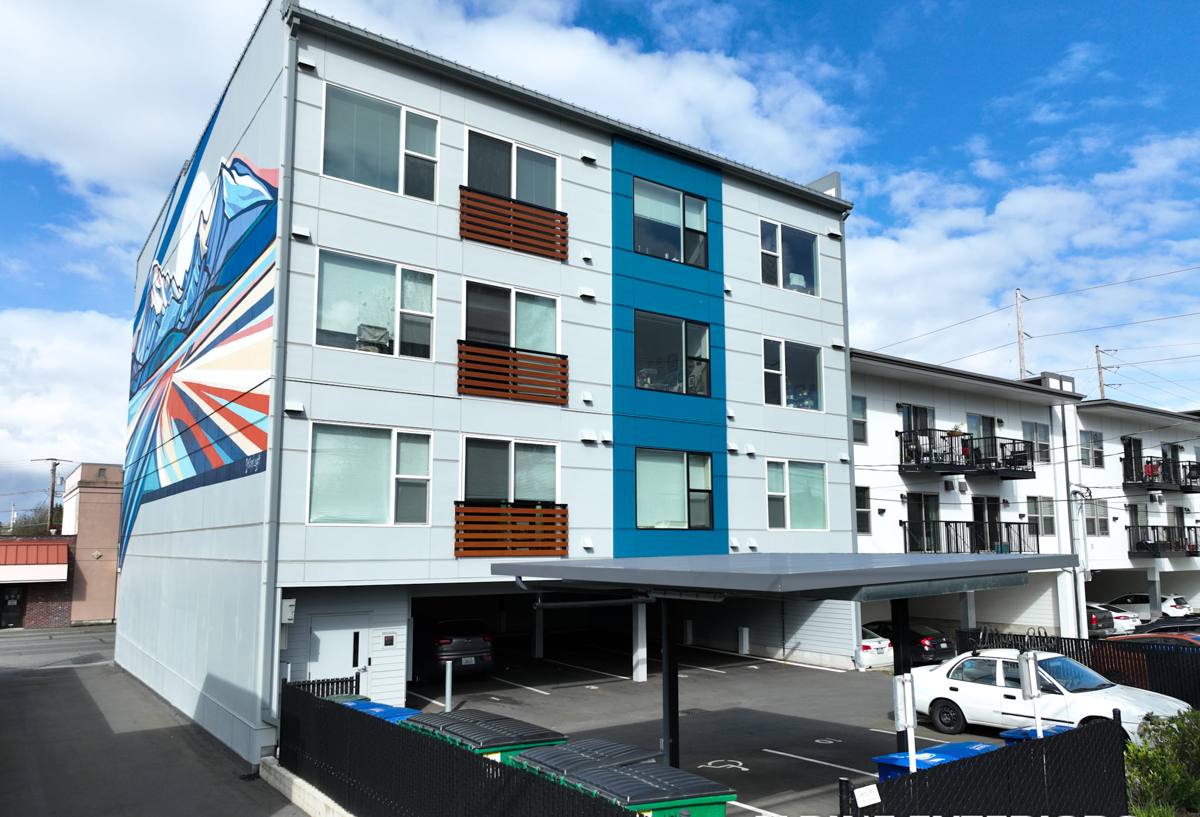
What Salt Air, Rain, and Moss Actually Do to Siding
Salt Air and Metal Components
Coastal air carries fine salt that settles on exposed metal — nail heads, flashing, trim screws, and any exposed fastener. Over years, this accelerates corrosion in ways that inland Whatcom County homes don't experience. Rust streaks bleeding down from a nail head or a flashing seam are a common early sign, and they usually show up years before the siding panel itself fails.
Driving Rain and Wind-Driven Moisture
Bellingham's storms often come with real wind behind them, which pushes rain sideways instead of letting it run straight down. That means water gets forced into joints, laps, and butt seams that would stay dry in a calmer climate. Repairs that don't account for wind-driven rain — using standard caulk instead of proper flashing, for example — tend to fail again within a season or two.
Moss and Prolonged Dampness
York's tree cover and marine humidity keep north-facing and shaded siding wet far longer after a rain than sun-exposed walls. Moss and algae don't just look bad — they hold moisture directly against the siding surface, which is exactly the condition that rots wood trim, blisters paint, and, on the wrong siding material, causes swelling and delamination.
Signs Your Siding in York Needs Repair Now
Some damage is obvious. Some hides until it's expensive. Here's what we tell York homeowners to watch for between inspections:
- Soft or spongy spots when you press on siding or trim boards
- Dark staining or streaking below seams, nail heads, or window trim
- Visible gaps opening up at butt joints or corner boards
- Paint that's bubbling, peeling, or chalking unevenly in patches
- Moss or black algae buildup that keeps returning after cleaning
- Siding panels that feel loose, or that flex more than neighboring sections
- Warm or cool spots on interior walls near exterior siding damage
- Any siding damage clustered near downspouts, roof valleys, or ground-level splash zones
Any one of these on its own might be minor. Several together, especially clustered in one area, usually point to a moisture path that's been active for a while.
What a Correct Siding Repair Actually Involves
Find the Water Path First
Before any siding comes off, we trace where water is actually getting in — it's rarely the spot where the damage shows up. A stain three feet below a window can trace back to a single failed flashing detail above it. Skipping this step is the single biggest reason siding repairs don't last.
Check What's Behind the Siding
Once a section is opened up, the house wrap, sheathing, and framing behind it need a real look. In a marine climate like Bellingham's, water that's been sitting behind siding for a season can already be softening sheathing even if the siding face still looks fine. Repairing over compromised sheathing just hides the problem for another year.
Match the Material Correctly
Patching in a mismatched panel, a different profile, or a repair product that doesn't share the same expansion behavior as the surrounding siding creates a new weak point. Correct repair means matching profile, exposure, and — where the siding is fiber cement — using the same manufacturer's repair components so the whole wall assembly behaves as one system.
Rebuild the Flashing and Drainage Path, Not Just the Surface
The visible siding is the last layer, not the only one. A repair that doesn't restore proper flashing, kick-out details, and a working drainage plane behind the siding is a cosmetic fix, not a real one — and in York's rain, cosmetic fixes don't hold.
Repair or Replace? How We Help York Homeowners Decide
Not every damaged section needs full replacement, and not every repair is worth doing instead of replacing. Here's how we walk homeowners through that decision:
| Factor | Leans Toward Repair | Leans Toward Replacement |
|---|---|---|
| Extent of damage | Isolated to one or two sections/elevations | Spread across multiple walls or the whole house |
| Sheathing condition | Dry and solid behind the damage | Soft, rotted, or water-stained over a wide area |
| Siding material | Still available, in good condition elsewhere | Discontinued, faded, or a product we no longer trust in this climate |
| Age of siding | Well within its expected service life | Near or past the age where failures compound |
| Root cause | A single fixable flashing or fastener issue | A systemic moisture or design problem repeating house-wide |
When the honest answer is "repair," we repair. When a house has chronic, spreading damage — which we do see on older siding in exposed York locations — full replacement with a product built for this climate is usually the better long-term investment, and we'll say so plainly either way.
Why We Repair (and Replace) With James Hardie Fiber Cement
When a repair calls for new material, or when a homeowner is past the point where patching makes sense, we install James Hardie fiber cement exclusively — not vinyl, not LP SmartSide, not cedar or primed wood. That's a deliberate standard, not a default. Fiber cement doesn't absorb water the way wood-based products can, it doesn't expand and contract the way vinyl does in temperature swings, and Hardie's HZ5 product line is engineered specifically for climates like ours — freeze-thaw cycles, sustained moisture, and coastal exposure. The factory-applied ColorPlus finish also resists the fading and chalking that salt air and UV accelerate on field-painted siding.
That standard matters most in repair work, because a repair is only as good as its weakest material. Patching a moisture-prone product back into a wall in York just resets the clock on the same failure. We'd rather tell a homeowner honestly that a section needs Hardie fiber cement instead of a like-for-like patch than hand back a repair we don't expect to last.
Our Siding Repair Process in York
- On-site inspection — we look at the damaged area and the surrounding siding, trim, flashing, and drainage details, inside and out where accessible.
- Diagnosis — we identify the actual moisture source, not just the visible damage, before recommending any work.
- Written scope and estimate — a clear explanation of what's failing, why, and what repairing it correctly requires — including sheathing repair if needed.
- Repair or replacement — matched materials, corrected flashing, and proper fastening for our wind and rain exposure.
- Cleanup and walkthrough — we show you what was done and why, so you understand the fix, not just the invoice.
Why Hiring a Crew That Already Works in York Matters
York isn't a large area, but its exposure varies block to block — proximity to the water, tree cover, prevailing wind direction, and how a home sits relative to the bay all change how siding ages. A crew that regularly works this specific part of Bellingham has already seen which details fail first in this exposure and which repair approaches actually hold up through a full wet season. That local pattern recognition is worth more than a generic repair estimate, and it usually means fewer surprises once we open up the wall.
We're also familiar with Bellingham and Whatcom County permitting and code requirements where they apply to exterior repair work, so there's no guesswork or delay when a project needs it.
After the Repair: Keeping York Siding in Good Shape
- Rinse moss and algae off shaded or north-facing walls at least once a year before it takes hold
- Keep gutters clear so overflow doesn't run down the siding face
- Trim back vegetation and tree cover that keeps siding damp longer than it should be
- Recheck caulking and flashing at windows and trim every couple of years — sealants age faster in salt air
- Have new staining or soft spots looked at early, before a small repair becomes a bigger one
If you're seeing early signs of trouble, or you already know a section of your York home's siding needs attention, we're glad to take a look and give you a straight answer about what it actually needs. Request a free, no-pressure estimate using the form below.