 Bellingham Roofing
 South Hill's Exposure Is Different From a Typical Bellingham Lot
South Hill sits up on the hillside south of downtown, with a lot of older homes built when siding meant painted wood and not much else. That elevation is a mixed blessing. It gets the views, but it also gets more direct exposure to wind and rain coming off Bellingham Bay than homes tucked into lower, more sheltered parts of the city. Add in Whatcom County's long wet season — moss and mildew have months to work on a north-facing wall before summer ever dries things out — and you've got siding that ages faster here than the manufacturer's glossy brochure ever accounts for.
We see the pattern over and over: homes on the hill with siding that looks fine from the sidewalk but is soft, delaminating, or holding moisture against the sheathing when you actually get up on a ladder. Salt-laden air off the water accelerates corrosion on fasteners and trim too, which is a detail a lot of siding jobs — even recent ones — get wrong.
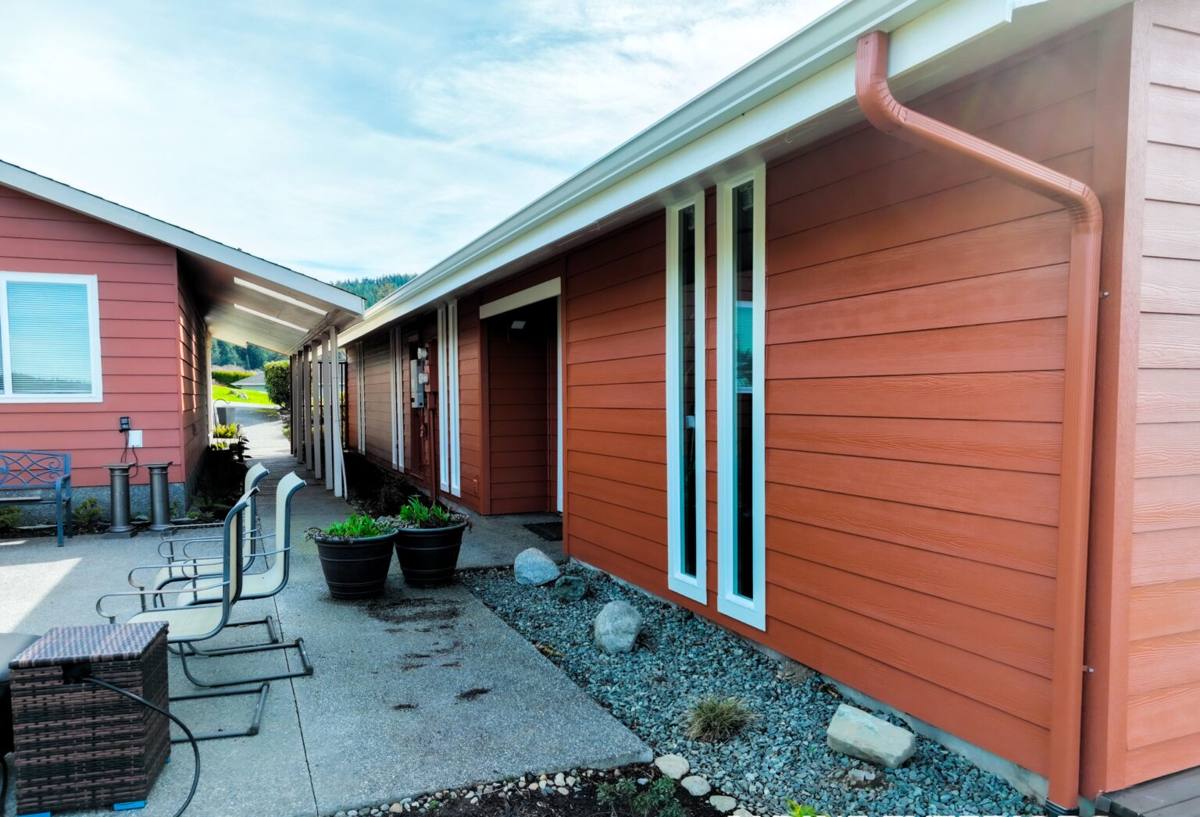
What Siding Failure Actually Looks Like on a South Hill Home
Most homeowners don't call us because their siding "looks old." They call because something specific caught their attention. Here's what that usually is:
- Paint that won't hold anymore — you repaint every 3-4 years instead of every 8-10, a sign the substrate underneath is failing, not just the paint film
- Soft or spongy spots when you press on wood or hardboard siding, especially near the bottom courses and around window trim
- Persistent green or black staining on north- and west-facing walls that pressure washing only knocks back temporarily
- Visible gaps, warping, or buckling boards, particularly on walls that catch the prevailing wind and rain off the bay
- Higher heating bills than a similar-sized home nearby, which often points to a compromised weather barrier letting moisture and air through the wall assembly
Any one of these can be a repair. Several together, especially on a home more than 20-25 years old, usually means it's time to talk about full replacement rather than another round of caulk and paint.
Why We Standardized on James Hardie Fiber Cement
We install James Hardie fiber cement siding exclusively — not vinyl, not LP SmartSide, not Cemplank or Allura, not primed spruce or cedar. That's a deliberate call, not a lack of options. Vinyl and engineered wood products each have a place in the market, but they carry trade-offs — moisture sensitivity at cut edges, shorter practical service life in a wet marine climate, or warranty structures that don't hold up as well when a wall takes real weather year after year — that we're not willing to put our name behind on a South Hill exterior.
Hardie's fiber cement is non-combustible, doesn't rot, and the ColorPlus factory finish is baked on under controlled conditions rather than field-painted, which matters a lot in a climate where field-applied paint has a short clock before it needs attention again. Hardie also engineers specific product lines for different climate zones — including the wetter HZ5 zone that covers Western Washington — so the material is actually formulated for the moisture load a hillside Bellingham wall deals with, not a generic national spec.
What Correct Fiber Cement Installation Requires
Fiber cement is only as good as the install behind it. The material itself is durable, but a sloppy install defeats the point of upgrading in the first place. On every South Hill job we're paying close attention to:
- Full tear-off and inspection of the sheathing underneath — you can't judge what condition the wall is in until the old siding is off
- A continuous weather-resistant barrier with all seams properly lapped and taped, not just stapled house wrap
- Correct flashing at every window, door, and roof-to-wall intersection — this is where the vast majority of hidden leaks start
- Manufacturer-specified fastener spacing and gapping, including expansion clearance at butt joints and trim
- Proper clearance from grade, decks, and roof lines so the bottom edge of the siding never sits in standing water or snow
- Stainless or hot-dipped galvanized fasteners and trim hardware, given the corrosive effect of salt air this close to the water
Skip any one of these and you can have premium siding material failing in the same spots the old siding did — just more expensively.
How Hardie Fiber Cement Compares to the Alternatives
| Factor | James Hardie Fiber Cement | Vinyl Siding | Wood / Engineered Wood |
|---|---|---|---|
| Moisture resistance | Engineered for wet climates (HZ5) | Doesn't rot, but seams and J-channels trap moisture | Vulnerable at cut edges and joints if maintenance lapses |
| Finish durability | Factory-baked ColorPlus, long repaint interval | Color molded in, but fades and chalks over time | Field-painted, typically needs repainting every few years |
| Fire resistance | Non-combustible | Melts/deforms under heat | Combustible |
| Wind and impact durability | Rigid, holds up well in coastal wind | Can crack or blow off in high wind | Dents and splits over time |
| Typical service life when properly installed | 30+ years | 20-30 years, seams degrade sooner | 15-25 years with regular maintenance |
Our Process for South Hill Jobs
The hillside setting adds a few practical wrinkles compared to a flat-lot job — steeper grades affecting scaffolding and staging, and in some cases tighter access depending on lot layout and driveway configuration. We plan for that up front rather than discovering it mid-job.
- On-site assessment — we walk the whole exterior, check trouble spots you've flagged, and look behind a sample section of existing siding when access allows, so the quote reflects what's actually there, not a guess
- Written estimate — clear scope, product line and color selection, and a realistic timeline, with no pressure to sign on the spot
- Site prep — landscaping and hardscape protection, staging set up for the specific grade and access of your lot
- Tear-off and sheathing inspection — any rot or damage found underneath is documented and addressed before new material goes up, not papered over
- Weather barrier and flashing — installed and inspected before a single piece of siding goes on
- Hardie installation — fastened and gapped to spec, trim and corners detailed to shed water, not just look finished
- Final walkthrough — we go over the finished work with you before calling the job done
Questions Worth Asking Any Siding Contractor
- Will you inspect and repair sheathing damage before installing new siding, or just cover it up?
- What weather barrier and flashing details do you use at windows and rooflines?
- Are you a certified installer for the specific siding product you're proposing?
- What's covered under the material warranty versus the labor warranty, and for how long?
- Have you worked on hillside or view-lot homes in this area before, and do you understand the access and staging involved?
- Do you use fasteners and trim hardware rated for coastal, salt-air exposure?
Timeline and What Drives Cost on a South Hill Home
Every home is different, but a few things consistently move the price and schedule on hillside Bellingham jobs: the total square footage of wall area, how much of the sheathing needs repair once the old siding is off, the complexity of the roofline and trim detailing, and site access for staging and material staging on a sloped lot. Homes with straightforward walls and good access move faster; homes with a lot of dormers, multiple stories, or tight side-yard access take longer and cost more in labor, independent of the siding material itself. We walk through all of this in the estimate so there are no surprises once tear-off starts.
Why Hiring Local Experience Matters Here
A crew that's worked South Hill knows the wind patterns off the bay, knows what "normal" moss growth looks like versus a sign of a deeper moisture problem, and has already solved the staging and access questions that a hillside lot throws at you. That's not something you get from a contractor who mostly works flat subdivisions on the other side of town. It shows up in small decisions — where to start tear-off given the day's weather, how to sequence work around a steep driveway, which walls need extra flashing attention because of prevailing wind direction — that add up to a siding job that actually holds up through a Whatcom County winter.
If your South Hill home's siding is showing its age, we're happy to take a look and give you a straightforward, no-pressure estimate — just fill out the form below.