 Bellingham Roofing
 Storm Damage Repair Built for Silver Beach Roofs
Silver Beach sits in a part of Bellingham where roofs take a different kind of beating than they do a few miles inland. Mature tree cover keeps roofs shaded and damp longer after a storm, wind off the water can drive rain sideways into flashing and vents, and the freeze-thaw swings we get through a typical Whatcom County winter open up small problems fast. When a windstorm or heavy rain event knocks something loose on a Silver Beach roof, the damage is rarely just cosmetic — it's usually a sign that water has a new path into the house.
This page covers what storm damage actually looks like on homes in this neighborhood, what a repair needs to include to hold up here, and how we handle the job from first inspection to final walkthrough.
What Silver Beach's Climate Does to a Roof Over Time
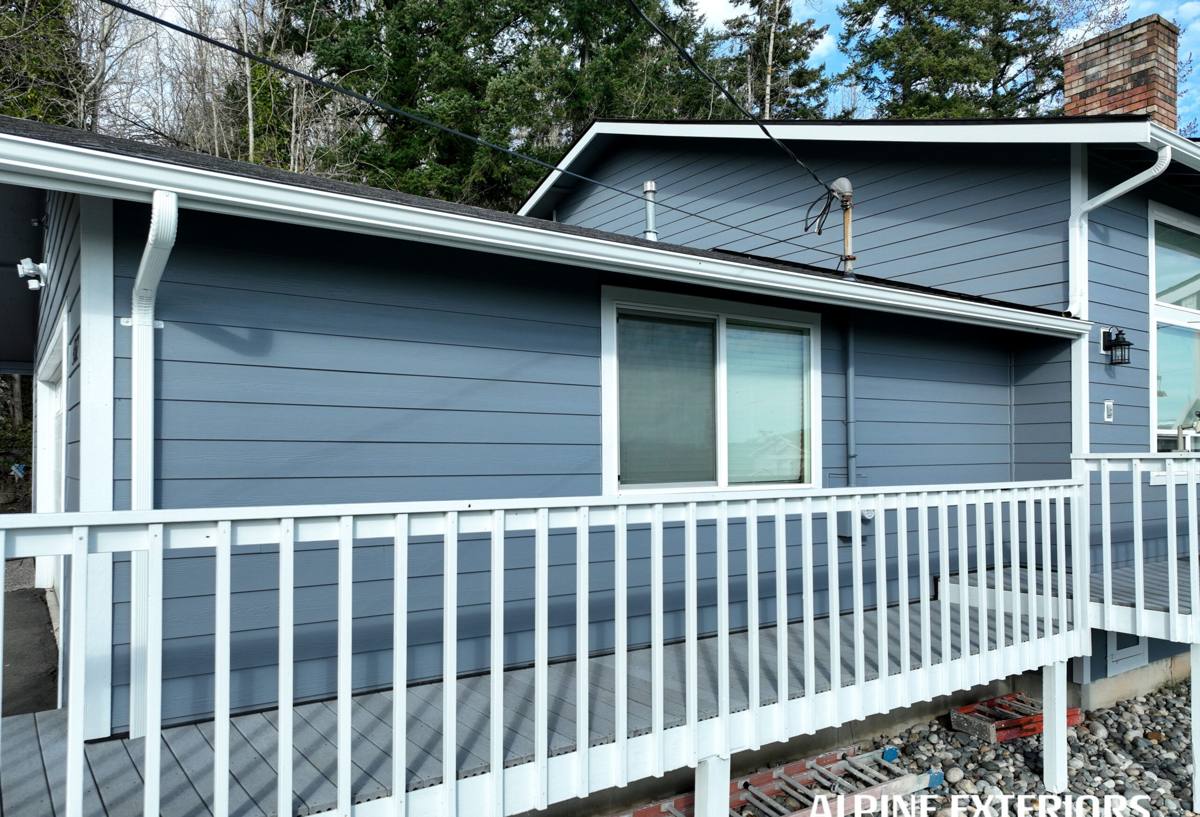
Bellingham sits on the water, and that marine climate shapes how roofs age here. Salt-tinged air off the bay accelerates corrosion on exposed metal — flashing, fasteners, and vent caps in particular — while the region's long wet season keeps roofing materials damp for months at a time. Silver Beach adds its own layer on top of that.
Shade and Moss
Many lots in this area have heavy tree cover, which is great for privacy and terrible for a roof's drainage. Shaded sections dry out slower after every rain, and that extra moisture is exactly what moss needs to get established. Moss doesn't just sit on top of shingles — it works its way under tabs and holds water against the roof deck, which is how a slow moss problem turns into a storm-triggered leak.
Wind Off the Water
Storms moving through the county often bring gusty, shifting wind rather than a steady direction, which is hard on shingle tabs, ridge caps, and anything with an exposed edge. Wind doesn't need to be extreme to do damage — it just needs to catch a tab that's already lost some of its seal from age or moss growth.
Driving Rain
Heavy rain that comes in at an angle finds every weak point in a roof system: nail pops, cracked pipe boots, lifted shingle edges, and flashing that's started to separate. That's why storm damage here so often shows up as a leak somewhere unexpected inside the house rather than as visibly missing shingles on the roof itself.
Signs Your Silver Beach Roof May Have Storm Damage
Storm damage isn't always obvious from the ground, and homeowners often notice the downstream effects before they notice the roof itself. After any significant wind or rain event, it's worth checking for:
- Shingles that look curled, lifted, or missing entirely, especially near ridges and edges
- Granules collecting in gutters or at downspout outlets — a sign of shingle wear or impact
- New water stains on ceilings or upper walls, even faint ones
- Soft or discolored spots on fascia boards or soffits
- Flashing around chimneys, skylights, or vent pipes that looks bent, lifted, or gapped
- Debris — branches, needles, moss clumps — piled against a valley or behind a vent
- Daylight visible through the roof deck from inside an attic space
If you notice any of these, especially after a storm, it's worth getting a roof looked at before the next rain rather than waiting for a leak to show up.
What a Correct Storm Damage Repair Actually Involves
A lot of storm repair work in this region gets done as a quick patch — new shingles nailed over the damaged spot and nothing else checked. That approach misses the point. Wind and rain rarely damage just one layer of the roof system, and a patch that doesn't address the underlayment or flashing underneath it can leave a leak path in place even after the visible damage is fixed.
Start With a Full Inspection, Not Just the Obvious Spot
We look at the whole roof, not just the area where damage was reported. Wind damage in particular tends to show up in more than one place, and a storm strong enough to lift shingles in one section has usually stressed fasteners and flashing elsewhere too.
Check What's Under the Shingles
Underlayment is the roof's backup layer, and it's what actually stops water once shingles have been compromised. If underlayment has been exposed to moisture for any length of time, replacing shingles without addressing it just reseals the problem underneath the new surface.
Flashing Gets the Same Attention as Shingles
Chimney flashing, valley flashing, and pipe boots are common failure points in wind and rain events, and they're also some of the easiest things to overlook in a rushed repair. We check these areas on every storm call, because a shingle repair next to failed flashing will still leak.
Match Materials Where It Matters
For a partial repair, we match shingle type, color, and where possible manufacturing batch as closely as the market allows, so the repaired section blends with the existing roof rather than standing out as an obvious patch. On older roofs where exact matches aren't available, we'll tell you honestly what to expect before starting the work.
Repair vs. Replacement: How We Decide
Not every storm-damaged roof needs to be replaced, and not every roof can be reasonably patched. The right call depends on the roof's age, the extent of the damage, and how the existing material has held up overall. We walk homeowners through this honestly rather than defaulting to the bigger job.
| Factor | Favors Repair | Favors Replacement |
|---|---|---|
| Roof age | Under 10-12 years, shingles still flexible | Nearing or past manufacturer's expected lifespan |
| Extent of damage | Isolated to one section or slope | Spread across multiple slopes or recurring in the same spots |
| Underlayment condition | Dry, intact where exposed | Saturated, deteriorated, or original underlayment nearing end of life |
| Moss/moisture history | Minor, recently treated | Long-term moss growth with deck moisture already suspected |
| Material availability | Close match available for existing shingles | Discontinued product, poor match likely |
When a roof is on the edge between the two, we'll show you what we found and explain the trade-offs rather than making the decision for you.
If You're Filing an Insurance Claim
Storm damage is one of the more common reasons homeowners in Whatcom County file a roofing insurance claim, and having clear documentation matters. We provide a written assessment of what we find — the type of damage, its likely cause, and its extent — that you can use when talking to your adjuster. We don't inflate scope to pad a claim, and we won't tell you that you need a full replacement if a targeted repair genuinely solves the problem. Our job is to give you an accurate picture so you and your insurer are working from the same facts.
Our Process for Silver Beach Storm Repairs
- Initial call and scheduling — Tell us what happened and what you're seeing; we'll get someone out promptly, especially if there's an active leak.
- Full roof inspection — We check the damaged area plus the rest of the roof, flashing, and visible attic space where accessible.
- Written findings — You get a clear explanation of what we found, photos, and a straightforward repair or replacement recommendation.
- Scope and estimate — We outline exactly what work is included, what materials will be used, and what it costs before anything starts.
- The repair itself — Shingles, underlayment, and flashing are addressed together, not in isolation.
- Final walkthrough — We confirm the repair with you and make sure any insurance documentation you need has been provided.
Why a Crew That Already Works This Neighborhood Matters
Silver Beach roofs have a fairly consistent set of problems — tree cover, moss, wind exposure off the water, and driving rain — and a crew that's already worked on homes in this part of Bellingham knows where to look first. That familiarity shows up in small ways: knowing which roof ages and shingle types tend to need extra flashing attention, recognizing moss damage patterns early, and understanding how quickly a small leak can turn into a bigger deck problem in a shaded, moisture-heavy setting like this one. It also means faster, more accurate estimates, because we're not guessing at how the local climate has treated a given roof — we've seen it before.
Get a Straightforward Assessment
If your Silver Beach roof has taken storm damage — or you're just not sure whether recent weather affected it — we're happy to come out, take a look, and give you an honest read on what it needs. There's no pressure and no charge for the estimate; you'll get a clear explanation of what we find and what your options are, in plain language. Use the form below to get started.