 Bellingham Roofing
 Board & Batten Siding on South Hill's Hillside Homes
South Hill is one of Bellingham's older, more distinctive neighborhoods — a hillside grid of established homes, mature trees, and a mix of architectural styles that range from early-1900s Craftsman and farmhouse forms to more recent infill. Board and batten siding shows up naturally in that mix. It's a vertical-plank style with narrow strips (battens) covering the seams between wider boards, and it reads as clean, tall, and a little more architectural than standard lap siding — which is exactly why it pairs well with the porches, gables, and steep rooflines common on South Hill's older housing stock.
But board and batten is also a style that punishes a sloppy install more than most. Every vertical seam is a place water can find its way behind the cladding if the batten spacing, fastening, or flashing isn't right. On a hillside neighborhood exposed to Bellingham's wind and rain patterns, that margin for error matters more than it would somewhere drier and flatter.
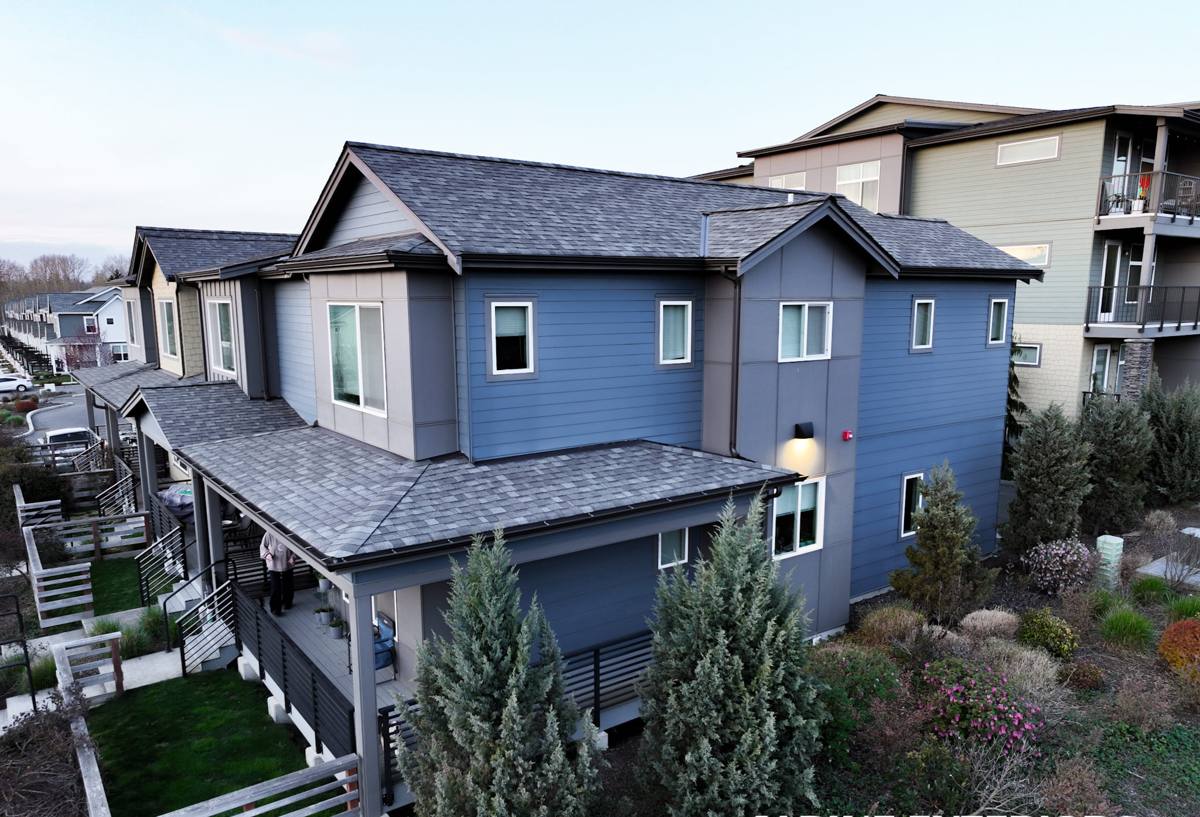
What Bellingham's Climate Does to Board & Batten Siding
Whatcom County sits right on Bellingham Bay, and that proximity shapes everything about how siding ages here. South Hill's elevation puts many homes in a good position to catch views of the water — and the same exposure that gives you the view also gives you weather.
Salt Air and Fasteners
Homes closer to the bay deal with a steady low-level dose of salt-laden air. Over years, that air accelerates corrosion in anything less than fully rated fasteners and trim, and it's a common reason painted wood and lower-grade composite siding start showing rust streaks and swelling at the nail heads well before the siding itself is worn out.
Driving Rain and Wind-Driven Moisture
Bellingham doesn't just get rain — much of it arrives sideways, pushed by wind off the bay. Vertical board and batten siding has more linear seam length per square foot than horizontal lap siding, which means more joints where wind-driven rain can be forced upward and behind the cladding if the water-resistive barrier, flashing, and batten gaps aren't detailed correctly.
Moss Season and Shaded Lots
South Hill's tree cover is part of its character, but shade plus a long wet season is a moss and algae engine. Anything organic (real wood, some composite substrates) gives moss a foothold to grow into, which traps moisture against the siding and shortens its life. Non-organic, factory-finished siding doesn't give moss the same thing to root into, and it stands up to the pressure-washing that keeps a home looking clean without stripping paint or roughing up the surface.
Why We Install Only James Hardie Board & Batten
We standardized on James Hardie fiber cement for every project we do, including board and batten, and we don't install LP SmartSide, vinyl, Cemplank, Allura, or bare cedar or spruce boards. That's not a marketing position — it's a call we made after years of seeing how different materials actually hold up in this climate.
Hardie's board and batten system pairs vertical fiber cement panels with matching fiber cement battens, engineered as one system rather than boards nailed up ad hoc. For our region, we use Hardie's HZ5 product line, which is formulated specifically for climates with heavy moisture exposure like ours — as opposed to the HZ10 line built for hot, dry regions. That distinction matters: fiber cement engineered for the wrong climate zone can perform worse here than a product properly matched to the Pacific Northwest.
Hardie panels also come with a factory-applied ColorPlus finish — baked on under controlled conditions rather than painted on site. That finish resists fading and chipping far longer than field-applied paint, and it means the color match at seams, corners, and touch-ups stays consistent for years without you needing to repaint the whole elevation.
What a Correct Board & Batten Installation Actually Involves
Board and batten looks simple from the curb — vertical boards, thin strips over the seams — but the parts you can't see are what determine whether it lasts 10 years or 40. A correct installation includes:
- A continuous water-resistive barrier installed and lapped correctly behind the siding, with no gaps at penetrations
- Proper flashing at every window, door, and roofline transition, integrated with the WRB rather than just caulked over it
- Correct fastener type, length, and placement per Hardie's published fastening schedule — not generic siding nails
- Batten spacing and reveal that follows Hardie's specifications, not just what looks even from the ground
- Proper clearance at the bottom of the siding from grade, decks, and roof lines to keep splash-back and standing water away from the cut edges
- Sealed and primed cut edges wherever a panel is trimmed on site, since exposed fiber cement edges are the most vulnerable point on the whole installation
- Ventilation behind the cladding where the assembly calls for it, so incidental moisture can dry out instead of getting trapped
Skip any one of these and the siding can still look fine for a year or two — the problems that show up from cut corners on a board and batten job are usually the kind that surface behind the wall, not on it.
How Board & Batten Materials Compare
Homeowners researching board and batten siding for a South Hill project usually compare a handful of materials. Here's how they stack up for this specific climate and style:
| Material | Moisture Performance Here | Maintenance | Typical Longevity |
|---|---|---|---|
| James Hardie fiber cement | Engineered for wet, marine climates (HZ5); non-combustible and dimensionally stable | Occasional wash; factory finish holds color for years | Long service life with a strong transferable warranty when installed to spec |
| Cedar or primed spruce boards | Absorbs moisture, prone to cupping and rot at seams, feeds moss growth | Regular repainting/staining and moss treatment | Shorter, highly dependent on upkeep |
| Vinyl board & batten | Doesn't rot, but seams and panels can warp or crack under UV and temperature swings; not a true rigid substrate | Low, but color fades and can't be repainted easily | Moderate, but appearance degrades over time |
| LP SmartSide (engineered wood) | Wood-based substrate is more moisture-sensitive than fiber cement at cut edges and seams | Requires diligent edge sealing and inspection | Moderate, warranty performance tied closely to installation quality |
Every material on this list has a legitimate use case somewhere. For South Hill's combination of salt air, wind-driven rain, and heavy shade, we consistently see fiber cement outperform the alternatives over the long run, which is why it's the only thing we put on a wall.
Our Process for a South Hill Board & Batten Project
We keep the process straightforward and give you visibility at each step:
- On-site assessment — we look at your home's current siding, trim, window flashing, and any moisture or moss issues before quoting anything, since a South Hill hillside lot with mature shade trees needs a different plan than a more open, sun-exposed property.
- Tear-off and inspection — removing the old siding lets us check the sheathing underneath for hidden rot or past water intrusion before it gets covered up again.
- Water-resistive barrier and flashing — installed fresh, with careful attention at every window, door, and roof-to-wall transition.
- Panel and batten installation — following Hardie's fastening schedule and batten spacing specifications, not shortcuts.
- Finish detail work — trim, caulking at the joints that require it, and a final check of every cut edge.
- Walkthrough — we go over the finished work with you before calling the job done.
Why a Crew That Already Works South Hill Matters
South Hill's older housing stock, hillside grades, and mature tree canopy add real logistics to a siding project — narrow access, established landscaping to protect, and older framing that sometimes needs extra attention once the old siding comes off. A crew that already works this neighborhood knows what to expect before the tear-off starts, from typical sheathing conditions in homes of this era to how the City of Bellingham's permitting and inspection process works for exterior work.
That familiarity also shows up in smaller ways — knowing which South Hill blocks get more wind exposure off the bay, which lots hold shade and moisture longest into the season, and adjusting the plan accordingly instead of treating every job the same way.
Keeping Board & Batten Siding Performing Long-Term
Once James Hardie board and batten siding is installed correctly, upkeep is genuinely light. An occasional gentle wash to keep pollen, road film, and moss spores from building up is usually all it needs. Because the ColorPlus finish is baked on at the factory rather than field-applied, you're not on a repainting cycle the way you would be with wood. The main thing worth checking periodically is caulking at trim joints and any areas where landscaping or gutters direct water toward the wall — catching a failed caulk line early is a five-minute fix, while ignoring it for a few wet seasons is not.
Get a Free Estimate for Your South Hill Home
If you're weighing board and batten siding for a home on South Hill, we're glad to come take a look, walk you through what we're seeing on your specific property, and put together a straightforward, no-pressure estimate. Use the form below to get started.