 Bellingham Roofing
 South Hill's Siding Problem Isn't Cosmetic — It's Moisture
South Hill sits close enough to Bellingham Bay to catch salt-laden air off the water, high enough to take the full force of driving winter storms, and shaded enough by mature trees on many lots to stay damp for weeks at a stretch. That combination is hard on exterior walls in a way that's easy to underestimate until you're looking at soft trim, streaked paint, or siding that's swollen at the bottom edge.
Whatcom County's climate doesn't give siding much of a break. Rain here isn't just frequent — it's often wind-driven, which pushes water sideways into laps, seams, and butt joints rather than letting it simply run down the face of the wall. Add a long moss season that stretches from fall through spring, and any siding material that can't shed water fast or resist sustained moisture contact is going to show it within a few years, not a few decades.
We install fiber cement siding on homes throughout Bellingham, and South Hill is one of the neighborhoods where getting the details right matters most. Older housing stock, mature landscaping, and hillside lots with limited overhang all raise the stakes on doing the job correctly the first time.
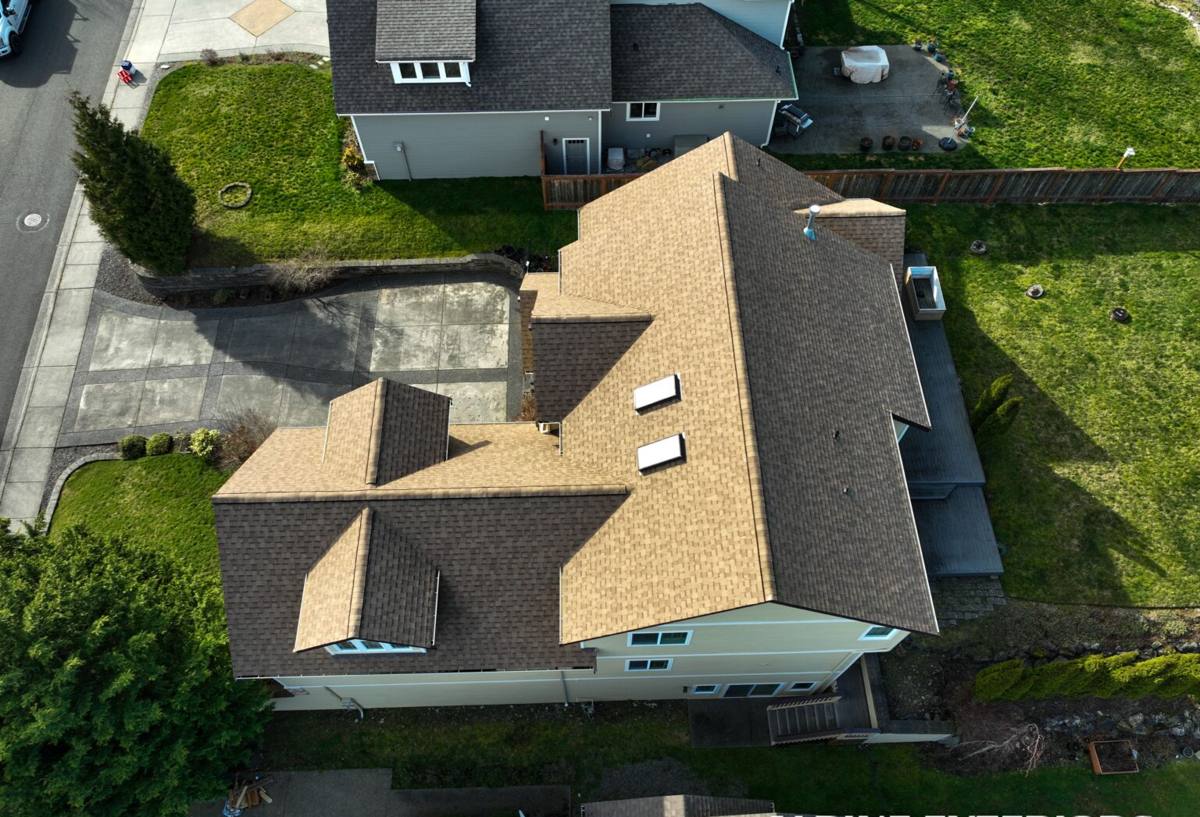
Why South Hill's Housing Stock Adds to the Challenge
A lot of homes on South Hill were built well before modern water-resistive barriers, rainscreen gaps, and factory-cured finishes were standard practice. That means several things show up more often here than in newer subdivisions:
- Original siding and trim that's decades past its intended service life, often painted over multiple times to hide moisture staining
- Mature trees and shrubs planted close to the house, keeping walls shaded and slow to dry after rain
- Sloped lots where grading sends runoff toward the foundation and lower wall sections instead of away from it
- Older window and door flashing details that don't meet current best practices for keeping water out of the wall assembly
None of this means a South Hill home is a bad candidate for new siding — it means the prep work and flashing details matter more than the siding brand itself. Even the best material installed over a compromised wall assembly will fail early.
What a Correct Fiber Cement Installation Actually Involves
Fiber cement siding is only as good as the assembly behind it. On a South Hill re-side, our process typically includes:
Tear-Off and Wall Inspection
We remove the old siding down to the sheathing and inspect for rot, soft spots, and existing moisture damage before anything new goes on. This is the step that gets skipped when a job is priced too low, and it's the one that determines whether the new siding lasts.
Water-Resistive Barrier and Flashing
A new weather-resistive barrier goes over the sheathing, with flashing integrated at every window, door, and penetration so water is directed out and down rather than trapped behind the cladding. In a climate that gets as much wind-driven rain as Whatcom County does, this layer matters as much as the siding itself.
Fastening and Clearances
James Hardie specifies exact fastener types, spacing, and minimum clearances from grade, roof lines, and decks. We follow those specs — including keeping the bottom edge of the siding the required distance above finished grade and roofing, which is especially relevant on the sloped and terraced lots common on South Hill.
Joints, Caulking, and Trim
Butt joints, corners, and trim intersections are the most common failure points on any siding job. We flash and seal these per manufacturer instructions rather than relying on caulk alone to do the work.
Why We Install James Hardie and Nothing Else
We standardized on James Hardie fiber cement siding and don't install vinyl, LP SmartSide, or other fiber cement brands. That's a deliberate choice, not a sales pitch:
- Non-combustible core — fiber cement doesn't burn, melt, or warp from radiant heat the way vinyl can
- ColorPlus factory finish — baked-on color that resists fading and holds up to the region's damp, low-sun-exposure conditions better than field-applied paint
- Climate-engineered product line — Hardie's HZ5 formulation is built for the freeze-thaw and moisture cycles typical of the Pacific Northwest, not a one-size-fits-all product
- Transferable warranty — meaningful if you sell the home, which matters on a street where houses tend to change hands over decades
We're honest that other products have their advantages — vinyl is cheaper up front, LP SmartSide is lighter to handle. But for a South Hill home dealing with salt air, sustained dampness, and moss growth, we've found fiber cement's rigidity, moisture resistance, and factory finish hold up better over the long run, and that's what we're willing to put our name behind.
Common Problems We Find on South Hill Siding Jobs
When we're called out to look at failing siding in this neighborhood, a handful of issues come up repeatedly:
| What We Find | Why It Happens Here |
|---|---|
| Moss and algae staining on north-facing walls | Tree cover and hillside shading keep those walls damp longer between dry spells |
| Swollen or delaminating siding near the ground | Old siding installed too close to grade, holding moisture against the bottom courses |
| Cracked caulk at trim and window joints | Wind-driven rain works joints harder than a calmer climate would, accelerating caulk failure |
| Paint failure and peeling | Field-applied paint on older siding wasn't built for this many wet-dry cycles per year |
Fiber cement with a factory finish and correctly detailed flashing addresses most of these directly — the finish resists the staining and peeling, and the installation details address the moisture intrusion.
Cost Factors for a South Hill Fiber Cement Project
Every home is different, but the same handful of factors drive most of the cost variation we see on South Hill re-sides:
| Factor | Why It Matters |
|---|---|
| Siding profile | Lap siding, shingle-style panels, and vertical board-and-batten each have different material and labor costs |
| Tear-off scope | Removing old siding down to sheathing costs more than siding over an already-sound wall, but it's usually the right call on older homes |
| Trim and detail complexity | Homes with more corners, dormers, and window trim take longer to flash and finish correctly |
| Site access | Sloped lots, mature landscaping, and tight setbacks common on South Hill can add setup time |
| Underlying wall condition | Rot or moisture damage found during tear-off needs repair before new siding goes on |
We'd rather walk your home and give you real numbers than throw out a broad estimate that doesn't reflect your specific project.
Maintenance in a Moss-Prone Climate
One advantage of a correctly installed James Hardie system is how little upkeep it asks for compared to painted wood or aging vinyl. That said, a few habits go a long way in this climate:
- Keep gutters clear so overflow doesn't run down the wall face and feed moss growth
- Trim back branches and shrubs that keep siding shaded and damp longer than necessary
- Rinse siding periodically in areas with heavy tree cover to keep organic growth from taking hold
- Check caulking at trim joints every year or two and have any cracked sections resealed
ColorPlus finish means you're not repainting on a cycle the way you would with wood siding — but it doesn't mean zero maintenance in a climate this wet.
Why It Matters That We Already Work in This Neighborhood
A crew that's worked on South Hill homes before already understands the things that catch out-of-town or one-time contractors off guard: the hillside grading that redirects water toward foundations, the age of the housing stock, the City of Bellingham's permitting requirements, and the reality that shaded, damp walls need different handling than a sunny, open lot across town. That familiarity shows up in fewer surprises during tear-off and a job that accounts for your home's actual conditions instead of a generic install.
Before you hire anyone for a siding project in this neighborhood, it's worth asking a few pointed questions:
- Will you tear off the old siding and inspect the sheathing, or install over it?
- What water-resistive barrier and flashing details will you use at windows and doors?
- Are you a certified James Hardie installer, and can you explain the HZ5 specifications you're following?
- How do you handle clearance from grade and roof lines on sloped lots?
- What does the warranty cover, and is it transferable if I sell the home?
If you're weighing a siding replacement on South Hill and want a straight answer about condition, scope, and cost, we're happy to walk the property and give you a free, no-pressure estimate — no obligation either way.